Drop a loaded barbell on a bare garage slab and you feel it in your teeth, hear it two rooms away, and leave a crater in the concrete. The right rubber flooring soaks up that impact, hushes the noise, grips your shoes, and shields the surface underneath, whether that is a garage, a basement, or a spare bedroom turned home gym. Getting the floor right is what turns a corner of the house into a place you actually want to train.


A great gym floor does four things: it absorbs shock, deadens noise, stays put underfoot, and protects the surface below from scratches and dents. Keeping it clean matters just as much, since sweat and chalk build up fast, so we have included a rubber-safe cleaner alongside the flooring itself. The five proven sellers below range from a single heavy-duty mat for a squat rack to full interlocking tile sets that cover a whole room, so a small lifting station and a wall-to-wall home gym are both covered.
At a glance
| Product | Standout feature | Price tier | Link |
|---|---|---|---|
| Mohawk Home Rubber Stall Mat | Thick single mat for a rack or platform | Budget | |
| SUPERJARE Rubber-Top Tiles | 75 sq ft of large dual-layer tiles | Premium | |
| VEVOR Rubber-Top Tiles | 48 sq ft interlocking, easy assembly | Mid-range | |
| Dollamur Mat Attack Cleaner | Concentrated disinfectant for rubber floors | Budget | |
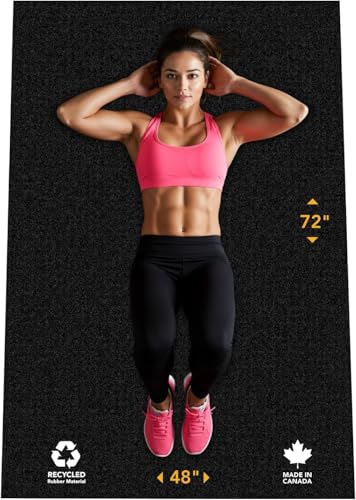
| Rubber King Recycled Mat | 4×6 ft heavy-duty 7mm recycled rubber | Premium | |
How to choose home gym rubber flooring
Tiles or a solid mat
The first decision is layout. Interlocking tiles snap together like a puzzle, cover a large area, and let you cut pieces to fit an odd-shaped room, which makes them the go-to for a full home gym. A single solid mat is simpler and heavier, ideal for defining one zone under a squat rack, a treadmill, or a lifting platform without covering the whole floor. Tiles win on flexibility and coverage; a solid mat wins on stability and quick setup.
Thickness and impact
Thickness decides how much punishment the floor can take. Thinner mats around 3mm are fine as a barrier under cardio machines and for bodyweight work. Half-inch and thicker rubber, and dual-layer rubber-over-foam tiles, absorb far more shock, which protects both your joints and the surface below when weights come down hard. If you drop loaded barbells, err thicker; if you mostly stretch and run a treadmill, a thinner mat is enough.
Grip and stability
A floor that slides is a hazard. Look for a textured, non-slip top surface for traction during lifts and a backing or interlocking edge that keeps the flooring from shifting. Heavier solid mats stay put by weight alone, while tiles lock together into one stable field. Either way, a floor that does not creep underfoot lets you focus on the set instead of your footing.
Noise and floor protection
Rubber is the quietest common gym surface, absorbing both the boom of dropped weights and the vibration of running machines. That is a big deal in an apartment, a shared house, or a room above a living space. The same cushioning that quiets impact also shields hardwood, tile, or concrete from dents and scratches, which is often the whole reason for laying flooring in the first place.
Material and odor
Most gym flooring is recycled rubber, sometimes bonded to an EVA foam base for extra cushioning. Recycled rubber is tough and sustainable, though some mats carry a rubber smell at first that fades with airing out. Products with a low-odor certification are worth seeking if the gym is in a closed indoor space. Letting new flooring air out and lie flat for a day or two helps it settle and reduces any initial smell.
Cleaning and vacuuming rubber floors
Rubber floors are easy to keep clean, but a few habits protect them. Sweep or vacuum regularly to lift chalk dust, hair, and grit, using a vacuum on a bare-floor or hard-floor setting; avoid a spinning beater-bar brush, which can scuff a rubber surface, catch a tile edge, or fling loose mats. A canister vacuum with a smooth-floor tool is ideal. For sweat and grime, damp-mop or wipe the surface, then disinfect with a cleaner formulated for rubber and athletic mats rather than harsh solvents that can degrade the material over time. A concentrated mat cleaner, diluted with water, makes routine sanitizing quick and affordable.
Mohawk Home Rubber Stall Mat
The Mohawk stall mat is the best seller here and the most versatile single piece you can buy. At half an inch thick, it delivers real impact resistance, sound absorption, and protection against scratches, scrapes, and everyday wear, making it perfect under a squat rack, a bench, or a piece of cardio gear. The resilient recycled rubber holds up indoors or out, and a high-low anti-slip backing keeps it planted underfoot so it does not wander mid-session.
Its appeal is simplicity. There is no assembly, no tiles to align, just a tough mat you roll out where you need it, and it doubles for garages, mudrooms, and under a dog crate if your training space changes. Let it lie flat for a couple of days to settle after unrolling, and it is ready for years of hard use.
Pros
- Half-inch thickness absorbs impact and noise
- Protects flooring from scratches and dents
- Anti-slip backing keeps it firmly in place
- Versatile for gyms, garages, and more
Cons
- Single mat covers one zone, not a whole room
- Heavy recycled rubber may need airing out at first
Best for: defining a single lifting or cardio station without flooring the whole room.
SUPERJARE Rubber-Top Interlocking Tiles
The SUPERJARE set is the premium full-coverage option, delivering 75 square feet across large 30-inch tiles. The bigger tiles mean fewer seams, less edge lifting, and a faster, cleaner-looking install. A dual-layer build pairs a durable rubber top with a high-density EVA foam base, so it shrugs off heavy equipment and intense sessions while cushioning jumps, drops, and stretches. The thick rubber layer also cuts impact noise meaningfully, which is a gift in an apartment or a shared space.
The textured, non-slip, water-resistant surface grips during workouts and wipes clean after sweaty sessions. For anyone building out a whole room and wanting the most polished result, the large-format tiles and shock absorption justify the higher price.
Pros
- Covers 75 sq ft with large, low-seam tiles
- Dual-layer rubber-and-foam shock absorption
- Noticeable noise reduction for shared spaces
- Non-slip, water-resistant, easy to wipe clean
Cons
- Highest price in the group
- Larger tiles need a bit more room to lay out
Best for: outfitting a full home gym with a clean, cushioned, low-seam floor.
VEVOR Rubber-Top Interlocking Tiles
The VEVOR tiles are the value route to full coverage, offering 48 square feet of rubber-topped, EVA-based flooring that installs without glue. The half-inch build absorbs shock, cushions joints, and dampens vibration well enough to sit under exercise machines, while the frosted rubber dot surface adds grip and resists dirt and wear. Twelve tiles plus border pieces let you build a tidy field, and each tile can be cut to fit around corners and equipment.
Assembly is genuinely quick, snapping together like a jigsaw with smooth edges that will not cut your hands, and cleanup is a simple wipe or rinse. For most home gyms that want solid protection and cushioning without a premium outlay, this is the practical middle ground.
Pros
- 48 sq ft of coverage at a mid-range price
- Half-inch rubber-and-EVA shock absorption
- Tool-free interlocking assembly, cuttable to fit
- Non-slip, easy-clean surface
Cons
- More seams than large-format tiles
- Foam base is less rigid than solid rubber for max loads
Best for: covering a room affordably with cushioned, easy-to-install tiles.
Dollamur Mat Attack Cleaner
Flooring is only half the job; keeping it hygienic is the other half, and the Dollamur Mat Attack is built for exactly that. It is a concentrated cleaner and disinfectant designed for rubber floors and athletic mats, mixing quickly with water for a bucket or spray bottle so you can mop or wipe the surface down after a sweaty session. Just two ounces make a gallon, and one quart makes many gallons, so it is genuinely economical for regular use.
Beyond dirt and grime, it targets the germs that thrive in a warm, sweaty gym, which matters if the space is shared or high-traffic. It also cleans weights, machines, and cardio equipment, making it a single care product for the whole room. Follow the label dwell time for the disinfecting claims to take effect.
Pros
- Formulated for rubber floors and athletic mats
- Concentrated, so it is very economical
- Cleans equipment and machines too
- Simple to apply by mop, cloth, or spray
Cons
- A care product, not flooring itself
- Disinfecting requires following the label dwell time
Best for: keeping rubber gym floors and equipment clean and sanitized.
Rubber King Recycled Exercise Mat
The Rubber King is the heavy-duty solid-mat pick, a 4-by-6-foot sheet of 7mm rubber made entirely from recycled tires. It is a serious platform for weightlifting, powerlifting, CrossFit-style training, Pilates, and placement under cardio machines, with an anti-slip, water-resistant surface built for stability rep after rep. Being shoe-friendly, it takes cleats and free weights in stride, and it carries a low-odor floor-quality certification for better indoor air, which sets it apart from cheaper rubber.
A single large mat like this gives you a defined, premium training zone with no seams to catch, backed by a multi-year warranty. It is the choice for a dedicated lifting spot where you want the toughness of solid rubber rather than the modular flexibility of tiles.
Pros
- Thick 7mm solid recycled rubber, seamless
- Low-odor certification for better indoor air
- Anti-slip, water-resistant, shoe-friendly surface
- Backed by a multi-year warranty
Cons
- Premium price for a single 4×6 mat
- Not recommended over carpet
Best for: a dedicated lifting platform that wants seamless, certified solid rubber.
The verdict
Best Overall: Mohawk Home Rubber Stall Mat. As the top seller, it is the most flexible, affordable way to protect a floor and cushion a training zone. For most people starting a home gym, one or two of these mats is the simplest place to begin.
Best Value: VEVOR Rubber-Top Tiles. Full-room coverage, real cushioning, and tool-free assembly at a mid-range price make it the sensible choice for flooring a whole space without overspending.
Best Premium: SUPERJARE Rubber-Top Tiles. The largest, cleanest-looking coverage with the strongest shock absorption, ideal for a serious full-room build. The Rubber King solid mat is the pick for a dedicated lifting platform, and the Dollamur cleaner keeps whichever floor you choose hygienic.
Decide by how much area you are covering and how hard you train. One heavy mat suits a single station, tiles suit a whole room, and thicker rubber suits heavy drops. Whatever you lay down, sweep or vacuum it often and disinfect regularly, and it will outlast the equipment on top of it.
FAQ
Can I vacuum rubber gym flooring? Yes, and you should, to lift chalk dust and grit. Use a vacuum on a bare-floor or hard-floor setting, or a canister with a smooth-floor tool. Avoid a spinning beater-bar brush, which can scuff the rubber, snag a tile edge, or slide a loose mat around.
How thick should the flooring be? For heavy barbell drops, choose half-inch or thicker solid rubber. For cardio machines and bodyweight work, thinner mats around 3mm are enough. Dual-layer rubber-over-foam tiles are a good middle ground for mixed training.
Do I need tiles or one big mat? Tiles cover a whole room and cut to fit odd shapes; a single solid mat is simpler and defines one zone under a rack or machine. Many home gyms use both, tiles across the floor with a heavy mat under the platform.
Will rubber flooring smell? Some recycled rubber has an initial odor that fades with airing out. Letting new flooring lie flat and ventilate for a day or two helps, and low-odor certified products minimize it from the start.
How do I clean and disinfect it? Sweep or vacuum regularly, damp-mop for sweat and grime, then disinfect with a cleaner made for rubber and athletic mats. Avoid harsh solvents, which can break down rubber over time.
Will it protect my hardwood or concrete? Yes. Rubber flooring cushions impact and avoids the dents and scratches that dropped weights and machine feet cause, which is one of the main reasons to install it.
This article may contain affiliate links; see our Affiliate Disclosure.