Pour-over people argue about beans, grind, and water temperature, then quietly reach for whatever filter is in the drawer. Yet the paper shapes the cup more than most realize: its color, thickness, and fit decide how clean the brew tastes and how smoothly the water flows. The natural-versus-bleached question is really about taste, convenience, and value, and once you understand the trade-offs the choice gets easy.


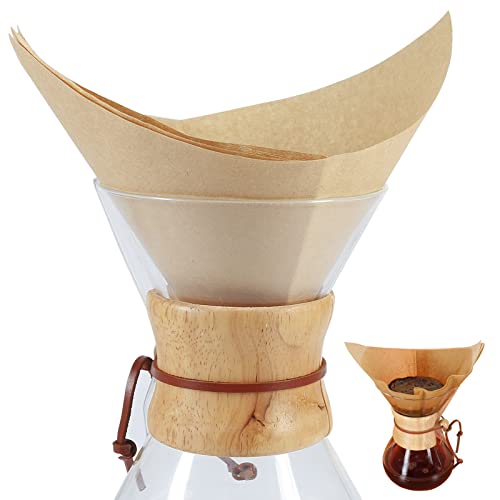
A great pour-over filter delivers a clean, sediment-free cup, holds its shape without collapsing, and fits your brewer without fuss. Natural and bleached papers each have their fans, and third-party unbleached filters undercut the brand on price. The five below cover a Chemex purist, a value brewer with a generic cone, an eco-minded coffee drinker, and someone with a small three-cup maker, so there is a sensible pick for every setup.
At a glance
| Product | Standout feature | Price tier | Link |
|---|---|---|---|
| Chemex Natural Square (100 ct) | Authentic unbleached paper, thick, compostable | Premium | |
| Chemex Bonded White Circle (100 ct) | Classic bleached white, cleanest neutral cup | Premium | |
| Chemex Half Moon (100 ct) | Sized for the small three-cup Chemex makers | Premium | |
| Brew Choice Pre-Folded Unbleached | Pre-folded, thick, compatible with Chemex | Mid-range | |
| BYKITCHEN Unbleached Squares | Budget natural squares for pour-over cones | Budget | |
Natural vs bleached: how to choose
The filter debate sounds like a taste war, but most of it comes down to habits and a couple of physical facts. Here is what actually matters when you pick a paper.
What natural and bleached really mean
Bleached filters are the familiar white ones. Reputable makers whiten them with an oxygen process, not chlorine, so the color is cosmetic rather than a sign of harsh chemicals. Natural filters skip the whitening entirely, which is why they are brown and often marketed as the more sustainable, chemical-free choice. Both are food-grade paper; the difference in the box is color and processing, not safety.
Does color change the taste?
Here is the part people get wrong. A dry natural filter can carry a faint papery note if you brew straight onto it, while bleached paper is more neutral out of the pack. But that difference all but vanishes with one simple habit: rinse the filter with hot water before adding coffee. A quick rinse washes away any paper taste and warms the brewer at the same time, so a rinsed natural filter and a rinsed bleached filter both give a clean cup. If you never rinse, bleached is the safer neutral pick; if you always rinse, choose on other factors.
Thickness and filtration
Thickness is the quiet hero. The genuine Chemex papers are notably thicker than typical filters, and that dense fiber traps more oils, fine sediment, and bitter particles, which is exactly what gives Chemex coffee its famously bright, clean body. The trade-off is a slower pour, so you grind a little coarser and take your time. Thin filters flow faster but let more oil and silt through, for a heavier, less polished cup. Several third-party naturals now advertise upgraded thickness to close that gap.
Shape and fit
Filters come as squares, circles, and half-moons, and shape is about fit, not flavor. Square filters tuck a corner neatly into the pouring spout and are the traditional Chemex choice; circles fold into a cone and sit cleanly too. Half-moon filters are made for the small three-cup makers, which the standard sizes do not fit. Whatever the shape, match it to your brewer, and if you use a generic pour-over cone, confirm the cup range it is rated for.
Convenience, value, and sustainability
Genuine Chemex filters fold from a flat sheet, a small ritual some enjoy and others find fiddly, while several third-party filters arrive pre-folded to save the step. On value, the brand costs more per filter than compatible unbleached papers, though its fit and consistency are dependable. On sustainability, unbleached, compostable, responsibly sourced papers appeal to eco-minded brewers, and used filters plus grounds can go straight into a compost or garden bed.
Getting the best cup from any filter
The paper is only half the story; how you use it decides the rest. Always rinse the filter with hot water first, both to remove any paper taste and to preheat the brewer so your coffee lands hotter and holds its temperature. Because Chemex-style papers are thick and slow the flow, grind a touch coarser than you would for a thin filter, which keeps the water moving and avoids a stalled, over-extracted, bitter brew. Pour in slow, steady circles to keep the coffee bed even, and seat the folded filter with its extra layers against the spout so the air vent can breathe. Do those small things and even a budget natural filter delivers a clean, sweet cup.
Chemex Natural Square (100 ct)
The most popular filter here is the authentic Chemex natural square, and it is the natural-camp benchmark. The paper is thicker than most, so it strips out oils, sediment, and bitterness for the crisp, clean cup Chemex is known for, and the square shape tucks smartly into the spout. Made in the USA from North American materials, it is compostable and unbleached, which suits the sustainability-minded. Fold it, rinse it, and brew; the rinse tames any faint paper note the brown paper might otherwise add. It fits the standard Chemex makers, and for purists it is the default.
Pros:
- Authentic, dependable fit and consistency
- Extra-thick paper for a clean, bright cup
- Unbleached and compostable
- Traditional square tucks into the spout
Cons:
- Costs more per filter than compatible papers
- Faint paper note if brewed without a rinse
Best for: Chemex owners who want the genuine natural filter.
Chemex Bonded White Circle (100 ct)
This is the bleached counterpart, the classic white Chemex filter, and it is the pick for the most neutral cup with the least fuss. The oxygen-whitened paper is more neutral out of the pack, so even brewers who skip the rinse get a clean, paper-free taste. It shares the same thick, specialty fiber construction that keeps oils and grounds out of the cup, and the circle folds into a tidy cone that seats cleanly in the brewer. If you like the crisp Chemex profile but want to avoid any chance of a papery note, the white bonded filter is the reliable choice.
Pros:
- Neutral flavor even without rinsing
- Same thick, clean-cup filtration as the natural
- Circle folds into a tidy cone
- Consistent authentic fit
Cons:
- Whitened paper is less eco-marketed than natural
- Premium price versus third-party filters
Best for: those who want the cleanest neutral cup with no rinse required.
Chemex Half Moon (100 ct)
If you brew on a small Chemex, this is the filter you actually need. The half-moon shape is made specifically for the compact three-cup makers, which the standard square and circle filters do not fit properly. It uses the same thick, specialty fiber paper as the rest of the line, so the small-batch cup still comes out clean and bright, with oils and grounds held back. It folds and seats the same way as the larger filters, just scaled to the smaller cone. For anyone with a one-to-three-cup Chemex, it removes the guesswork about which filter belongs.
Pros:
- Correct fit for small three-cup makers
- Same clean-cup thick paper
- Authentic Chemex quality
- Simple fold and seat
Cons:
- Only for the small makers, not standard sizes
- Premium per-filter price
Best for: owners of the compact three-cup Chemex.
Brew Choice Pre-Folded Unbleached
This is the value pick that skips the fiddly folding. Brew Choice ships its unbleached cones pre-folded, so you drop one in and brew, and it advertises an upgraded paper that is roughly a third thicker for finer filtration and more rigidity against tears and collapse. It is compatible with most cone pour-over makers rated for five to thirteen cups, including the standard Chemex, and it leans into sustainability with chemical-free, responsibly sourced pulp that composts with the grounds. For a natural filter that costs less than the brand and saves a step every morning, it is a smart everyday choice.
Pros:
- Pre-folded for faster brewing
- Upgraded thicker paper resists tears
- Compatible with standard Chemex and other cones
- Unbleached, chemical-free, compostable
Cons:
- Third-party fit is broad rather than exact
- Still benefits from a rinse for best taste
Best for: value brewers who want a natural filter without the folding.
BYKITCHEN Unbleached Squares
The BYKITCHEN squares are the budget entry point into natural filters. Made from unbleached, food-grade wood pulp, they trap bitter elements, oils, and fine particles for a smoother cup, and the square shape fits Chemex and other pour-over drippers rated for three to ten cups. They arrive flat rather than pre-folded, so you fold twice into a cone, and the maker suggests soaking the paper with hot water first, which doubles as the flavor-improving rinse. With a lower count and a low price, they are an easy way to try natural filters or keep a cheap backup in the cupboard.
Pros:
- Lowest price to try natural filters
- Unbleached food-grade paper
- Fits Chemex and other pour-over cones
- Smooth, sediment-reduced cup
Cons:
- Not pre-folded, and fewer per box
- Best results need a soak or rinse first
Best for: budget brewers and anyone sampling natural filters.
The verdict
Best Overall: the Chemex Natural Square is the pick for most Chemex owners. It is the authentic filter, thick enough for the signature clean cup, unbleached and compostable, and the most popular of the group. With a quick rinse before brewing, any hint of paper disappears and you get Chemex at its best.
Best Value: the Brew Choice Pre-Folded Unbleached delivers a thick, natural, compatible filter for less than the brand, and the pre-folded design saves a step every morning, making it the smart everyday choice.
Best Premium: the Chemex Bonded White Circle earns it for anyone who wants the cleanest, most neutral cup with zero fuss. The whitened paper tastes neutral even without a rinse, while keeping the same thick, clean-cup filtration as the natural.
The real takeaway is that, once rinsed, natural and bleached taste far closer than the debate suggests, so buy on the things that actually differ day to day: fit, thickness, whether it comes pre-folded, and price. Match the shape to your maker, keep a rinse in your routine, and the color of the paper becomes the least important choice you make.
Frequently asked questions
Do natural filters make coffee taste like paper? They can add a faint papery note if you brew straight onto a dry filter, more so than bleached paper. The fix is simple and standard practice: rinse the filter with hot water before adding coffee. A rinsed natural filter tastes clean, so if you rinse every time, color makes little difference to flavor.
Are bleached filters finished with harsh chemicals? Reputable brands whiten their filters with an oxygen process rather than chlorine, so the white color is cosmetic and food-safe. If chemical-free processing matters to you on principle, natural unbleached filters skip whitening altogether, which is part of their appeal.
Why are Chemex filters so much thicker? The extra thickness is deliberate. Denser paper traps more oils, fine sediment, and bitter compounds, which produces the bright, clean, light-bodied cup Chemex is known for. The cost is a slower pour, so a slightly coarser grind and a patient pour keep the flow smooth.
Can I use third-party filters in a Chemex? Yes, as long as the shape and size match your maker. Many unbleached cone and square filters are made to fit standard Chemex brewers and cost less than the brand. Just check the cup range and shape, and expect fit to be a touch less exact than the genuine article.
Should I rinse the filter every time? It is the single best habit for pour-over. Rinsing removes any paper taste, preheats the brewer and carafe so the coffee stays hotter, and helps the filter sit snugly. It takes seconds and improves nearly every cup, whichever color paper you use.
This article may contain affiliate links; see our Affiliate Disclosure.