Every microwave heats food. The gap between a good one and a bad one shows up in the details: leftovers that come out hot in the middle instead of molten at the edges and cold in the center, a door that opens without a fight, and a beep you can silence at midnight. Wattage, capacity, and how the machine judges doneness are what separate them, and none of it is complicated once you know where to look.


Countertop microwaves run from compact 0.7 cubic foot boxes for a dorm or office to 2.2 cubic foot units that swallow a whole chicken. This guide compares strong picks across that range, so a small-kitchen renter, a household reheating dinner for four, and anyone cooking for a crowd can each match a machine to their counter and their cooking. The notes below flag where a sensor genuinely improves results and where a simple preset is all you need.
At a glance
| Product | Standout feature | Price tier | Link |
|---|---|---|---|
| Chefman Countertop Microwave | Best-seller, 10 power levels, mute and eco mode | Budget | |
| BLACK+DECKER Digital Microwave | Push-button door, large LED display, 1000W | Mid-range | |
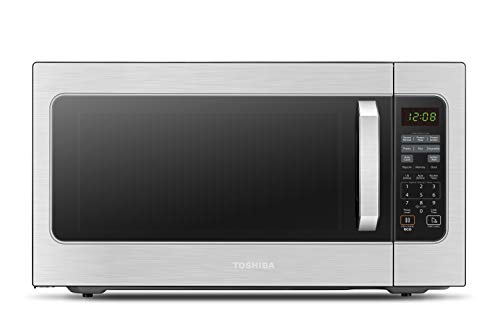
| TOSHIBA Smart Sensor Microwave | Humidity sensor adjusts time and power | Mid-range | |
| Farberware Countertop Microwave | Multi-stage cooking, defrost by weight or time | Budget | |
| TOSHIBA Large Countertop Microwave | 2.2 cu ft, 1200W, fits a 16-inch pizza | Premium | |
How to choose a countertop microwave
Wattage sets the speed
Output wattage is the number that decides how fast food heats, and it is not the same as the input power printed elsewhere on the box. Roughly speaking, 700 watts is entry level and fine for reheating a plate or making popcorn, though it takes noticeably longer. Nine hundred watts is a comfortable middle, and 1000 watts is the sweet spot most package instructions are written for, so timings on frozen food actually work as printed. Twelve hundred watts is the fast lane for a busy kitchen. A low-wattage machine is not worse at heating, it simply needs more time, so if you reheat constantly the extra power is worth having.
Capacity, and measuring your counter
Capacity and footprint move together, so decide what you need to fit inside before you fall for a size. A 0.7 cubic foot box suits a dorm, office, or small kitchen and handles a dinner plate and a mug. Around 0.9 to 1.2 cubic feet is the mainstream family size, taking most casserole dishes comfortably. At 2.2 cubic feet you can slide in a 16-inch pizza or a whole chicken. Measure your counter depth and the space under any cabinet before ordering, and remember a microwave needs clearance around the vents, so the outside dimensions matter as much as the cubic feet inside.
Even heating: turntables, sensors, and power levels
Uneven heating is the classic microwave complaint, and three things fight it. A turntable keeps food moving through the hot and cold spots of the microwave field, and a bigger plate helps larger dishes rotate fully. Multiple power levels matter more than people realize: running at 50 or 70 percent for longer lets heat spread through the food instead of blasting the outside, which is why defrost and melting work far better at low power. A humidity sensor is the real upgrade, detecting the steam coming off food and shutting off when it is genuinely done rather than when a timer says so, which takes the guesswork out of reheating.
Controls, presets, and defrost
Good controls are the difference between using features and ignoring them. One-touch presets for popcorn, pizza, potato, beverage, and vegetables cover most daily jobs, and express cooking, where pressing a number runs that many minutes at full power, is the fastest way to reheat. An add-30-seconds button gets used more than any preset. For defrost, look for the option to go by weight as well as by time, since entering the weight lets the machine work out the right low-power cycle rather than leaving you guessing and cooking the edges.
The small things you live with
Details decide how pleasant a microwave is day to day. A mute button silences the beeps, which matters if the kitchen sits near a sleeping child or you reheat late. A child safety lock stops the door being opened or the panel being used by small hands. Eco mode drops the display to save standby power. Door style is worth a thought too: a push-button release is easy, while a handle suits some kitchens better. Finally, favor a wipe-clean interior and a dishwasher-safe glass turntable, because a microwave that cleans in a minute stays cleaner.
Chefman Countertop Microwave
The best-selling microwave here keeps the useful features and skips the fluff. This 1.1 cubic foot model puts out 1000 watts with 10 power levels, from a gentle setting that melts butter without scorching to full power for fast reheating, and it also comes in 0.7 and 0.9 cubic foot sizes if your counter is tighter. Six presets handle popcorn, pizza, beverages, veggies, potatoes, and leftovers, while pressing a number key runs that many minutes and a +30 seconds button covers the rest. A memory function stores your regulars for one-touch use. Practical touches land well: a child safety lock on the handle plus a panel lock mode, a mute button to kill the beeps, eco mode to blank the display, and a wipe-clean black exterior with a dishwasher-safe glass turntable.
Pros
- Proven best-seller with 1000W and 10 power levels
- Mute button and eco mode
- Child lock on both the handle and the panel
- Memory function and available in three sizes
Cons
- No humidity sensor for automatic doneness
- Only six presets
Best for: most kitchens wanting solid power, real conveniences, and a friendly price.
BLACK+DECKER Digital Microwave
A familiar name with a no-nonsense design, this BLACK+DECKER runs 1000 watts across 10 power settings in a 1.1 cubic foot cavity, with a generous 12.4 inch removable glass turntable that lets bigger dishes rotate properly. Pre-programmed buttons cover popcorn, potato, pizza, frozen vegetable, beverage, and dinner plate, and 30-second express cooking gets you going with one press. The large LED display and clearly laid out control panel are genuinely easy to read, which sounds minor until you use a cramped panel daily. A push-button door release opens it cleanly without yanking a handle, and there is an interior light, a clock, a kitchen timer, and a child safety lock. It measures 20.6 by 15 by 11.8 inches, so check your space before buying.
Pros
- 1000W with a large 12.4-inch turntable
- Easy-to-read LED display and control panel
- Push-button door release
- Six presets plus 30-second express cooking
Cons
- No sensor cooking or mute option
- Takes a fair amount of counter depth
Best for: buyers who want a straightforward, well-labeled machine from a known brand.
TOSHIBA Smart Sensor Microwave
This is where the cooking genuinely gets smarter. The Toshiba’s humidity sensor reads the steam coming off your food and adjusts both time and power automatically, which is the single most effective fix for the overcooked-or-still-cold reheat. At 1.2 cubic feet and 1000 watts it fits mainstream family cooking, with a 12.4 inch removable turntable and a black easy-clean interior. Twelve auto menus and six preset options handle the common jobs including sensor reheat, and 10 power levels cover everything from deodorizing to boiling liquids. Defrost works by weight or time, one-touch start runs 1 to 6 minutes at full power, and there is a mute function and eco mode. For anyone who reheats leftovers constantly and wants them right, the sensor earns its keep.
Pros
- Humidity sensor sets time and power automatically
- Twelve auto menus plus sensor reheat
- Mute function and eco mode
- Easy-clean interior with a large turntable
Cons
- Costs more than sensor-free rivals
- Larger footprint than compact models
Best for: households that reheat leftovers daily and want consistent results without guessing.
Farberware Countertop Microwave
The Farberware brings a feature the budget crowd usually lacks: multi-stage cooking, which chains power levels in one program so a dish can defrost then cook without you standing there re-entering settings. It packs 1000 watts of output with ten power levels into a 1.1 cubic foot cavity, a size that delivers full family cooking without hogging the counter, and it suits a home or an office kitchen equally. Six one-touch options cover popcorn, potato, pizza and the rest, express cooking runs 1 through 6 minutes at a press, and there is an add-30-seconds control. Defrost works by weight or by time. A clear LED display carries a clock and kitchen timer, interior lighting lets you watch the dish, and a child safety lock and easy-clean stainless finish round it out.
Pros
- Multi-stage cooking chains power levels automatically
- 1000W in a compact 1.1 cubic foot body
- Defrost by weight or by time
- Stainless finish with an easy-clean interior
Cons
- No humidity sensor
- No mute option for the beeps
Best for: value shoppers who want full power and multi-stage programs in a modest footprint.
TOSHIBA Large Countertop Microwave
For a big household, this 2.2 cubic foot Toshiba changes what a microwave can do. It swallows a 16-inch pizza or a whole chicken, and 1200 watts of output makes it the fastest machine here, which matters when you are reheating for a crowd rather than one plate. A smart humidity sensor adjusts power and time automatically for even heating that seals moisture in, and a 16.5 inch position-memory turntable returns dishes to the front so you are not reaching into the back. Twenty-three one-touch menus cover the usual suspects, custom auto-defrost has dedicated programs for meat, poultry, and fish, and there is a sound on/off option, memory function, eco mode, and child lock. Just measure first: at 24.4 by 19.6 by 13.6 inches it needs serious counter space.
Pros
- Huge 2.2 cu ft cavity fits a 16-inch pizza
- Fastest 1200W output with a humidity sensor
- Position-memory 16.5-inch turntable
- 23 menus and dedicated defrost programs
Cons
- Premium price and a large footprint
- Overkill for one or two people
Best for: large families and anyone cooking big dishes who has the counter space.
The verdict
Best Overall: the Chefman Countertop Microwave. As the proven best-seller it gives most kitchens what they actually use: a full 1000 watts, 10 power levels, useful presets, plus a mute button, eco mode, and a double child lock, all at a budget price and in three sizes.
Best Value: the Farberware Countertop Microwave. Full 1000-watt power, ten levels, defrost by weight, and multi-stage cooking, a feature usually reserved for pricier machines, in a compact stainless body.
Best Premium: the TOSHIBA Large Countertop Microwave. A 2.2 cubic foot cavity, 1200 watts, a humidity sensor, and a position-memory turntable make it the most capable machine here for households cooking at scale.
Frequently asked questions
How many watts do I need? Around 1000 watts is the sweet spot, since most package instructions are written for it. Seven hundred watts still heats everything, just more slowly, while 1200 watts suits a busy kitchen reheating for several people.
What does a humidity sensor actually do? It detects the steam rising off your food and stops cooking when the food is genuinely done, rather than when a timer runs out. That is the most reliable fix for reheating that comes out unevenly.
What size microwave should I buy? A 0.7 cubic foot model suits a dorm or office, 0.9 to 1.2 covers most families and fits casserole dishes, and 2.2 handles a 16-inch pizza or a whole chicken. Measure your counter and cabinet clearance before deciding.
Why does my food heat unevenly? Microwave fields have hot and cold spots, which is what the turntable counteracts. Using a lower power level for longer lets heat spread through the food, and stirring or resting the dish partway makes a big difference.
Can I turn off the beeping? Some models include a mute or sound on/off button, which is worth looking for if the kitchen is near a bedroom or you reheat late at night. Not every microwave offers it, so check before buying.
This article may contain affiliate links; see our Affiliate Disclosure.