One sharp piece of grit works its way under your arch at mile two. By mile six it has filed a blister you will feel for a week. Gaiters weigh a couple of ounces and exist entirely to stop that.


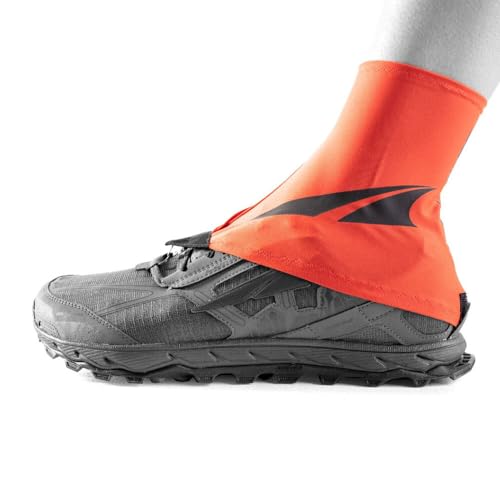


Gaiters split into two families that solve different problems: low-cut shields that seal the shoelace gap against sand and grit, and taller wraps that also keep water, mud, and thorns off your shins. What separates a good pair from a pair you take off at lunch is how they attach, how they breathe, and whether the bottom strap survives the abrasion. The picks below suit desert sand, a wet moor, a trail run over scree, or a day of thorny scrub.
At a glance
| Product | Standout features | Price tier | Link |
|---|---|---|---|
| Pike Trail Adjustable Leg Gaiters | Best seller; full-height; waterproof; 3 stainless buckles | Mid-range | |
| Frelaxy Ultralight Trail Gaiters | Only 2.29 oz; 4-point hold; 3-layer rubber sole strap | Budget | |
| ALTRA Unisex Trail Gaiter | Strapless; nothing under the sole; breathable stretch fabric | Mid-range | |
| UNIQOCK Low Ankle Gaiters | Waterproof Oxford cloth; adjustable leg width; folds small | Budget | |
| Salomon Trail Gaiters Low | Velcro closure; hard-wearing sole strap; low profile | Premium | |
How to choose trail gaiters
Low-cut or full-height: what are you keeping out
Decide this first, because everything else follows. Low gaiters, the Frelaxy, ALTRA, UNIQOCK, and Salomon, are ankle-height sleeves that wrap the shoelace area. They exist to stop sand, dust, grit, and small stones dropping into the shoe, which is the problem on desert trails, sandy tracks, and scree. They are light, they breathe, and you forget them. Full-height gaiters, like the Pike Trail, run up the calf and add a different set of jobs: keeping water out in wet grass, blocking mud, and taking thorn and bug hits that would otherwise reach your shins. The Pike Trail describes itself as a lightweight alternative to waterproof boots, which is a fair summary of the trade. If your problem is grit, buy low. If your problem is water, brush, or snow, buy tall.
How they attach is what actually fails
Gaiters live or die on attachment, and there are four approaches here. The most common is the multi-point system: Frelaxy uses a four-point hold with an adjustable top drawstring, a front shoe hook, a bottom strap under the sole, and a rear anti-slip belt. Salomon uses a velcro closure with a hard-wearing sole strap. Pike Trail uses three rustproof stainless steel buckles plus foot straps over the boot, appropriate for a taller gaiter that has more to hold. ALTRA takes the most interesting route: strapless, with nothing running under the shoe at all. Whatever the system, the underfoot strap is the part that wears through, because it is dragged across rock every step.
The strapless idea, and its catch
The ALTRA gaiter is worth understanding on its own terms. It has no strap under the sole, which means nothing to abrade away and nothing to snag, and it lets you change shoes or socks without taking the gaiter off. It achieves that by attaching to the shoe itself: it fits all Altra trail shoes directly, and an extra hook-and-loop piece is included for other trail shoe brands, which you attach to the shoe’s heel. That is the catch. The system is brilliant if you own compatible shoes or are willing to stick a patch onto your heel, and it is a non-starter if you are not. Everything else here works with whatever is already on your feet.
Stretch fabric or waterproof cloth
Material tells you what the gaiter is for. Stretch Lycra, on the Frelaxy and ALTRA, breathes well, moves with the ankle, and resists abrasion; ALTRA’s is 18 percent spandex and specifically described as highly breathable with high abrasion resistance. That is the right answer for hot, dry, sandy ground, where the enemy is grit and your feet need to vent. High-density waterproof Oxford cloth, on the UNIQOCK, does the opposite job: it wraps the shoe completely and blocks snow, rain, and mud rather than breathing. Pike Trail is waterproof and puncture resistant to thorns. In the desert, breathable stretch wins easily. In a wet or thorny place, it does not.
Weight, and why it is the whole point
Gaiters only work if you actually wear them, and weight decides that more than any feature. The Frelaxy pair comes in at 2.29 ounces, which genuinely disappears on a shoe. Salomon’s pitch is comfort without bulk, and ALTRA’s stretch design adds almost nothing. The taller waterproof designs are heavier and warmer by necessity, since there is more fabric and it does not breathe. Anything you take off at lunch and stuff in a pack has done nothing except add weight, so if your trails are dry, buy the lightest pair that will hold on.
Pike Trail Adjustable Leg Gaiters
The best seller of this group, and the most protective. These are full-height leg gaiters rather than low shields: a 360 degree wraparound, fully adjustable to fit a range of legs, waterproof, and tough enough that Pike Trail positions them as a lightweight alternative to waterproof boots. They are puncture resistant to thorns and bug bites, which is the argument for height over minimalism, and they wear over or under hiking pants. Three rustproof stainless steel buckles and sturdy foot straps hold them over boots. They are heavier and warmer than an ankle sleeve, and they are not what you want on a hot sand trail. In wet grass, scrub, or mud, they are a different level of protection.
Pros:
- Best-selling gaiters in this comparison
- Full-height 360 degree wraparound protects the whole lower leg
- Waterproof; a lighter alternative to waterproof boots
- Puncture resistant to thorns and bug bites
- Three rustproof stainless steel buckles and sturdy foot straps
- Fully adjustable; wears over or under hiking pants
Cons:
- Hotter and heavier than a low gaiter
- Overkill for dry, sandy trails where grit is the only issue
- More hardware to fit and adjust
Best for: wet grass, mud, thorny scrub, hunting, and fishing, where shin protection matters as much as keeping debris out.
Frelaxy Ultralight Trail Gaiters
Two point two nine ounces. For a piece of gear whose only failure mode is being left in the pack, that number is the argument. The Frelaxy is a low gaiter that wraps the shoelace area and ankle completely, keeping rocks, mud, dust, debris, bugs, and trail brush out of the shoe, in stretch Lycra that breathes and moves. The hold is a four-point system: adjustable top drawstring, front shoe hook, bottom strap, and a rear anti-slip belt, which between them stop the slow rotation that makes cheap gaiters annoying. The sole strap is the clever part, a three-layer high-abrasion rubber build aimed squarely at the component that normally wears through first. It works with most trail shoes, hiking boots, and sneakers, and it is among the cheapest picks here.
Pros:
- Extremely light at 2.29 oz per pair
- Four-point hold system resists slipping and rotating
- Three-layer high-abrasion rubber sole strap
- Breathable stretch Lycra with reinforced stitching
- Fits most trail shoes, boots, and sneakers
- Budget price
Cons:
- Low cut, so no shin or calf protection
- Breathable fabric is not a waterproof barrier
- Underfoot strap still wears on abrasive rock
Best for: desert and sandy trails, trail running, and fast hiking where every ounce is noticed.
ALTRA Unisex Trail Gaiter
The clever one. The ALTRA gaiter is strapless: nothing passes under the sole, which removes the component that abrades away on every other design and means you can change shoes or socks without taking the gaiter off. It shields feet from dirt, sand, rocks, and snow, and the fabric is a highly breathable stretch material with 18 percent spandex and high abrasion resistance, so it vents on hot ground rather than cooking your ankle. The attachment is the thing to understand before buying: it fits all Altra trail shoes directly, and an extra hook-and-loop piece is included so it can be made to work with other trail shoe brands. If you already run in Altras, this is an obvious purchase. If not, budget for attaching the hook-and-loop patch to your shoes.
Pros:
- Strapless: nothing under the sole to wear through or snag
- Change shoes or socks without removing the gaiter
- Highly breathable stretch fabric with high abrasion resistance
- Shields against dirt, sand, rocks, and snow
- Extra hook-and-loop piece included for other shoe brands
Cons:
- Needs compatible shoes, or a patch attached to yours
- Low cut only; no leg protection
- Sold in shoe-size ranges, so fit must be matched
Best for: Altra trail shoe owners, and anyone who has already worn through the underfoot strap on a conventional pair.
UNIQOCK Low Ankle Gaiters
A low gaiter that chases waterproofing rather than weight. The UNIQOCK is built from high-density waterproof Oxford cloth that wraps the shoe completely, blocking snow, rain, and mud from getting in rather than merely filtering grit. The leg width adjusts and the boot buckle adjusts, so it can be tuned to a boot instead of assuming one shape fits, and there is an adjustable high-density elastic band at the top. The materials are ultra wear-resistant, aimed at harsh conditions, and the lace-up design keeps it in place. It folds down small enough to live in a pack for the day the weather turns. The real trade against the stretch designs is breathability: waterproof cloth does not vent, so on a hot dry trail it will be warmer than a Lycra sleeve.
Pros:
- High-density waterproof Oxford cloth blocks snow, rain, and mud
- Adjustable leg width and boot buckle for a tuned fit
- Adjustable elastic band at the top
- Wear-resistant materials for harsh conditions
- Folds small and light enough to carry as a spare
- Budget price
Cons:
- Waterproof cloth breathes far less than stretch fabric
- Warm on hot, dry, sandy trails
- More adjustment to fiddle with than a pull-on design
Best for: wet, muddy, or snowy days, and as the cheap pair that lives in the pack for bad weather.
Salomon Trail Gaiters Low
The premium low gaiter, and the simplest to live with. It slides over the shoe and closes with velcro, which is faster than threading a drawstring and easier to adjust with cold hands or on the move. Salomon builds it around a hard-wearing sole strap for stability, with a design that stays breathable while keeping trail debris out, and pitches it at gravel, snow, thorns, and grass alike. It is deliberately low profile and lightweight, so it works for day hikes and trail runs without the bulk of a full leg gaiter. It is the most expensive pick here and it does less, on paper, than the taller options. What you are paying for is a design that is easy to put on, easy to take off, and unobtrusive enough to stay on.
Pros:
- Velcro closure is quick to fit and adjust
- Hard-wearing sole strap for stability
- Breathable and low profile; no bulk
- Handles gravel, snow, thorns, and grass
- Slides straight over the shoe with no shoe modification
Cons:
- Highest price of these picks
- Low cut, so no leg protection
- Velcro collects grit and lint over time
Best for: day hikes and trail runs where you want gaiters on and off quickly without fiddling.
The verdict
Best Overall: Pike Trail Adjustable Leg Gaiters. The best seller here, and the most versatile thing to own if you only own one pair. Full-height, waterproof, puncture resistant to thorns, adjustable to fit, and held by three stainless buckles and foot straps. It covers wet grass, mud, and scrub as well as debris, which is more trail conditions than any low gaiter reaches. On hot sand it is more than you need.
Best Value: Frelaxy Ultralight Trail Gaiters. For sand and grit specifically, this is the pick, and it costs the least. At 2.29 ounces you will not take them off, the four-point hold stops them wandering, and the three-layer rubber sole strap addresses the part that normally dies first.
Best Premium: Salomon Trail Gaiters Low. The most polished low gaiter here. A velcro closure and a hard-wearing sole strap make it the quickest to fit and the least fussy to live with, in a low-profile shape that does not announce itself.
Two situational calls. If you run in Altra shoes, the ALTRA gaiter and its strapless design remove the underfoot strap problem entirely. And for wet or snowy days on a budget, the UNIQOCK and its waterproof Oxford cloth do a job the breathable pairs cannot.
Frequently asked questions
Do I want low gaiters or full-height ones?
Match them to what is getting in. Low gaiters seal the shoelace gap and stop sand, dust, and small stones, which is the desert and scree problem, and they are light and breathable. Full-height gaiters like the Pike Trail also keep water, mud, and thorns off your shins, at the cost of heat and weight. Many people end up owning both and choosing by trail.
Will gaiters fit my shoes?
Usually, but check the attachment. Most low gaiters hook onto the laces at the front and run a strap under the sole, and Frelaxy says it fits most trail shoes, boots, and sneakers. The exception is the ALTRA, which is strapless and attaches to the shoe itself: it fits Altra trail shoes directly and includes a hook-and-loop piece to adapt other brands. Fitted designs like ALTRA and Salomon come in shoe-size ranges, so buy to your size.
Are trail gaiters waterproof?
Only the ones that say so. Breathable stretch designs like the Frelaxy and ALTRA are debris shields, not water barriers, and they are better for it on hot dry ground. The UNIQOCK uses waterproof Oxford cloth and the Pike Trail is waterproof and thorn resistant. Buy the breathable pair for sand, the waterproof pair for wet.
What part wears out first?
The strap under the sole, every time, because it is dragged across rock with your full weight on it. That is why Frelaxy specifies a three-layer high-abrasion rubber strap and Salomon a hard-wearing one. It is also the reason the strapless ALTRA design exists, since a gaiter with nothing under the shoe has nothing there to wear through.
Do gaiters make your feet hot?
The waterproof ones do. Anything that blocks water also blocks vapor, so Oxford cloth and full-height waterproof designs are noticeably warmer. Stretch Lycra designs are made to vent: ALTRA describes its fabric as highly breathable, and at 2.29 ounces the Frelaxy barely registers. On a hot sandy trail, breathable is the right call.
This article may contain affiliate links; see our Affiliate Disclosure.