The difference between a waffle that shatters when you cut it and one that sags into a damp pancake comes down to a handful of decisions made before the batter ever hits the iron. Plate depth, heat, and whether the thing can hold a shade setting matter far more than the recipe.



A good waffle iron gets hot, stays hot when cold batter lands on it, releases cleanly, and lets you choose how dark the outside goes. Everything else is about the waffle you want: deep-pocketed Belgian rounds that hold a pool of syrup, thin crisp classics that stack, or four-inch minis that suit a single serve. The five here run from a pocket-sized iron to a vertical machine that pours through a chute.
| Product | Standout feature | Price tier | Link |
|---|---|---|---|
| bella Flip-n-Store | Flips 180° then stands upright, PFAS-free ceramic coating | Budget | |
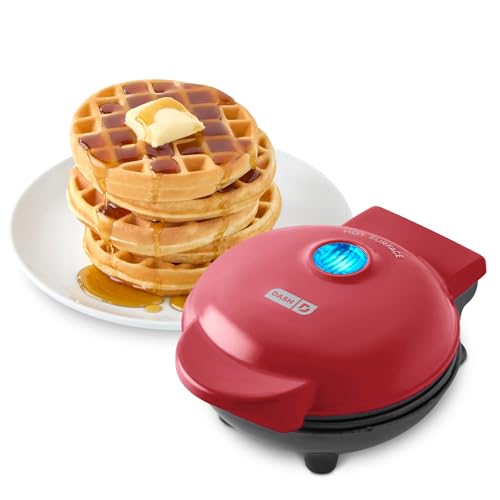
| Dash Mini | 4-inch waffles, fast heat-up, stores anywhere | Budget | |
| Cuisinart Round Classic | 1250W, 5 browning settings, 1″ deep pockets, 3-year warranty | Mid-range | |
| Ninja Belgian Waffle Maker Pro | Vertical pour, 5 shades, specialty setting for sweet batters | Premium | |
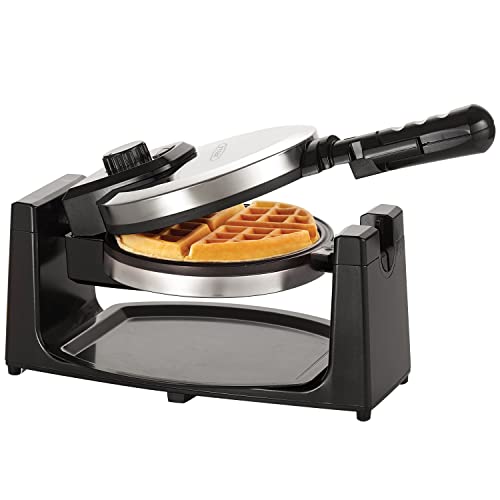
| bella Classic Rotating Belgian | Rotating body, 9 browning settings, removable drip tray | Budget | |
How to choose a waffle maker
Belgian or classic: it is a pocket-depth question
Belgian waffles come from deep plates, roughly an inch of pocket, which trap butter and syrup and give a soft, almost custardy interior under a crisp shell. Classic American waffles use shallower grids, cook thinner and faster, and go crisp most of the way through. Neither is better; they are different breakfasts. Deep pockets need a batter with some structure and a machine with the heat to cook the middle before the outside burns – which is why the Belgian machines here have flipping or rotating mechanisms and higher wattage.
The line between the two blurs in practice. The Cuisinart is sold as a round classic, yet it has 1″ deep pockets and four quarters, so it lands closer to Belgian territory than its name suggests. The bella Flip-n-Store produces thick 7-inch Belgian-style rounds from a compact body.
Flipping, rotating, and why they exist
Pour thick batter onto a flat iron and gravity pulls it to the bottom plate; the top of the waffle ends up paler and less defined. Flipping the whole machine 180 degrees after the pour, as the bella Flip-n-Store does, sends the batter back across the top plate and evens the bake. A rotating body, like the bella Classic Rotating, does the same job on a turning axis. Ninja takes a third route: stand the plates vertically and pour batter down the gap, so it fills evenly by design and there is nothing to flip.
All three work. Flipping models are the most common and the cheapest way to get an even Belgian bake. Rotating models tend to be sturdier and are the classic diner mechanism. Vertical is the tidiest to pour and the easiest to fill without overflow.
Browning control is the crispness dial
This is the feature to insist on. A machine with a single fixed temperature gives you one waffle. Adjustable browning lets you go light and fluffy for a child’s plate and dark and crisp for someone who wants a shell that cracks. The Cuisinart and Ninja both offer five settings; the bella Classic Rotating offers nine, the most granular here. The Dash Mini has none, which is the real trade for its price and size.
Coatings, and what is in them
Nonstick is not optional on a waffle iron – batter in a grid is unforgiving. What differs is the chemistry. The bella Flip-n-Store uses a ceramic coating made without PFAS, PFOA, PTFE, lead, or cadmium, which is worth knowing for anyone who has been avoiding traditional nonstick. The bella Classic Rotating uses three different coatings including ceramic titanium. Whatever the surface, work on it kindly: no metal utensils, no abrasive scrubbing, and let it cool before wiping.
Storage, cleanup, and the real reason irons go unused
Waffle makers get bought with enthusiasm and abandoned in a cupboard because they are bulky and messy. Upright storage solves the first problem – the bella Flip-n-Store stands on its end and claims up to 50% space saving, the Cuisinart stands up with the cord wrapped round the base, and the Dash Mini is small enough that it hardly counts. For mess, a removable drip tray, as on the bella Classic Rotating, catches the overflow that otherwise bakes onto the counter.
bella Flip-n-Store – the best seller, and a smart bit of design
The strongest seller here, and it wins on a single good idea executed properly: the hinge that flips it 180 degrees for an even bake is the same hinge that lets it stand upright in a cupboard. That solves the two things that stop people using a waffle iron – uneven waffles and no room to keep it. It turns out thick 7-inch Belgian-style rounds from a 1000 W element, with 1″ deep plates, a power indicator light, cool-touch handles, and a cord wrap.
The coating deserves a mention: EverGood ceramic made without PFAS, PFOA, PTFE, lead, or cadmium. For anyone who has been quietly replacing their nonstick pans, that is a real reason to pick this one. The catch is that there is no browning dial – you control the shade by watching the clock rather than turning a knob – and one waffle at a time is slow for a table of four.
- Pros: Best seller in this group; 180-degree flip gives an even bake; stands upright for compact storage; ceramic coating free of PFAS, PFOA, PTFE, lead, and cadmium; cool-touch handles; 7-inch thick Belgian-style waffles; budget tier.
- Cons: No adjustable browning control; one waffle per cycle; 1000 W is modest for back-to-back batches; no drip tray.
Best for: Small kitchens, and anyone who wants thick Belgian-style waffles without a bulky machine or traditional nonstick chemistry.
Dash Mini – four inches of very little fuss
The second-best seller in the group is also the cheapest and the smallest, which tells you something about what people actually want. It makes one four-inch waffle, heats up quickly, and lives in a drawer. That size is the whole point: a single waffle is a sensible portion, it cooks fast, and the machine is light enough that a child can be involved without a two-handed lift. It has become a favorite well beyond waffles, turning out hash browns, cornbread rounds, and egg-and-cheese chaffles, largely because the small surface heats evenly and cleanup is a single wipe.
Be clear about the limits. One setting, one small waffle, no browning control, no drip tray, and no depth to speak of – these are thin classic-style waffles, not Belgian. Feeding several people means standing at it for a while. As a first waffle iron, a dorm or caravan appliance, or a machine for one or two, it is very hard to argue with.
- Pros: Lowest price here; quick heat-up and even surface; genuinely tiny to store; nonstick releases cleanly; simple one-step operation with an indicator light; good for far more than waffles.
- Cons: One 4-inch waffle at a time; no browning control; shallow plates mean thin waffles, not Belgian; slow going for a family breakfast.
Best for: Solo cooks, small kitchens, kids in the kitchen, and anyone curious about waffles without committing counter space.
Cuisinart Round Classic – the dependable middle
1250 W is the highest wattage in this group, and heat is what makes a waffle crisp rather than steamed. It bakes one large round waffle divided into four quarters with extra-deep 1″ pockets, so despite the classic label it makes something closer to a Belgian than the name implies. Five browning settings cover light and fluffy through dark and crisp. The two details that make it pleasant to live with are the red and green ready-to-bake and ready-to-eat lights, which take the guesswork out of both ends of the cook, and upright storage with the cord wrapped around the base. Cuisinart backs it with a 3-year warranty, the longest here.
It does not flip or rotate, so the top plate relies on conducted heat rather than batter contact, and it makes one waffle per cycle. For a machine that will be used most weekends for years, the wattage, the shade control, and the warranty add up.
- Pros: 1250 W, the most powerful here, for crisp results; 5-setting browning control; extra-deep 1″ pockets in four quarters; ready-to-bake and ready-to-eat indicator lights; stands upright with cord wrap; 3-year warranty; brushed stainless build.
- Cons: No flip or rotation for even top browning; one waffle per cycle; mid-range price; round format does not stack as neatly as squares.
Best for: A long-term weekend waffle habit where crispness and shade control matter more than gadgetry.
Ninja Belgian Waffle Maker Pro – the one that solved the pour
Standing the plates vertically is a genuinely different answer to the even-bake problem. Batter goes down the gap between two hot faces, fills from the bottom, and cooks against both plates equally – no flipping, no rotating, and far less of the overflow that comes from eyeballing a puddle on a flat iron. The included precision-pour cup measures the dose, and the machine beeps when the waffle is done, so nobody is crouching to peer at a seam. Five shade settings run from soft and fluffy to properly crisp, and the interior makes roomy 1-inch Belgian waffles.
The specialty setting is the sleeper feature. High-sugar batters – brownie mix, cake mix – burn on a normal iron because the sugar caramelizes before the middle sets. A dedicated mode for them turns the machine into a dessert tool, and a chef-curated recipe guide comes along to suggest what to do with it. It is the premium pick here, and a vertical machine has a taller footprint than a flat one, so measure the shelf.
- Pros: Vertical design fills evenly with no flipping and less spill; precision-pour cup removes guesswork; audible and visual done alerts; 5 shade settings; specialty setting handles high-sugar batters like brownie and cake mix; thick 1-inch Belgian waffles; recipe guide included.
- Cons: Premium price, by some distance the dearest here; tall footprint needs vertical clearance; 1000 W; one waffle per cycle; more machine than a plain waffle habit needs.
Best for: Belgian waffles without mess or flipping, and anyone who wants to push into brownie and cake batters.
bella Classic Rotating Belgian – the diner mechanism, cheaply
Rotating waffle irons are what diners use, and getting one at the budget tier is the appeal. The body turns on its axis so batter coats both plates evenly, and nine browning settings give the finest shade control in this group – useful when one person wants pale and soft and the next wants dark and crisp from the same batter. Three nonstick coatings including ceramic titanium widen what it will cook: pancakes and hash browns as readily as waffles.
The practical details are the good ones. A dishwasher-safe removable drip tray catches overflow instead of letting it bake onto the counter, non-slip feet keep it put while you turn it, cool-touch handles make the rotation safe, and the handle folds for storage. The rotating mechanism is the part that wears on cheap machines, and this is a budget machine, so work on the turn gently rather than forcing it.
- Pros: Rotating body for an even Belgian bake at a budget price; 9 browning settings, the most granular here; removable dishwasher-safe drip tray; three nonstick coatings including ceramic titanium; cool-touch handles and non-slip feet; folding handle for storage.
- Cons: Rotating mechanisms are the usual weak point at this price; bulkier than the flip-and-store designs; one waffle per cycle; needs counter room to turn.
Best for: Households where people disagree about crispness, and anyone who wants the diner-style rotation without the diner-style price.
The verdict
Best Overall – bella Flip-n-Store. It leads this group on sales, and the reason is a hinge that does two jobs: an even 180-degree flip while cooking, and upright storage afterwards. Add a ceramic coating without PFAS, PFOA, or PTFE and a budget price, and it is the waffle maker most likely to still be used a year later. The missing browning dial is the one real compromise.
Best Value – Dash Mini. The cheapest thing here, and the second-best seller in the group. It makes one four-inch waffle, stores in a drawer, and doubles as a hash brown and chaffle iron. For one or two people it is all the machine needed.
Best Premium – Ninja Belgian Waffle Maker Pro. The vertical pour removes the two annoyances of Belgian waffles at once – uneven filling and overflow – and the specialty setting for high-sugar batters is something nothing else here offers. It costs the most and it does the most.
Two more worth naming. The Cuisinart Round Classic has the highest wattage and the longest warranty, which is the combination that makes a waffle crisp and keeps it doing so. The bella Classic Rotating gives nine shade settings and a drip tray for a budget price.
FAQ
What actually makes a waffle crisp?
Heat and time, in that order. A hot plate flashes the outside surface dry before the inside can steam it soft, which is why wattage matters – the 1250 W Cuisinart has an advantage here. After that, a browning control lets you keep it on long enough to darken the shell. Resting finished waffles on a rack rather than stacking them on a plate also stops trapped steam from softening the crust.
Do I need a Belgian machine or a classic one?
Belgian plates are around an inch deep and give a soft, fluffy interior with big syrup pockets. Classic plates are shallower, cook faster, and crisp through more of the waffle. If you like a waffle that holds a pool of butter, go Belgian: the bella Flip-n-Store, Ninja, or bella Rotating. If you want thin and crisp, the Dash Mini is the classic style here, and the Cuisinart sits between the two with deep pockets in a round classic format.
Why do my waffles stick?
Usually one of three things: the iron was not fully preheated, the batter is too low in fat, or the coating has been damaged. Wait for the ready light, use a recipe with some butter or oil in it, and never use metal utensils or abrasive pads on the plates.
Can these cook things other than waffles?
Yes, and it is half the fun. Hash browns, cornbread, and cheese-and-egg chaffles all work on any of them. The bella Classic Rotating specifically lists pancakes and hash browns, and the Ninja’s specialty setting is built for high-sugar batters like brownie and cake mix, which would scorch on a standard iron.
This article may contain affiliate links; see our Affiliate Disclosure.