The rep that ends a training block is the one where the bar stops moving halfway up and there is nobody else in the room. Spotter arms are the difference between racking a failed lift and wearing it. They are also the one rack accessory where buying the wrong size is not a small mistake, because a catch that does not fit your uprights is a catch that is not there.
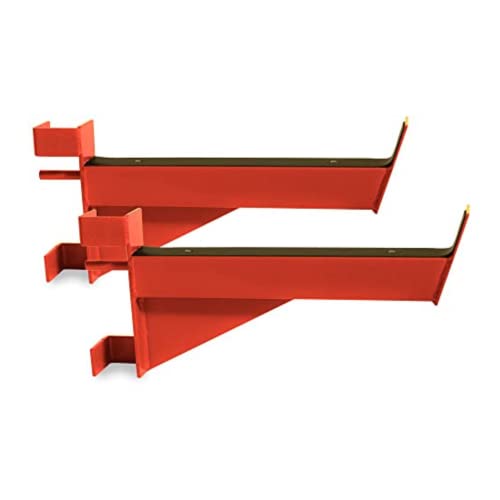


Three things separate a good pair of arms from a bad one: whether they fit your rack exactly, whether the load rating is clear about what it means, and whether the catch surface protects your bar instead of chewing the knurl. Everything below is sold as a pair, and every one of them will hold a failed squat if it is the right pair for your uprights.
At a glance
| Product | Standout feature | Price tier | Link |
|---|---|---|---|
| CAP Barbell Safety Catches / Spotter Arms | Purpose-built for CAP FM-905Q series racks, 3-sided welded face plate | Mid-range | |
| Mikolo Safety Catches, Spotter Arms | 800 lb rating and a UHMW pad at the lowest price here | Budget | |
| Kipika Safety Spotter Arms | Fits both 5/8 inch and 1 inch holes, 17.5 inch rubber pad | Mid-range | |
| Titan Fitness T-3 Series Spotter Arms | Longest catch at 20.5 inches, UHMW lined, quick-pin adapters | Premium | |
| EVERYMATE Safety Spotter Arms | Sleeve adapter lets one pin serve 5/8 inch and 1 inch racks | Mid-range | |
How to choose spotter arms
Measure twice: tube size and hole diameter
This is where most bad purchases happen. Spotter arms sleeve over or pin into your uprights, so two measurements govern everything: the outside dimension of the upright tube, and the diameter of the holes drilled through it. Common tube sizes are 2 by 2 inches, 2.36 by 2.36 inches (which is 60mm, a very common import size), and 3 by 3 inches on heavier racks. Hole diameters are usually 5/8 inch or 1 inch.
Get a tape measure and check both before ordering. A 2 by 2 arm on a 2.36 inch upright will rattle and sit crooked. A 1 inch pin will not enter a 5/8 inch hole at all. Some arms ship with a sleeve that adapts one pin to both hole sizes, which is a genuine convenience.
Proprietary arms versus universal ones
Several manufacturers build arms only for their own racks. They fit perfectly, the face plate matches the upright profile, and there is no guesswork. The catch is that they are useless if you change racks, and they are the only option if your rack has a non-standard profile. Universal arms sized to a common tube-and-hole combination are the flexible choice, and they usually cost less, but you own the responsibility of verifying fit.
Load rating: per arm, or per pair?
Read this number carefully, because manufacturers state it inconsistently. “800 lb capacity” can mean each arm holds 800, or the pair holds 800 between them. Titan is explicit that its figure is a combined rackable capacity. Kipika states its number per arm. Others simply give a number and leave you guessing.
The practical guidance is to take the lower interpretation as the truth and leave real margin. Your arms need to survive a bar dropped onto them from a failed rep, not gently lowered, and a dropped load spikes well above its static weight. If you squat heavy, arms rated near your working weight are not enough.
Catch length, and how deep you can set up
The arm has to be long enough that the bar lands on it, not past the end of it. Most arms here run 17 to 20 inches. A longer catch gives more room for a bar path that drifts, and more tolerance if you set up a little forward or back in the rack. It also sticks further into the room and is easier to walk into. If you bench inside the rack, the catch needs to reach past the widest part of your setup.
Padding, and what it protects
Steel on steel destroys knurling and makes a noise your household will remember. Rubber pads are soft, quiet, and cheap. UHMW plastic is harder, slicker, and lasts longer under repeated impact, making it the better material for heavy or frequent drops.
Welded end caps matter just as much. Without a lip at the end, a bar that lands off-center can roll straight off the arm, which is a worse outcome than no catch at all.
Arms, straps, or pin-pipe safeties
Spotter arms cantilever off the front uprights, which suits benching and lets you set up outside a shallow rack. Straps span a cage and are the gentlest catch, but they need four posts and they sag. Pin-and-pipe safeties are strongest, and also need a full cage. Arms are the only one of the three that works on a two-post or half rack.
CAP Barbell Safety Catches / Spotter Arms
The best-selling pair in this group by a distance, and the reason is simple: a lot of people own the rack these are built for. They fit CAP Barbell’s FM-905Q Color Series and the FM-CS7000F, and nothing else. That constraint is also the appeal. The face plate wraps three sides of the upright and is welded rather than bolted, so there is no slop and no measuring. You order them, they fit, you lift.
Construction is 10 and 11-gauge steel with a powder coat, rated to 500 pounds static, at 17.75 inches long and 8 inches tall. Height changes are a twist, pull, and reinsert. Rubber padding keeps the noise down and protects the bar finish, and welded end caps stop a bar rolling off the end.
- Pros: Exact fit with zero measuring if you own the matching CAP rack; three-sided welded face plate resists twisting; 10 and 11-gauge steel; rubber padding and welded end caps; tool-free height changes; the popular choice here by a wide margin.
- Cons: Fits two CAP rack models and nothing else, so worthless if you switch racks; 500 lb static rating is the joint lowest here; only a 30-day warranty; 8 inch height means the pair takes up more upright than some.
Best for: Owners of a CAP FM-905Q series or FM-CS7000F rack who want a rated fit.
Mikolo Safety Catches, Spotter Arms
The value play, and a strong one. It is the cheapest pair here while carrying the joint-highest rating at 800 pounds and using UHMW rather than rubber on the catch surface. That combination is unusual: UHMW normally appears on the expensive arms. It is 11-gauge steel under a scratch-resistant matte powder coat.
Fitment is 2 by 2 inch square tube with 1 inch holes, and it is designed around Mikolo’s own folding squat racks, so it is a perfect match there and a compatible one elsewhere if your measurements agree. Height changes take about five seconds: pick the hole, insert the pin, tighten. The UHMW pad sits on the barbell holder extension, smooth enough to take a dropped bar without marking it.
- Pros: Lowest price here with the joint-highest 800 lb rating; UHMW pad rather than rubber, which is the better material under repeated drops; 11-gauge steel; five-second height changes; fits any 2 by 2 rack with 1 inch holes, not just Mikolo’s.
- Cons: 1 inch holes only, so a 5/8 inch rack is out; the maker does not say whether 800 lb is per arm or per pair; single pin design has less anti-twist support than a wrap-around face plate; sells in much lower volume than the CAP.
Best for: A 2 by 2 inch rack with 1 inch holes where you want the highest rating for the least money.
Kipika Safety Spotter Arms
The flexible universal option. These fit 2 by 2 inch uprights with either 5/8 inch or 1 inch holes, which covers a large share of home racks and removes the most common ordering mistake. Kipika is also refreshingly direct about the limits, stating plainly that the arms are for that size and may not fit others, which is more accurate than most listings in this category.
Each arm is rated to 500 pounds, and Kipika says that per arm rather than per pair, so the working figure is better than it first appears. The catch carries a 17.5 inch reinforced rubber pad, long enough to cover a bar path that wanders, with welded end caps against roll-off. The lock design slides the pin through the upright and swings into place, so height changes need no tools.
- Pros: Fits both 5/8 inch and 1 inch holes, which few here do; rating stated per arm, so 500 is 500 on each side; long 17.5 inch reinforced pad; welded end caps; easy swing-lock height adjustment; powder coat over quality steel.
- Cons: Priciest of the universal 2 by 2 options; rubber pad rather than UHMW, so it will wear faster under heavy drops; 2 by 2 uprights only, no 3 by 3 version in this listing; 500 lb per arm is mid-pack.
Best for: Anyone with a 2 by 2 inch rack who is unsure whether their holes are 5/8 or 1 inch.
Titan Fitness T-3 Series Spotter Arms
The serious pair, priced accordingly. The headline is a 20.5 inch catch surface, the longest here by nearly three inches, lined with UHMW to protect the knurl on a heavy drop. Extra catch length is not a spec-sheet flourish: it is margin for a bar that comes down where you did not plan, and it is the feature you appreciate exactly once.
Titan quotes 800 pounds combined rackable capacity and says so explicitly, which is worth more than a bigger number stated vaguely. Construction is solid steel with reinforced welding, and quick-pin adapters make height changes fast between sets. They fit Titan’s T-3 Series racks and take any bar from standard to oversized. Like the CAP, this is a proprietary fit, and that is the price of the precision.
- Pros: 20.5 inch catch, the longest here, with real margin for a wandering bar; UHMW lining; capacity stated plainly as a combined figure; reinforced welding; quick-pin height changes; fits every bar size; Titan’s rack ecosystem is well supported.
- Cons: Roughly double the price of the universal options; T-3 Series racks only; 800 lb combined is 400 per arm, which is the lowest per-side figure here once you read it properly; longer arms intrude further into the room.
Best for: T-3 rack owners lifting heavy alone who want the longest, best-protected catch.
EVERYMATE Safety Spotter Arms
The clever detail here is the sleeve. A metal sleeve slips over a 5/8 inch pin to fill a 1 inch hole, so one product physically adapts to both common rack drillings rather than needing you to pick a version. For anyone who has measured a hole three times and still felt unsure, that is a real reduction in risk.
Each arm is 18.1 inches, rated to 550 pounds, with a 17.5 inch rubber pad and welded anti-roll end caps. A single locking design keeps operation simple. EVERYMATE describes the build as lightweight, which cuts both ways: easier to move and reposition, less reassuring under a heavy failed squat. The 550 lb figure sits sensibly between the 500 lb arms and the 800 lb claims, and reads like a number chosen for everyday training rather than a marketing ceiling.
- Pros: Sleeve adapter covers both 5/8 inch and 1 inch holes on one product; 18.1 inch arm is longer than most of the mid-pack; 17.5 inch rubber pad and welded end caps; simple single lock; light enough to move without effort.
- Cons: 550 lb rating is modest for a heavy squat with a dropped-load spike; lightweight build inspires less confidence; rubber rather than UHMW; 2 by 2 racks only; the least popular pick here by a wide margin.
Best for: Home gyms training at moderate loads where hole size is uncertain.
The verdict
Best Overall: CAP Barbell Safety Catches / Spotter Arms. It is the clear volume leader here, and that popularity comes from solving the hardest part of this purchase: fit. If your rack is a CAP FM-905Q series or FM-CS7000F, these bolt on with no measuring, no adapters, and no doubt, with a welded three-sided plate that will not twist. The one caveat is unavoidable and worth stating plainly: they fit those racks and nothing else. Confirm your model before ordering.
Best Value: Mikolo Safety Catches, Spotter Arms. The cheapest pair with the highest quoted rating and a UHMW catch surface, which is a combination the rest of this group does not offer. If your uprights are 2 by 2 inches with 1 inch holes, this is the most capability per pound spent.
Best Premium: Titan Fitness T-3 Series Spotter Arms. The longest catch, UHMW lining, reinforced welds, and a capacity figure the maker defines rather than implies. On a T-3 rack, lifting alone, the extra length is the reason to spend the money.
Common questions
How do I know which spotter arms fit my rack?
Measure the outside width of an upright tube and the diameter of one of the holes through it. Those two numbers, plus your rack’s brand and model, decide the answer. Typical uprights are 2 by 2 inches, 2.36 by 2.36 inches, or 3 by 3 inches, with 5/8 inch or 1 inch holes. If the listing does not state both numbers, take it as an unknown rather than a maybe.
Is an 800 lb rating enough if I squat 400?
Probably, but check what the number means first. If 800 is the combined figure, each arm carries roughly 400, and a bar dropped from lockout height lands with considerably more force than its static weight. Manufacturers rate for static load, not impact. Leaving a wide margin between your working weight and the quoted rating is ordinary sense in this category.
Can I use spotter arms for bench press as well as squats?
Yes, and it is one of their main advantages. Set them just below your chest at the bottom of the press so a failed rep lands on steel rather than your ribs. Check the arm is long enough to reach past your bench setup, and that the height holes give you a position close to your chest without touching it during a normal rep.
Do rubber pads or UHMW plastic protect a bar better?
UHMW is harder, slicker, and more durable under repeated impact, and it is what most heavy-duty arms use. Rubber is softer and often quieter, and it does the job at moderate loads, but it compresses and wears faster where a bar lands repeatedly. If you drop heavy loads often, favor UHMW. If noise is your main concern, rubber has an edge.
This article may contain affiliate links; see our Affiliate Disclosure.