A raised bed lives or dies on what you shovel into it. Fill it with dense garden dirt and your roots suffocate; fill it with a light, living blend and the same seeds turn into a jungle of tomatoes and greens.


You have two real paths: buy a ready-to-use raised bed mix and pour it in, or blend your own from a few components and save money on a big bed. This guide compares five picks covering both routes, so a first-time bed builder, a container gardener topping off pots, or a DIY blender chasing the perfect recipe can find what fits.
| Product | Standout feature | Price tier | Link |
|---|---|---|---|
| Miracle-Gro Organic | Popular OMRI-listed all-purpose mix | Budget | |
| Espoma Raised Bed Mix | Built for beds, with mycorrhizae | Mid-range | |
| FoxFarm Raised Bed Mix | Rich ready blend with earthworm castings | Premium | |
| Verdana Coco Coir | Compressed brick, peat alternative base | Mid-range | |
| Garden Magic Compost | Compost and manure for nutrition | Mid-range | |
How to fill a raised bed
Ready mix or blend your own
A ready-to-use raised bed mix is the fastest route: open the bag, pour, plant. It is the right call for a single bed or anyone who values simplicity over a few dollars saved. Blending your own makes sense once you are filling a large bed or several, because buying components separately in bulk usually costs less per cubic foot and lets you tune the blend. A classic homemade recipe is roughly equal parts nutrition, aeration, and a bulking base, which is why the components in this guide pair so naturally with the finished mixes.
The three jobs your soil must do
Good bed soil balances nutrition, moisture retention, and drainage. Compost and aged manure supply the nutrition and the living biology that feed plants over the season. Coconut coir or peat holds moisture so roots do not dry out between waterings, while also keeping the blend light. Coarser material and the structure of the mix provide drainage and air, so roots can breathe instead of drowning. A bag labeled for raised beds has already balanced these, whereas blending your own means making sure all three jobs are covered.
Work out how much you need
Raised bed soil is sold by volume, so measure your bed before you shop. Multiply length by width by depth in feet to get cubic feet: a common four-by-eight bed filled six inches deep needs about sixteen cubic feet. Ready mixes often come in one-and-a-half cubic foot bags, and a compressed coir brick expands to several times its packed size once hydrated, which makes it easy to store and haul. Knowing your number up front avoids the classic mistake of buying two bags for a bed that needed ten.
Organic and OMRI labels
If you grow food, the organic question is worth a glance. An OMRI listing means a product has been reviewed for use in organic growing, and several picks here carry it. Organic blends lean on natural inputs like earthworm castings, kelp, and mycorrhizal fungi rather than synthetic feed, which many vegetable gardeners prefer for both taste and soil health. It is a preference rather than a rule, but it is easy to honor when good organic options are this available.
Potting mix, garden soil, and raised bed mix are not the same
The bags sit side by side and the names blur, but they do different jobs. Potting mix is light and sterile, built for containers where drainage is everything and there is no ground underneath; it is superb in pots and expensive as bed fill. Garden soil is heavy, meant to be dug into existing ground, and it compacts badly in a bed. Raised bed mix sits between the two: light enough that roots breathe, substantial enough to hold moisture and nutrients across a whole season without drying out by lunchtime. A deep bed built entirely from potting mix drains so fast you water constantly, while one filled with garden soil sets like a brick. Reading the bag for its intended use, not just its brand, avoids both.
A simple recipe that works
If you are blending your own, a reliable starting point is roughly a third compost or aged manure for nutrition, a third coir or peat for moisture and lightness, and a third bulk material such as an existing mix or screened topsoil for body. Hydrate the coir first, then fold everything together on a tarp rather than in the bed. Precision is not required; the aim is a blend that holds together when squeezed but crumbles when poked. Err toward more compost in a hungry vegetable bed and more coir if your climate is hot and dry.
Miracle-Gro Organic Outdoor Potting Mix
This is the most popular soil in the group, and it is a genuinely versatile workhorse. It is an OMRI-listed organic mix built around responsibly sourced peat, with a quick-release natural fertilizer that feeds plants for up to a couple of months. Its real strength is flexibility: it is ideal for outdoor containers of every kind, and it is excellent for topping off a settled raised bed or blending into a homemade mix to lighten it. For a whole new bed you will need several bags, but as an all-purpose organic base it is hard to beat for the price.
Be realistic about the volume. One sixteen-quart bag fills roughly one twelve-inch pot, which puts a four-by-eight bed well into double figures of bags, and at that scale a purpose-built bed mix or a homemade blend costs less per cubic foot. Where it shines is everything else: containers of flowers, herbs, and vegetables, refreshing a settled bed, and lightening a blend that came out too heavy. Its peat is sourced from certified producers, which is worth noting if that matters to you.
- OMRI-listed organic with a natural starter fertilizer
- Feeds plants for up to two months
- Great for containers and topping raised beds
- Widely trusted and easy to find at a low price
- Sold in smaller bags, so a full bed takes several
- A potting mix, not a purpose-built bed fill
Best for: container gardeners and anyone topping up or lightening an existing bed with a trusted organic mix.
Espoma Organic Raised Bed Mix
The Espoma is purpose-built for exactly this job, and it shows. It is a rich all-natural blend enriched with earthworm castings, alfalfa meal, kelp meal, and feather meal, plus the brand’s Myco-tone mix of beneficial mycorrhizae that help roots take up water and nutrients. It arrives ready to use in a one-and-a-half cubic foot bag, so you can fill a new bed or refresh an existing one without mixing anything yourself. For growing vegetables and herbs organically, it is the kind of living soil that gets a bed off to a strong start.
The mycorrhizae deserve a word, because they are not marketing dust. These are fungi that colonize roots and effectively extend their reach, trading water and nutrients they gather for sugars from the plant, and a mix that arrives with them already present gives a new bed a head start over sterile soil that has to be colonized over time. The rest of the ingredient list reads like a slow-release pantry: alfalfa and feather meal break down gradually rather than dumping nutrients at once, which suits a season-long vegetable crop. It works as the whole fill for a new bed or as an enrichment for an existing one, and it needs no amending.
- Formulated specifically for raised beds
- Enriched with castings, kelp, and feather meal
- Includes beneficial mycorrhizae for root health
- Ready to use straight from the bag
- Costs more per bag than all-purpose mixes
- Large beds still need several bags
Best for: vegetable and herb growers filling a new organic bed who want a living, ready-made soil.
FoxFarm Raised Bed Planting Mix
FoxFarm has a devoted following, and its raised bed mix is the premium ready blend here. It is a rich, ready-to-use formula built on aged forest products and sphagnum peat moss, with fertility from earthworm castings, oyster shell, and dolomite lime, so it balances pH while it feeds. The blend is tuned to retain moisture around roots while still draining freely, and it needs no mixing or amending: pour it in and plant. For gardeners who want a lush, nutrient-dense start for vegetables, flowers, fruits, and herbs, it is a satisfying step up.
Two ingredients explain the blend’s character. Oyster shell and dolomite lime both push against acidity, which matters because peat-based mixes trend acidic and most vegetables prefer something closer to neutral, so the mix arrives roughly where your crops want it. Aged forest products make up the bulk, giving structure that resists compacting as the season goes on.
- Rich, ready-to-use blend for beds and containers
- Earthworm castings, oyster shell, and dolomite lime
- Balances moisture retention with good drainage
- No mixing or extra amendments needed
- Among the pricier options here
- Nutrient-dense blends can be strong for tender seedlings
Best for: gardeners who want a premium, nutrient-rich ready mix and are happy to pay for it.
Verdana Coco Coir Brick
The Verdana brick is the component to reach for when you are blending your own soil. It is compressed coconut coir that expands to around seventy-two quarts, roughly two-and-a-half cubic feet, once you add water, so a compact block replaces a bulky bag of loose material and stores easily. As a renewable peat alternative, coir holds moisture while keeping the blend light and airy, improving structure without going heavy or compacted. It is low in salt and easy to use: soak, fluff, and mix into your compost and base. On its own it is not a complete soil, but as the moisture-and-aeration backbone of a DIY mix it is excellent.
The low EC and low salt claim is the specification that matters, and it is worth knowing why. Coir comes from coconut husks that have often been soaked in salty water, and poorly processed coir carries that salt into your bed where it can stunt plants. Buying coir described as low salt and low EC, which is a measure of dissolved salts, avoids a problem that is invisible until your seedlings sulk. Rehydrating is simple: put the brick in a large tub, add water gradually, and break it up by hand as it swells. Storage is the underrated benefit, since one small block sits on a shelf where the equivalent loose volume would need most of a garage corner.
- Compact brick expands to a large volume of coir
- Renewable alternative to peat moss
- Retains moisture while improving aeration
- Low salt and easy to store and rehydrate
- A component, not a stand-alone soil
- Needs water and mixing before use
Best for: DIY blenders who want a light, moisture-holding base to combine with compost.
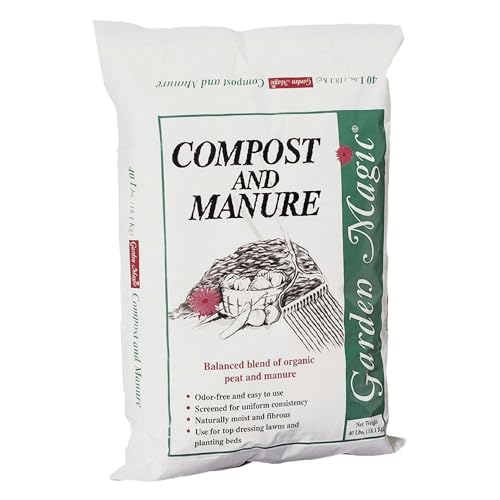
Garden Magic Compost and Manure Blend
If the coir is the backbone of a homemade mix, this compost and manure blend is the nutrition. It combines odor-free composted reed sedge peat with composted animal manure, delivering the nutrients and biology that a bed needs to feed plants through the season. It arrives ready to use and is designed to enrich lawns and raised beds alike, so you can fold it into a coir base, layer it into an existing bed, or use it to revive tired soil. Each bag covers a modest volume, which suits topping up and amending more than filling a large bed alone.
The word composted is the important one on this bag. Fresh manure is too strong for a growing bed and can burn roots, while composted manure has already broken down into a stable, odor-free material that releases nutrients gradually, which is why this blend can go straight onto a bed. Because a forty-pound bag covers roughly three-quarters of a cubic foot, take it as the nutrition component of a blend or a yearly top dressing rather than the bulk fill.
- Nutrient-rich compost and aged manure blend
- Odor-free and ready to use
- Great for amending beds and building DIY mixes
- Supports vegetables, flowers, and lawns
- Covers a small volume per bag
- Too rich to use as the sole soil for seedlings
Best for: gardeners enriching a bed or supplying the nutrition side of a homemade blend.
Verdict
Best Overall: the Miracle-Gro Organic mix is the most popular for good reason. It is a trusted, OMRI-listed organic soil that shines in containers and for topping and lightening beds, and it is the flexible, affordable base most gardeners will use somewhere.
Best for filling a new bed: the Espoma Organic Raised Bed Mix is purpose-built and ready to use, with a living blend of castings, kelp, and mycorrhizae that gives vegetables a strong start. The FoxFarm mix is the premium upgrade for a richer ready blend.
Best for DIY blends: pair the Verdana coco coir as your light, moisture-holding base with the Garden Magic compost and manure for nutrition, and you have the makings of a big-bed mix for less per cubic foot.
Frequently asked questions
Can I fill a raised bed with regular garden soil? Not on its own. Plain ground soil is dense, drains poorly in a bed, and compacts around roots. Use a raised bed or potting mix, or blend garden soil with plenty of compost and coir to lighten it and add nutrition.
How much soil do I need? Multiply the bed’s length, width, and depth in feet. A four-by-eight bed at six inches deep needs about sixteen cubic feet. Buy to that number so you are not left short after opening a couple of bags.
Is coco coir better than peat? Coir is a renewable byproduct of coconut processing and rehydrates from a compact brick, while peat is harvested from bogs. Both retain moisture and lighten soil well; many gardeners choose coir for its renewability and easy storage.
Do I need to refresh the soil each season? Beds settle and nutrients deplete over a season, so top up with fresh mix and work in compost or aged manure before replanting. That yearly refresh keeps the soil light and fertile instead of tired and sunken.
Is it cheaper to blend my own? For one small bed, no; the ready mixes are simpler and the saving is minor. Once you are filling a large bed or several, buying components such as coir and compost separately usually costs less per cubic foot and lets you tune the blend to your climate.
Can I use potting mix to fill a whole raised bed? You can, but it is expensive and drains very fast in a deep bed, so you would water constantly. Potting mix is best in containers or blended in to lighten heavier material. For filling a bed, use a raised bed mix or a homemade blend with more body.
This article may contain affiliate links; see our Affiliate Disclosure.