Somewhere around mile fourteen, on the third climb of the day, the pack stops being equipment and becomes a negotiation. Every ounce you shaved at home is a rep your shoulders do not have to do out here, which is why “ultralight” has become the most abused word in the category, stamped on 75-liter expedition haulers and 1.8-pound frameless sacks alike.



The packs below run from a frameless 1.94-pound shell built around a sleeping pad to a framed 48-liter carry with four inches of torso adjustment, and the real spread between them is about a pound. That gap buys structure, load transfer, and comfort, which is a trade worth making for some trips and not others. Whether you are counting grams for a long trail, planning a first weekend out, or want one pack that handles both, the picks lead with the best seller.
| Pack | Standout features | Price | Link |
|---|---|---|---|
| WoneNice 50L (45+5) | 50L, sleeping bag compartment, rain cover included | Budget | |
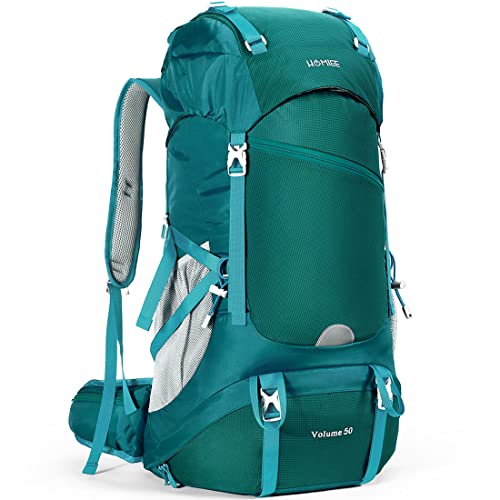
| HOMIEE 50L | 1.8 lb, 420D nylon, YKK zippers, full-contact suspension | Budget | |
| Acqorad QiDian Pro UL 46+10L | 1.94 lb, frameless UHMWPE, sleeping pad back panel | Mid-range | |
| Naturehike 65L | 2.56 lb, 60+5L, 15kg load rating, rain cover, shoe pocket | Mid-range | |
| Osprey Exos 48L | 2.77 lb, 4 in of torso adjustment, removable floating lid | Premium | |
How to choose a lightweight backpacking pack
Pack weight is the easiest number to compare and the worst one to shop on alone. A pack that saves you a pound and then grinds a hot spot into your hip for four days has cost you more than it saved.
What “ultralight” actually means here
Nothing, officially. There is no standard behind the word, and manufacturers apply it freely. Among the packs here, stated weights run from 1.8 pounds to 2.86 pounds, and packs at both ends carry the same “ultralight” label on the box. Some listings publish a weight to two decimal places; others do not publish one at all, which tells you something in itself. The practical rule: ignore the adjective, find the number, and if there is no number, assume the pack is heavier than the ones that brag. Under about 2 pounds is genuinely light for a 45 to 50 liter pack. Around 2.5 to 3 pounds is normal for a framed pack and is not a failure.
Frame or no frame, the real fork in the road
This decision shapes everything else. An internal frame, whether a molded sheet or a removable aluminum stay, transfers weight off your shoulders onto your hips, which is what makes a heavy load bearable. Removing it is the single biggest weight saving available, and it is why frameless packs exist. The catch is that a frameless pack has no structure of its own, so it relies on how you pack it, often using a folded sleeping pad against your back as a virtual frame. Load it well and it is superb; load it carelessly and it slumps into a sack of corners. Frameless rewards discipline and a base weight under roughly 20 to 25 pounds. Framed packs forgive everything else.
Liters, and being clear about how much you carry
Capacity is where most people overbuy. Forty-five to 50 liters covers a weekend comfortably and, with compact gear, far longer trips too. Sixty liters and up buys room for a bulky sleeping bag, four-season layers, or shared group kit. The trap is that a bigger pack invites you to fill it, and the fill weighs more than the pack ever did. Roll-top designs hedge this well, expanding and compressing so one pack handles an overnight and a five-day trip without dead volume.
Fit beats every spec on the page
Torso length, not height, determines whether a pack works, which is why a pack a friend loves can be unbearable on you. Measure from the bony bump at the base of your neck to the point level with the top of your hip bones. Packs with adjustable suspension or multiple frame sizes accommodate a range; fixed-length packs do not, and no amount of strap fiddling fixes a torso mismatch. Some packs sell in a specific gendered or extended fit, which is hip and shoulder geometry rather than marketing, so read which version you are adding to the cart.
Fabric, deniers, and the UHMWPE question
Most packs here use 420D nylon, a sensible middle ground that resists tears without weighing much. The outlier is UHMWPE, an ultra-high-molecular-weight polyethylene fiber blended into the weave, which delivers very high tensile strength for its weight and lets a maker build a lighter pack without making it flimsy. It costs more. Higher denier means thicker yarn and more grams; lower means lighter and more delicate. A pack dragged over granite deserves the tougher weave.
Rain covers, and what water resistance really buys
Nearly every pack here is water resistant rather than waterproof, and several include a rain cover. That distinction matters in sustained rain. A cover sheds a shower and stops the fabric wetting out, but water still runs down your neck into the top, and the straps stay soaked. Take the cover as a first line and put anything that must stay dry, sleeping bag and insulation especially, inside a liner bag.
WoneNice 50L (45+5) Waterproof Hiking Backpack
The best seller of this group is the pack most people actually buy for a first multi-day trip, and the reasoning is not hard to follow: 50 liters of properly organized space, a dedicated sleeping bag compartment at the base, two zipped front pockets, mesh side pockets, and a rain cover included, at a price that leaves budget for the gear going inside it. The polyester and nylon shell is water and tear resistant, the S-curve shoulder straps are padded and widened, and the elastic mesh back panel keeps some air moving. One thing to be straight about: WoneNice does not publish a weight for this pack, and packs that stay quiet about weight are rarely the lightest. Buy it for capacity and value, not for grams.
Pros:
- 50L with a separate sleeping bag compartment and clear internal layout
- Rain cover included in the box
- Adjustable chest and waist belts to shift load off the shoulders
- Padded S-type straps with a ventilated elastic back panel
- The most popular pack here, at a budget price
Cons:
- No published weight, which undercuts it for gram-counters
- No internal frame or torso adjustment specified
Best for: a first 50L pack, or anyone who wants proven capacity and a rain cover without overspending.
HOMIEE 50L Lightweight Hiking Backpack
The quiet surprise of the group: 1.8 pounds, 50 liters, and a budget price, a combination the premium brands do not offer. HOMIEE publishes the number and backs it with 420D waterproof nylon and YKK zippers rather than generic hardware. The suspension sits flat against your back, with two mesh pads either side of the spine forming a ventilation channel. Practical touches run deep: a U-shaped two-way opening, a base section with wet and dry compartments, a hydration hook, hip belt pockets, a whistle, and reflective webbing. It is airline carry-on sized, a real convenience for flying to a trailhead.
Pros:
- 1.8 pounds for a 50L pack, the lightest here by stated weight
- 420D waterproof nylon with YKK zippers
- Ventilated full-contact back panel with twin spine-side pads
- U-shaped opening, separate wet and dry base sections, hydration hook
- Rain cover, whistle, reflective webbing, and hip belt pockets included
Cons:
- No frame or torso adjustment, so heavy loads sit more on the shoulders
- Far less widely bought than the leaders here
Best for: the lightest genuine multi-day pack you can get without leaving the budget tier.
Acqorad QiDian Pro UL 46+10L Frameless Backpack
The purist’s pack, and the only one here built on ultralight logic from the ground up. Acqorad deleted the frame entirely and had the sleeping pad do its job: the pad slides into a dedicated compartment and becomes the back panel, which is elegant, saves real weight, and forces you to pack deliberately. The shell is UHMWPE blended with nylon into a tear-resistant check weave, a fiber with several times the tensile strength of steel wire by weight, so the 1.94-pound figure does not come from thin fabric. A roll-top runs capacity from 40 to 56 liters, and the storage is thought through, with a front kangaroo pocket for a rain shell or cookware, side bottle pockets, a belt pouch, and an internal valuables pocket. Sizing is specific: it fits heights from roughly 160 to 190cm with a waist over 79cm.
Pros:
- 1.94 lb with a UHMWPE blend shell, strength without the grams
- Sleeping pad compartment doubles as the back panel, no frame needed
- Roll-top adjusts from about 40L to 56L
- Front kangaroo pocket, belt pouch, side and internal pockets
- Tear-resistant check weave built for abrasion
Cons:
- Frameless carry punishes sloppy packing and heavy loads
- Fit range is narrow and stated in specific height and waist terms
Best for: low base weights and hikers who pack with intent and want the frame gone.
Naturehike 65L Internal Frame Hiking Backpack
When the trip involves a bulky sleeping bag, four-season layers, or your share of a group tent, liters start to matter more than grams, and this is where 2.56 pounds buys you 65 of them. The load rating is stated plainly at 15kg, the 420D nylon shell resists tears and sheds light rain, and a rain cover and hydration compatibility are built in. The back and shoulder padding is judged rather than merely thick, with a breathable mesh structure that stops the panel turning swampy on a long climb. Compression straps on the top and both sides lash trekking poles and a sleeping bag, and a separate rear pocket takes muddy shoes, which is a genuinely useful idea for travel as much as trail.
Pros:
- 2.56 lb for 60+5L, a reasonable weight for the volume
- Stated 15kg load capacity with an ergonomic padded back
- 420D nylon, water repellent, with rain cover and hydration support
- Compression straps for poles and sleeping bag; separate shoe pocket
- Breathable mesh back structure for long carries
Cons:
- Water repellent rather than waterproof, as the listing states
- 65L is more pack than a weekend needs, and volume invites overpacking
Best for: longer trips, bulkier kit, or carrying a share of group gear.
Osprey Exos 48L Ultralight Backpacking Pack
The premium pick spends its money where it shows up on day four. The Airspeed suspension uses an injection-molded ladder system giving four inches of torso adjustment, the difference between a pack that nearly fits and one that disappears on your back. At 2.77 pounds it is not the lightest here and is not trying to be: the backpanel mesh and body fabrics are deliberately beefed up, on the theory that a pack which fails at 1.9 pounds saved you nothing. The details are mature, with two hip belt pockets, an internal hydration sleeve with a center hose port, and a removable floating lid. Sold here in a men’s S/M fit, so check that against your torso.
Pros:
- Four inches of torso adjustment via the Airspeed ladder system
- Reinforced backpanel mesh and body fabrics for durability
- Two hip belt pockets for on-the-move access
- Internal hydration sleeve with center back hose port
- Removable floating lid with top and under-lid pockets
Cons:
- Comfortably the most expensive pack here
- 2.77 lb, heavier than two budget packs in this group
Best for: long trails where fit, load transfer and durability outrank the weight number.
The verdict
Best overall
The WoneNice 50L is the best seller here and the most broadly sensible buy. Fifty liters, a sleeping bag compartment, a rain cover in the box and adjustable belts cover a weekend or a week for most people, at a price that does not compete with the gear budget. If a published weight is your first filter, look at the HOMIEE instead. Check price on Amazon
Best value
The HOMIEE 50L is the pack that makes the least sense on paper and the most sense in your hand: 1.8 pounds, 50 liters, YKK zippers, a ventilated back panel, and a budget price. It is the only pack here that is both genuinely light and genuinely cheap, and the compromise is structural, since there is no frame to lean on when the load climbs. Check price on Amazon
Best premium
The Osprey Exos 48L earns its price through fit and load transfer rather than a low number: four inches of torso adjustment, reinforced fabrics, and details built for consecutive long days. For the true ultralight approach at a lower price, the Acqorad QiDian Pro is the frameless alternative, at 1.94 pounds with a UHMWPE shell. Check price on Amazon
Frequently asked questions
What actually counts as an ultralight pack?
There is no official definition, which is why the label appears on packs weighing anywhere from under 2 pounds to well over 3. As a working guide, a 45 to 50 liter pack under about 2 pounds is genuinely light, 2 to 2.5 pounds is light for a framed pack, and anything approaching 3 pounds is a standard pack that happens to use the word. Judge by the published figure, and take a missing figure as a mild warning.
Do I need an internal frame?
It depends on how much you carry, not how far you walk. Once a load passes roughly 20 to 25 pounds, a frame transfers weight to your hips and the difference is enormous over consecutive days. Below that, a well-packed frameless pack carries comfortably and saves you real weight. Beginners usually carry more than they expect, so a frame is the safer first choice; ultralight hikers with a low base weight are the ones who benefit from deleting it.
How many liters do I need for a multi-day trip?
Forty-five to 50 liters handles a weekend for nearly everyone and stretches to a week for people with compact gear and a disciplined kit list. Push to 60 or 65 liters if you carry a bulky synthetic sleeping bag, cold-weather layers, or shared group equipment. Roll-top packs blur the question usefully by expanding and compressing across a wide range. Remember the trap: extra volume gets filled, and what you put in weighs more than the pack.
Why do published weights vary so much between similar packs?
Partly real engineering, partly what the maker chose to measure. Removing the frame, using a stronger fabric such as a UHMWPE blend, and stripping the lid all cut genuine weight. But some listings quote the pack without its rain cover and lid, and some state no weight at all. Be suspicious of a pack that calls itself ultralight without printing a number anywhere.
Is an included rain cover enough to keep my gear dry?
Not on its own, in sustained rain. A cover sheds a passing shower well and stops the fabric soaking up water and gaining weight, but rain still finds the top opening and the straps stay wet. The usual approach is to use the cover plus a liner, a dry bag or even a heavy-duty bin liner, around anything that ruins your trip if it gets wet, which mainly means your sleeping bag and insulation.
This article may contain affiliate links; see our Affiliate Disclosure.