There is a sound that ruins a mattress protector, and everyone who has bought a cheap one knows it: that plasticky crackle every time you roll over, like sleeping on a crisp packet. Then there is the other failure, the silent one, where you strip the bed after a spill and find the stain went straight through anyway.


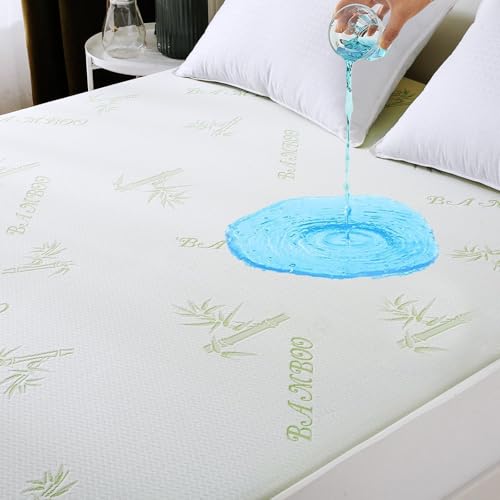
A protector has to do three things at once that pull against each other: block liquid completely, stay silent under a moving body, and let enough heat and vapor escape that you do not wake up damp. The membrane material decides all three. Below are five that handle the balance in different ways, from a thin recycled-polyester barrier to a quilted pad and a bamboo-faced cover.
At a glance
| Product | Standout feature | Price tier | Link |
|---|---|---|---|
| BEDLORE Noiseless Quilted Protector | Best seller by a wide margin; quilted pad, TPU layer, 18-inch pockets | Mid-range | |
| Utopia Bedding Terry Protector | Absorbent 200 GSM terry surface over TPU backing | Budget | |
| PlushDeluxe Premium Bamboo | Bamboo viscose face that wicks moisture; silent, any depth to 18 inches | Premium | |
| Amazon Basics Waterproof Protector | Bed bug proof barrier; 85% recycled polyester; cheapest here | Budget | |
| 3D Air Fabric Cooling Protector | Widest pocket range, 8 to 21 inches; rayon and polyester blend | Mid-range | |
How to choose a waterproof mattress protector
The membrane is the whole product
Under the nice fabric there is a thin film, and that film is what you are actually buying. The cheap approach is a vinyl or PVC sheet: genuinely waterproof, completely airtight, and the source of both the crackle and the sweaty back. The better approach is a TPU or polyurethane membrane, which can be made far thinner, bends silently with the fabric instead of against it, and passes water vapor while blocking liquid water. Every protector here uses the polyurethane family rather than vinyl, and that single fact is why none of them should crackle.
Noiseless is a claim you can sanity-check
Listings all say silent. The tell is in the construction. A membrane laminated to a knit or terry face, with no loose plastic layer to buckle, stays quiet. A membrane that is effectively a separate sheet sandwiched inside will eventually announce itself. Quilting helps too, because it locks the layers together so nothing shifts and rustles. Worth knowing: a protector that arrives slightly stiff usually softens after the first wash.
Protector or encasement
A protector is a fitted sheet with a skirt: it covers the top and sides and leaves the bottom open. That handles spills, sweat and accidents, which is what most people need. An encasement zips around all six faces of the mattress. If your concern is dust mites or bed bugs rather than liquid, the encasement is the format that actually works, since a five-sided protector leaves the underside exposed. One protector here advertises a bed bug proof barrier in a fitted format, so read that claim as barrier fabric rather than full enclosure.
Quilted pad or thin barrier
A quilted protector adds a layer of filling. You get a little cushioning, a softer hand, and absorbency that catches a spill before it can pool and run off the edge. The cost is bulk and longer drying. A thin barrier protector adds essentially nothing to the feel of the bed, which is exactly right if you have already spent money on a mattress or topper and do not want it muffled. Neither is better; they are different jobs.
Pocket depth, measured properly
Measure the mattress and add any topper, then check the pocket range. The protectors here span 15 inches, 18 inches and one that stretches from 8 to 21 inches. Too shallow and the corners pop off at 3am. Too deep on a slim mattress and the skirt bunches under the sheet. If you use a thick topper, that extra depth is not optional.
Washing it without wrecking it
This is where most protectors die, and it is avoidable. Skip fabric softener entirely: it leaves a waxy film that clogs the breathable membrane and can carry liquid across it. Keep the dryer on low, because heat delaminates the film from the fabric and that is the end of the waterproofing. No bleach, no ironing. Wash cold or warm on a gentle cycle and the barrier survives years of laundering.
BEDLORE Noiseless Quilted Mattress Protector
The runaway best seller of this group, and it is the quilted-pad interpretation of the job rather than the thin-film one. A classic quilted face locks the filling in place so it cannot migrate into one corner, which also keeps the layers from shifting and rustling. Underneath sits a TPU layer that blocks liquid outright. The 360-degree elastic skirt takes mattresses from 6 to 18 inches deep, so it suits a slim guest bed and a pillowtop equally. Machine washable, tumble dry low, no ironing or bleach. It is the closest thing here to a default answer: a bit of comfort, full protection, and silence.
Pros
- By far the best-selling protector in this comparison
- Quilted construction locks filling in place and keeps it quiet
- TPU layer blocks liquids completely
- 360-degree elastic skirt fits 6 to 18 inch mattresses
- Adds a little cushioning and helps even out temperature
- Machine washable and dirt-resistant
Cons
- Quilting adds bulk if you want the mattress feel untouched
- Takes longer to dry than a thin barrier protector
Best for: almost anyone; particularly households where the bed sees spills, kids or pets and a bit of padding is welcome.
Utopia Bedding Terry Mattress Protector
Terry is the smart choice for anyone dealing with actual liquid rather than the theoretical risk of it. The 200 GSM looped surface drinks a spill on contact instead of letting it sheet across a smooth face and run off the side onto the bed frame, and the TPU backing underneath stops any of it reaching the mattress. It fits as a normal fitted sheet with all-round elastic and deep 15-inch pockets, with professionally turned hems that survive repeated washing. Care instructions are the standard membrane rules: cold or warm gentle cycle, tumble low, and no fabric softener.
Pros
- Absorbent terry surface catches spills rather than shedding them
- TPU backing resists leakage through to the mattress
- Fitted style with all-round elastic and 15-inch pockets
- Turned hems and strong seam construction
- Among the cheapest options here
Cons
- Terry has a towel-like hand some people dislike under a sheet
- 15-inch pockets are the shallowest of this group
- Absorbency means it holds water and takes longer to dry
Best for: bedwetting years, older sleepers, sickbeds, and anywhere a spill needs catching rather than deflecting.
PlushDeluxe Premium Bamboo Mattress Protector
The one aimed squarely at hot sleepers. The face is bamboo viscose, a fabric that wicks moisture off the skin and moves it outward rather than holding it against you, which is the practical counter to the main complaint about every waterproof protector ever made. The membrane still resists spills and bodily fluids completely, and PlushDeluxe is emphatic about the silence: no crinkling. It suits memory foam, latex and sprung mattresses alike, measures 60 by 80 inches in queen, and fits any depth up to 18 inches. The most expensive protector here, and the reason to pay it is temperature, not toughness.
Pros
- Bamboo viscose face wicks moisture and helps regulate temperature
- Ultra-soft, breathable membrane with no crinkling sound
- Fully resists spills and bodily fluids
- Works with memory foam, latex or spring mattresses
- Fits any mattress depth up to 18 inches
Cons
- Priciest option in this comparison
- Viscose face needs gentle laundering to keep its softness
- No quilted padding, so it adds no cushioning
Best for: hot sleepers, and anyone who has abandoned a protector because it slept warm.
Amazon Basics Waterproof Mattress Protector
The unfussy barrier. Flexible polyester with a polyurethane backing, no quilting, no padding, nothing to notice once the sheet is on, and it claims a bed bug proof barrier alongside the waterproofing. The elastic band is beefed up to grip all four corners, and the pocket runs to 18 inches so it clears most mattresses without a fight. It dries quickly, which is the underrated advantage of a thin protector when something happens at 2am and the bed needs remaking before morning. It also uses 85% recycled post-consumer polyester certified to the Global Recycled Standard, and it is the cheapest thing in this comparison.
Pros
- Thin and silent; does not change how the mattress feels
- Waterproof and bed bug proof barrier
- Deep 18-inch pockets with reinforced elastic
- Quick-drying, and keeps its waterproofing wash after wash
- 85% GRS certified recycled polyester; lowest price here
Cons
- Polyester face lacks the softness of bamboo or terry
- No absorbency, so a large spill can run off the sides
- Fitted format leaves the mattress underside uncovered
Best for: guest rooms, kids’ rooms, and anyone protecting several beds without spending much per bed.
3D Air Fabric Cooling Mattress Protector
This one solves the problem nobody thinks about until their protector will not stay on: depth. The stretchable pockets span 8 to 21 inches, the widest range here by some distance, which covers a thin bunk mattress and a tall pillowtop with a memory foam topper on it. The face blends 40% rayon from bamboo with 60% polyester for a cool touch that spreads heat rather than trapping it, over an upgraded TPU membrane that handles sweat, spills and stains. The viscose content is also what keeps it quiet, since there is no loose plastic layer to buckle when you move.
Pros
- 8 to 21 inch stretch pockets, the widest fit range here
- Rayon and polyester blend gives a cool, soft touch
- Upgraded TPU membrane against sweat, spills and stains
- Silent in use, with no plastic-sheet noise
- Suits memory foam, latex and sprung mattresses
Cons
- Mostly polyester, so less breathable than a full bamboo face
- Needs mild detergent and low drying to protect the membrane
- No padding or absorbent layer
Best for: deep mattresses, thick toppers, and anyone whose last protector kept pinging off the corners.
The verdict
Best overall: BEDLORE Noiseless Quilted Protector. It outsells everything else here by a distance, and the construction explains why: quilting that stops the layers shifting and rustling, a TPU layer that blocks liquid outright, a skirt that grips from 6 to 18 inches, and a bit of padding thrown in. Silent, waterproof, comfortable, washable. That is the entire brief, met.
Best value: Amazon Basics Waterproof Protector. The cheapest option, and it gives up nothing that matters: proper polyurethane backing, 18-inch pockets, quick drying, plus a bed bug barrier. If you are covering a guest bed or three, buy these. The Utopia Bedding terry protector costs about the same and is the better call if real spills are likely.
Best premium: PlushDeluxe Premium Bamboo. Buy it for one reason: it sleeps cooler than the rest. If previous protectors have left you waking up warm and damp, the bamboo viscose face is the fix, and it stays completely silent doing it.
FAQ
Will a waterproof protector make the bed sleep hot?
Any waterproof layer reduces breathability to some degree, since blocking liquid means restricting airflow. Modern TPU and polyurethane membranes pass water vapor and are a long way from the old vinyl sheets, and the face fabric does the rest of the work. A bamboo viscose or rayon-blend face wicks moisture outward and sleeps noticeably cooler than plain polyester.
Why does my protector crackle, and can I stop it?
Crackling comes from a loose plastic film buckling as you move, typical of vinyl or PVC sheeting. You cannot fix it; you replace it. A membrane laminated to a knit or terry face, or locked down by quilting, has nothing to buckle and stays quiet. Every protector in this comparison uses the polyurethane family rather than vinyl.
Do I need a protector or a full encasement?
For spills, sweat and accidents, a fitted protector is enough and far easier to strip and wash. For dust mites or bed bugs, you want a six-sided zippered encasement, because a fitted protector leaves the underside and the bottom edges open. Buy for the problem you actually have.
How do I wash it without ruining the waterproofing?
Cold or warm water, gentle cycle, mild detergent, tumble dry on low. Never use fabric softener, which leaves a film that clogs the breathable membrane. No bleach and no ironing, and keep it away from high dryer heat, which separates the film from the fabric and permanently ends the waterproofing.
How deep a pocket do I need?
Measure the mattress, then add any topper you use, and buy a pocket that comfortably exceeds the total. The options here run to 15 or 18 inches, with one stretching from 8 to 21 inches. Corners that pop off in the night are almost always a pocket-depth problem rather than a defect.
This article may contain affiliate links; see our Affiliate Disclosure.