Somewhere around the third hour, a normal office chair stops being furniture and becomes a mold. A wobble stool takes that option away: it never lets you settle, because it never quite stops moving underneath you.

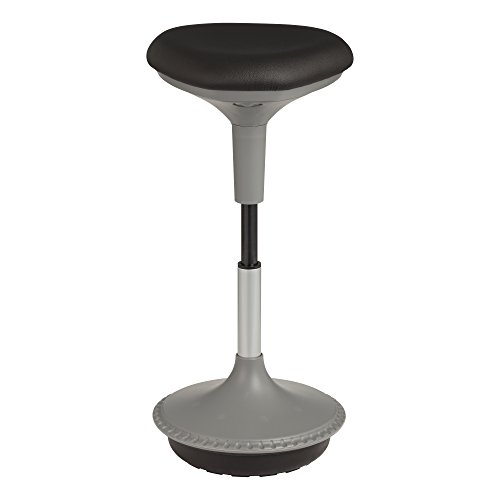
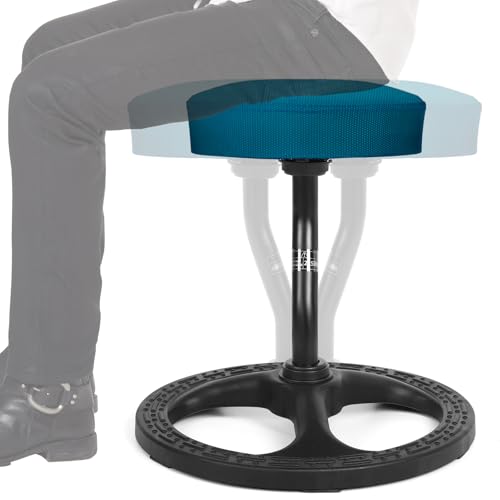


A wobble stool is a seat on a curved or pivoting base, with no back to lean on, so staying upright is a small continuous job rather than something the furniture does for you. What separates a good one is fair height range, a weight rating that matches the person on it, and enough cushion that the tailbone survives. The stools below run from a child’s homework desk to a standing desk perch, and the specifications tell you which is which far better than the marketing does.
At a glance
| Product | Standout features | Price tier | Link |
|---|---|---|---|
| Storex Active Tilt Stool | 12 to 24 inch height in 2-inch steps; carry handles; made in North America | Budget | |
| Learniture Active Learning Stool | Gas lift 18.5 to 28 inches; 265 lb rating; wipe-clean vinyl seat | Premium | |
| Upaloop Wobble Stool | Washable seat cover; 360-degree rotation; 225 lb rating; 5 rubber stabilizers | Mid-range | |
| GoSports 18 Inch Wobble Chair | Built for ages 8 to 12; textured footrest; 120 lb limit; no-tool assembly | Budget | |
| ERGO COLLECT Wobble Stool | 440 lb rating; 19.7 to 27.5 inches; 2.4 inch cushion; 15-degree pivot | Premium | |
How to choose a wobble stool
What these actually do
Every listing in this category promises core strength, better posture and sharper focus. Take those as manufacturer claims, because that is what they are. The effect you can rely on is simpler and still worth having: a backless seat on an unstable base makes you shift position constantly, and it removes the slouch, because there is nothing behind you to slouch into. Frequent small movement and an upright pelvis are genuinely better than three still hours in a recliner. Muscle-building is a stretch. Buy one to stop sitting like a statue, not to replace the gym.
Height range decides everything
This is the specification that makes a stool right or useless, and it varies enormously here, from 12 inches at the bottom to 28 at the top. Roughly: a child’s desk wants a seat around 12 to 18 inches, a standard adult desk wants about 17 to 22, a counter or low standing desk wants 24 to 28, and a full standing desk wants more than anything on this page. Measure from the floor to the underside of your desk before you shop. Ignore the phrase “standing desk” in a product name if the numbers underneath it stop at 24 inches.
Weight rating, and who the stool is for
Ratings in this group span 120 lb to 440 lb, which tells you these are not the same product wearing different colors. A stool rated for 120 lb is a child’s chair, whatever else the listing says about focus and posture. A 440 lb rating means the engineering has room to spare for an adult who leans hard into the tilt. Check this number before the color.
Tilt, rock, or swivel
Three different motions get sold as “wobble”. A pivoting base tilts in any direction and is the most active and least restful. A curved base rocks gently, mostly forwards and back, and is much calmer. A swivel lets the seat spin without tilting at all. Some stools do two of the three. More motion means more movement and less ability to forget the chair exists, which is the point and also the reason some people give up in week one. A counter-balanced design that returns to upright on its own is the friendlier introduction.
The tailbone problem
Backless stools put your whole weight on a small area, and thin foam over hard plastic becomes obvious around the ninety-minute mark. Cushion thickness and seat width matter more here than on a normal chair, because you cannot shift the load into a backrest. Anything advertising padding measured in millimeters rather than inches is a short-session seat.
Floors
A tilting base drags its edge across whatever is underneath it. Non-slip rubber or silicone protects hard floors and stops the stool walking away from the desk. On carpet, the same grip makes the stool feel stiffer and the wobble noticeably duller, which is worth knowing before you blame the product.
Storex Active Tilt Stool
The best seller of this group, and it earns it by being the least fussy thing here. The seat sets anywhere from 12 to 24 inches in 2-inch increments, which is an unusually wide span: the same stool serves a seven-year-old at a homework desk and an adult at a normal desk, then moves rooms when the household rearranges. The cushion is thick, the base is non-skid, and Storex builds in carry handles, which sounds trivial until you own a stool that lives in three places. The adjustment mechanism is tamper-proof, a detail aimed squarely at classrooms and anyone whose children take furniture as a ride. It is made in North America.
- Pros: the widest useful height span here, covering child and adult desks; extra-thick cushion for a backless seat; integrated handles make it genuinely portable; tamper-proof height adjustment; non-skid base; budget tier; North American manufacture.
- Cons: the listing mentions standing desks, but 24 inches is a counter perch at best and will not reach a raised desk; 2-inch steps mean you take the nearest height rather than the right one; no weight rating is published, which is the one number you most want.
Best for: a household or classroom where one stool has to fit more than one body and more than one desk.
Learniture Active Learning Stool
The second-best seller, and the one built for rooms that get used hard. A pneumatic gas lift takes the seat anywhere between 18.5 and 28 inches, continuously rather than in steps, so it lands on the right height instead of near it, and that top figure clears a counter or a low raised desk. The base is curved and non-slip, giving a gentle rocking motion rather than a full tilt, and it is rated to 265 lb. The seat is a 12.6-inch foam pad under wipe-clean vinyl on a heavy-duty polypropylene frame, backless by design, and light enough to stack out of the way.
- Pros: stepless gas-lift adjustment across a genuinely useful 18.5 to 28 inch range; solid 265 lb rating; vinyl seat wipes clean, which matters in a classroom or a kitchen-table office; light to move and compact to store; the rocking base is the easy end of the wobble spectrum.
- Cons: the priciest stool in this comparison; a curved rocking base is calmer than a pivot, so if you want real instability this is not it; a 12.6-inch seat is on the narrow side for long sessions; vinyl gets warm and sticky in a hot room.
Best for: a shared desk or classroom that needs quick height changes between different people.
Upaloop Wobble Stool
Upaloop pitches the UP100 at everyone from fidgety children to adults doing seated Pilates, and the hardware backs up the broad brief better than most: a wide seat with premium foam, a washable cover, 360-degree rotation, and a 225 lb rating. The flat base carries five rubber stabilizers for grip, and there is an air rod inside for smooth height movement. The washable cover is the standout, because a stool that lives under a person for hours a day gets grubby in a way a backrest chair does not, and almost nothing else in this category lets you throw the cover in the wash. It carries an IDA design award and a 30-day return policy.
- Pros: removable washable seat cover, rare and genuinely practical; wide, well-padded seat; 360-degree rotation as well as tilt; 225 lb rating suits most adults; five rubber stabilizers for floor grip; 30-day no-hassle returns take the risk out of trying it.
- Cons: the listing never states the height range, which is the single most important number for a desk stool, so confirm it before ordering; claims that it “will not tip over” are marketing rather than physics; aiming at both children and adults leaves the fit vague.
Best for: a stool that will be sat on daily and needs to stay clean, where you can confirm the height first.
GoSports 18 Inch Wobble Chair
Read the specification before the price on this one: 120 lb maximum, for children at least 48 inches tall, typically ages 8 to 12. That is not a limitation so much as a design brief, and within it this is a thoroughly sensible object. It wobbles, tilts and spins through 360 degrees, so a child can burn off motion without leaving the desk. The textured footrest gives busy feet something to do, the seat is padded foam rather than bare plastic, and the HDPE shell and non-slip rubber base are built for the abuse a classroom delivers. Handles under the seat let a child carry it themselves, and assembly is a one-time, no-tool job. It measures 18.7 inches tall by 13.5 square.
- Pros: the lowest price here; sized and rated plainly for a specific age range instead of pretending to fit everyone; textured footrest is a real feature for restless feet; tough HDPE and rubber base; children can move it themselves; assembles in minutes without tools.
- Cons: the 120 lb limit rules out most teenagers and every adult; fixed at 18.7 inches with no adjustment, so it cannot follow a child up to a bigger desk; outgrown at around twelve, which makes it a stage rather than a purchase for life.
Best for: a child roughly eight to twelve at a homework desk or in a classroom.
ERGO COLLECT Wobble Stool
The only stool here engineered rather than merely assembled. The pivot is centered and the tilt is capped at 15 degrees, so it moves constantly without ever threatening to dump you, and the Class 3 gas lift covers 19.7 to 27.5 inches with nearly 8 inches of travel, which is the span that actually matters if your desk goes up and down. The seat is a 14.4-inch round pad with 2.4 inches of high-density foam, thick enough to sit on properly rather than perch on, and the 15.7-inch silicone base grips hard floors. The headline is the 440 lb rating, roughly double what most of this category claims, and it assembles without tools.
- Pros: 440 lb rating stands well clear of everything else here; 19.7 to 27.5 inches genuinely reaches perching height at a raised desk; 2.4 inches of high-density foam is the most serious cushion in this group; a defined 15-degree limit means predictable, controlled movement; silicone base grips without marking floors.
- Cons: the lowest sales rank of the five, so there is far less buyer history behind it than the Storex or Learniture; 27.5 inches still falls short of a fully raised standing desk; a 14.4-inch round seat is modest for the price; premium tier.
Best for: an adult sit-stand desk, especially anyone whose weight or height puts other stools near their limits.
The verdict
Best Overall: Storex Active Tilt Stool. The clear best seller of this group, and the most flexible thing on the page: a 12 to 24 inch range covers a child’s desk and an adult’s, the cushion is thick, it has handles, and it costs the least of any stool here that adults can use. The missing weight rating is the one blemish on an otherwise sensible product.
Best Value: GoSports 18 Inch Wobble Chair, for a child’s desk. The cheapest pick here and plainly scoped: ages roughly eight to twelve, 120 lb, fixed height. Within that brief it does everything asked of it. Outside it, it is the wrong stool, so check the limit before buying.
Best Premium: Learniture Active Learning Stool. A stepless gas lift from 18.5 to 28 inches, a 265 lb rating and a wipe-clean seat, backed by the second-strongest sales record here. If you want maximum capacity and the thickest cushion instead, the ERGO COLLECT is the specialist, with less buyer history to lean on.
FAQ
Will a wobble stool strengthen my core?
Not meaningfully. It keeps you upright and moving, which beats slumping, but the loads involved are nowhere near training loads. The real benefit is that you fidget, shift and change position instead of setting into one shape for hours.
Can I sit on one all day?
Most people should not, at least not at first. There is no backrest and no armrests, so nothing shares the load. The usual pattern is an hour or two at a stretch, alternating with a normal chair or standing. Take it as one of several positions rather than the only one.
What seat height do I need?
Measure from the floor to the underside of your desk, then aim for a seat that leaves your forearms roughly level with the desktop and your feet supported. A standard desk usually wants something in the high teens to low twenties in inches. If a stool’s maximum is 24 inches, it will not serve a raised standing desk, regardless of what the title says.
Can an adult use a stool sold for children?
No. The weight limits are real engineering limits, not suggestions, and the kids’ stool here stops at 120 lb. Exceeding it risks the base and the gas lift. Match the rating to the person.
Wobble stool or balance ball?
A stool wins on practicality. It holds its height, it does not deflate, it will not roll across the room, and it looks like furniture. A ball gives more movement and costs less. If a stool sounds appealing but the instability is the worry, look for a counter-balanced design that returns to upright by itself.
This article may contain affiliate links; see our Affiliate Disclosure.