There is a number on the front of these drives and a different number you will actually get. A drive advertising 2,000MB/s delivers it only into a port most laptops do not have, and quietly halves itself into the port you own. Understanding that one thing will save you money, because the fastest drive here is often the wrong purchase.


Bus-powered is the easy part: every drive here draws what it needs from the USB-C cable, so there is no wall adapter, no second cable, and nothing to forget in a hotel. They separate on the port they were built for, how tough they are, and how much of the speed you will ever see. This suits photographers clearing cards, editors working off an external, and anyone whose laptop shipped with far too little storage.
At a glance
| Product | Standout feature | Price tier | Link |
|---|---|---|---|
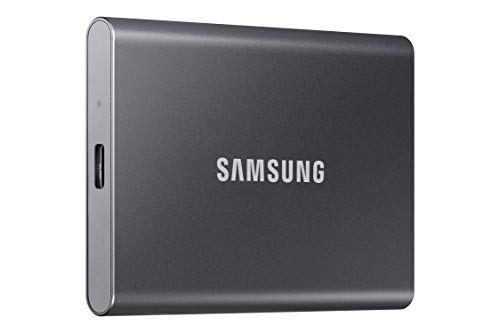
| Samsung T7 1TB | 1,050MB/s over USB 3.2 Gen 2; PCIe NVMe inside | Mid-range | |
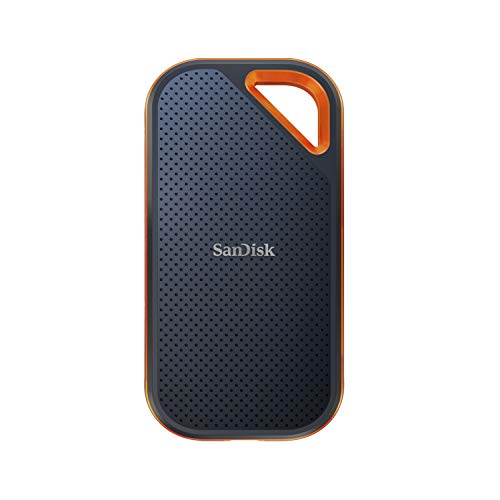
| SanDisk Extreme PRO 1TB | Up to 2,000MB/s on Gen 2×2; forged aluminum heatsink chassis | Mid-range | |
| Crucial X9 1TB | 1050MB/s, IP55, drop resistant to 7.5ft, works with consoles | Budget | |
| Silicon Power PX10 1TB | Cheapest here at a full 1050MB/s read and write | Budget | |
| OWC Envoy 1TB | Aluminum body, Thunderbolt compatible, palm-sized | Premium | |
How to choose a portable SSD
The port decides the speed, not the drive
This is the whole thing, and almost nobody explains it. USB 3.2 Gen 2 runs at 10Gbps, which in practice tops out around 1050MB/s, and that is what the Samsung T7, Crucial X9, Silicon Power PX10, and most drives here quote. USB 3.2 Gen 2×2 runs at 20Gbps and is what the SanDisk Extreme PRO needs to reach its 2,000MB/s. Gen 2×2 is rare: it never appeared on Macs, and it is uncommon on PCs. Plug an Extreme PRO into an ordinary Gen 2 port and you get roughly half its headline figure, which is the same speed as drives costing considerably less. Check the port on your machine before you pay for the fast drive.
Bus-powered, and why it matters here
Every drive on this page runs from the USB-C cable alone. That sounds unremarkable until you have used a portable hard drive that needed a power brick, or an enclosure that browned out on a laptop port. Bus-powered means one cable, in a pocket, working off a laptop on a train. It also puts a ceiling on power draw, which is why these drives are all small and why heat management, rather than raw appetite, is what separates them under sustained load.
Sustained speed is where they actually differ
Every drive here hits its headline number for a few seconds. What decides whether a 200GB card offload takes four minutes or eleven is what happens after that, when the flash gets hot and the controller throttles to protect itself. This is why SanDisk builds the Extreme PRO’s chassis from forged aluminum and calls it a heatsink, and why OWC uses aircraft-grade aluminum with fanless venting. A plastic-bodied drive will match them in a benchmark and lose badly on a long transfer. If you move large files, buy metal.
Toughness, and what the ratings mean
These live in bags. The SanDisk drives carry IP65 water and dust resistance with up to 3-meter drop protection, and a carabiner loop so the drive hangs off a belt or a strap rather than rattling loose. Crucial’s X9 is IP55 and rated to 7.5 feet, about 2 meters. IP65 is fully dust-tight and handles jets of water; IP55 handles dust ingress and light spray. Neither is a license to swim. For a drive that lives on a desk, none of this matters; for one that goes up a mountain, it is the specification.
What you actually get for a terabyte
Roughly 931GB on Windows, and SSK deserves credit for being the only listing here that says so plainly. That is not a con: drive makers count a terabyte as a trillion bytes while Windows counts in powers of two, so the same drive shows as 1TB on macOS and 931GB on Windows. Nothing is missing. Worth knowing before you conclude you were shortchanged.
Compatibility and the small print
Check the list rather than assuming. Crucial’s X9 explicitly covers Windows, Mac, iPad Pro, Chromebooks, Android, Linux, PS4, PS5, and Xbox, which makes it the pick if the drive is going to move between a console and a laptop. OWC leans on universal USB-C compatibility across Macs, iPads, PCs, and docks. Look for features that predict lifespan too, since a few drives publish them: SSK quotes S.M.A.R.T. health monitoring and TRIM support, both of which keep write speeds consistent as the drive fills.
Samsung T7 1TB
The drive everyone means when they say portable SSD. It runs PCIe NVMe flash behind USB 3.2 Gen 2 for speeds up to 1,050MB/s, which is the full ceiling of a 10Gbps port, meaning it is as fast as your laptop can go rather than as fast as the marketing wishes. Samsung pitches it at people making things, and the appeal is that it does the boring parts reliably: it is compact, it takes a working video project or a photo library without complaint, and the range extends to 4TB if a terabyte turns out not to be enough. There is no drama here and that is the point. It is a known quantity from a company that makes its own flash.
Pros
- Full 1,050MB/s: everything a normal USB-C port can deliver
- PCIe NVMe inside, not a repackaged SATA drive
- Compact and genuinely pocketable
- Made by a company that manufactures its own flash
- Range goes to 4TB if you outgrow this one
Cons
- Costs more than drives matching its speed
- No published IP or drop rating
Best for: the default pick, and the safe answer if you want a drive that just works for years.
SanDisk Extreme PRO 1TB
The fast one, with the asterisk this whole article exists to explain. Up to 2,000MB/s read and write is double everything else here, and it needs a USB 3.2 Gen 2×2 port to deliver it. If your machine has one, this is transformative on large transfers. If it does not, and most do not, you will see roughly half and you have paid a premium for nothing. The rest of the drive is excellent regardless: a forged aluminum chassis that acts as a heatsink, which is what keeps speeds up on long sustained transfers rather than only in a benchmark, plus IP65 water and dust resistance, up to 3-meter drop protection, and a carabiner loop. This is the drive for a card offload in a field.
Pros
- Up to 2,000MB/s on a Gen 2×2 port; nothing else here is close
- Forged aluminum heatsink chassis holds speed on long transfers
- IP65 and up to 3-meter drop protection
- Carabiner loop for a bag or a belt
- Still fast on ordinary ports, just not twice as fast
Cons
- Needs USB 3.2 Gen 2×2, which Macs never had and few PCs do
- Most expensive of the mainstream drives here
Best for: anyone with a Gen 2×2 port and big files, or who wants the toughest drive here regardless.
Crucial X9 1TB
The sensible bargain. It hits 1050MB/s, which is the same real-world ceiling as the Samsung T7 on the same ports, at a noticeably lower price, and Crucial is candid that it is aimed at casual gamers and everyday use rather than pretending to be a workstation drive. Where it earns its keep is breadth: IP55 water and dust resistance and drop resistance to 7.5 feet make it a genuine travel drive, and the compatibility list is the widest here, spanning Windows, Mac, iPad Pro, Chromebooks, Android, Linux, PS4, PS5, and Xbox over USB-C. If the drive needs to hold a console library one week and edit photos the next, this is the one that will not argue about it.
Pros
- Same 1050MB/s real-world speed as pricier drives
- Widest compatibility here, including PS5 and Xbox
- IP55 and drop resistant to 7.5 feet
- Cheaper than the Samsung and SanDisk equivalents
- Crucial is Micron’s brand, so the flash is in-house
Cons
- IP55 rather than IP65; less sealed than the SanDisk drives
- Positioned for everyday use rather than sustained professional loads
Best for: most people, and especially a drive shared between a console and a computer.
Silicon Power PX10 1TB
The cheapest drive here that does not compromise on the number that matters: 1050MB/s read and 1050MB/s write. Note that both figures are the same, which is worth pausing on, because plenty of drives quote a fast read and a much slower write and let you discover the difference while copying. Write speed is what you feel offloading a card or backing up a project; read speed is what you feel opening it. It is a compact NVMe drive with heat dissipation called out in the design, which is the right concern in a body this size. There is little else to say about it, and at this price that is a compliment.
Pros
- Cheapest pick here, at the full 1050MB/s ceiling
- Read and write both quoted at 1050MB/s, not just read
- NVMe performance in a compact body
- Heat dissipation designed in rather than ignored
Cons
- No published IP or drop rating
- Less known than Samsung, SanDisk, or Crucial
Best for: a desk drive, a backup, or anyone who wants full speed for the least money.
OWC Envoy 1TB
The one built for people who work off the drive rather than back up to it. It clears 1000MB/s over its 10Gbps USB-C connection, in an aluminum body that is palm-sized and bus-powered, and it is Thunderbolt compatible, which matters if your machine is a Mac and your dock is full. OWC’s argument is durability and compatibility across generations of hardware rather than a headline speed: past, present, and future USB-C Macs, iPads, PCs, docks, and mobile devices. The aluminum is doing thermal work as much as structural, which is what keeps a long transfer from slowing to a crawl. It is the most expensive mainstream drive here, and the audience is professionals who value it lasting over it benchmarking.
Pros
- Aluminum body: sheds heat and survives a working life
- Thunderbolt compatible as well as USB-C
- Over 1000MB/s, the full useful ceiling
- Palm-sized and bus-powered
- Built for compatibility across hardware generations
Cons
- Roughly double the Silicon Power for the same real-world speed
- No published IP or drop rating despite the metal shell
Best for: Mac users and professionals who want a drive to still be working in five years.
The verdict
Best Overall: Samsung T7 1TB. It hits the full 1,050MB/s that a normal USB-C port can carry, it is small, it is PCIe NVMe rather than something cheaper wearing a badge, and it comes from a company that makes its own flash. There is no asterisk and nothing to check first, which in this category is worth paying a little for.
Best Value: Crucial X9 1TB. The same real-world speed as the T7, cheaper, tougher on paper with IP55 and a 7.5ft drop rating, and compatible with everything including consoles. If you want one drive for a laptop and a PS5, this is it. If price is the only axis, the Silicon Power PX10 matches the speed for less again.
Best Premium: OWC Envoy 1TB. Aluminum, Thunderbolt compatible, and built around still working years from now. Buy it if you work off the drive daily.
One warning worth repeating. The SanDisk Extreme PRO’s 2,000MB/s is real and it needs a USB 3.2 Gen 2×2 port. Check your machine has one before paying for it; if it does not, the Extreme PRO is still a superb, rugged drive and you have bought half its headline.
Frequently asked questions
Why is my SSD slower than advertised?
Almost always the port. USB 3.2 Gen 2 caps around 1050MB/s, and a drive rated at 2,000MB/s needs the rarer Gen 2×2 to reach it, which no Mac has ever had and few PCs do. The other cause is heat: every drive throttles on a long transfer once the flash warms, which is why the metal-bodied drives hold their speed and plastic ones fade.
What does bus-powered mean?
The drive takes all its power from the USB-C cable, so there is no separate adapter. Every drive here works this way, which is why they run from a laptop on a train and why there is only ever one cable. It also caps how much power they can draw, which is why cooling design matters more than it would in a desktop drive.
Why does my 1TB drive show 931GB?
Nothing is missing. Drive makers count a terabyte as a trillion bytes; Windows counts in powers of two and reports the same drive as about 931GB. macOS uses the maker’s convention and shows 1TB. SSK is the only listing here that mentions this up front, which is decent of them.
Do I need IP65 and drop protection?
Only if the drive leaves your desk. IP65, on the SanDisk drives, is dust-tight and handles water jets; IP55, on the Crucial X9, handles dust and light spray. Both add drop ratings of two to three meters. For a drive living beside a monitor none of it matters. For one in a camera bag on a hillside, it is the reason to choose one over another.
Will these work with a PS5 or Xbox?
Crucial’s X9 states console support explicitly, covering PS4, PS5, and Xbox alongside computers and tablets, which makes it the safe pick for that. Most USB-C SSDs work for storing and playing older-generation games, with limits on what current-generation titles can run from external storage. Check the console’s own current requirements rather than the drive’s listing, since that is where the restriction lives.
This article may contain affiliate links; see our Affiliate Disclosure.