You bought the standing desk. Three weeks later you are sitting again, because by eleven in the morning your heels ache and your lower back has opinions. The desk is not the problem. The floor is.
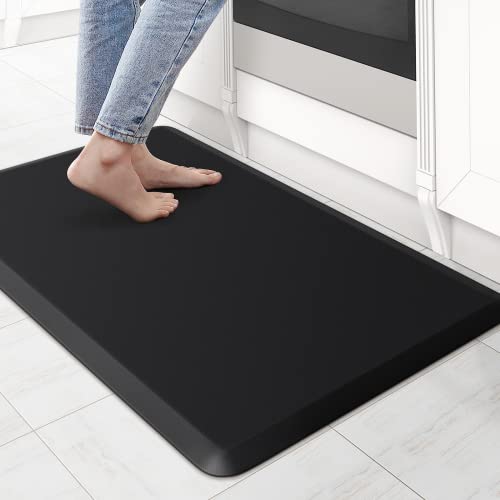
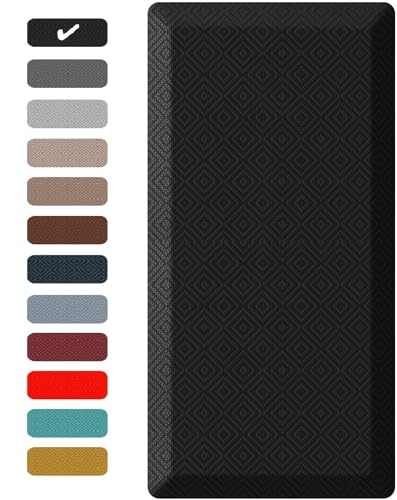
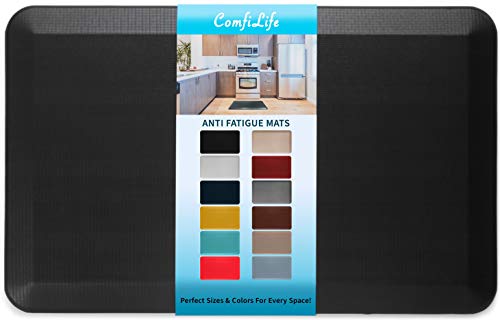


Here is the thing worth knowing before you spend: almost every mat sold for standing desks is a kitchen mat with “standing desk” added to the listing. That is not automatically bad, but a kitchen mat is sized for someone rooted at a sink for twenty minutes, and a desk is somewhere you stand for hours and need to shift. One brand here designs for the desk instead, and charges for it. Both approaches work. They work differently.
At a glance
| Mat | Standout feature | Price tier | Link |
|---|---|---|---|
| KitchenClouds | The runaway best seller, at the lowest price | Budget | |
| Ophanie | 3/4 inch recycled PU foam, ships flat | Budget | |
| ComfiLife | 3/4 inch memory foam at desk size | Mid-range | |
| FEATOL | 9/10 inch, the thickest flat mat here | Mid-range | |
| StepRite | 4/5 inch memory foam at a low price | Budget | |
| Ergohead | Built-in handle; hangs on a hook | Budget | |
| Ergodriven Topo Mini | Shaped terrain that makes you shift | Premium | |
| Ergodriven Topo | The full-size terrain mat, PVC-free | Premium | |
How to choose a mat for a standing desk
Flat or not-flat, and why it is the only real decision
A flat cushioned mat makes standing still more comfortable. A terrain mat tries to stop you standing still at all. Those are different mechanisms, not different grades of the same thing. Ergodriven’s argument for the Topo is that the shaped surface invites your feet to move without you deciding to, and that the movement, not the padding, is what keeps you at the desk. Every other mat here takes the padding route. Neither is wrong. Decide which problem you have: sore heels on a hard floor, or the slow creep back into your chair.
Size is where kitchen mats give themselves away
At a sink you stand in one spot. At a desk you rock, you shift your weight, you put one foot forward. The mats here run from 17 by 22 inches up to 20 by 32, and the difference is whether your foot finds mat or bare floor when you move. The Ophanie, ComfiLife and FEATOL are all 20 by 32, which is the size that gives you somewhere to go. The 17-inch mats are comfortable, but you will step off them without meaning to.
Thicker is not automatically better
The thickness race runs from 3/4 inch on the Ophanie and ComfiLife, to 4/5 on the StepRite, to 9/10 on the FEATOL. More foam sounds like more comfort, and up to a point it is. Past that point a very soft, very deep mat gets unstable, and your legs quietly work harder holding you upright than they would on something firmer. What you want is support that pushes back, which is why these listings all talk about high-density foam and rebound rather than softness alone. If you are choosing between two mats, firmer and larger beats softer and smaller.
The edge is a trip hazard until it is not
Every mat here mentions a beveled edge, and it is not filler. A slab of foam with a square edge is something you will catch a toe on, at speed, once. A bevel that tapers to the floor turns the edge into a ramp. Check that the mat has one, on all four sides, before you put it somewhere you walk past all day.
Surface, and what happens when you spill
PVC and PU leather tops both wipe clean, and that matters more at a desk than people expect, given the coffee. Ophanie specifies a 1.2 mm PVC leather top over a recycled foam core and states CP65 and GRS certifications. Ergodriven goes the other way and builds the Topo without PVC, and says the Mini has no PFAs either. If you care what the thing is made of, that is the split.
Read the comfort claims as comfort claims
Several of these listings promise relief from back, knee and spine discomfort, and one pair adds raised massage points said to promote circulation. Take those as the makers’ own marketing, not as findings. What a good mat reliably does is make a hard floor easier to stand on for longer. That is worth the money on its own. Take anything beyond that as unproven.
KitchenClouds
The best seller of this group by a distance, and it is the cheapest thing here, which explains a lot. A soft PVC foam cushion at 17.3 by 28 inches, with a diamond-textured underside to stop it wandering and a beveled edge so you do not trip on it. The surface sheds dust and wipes clean with a damp cloth. KitchenClouds does not publish a thickness, which is the one number you would most want, and the size is kitchen-sized rather than desk-sized.
Pros:
- The best-selling mat here, at the lowest price
- Diamond-textured base and a beveled edge
- Water resistant; wipes, vacuums or sweeps clean
- Neutral look that suits an office as well as a kitchen
Cons:
- No published thickness
- 17.3 by 28 inches gives little room to shift your stance
- Arrives folded; creases need warm air to settle
Best for: finding out whether a mat fixes your feet before spending properly.
Ophanie
A 3/4 inch core of high-density recycled PU foam under a 1.2 mm PVC leather top, at a proper 20 by 32 inches. Two details lift it above the budget pack: it ships flat rather than rolled, so there are no curled corners to fight on day one, and it carries CP65 and GRS certifications, which is more than most in this price bracket bother to state. The ramped bevel is progressive rather than an abrupt step, and the ridged underside holds position.
Pros:
- Desk-appropriate 20 by 32 inches
- Ships flat, so no creases or curled corners
- CP65 and GRS certified; recycled foam core
- Progressive ramped edge rather than a step
Cons:
- 3/4 inch is mid-pack against the FEATOL
- PVC surface, if that matters to you
- Flat-packed shipping means a big box to store or bin
Best for: a full-size mat you can stand on the hour it arrives.
ComfiLife
A 3/4 inch high-density memory foam core at 20 by 32 inches, and the pitch it makes is durability: engineered not to lose support over time, which is the failure mode that kills cheap mats. A foam that packs down to a pancake after four months of one person standing in the same spot is a mat you buy twice. Stain-resistant top, non-slip backing, wipe-clean surface. It is a strong seller in a category led by mats a third of its price, which says something about how it holds up.
Pros:
- High-density memory foam built to keep its support
- Desk-appropriate 20 by 32 inches
- Stain-resistant surface and non-slip backing
- Sells well despite costing more than the budget pack
Cons:
- Costs roughly triple the best seller
- 3/4 inch, not the thickest here
- Flat, so it does nothing to get you moving
Best for: standing at the same desk every day, for years.
FEATOL
The thickest flat mat here at 9/10 of an inch, in high-density memory foam that FEATOL describes as strongly rebounding rather than merely soft, which is the right target. A PU leather top resists punctures and tears and keeps its shape, the edges are low-angle bevels tapering to the floor, and it ships unfolded so it lies flat immediately. At 20 by 32 inches it is desk-sized. A longer version exists if you want room to pace.
Pros:
- Thickest flat mat here at 9/10 inch
- High-rebound foam rather than plain soft foam
- PU leather top resists punctures and tears
- Ships unfolded; no creases to flatten
Cons:
- Extra height is a bigger step up and a bigger edge
- Costs more than most of the flat pack
- Deep foam can feel unstable if you like firm footing
Best for: hard tile or concrete, where the extra cushion earns its keep.
StepRite
4/5 of an inch of memory foam at 17 by 28 inches, which is a lot of cushion for the money and a slightly odd combination: near the top of the thickness range, near the bottom of the size range. A premium PVC surface shrugs off water, oil and sauce with a wipe, the textured bottom holds it down, and the beveled edge does its job. It arrives folded, and StepRite is upfront that you may need warm air or sun to settle the creases.
Pros:
- 4/5 inch of memory foam at a budget price
- PVC surface wipes clean of oil and sauce
- Textured base and a beveled edge
- Real instructions for flattening the creases
Cons:
- 17 by 28 inches, small for a desk
- Arrives folded and needs settling
- Thick foam on a small footprint magnifies the wobble
Best for: maximum cushion per dollar in a tight footprint.
Ergohead
The one that solves a problem nobody else addresses: where the mat goes when you sit down. A built-in handle shaped for your fingers lets you pick it up and hang it on a hook, which matters in a shared office or a small room where a slab of foam underfoot is in the way half the day. It is the smallest mat here at 17 by 22 inches, with a non-slip base and raised massage points on the surface. Ergohead says those points aid circulation; read that as their claim.
Pros:
- Built-in handle; carry it or hang it up
- Smallest and easiest to store
- Non-slip base and a textured surface
- Low price
Cons:
- 17 by 22 inches is the least room to shift of anything here
- No published thickness
- The circulation claim is unproven marketing
Best for: a shared desk, a hot desk, or a room with no space to leave a mat out.
Ergodriven Topo Mini
The not-flat idea in its smaller, cheaper form, and the better seller of the two Topos. Instead of a cushioned slab, the surface is shaped: mounds, edges and a calf stretcher your feet find on their own, so you shift position without deciding to. The foam is thick and firm rather than plush. A heel-shaped indentation lets you drag it out from under the desk with one foot, which sounds trivial until you have kicked a flat mat around for a week. No PVC, and Ergodriven states no PFAs. They claim well over half a million Topos sold.
Pros:
- Shaped terrain gets you moving rather than just cushioning you
- Reposition it with one foot, no bending
- No PVC and no PFAs
- Outsells the full-size Topo, at a lower price
Cons:
- Costs several times the flat mats
- Smaller footprint than the full Topo
- The shaped surface is divisive; some people want flat
Best for: a standing desk you keep abandoning, where movement is the actual fix.
Ergodriven Topo
The original and the full-size version: same shaped terrain, same one-footed repositioning trick, more room and a deluxe foam. It is the most expensive mat here by a clear margin, and it is PVC-free. If the Mini’s appeal is the concept at a smaller price, this is the concept without the compromise on space, which matters given that room to move is the whole point of a terrain mat. It sells a little behind the Mini, which is what you would expect at nearly double the price.
Pros:
- Full-size terrain, so the movement idea gets room to work
- Thicker deluxe comfort foam
- PVC-free
- Repositions with a heel or toe
Cons:
- The most expensive pick here, by a lot
- Sells behind its own smaller sibling
- Too much mat for a small or shared room
Best for: a dedicated standing desk where you want the idea done properly.
The verdict
Best overall: ComfiLife. It is 20 by 32 inches, which is the size a desk actually needs, and its 3/4 inch high-density memory foam is built around not going flat, which is how cheap mats fail. It sells strongly in a category where much cheaper mats dominate the charts, and that is the useful signal: people pay more for it on purpose.
Best value: KitchenClouds. The runaway best seller here and the cheapest thing on the list. It is a kitchen mat and it is smaller than ideal, with no published thickness. It also costs about a fifth of the premium picks and will tell you within a week whether a mat is the answer for your feet. Start here if you are unsure.
Best premium: Ergodriven Topo Mini. The only mats here designed for standing desks rather than adapted to them, and the Mini is the better-selling and cheaper of the two. Its argument is different and worth hearing: cushioning helps you tolerate standing still, while shaped terrain stops you standing still in the first place. If your problem is that you keep sitting back down, padding was never going to fix it.
FAQ
Can I just use a kitchen mat?
Mostly, yes, and most people do. The catch is size. Kitchen mats are built for someone planted at a sink, so they run around 17 inches deep, and at a desk you shift your weight and step off the edge without noticing. If you go the kitchen mat route, get the biggest one you can.
Is a thicker mat a better mat?
Only up to a point. Deep, soft foam gets unstable, and your legs end up working to hold you steady. The listings that matter talk about high-density foam and rebound rather than plushness. Given a choice, firmer and bigger beats softer and smaller.
Are the not-flat mats worth several times the price?
It depends what is failing. If your heels hurt on a concrete floor, a good flat mat fixes that for a fraction of the money. If you own a standing desk and keep sitting down, the terrain mats target that directly by keeping your feet moving. Buy the one that matches your actual complaint.
Do the massage points do anything?
The makers say they aid circulation. There is nothing here to support that beyond the marketing, so take it as a textured surface rather than a benefit. The mat’s cushioning is what does the work.
My mat arrived with creases. Is it ruined?
No. Folded mats are normal at the budget end, and the fix is warm air: a hairdryer held an inch away, or a few hours in the sun. StepRite and KitchenClouds both say so in their own instructions. If you would rather skip that entirely, the Ophanie and FEATOL both ship flat.
This article may contain affiliate links; see our Affiliate Disclosure.