Four shoes here publish a heel figure. One says 4 mm, one says 15 mm, one says 0.67 inches and one says 1.4 inches. You cannot line those up, because they are not measuring the same thing, and that confusion is doing more damage to more lifters than any bad shoe on this page.


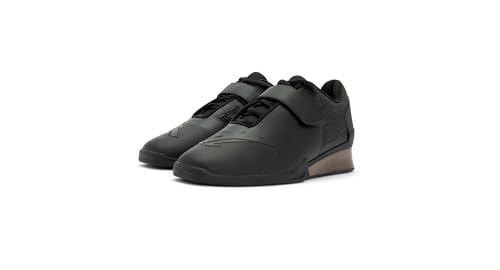
Two sports, two shoes. Olympic weightlifting wants a tall, rigid heel so you can sit into a deep squat with your chest up under a bar held overhead. Powerlifting, and the deadlift especially, often wants the opposite: as flat and as close to the floor as you can get. The shoes below span that entire range, and picking the wrong end of it will actively work against you.
At a glance
| Shoe | Standout feature | Price tier | Link |
|---|---|---|---|
| MANUEKLEAR Deadlift Shoe | Cheapest here; flat and minimal by design | Budget | |
| MANUEKLEAR Weightlifting | Raised heel and twin straps on a budget | Budget | |
| adidas Powerlift 5 | Publishes a 15 mm heel lift; known brand | Mid-range | |
| CORE | 0.67 inch heel with an EVA wedge midsole | Mid-range | |
| Nordic Lifting MEGIN | Tallest quoted heel here at 1.4 inches | Mid-range | |
| NOBULL Outwork | Full specs published; flat 4 mm drop | Premium | |
| VELAASA Strakes Plus | A solid wooden heel, the traditional build | Premium | |
How to choose a lifting shoe
Heel height and heel drop are different numbers
This is the trap. NOBULL quotes a 4 mm heel-toe drop, which is the difference between the heel and the forefoot, and separately gives its stack at 11 and 15 mm. adidas quotes a 15 mm heel lift. CORE quotes a 0.67 inch heel. Nordic Lifting quotes a 1.4 inch heel height. A drop and an absolute height are not comparable, and nobody in this category says which they mean unless you read carefully. Work out what a brand is actually measuring before you conclude one shoe has three times the heel of another.
The deadlift wants you flat
Every millimeter of heel is a millimeter further the bar has to travel, and on a deadlift the bar path is the whole game. That is why a genuinely flat shoe is not a compromise for pulling, it is the correct tool, and why NOBULL builds the Outwork low to the ground with a 4 mm drop rather than a wedge. The cheap MANUEKLEAR deadlift shoe is built on the same logic from the other end of the market. If your training is deadlift-heavy, an elevated heel is working against you.
The squat and the Olympic lifts want the heel
Raise the heel and you can sit deeper with a more upright torso and less demand on your ankles, which is exactly what a snatch or a clean needs, and what a lot of people need to squat well. That is what the wedge is for. How much heel suits you depends on your ankles and your proportions, which is why the range here spans from a modest 0.67 inches up to Nordic Lifting’s quoted 1.4. There is no universally correct number, and anyone telling you otherwise is selling.
A soft sole eats your effort
Under a heavy bar, a compressible foam midsole squashes, and force that should be going into the floor goes into your shoe instead. That is the argument for a rigid heel, and it is why VELAASA uses a solid wooden one, the traditional construction for Olympic shoes. CORE uses an EVA wedge, which is firmer than running foam but not wood. Nothing wobbles less than a solid block. It is also why running shoes are the worst possible thing to squat in.
Straps are structural, not decoration
A lifting shoe has to stop your foot moving inside it while you push against the floor as hard as you can. Laces alone stretch. That is why adidas fits a wide hook-and-loop strap over the laces, MANUEKLEAR uses laces plus tape straps, and CORE combines lace straps with the lacing. The strap is what holds the midfoot down. On a shoe without one, your foot will roll a little on a maximal effort, and you will feel it.
The grip matters more than it sounds
You are trying to push the planet away. NOBULL specifies a carbon rubber outsole with a circular tread designed to stick to gym floors and wooden platforms, which is the most specific traction claim here. Everyone else says non-slip. On a rubber gym floor almost anything grips; on a lacquered wooden platform under a maximal squat, it matters a great deal.
MANUEKLEAR Deadlift Shoe
The cheapest shoe here by a distance, and it knows what it is: a flat, minimal, near-barefoot trainer for pulling. Breathable mesh upper, double nylon velcro straps for a quick and firm lockdown, a heel support pad for ankle stability, and a sole designed for torsional resistance and grip rather than cushioning. MANUEKLEAR mentions cushioning to reduce ground impact, which is a cross-training claim rather than a lifting one, so read it as a shoe that pulls well and jogs adequately rather than a dedicated platform.
Pros:
- Cheapest shoe here by a wide margin
- Flat and minimal, which is correct for deadlifting
- Double velcro straps for fast, firm lockdown
- Breathable mesh; good torsional resistance
Cons:
- No heel, so it will not help your squat depth
- No published heel, drop or weight figures
- Cushioning language suggests a softer sole than a purist wants
Best for: deadlifts, on the smallest possible budget.
MANUEKLEAR Weightlifting
The wedge version, and the cheapest way into a heeled shoe. It combines TPU, rubber and Oxford cloth in a seamless upper, with laces plus tape straps for lockdown, and the part that matters: a reinforced chassis with a widened, heightened heel that MANUEKLEAR specifically says is braced against deformation under heavy load. That is the right worry to have. The outsole is high-abrasion with a honeycomb structure. What is missing is the number: nowhere does it say how tall the heel actually is, which in this category is the whole specification.
Pros:
- Cheapest heeled lifting shoe here
- Reinforced chassis and heel braced against deformation
- Laces plus tape straps for a locked-down midfoot
- High-abrasion honeycomb outsole
Cons:
- Never states the heel height, the one spec that matters
- Sells modestly against the known brands
- No weight or stack figures published
Best for: trying a heeled squat shoe without committing real money.
adidas Powerlift 5
The sensible middle, from the brand that has been making these longest. The heel lift is 15 mm, published plainly, which is a moderate wedge: enough to open up your squat depth without tipping you so far forward that you have to relearn the movement. A textile and synthetic upper keeps it light and breathable, adjustable laces run under a wide hook-and-loop strap for lockdown, and the rubber outsole grips. It is made in part with recycled materials. For most people moving from trainers to a lifting shoe, this is the least dramatic step.
Pros:
- Publishes its heel lift plainly at 15 mm
- Moderate wedge suits most lifters without a relearning curve
- Wide hook-and-loop strap over adjustable laces
- Established brand at a mid-range price
Cons:
- Sparse listing; no weight or sole stiffness detail
- Textile upper is less rigid than a leather or wood-heeled build
- 15 mm may be too little for a dedicated Olympic lifter
Best for: a first proper squat shoe, from a brand you already trust.
CORE
A 0.67 inch heel, published, which lands it between the adidas and the taller wedges, and CORE is clear that the height is a deliberate choice for stability and posture rather than a styling accident. The wedge is a non-slip EVA in the midsole, firmer than running foam though not the solid heel of a dedicated Olympic shoe, and lace straps work alongside the lacing to hold the foot down. It is light, minimalist and pitched at crossover use across squats, deadlifts and cross-training, which is clear about what a mid-height wedge is good at.
Pros:
- Publishes its heel at 0.67 inches
- Non-slip EVA wedge with lace straps for lockdown
- Light, and genuinely usable across several lift types
- Clean minimal design
Cons:
- Barely sells; the least proven of the mid-range picks
- EVA compresses more than a rigid heel under maximal load
- Middling heel suits neither extreme perfectly
Best for: mixed sessions where one shoe has to squat, pull and train.
Nordic Lifting MEGIN
The tallest quoted heel on this page at 1.4 inches, aimed at lifters who want maximum depth and the most upright torso they can get. Reinforced collars keep the ankle aligned rather than rolling mid-rep, the sole is non-slip for grip under a maximal load, and the build uses double stitching. Read the heel figure with the caution this whole category demands: Nordic Lifting quotes a heel height while others quote a drop, so it is a taller shoe than the adidas but not by the ratio the raw numbers imply.
Pros:
- Tallest quoted heel here, for maximum squat depth
- Reinforced ankle collars against rolling under load
- Double stitching and durable construction
- Unisex sizing across a full range
Cons:
- Quotes heel height, not drop, so it does not compare directly
- A tall heel is actively wrong for deadlifting
- Sells modestly
Best for: deep squats and Olympic lifts, if your ankles want the help.
NOBULL Outwork
The only shoe here that tells you everything: 11 oz in a size nine, stack heights of 11 and 15 mm, a 4 mm heel-toe drop. In a category that hides its numbers, that alone is worth attention. It is flat, firm and low to the ground with a wide toe box, which is the correct geometry for deadlifts, squats and presses where you want ground feel rather than a wedge. The one-piece SuperFabric upper locks the foot down, the carbon rubber outsole with circular tread is the most specific grip claim on this page, and a low-profile phylon EVA midsole gives just enough cushioning to walk in.
Pros:
- Publishes weight, stack height and drop; nobody else does
- Flat 4 mm drop, correct for deadlifts and flat-footed pressing
- Carbon rubber outsole with a specific grip design
- SuperFabric one-piece upper and a wide toe box
Cons:
- Flat, so it does nothing for squat depth or Olympic lifts
- Expensive for a shoe with no wedge
- The best seller here, which in this category is not saying much
Best for: powerlifting, where flat and locked-down is the whole point.
VELAASA Strakes Plus
The real thing, built the traditional way: a solid wooden heel under a durable upper. Wood does not compress, which is the entire argument. Under a heavy clean, a foam wedge squashes and gives some of your effort back late and unevenly; a wooden block simply does not move, and you feel the floor through it. VELAASA says the design was developed with Olympic athletes and coaches, and it is the most expensive shoe here. One practical note straight from the brand: size up by half against your usual trainer.
Pros:
- Solid wooden heel; the traditional Olympic construction
- Rigid platform that does not compress under maximal load
- Developed with Olympic-level athletes and coaches
- Clear sizing guidance: add half a size
Cons:
- Most expensive shoe here
- Barely sells at all; the least proven pick on this page
- Never publishes its heel height
Best for: Olympic lifting, where a rigid heel is not negotiable.
The verdict
Best overall: NOBULL Outwork. It is the strongest seller here and the only shoe willing to publish its weight, stack and drop, which in a category built on vagueness counts for a lot. Flat, firm, wide in the toe, locked down by a one-piece upper and gripping through a carbon rubber sole. Be clear about what you are buying, though: this is the powerlifting answer. It has no wedge and will not help your squat depth or your snatch.
Best value: MANUEKLEAR Weightlifting. The cheapest heeled shoe here, with the two things a wedge shoe must get right: a reinforced chassis braced against deformation, and straps over laces so your midfoot cannot move. It never states its heel height, which is a real omission in this category. If you want to find out whether a heel transforms your squat before spending properly, this answers the question cheaply.
Best premium: VELAASA Strakes Plus. A solid wooden heel is the traditional Olympic build for one reason: it does not compress, so nothing you push into the floor comes back late. It costs the most, it barely sells, and it never publishes its heel height. If you are cleaning and snatching seriously, none of that matters as much as a heel that stays exactly where it is.
FAQ
What is the difference between powerlifting and Olympic lifting shoes?
The heel. Olympic shoes use a tall, rigid wedge so you can sit into a deep squat with an upright chest, which the snatch and the clean demand. Powerlifting, especially the deadlift, often wants the opposite: flat and close to the floor, because every millimeter of heel is extra bar travel.
Why can’t I compare the heel numbers?
Because the brands measure differently. NOBULL quotes a 4 mm heel-toe drop, the difference between heel and forefoot. Nordic Lifting quotes a 1.4 inch heel height, an absolute figure. adidas quotes a 15 mm heel lift. Check what is actually being measured before concluding one shoe has three times the wedge of another.
Can I deadlift in a heeled shoe?
You can, and you will pull slightly less. Raising your heels raises the bar’s start and finish, so the bar travels further for the same lift. If deadlifting matters to you, a flat shoe like the NOBULL or the cheap MANUEKLEAR deadlift shoe is the right tool.
Why does sole stiffness matter?
Because a soft midsole compresses under load, and force meant for the floor goes into squashing your shoe instead. That is why VELAASA uses a solid wooden heel and why running shoes are the worst thing to squat in. An EVA wedge, like CORE’s, sits in between: firmer than foam, softer than wood.
Do I need the strap?
Yes, on any heeled shoe. Laces stretch, and a lifting shoe has to stop your foot sliding while you push against the ground as hard as you can. adidas puts a wide hook-and-loop strap over the laces, MANUEKLEAR and CORE both add straps of their own. It is structural, not styling.
This article may contain affiliate links; see our Affiliate Disclosure.