A tamper is the cheapest upgrade in espresso and the easiest one to get wrong, because the thing that decides whether it helps has nothing to do with how it is made. It is the diameter. A tamper two millimeters too small leaves a ring of loose coffee around the edge of the puck, water finds that ring, and you have bought a precision tool that creates the exact channelling you were trying to set.


So before anything else: find out what your portafilter basket measures. Almost everything on this page is 51mm, which is the budget-machine size. One product here fits the 53.3mm Breville and Sage baskets, and one has a 58mm face for commercial-size machines. Buy the wrong number and nothing else about the tamper matters.
At a glance
| Tamper | Standout feature | Price tier | Link |
|---|---|---|---|
| Ezebesta Dual-Sided | 51mm and 58mm faces on one tool | Budget | |
| WYLOSUA 51mm | Plain stainless with a wooden handle | Budget | |
| Apexstone 51mm | Cheapest calibrated spring tamper here | Budget | |
| Y-Step 51mm Set | Calibrated tamper plus a needle distributor | Budget | |
| Reoszeank Kit | Dual-head leveler, WDT tool, magnetic funnel | Mid-range | |
| GdHaHSP Kit | Calibrated tamper and a 316 steel WDT tool | Mid-range | |
| Normcore V4 | Best seller; three swappable springs | Premium | |
How to choose an espresso tamper
Measure the basket first, everything else second
Portafilter sizes are not interchangeable and the machines do not advertise them loudly. 51mm is the size on DeLonghi, CASABERWS and most budget pump machines, which is why almost every tamper here is 51mm. Breville and Sage use a 54mm portafilter whose basket needs a 53.3mm face, and the Normcore is the only tamper on this page that fits it. 58mm is the commercial standard. WYLOSUA puts the warning right at the top of its own listing: check this will fit your filter basket before buying. Take that seriously.
Calibrated means repeatable, not correct
Spring-loaded tampers click when they hit a set force, and most here are built around 30 pounds, which the industry snacks as the default. The value is not that 30 pounds is the right answer, because it is not a universal truth. The value is that you apply the same force every single time, so when a shot runs badly you can change the grind and know the tamp did not move. Normcore is the only tamper here that takes this further, shipping 15, 25 and 30 pound springs so you can pick a force and then stick to it.
Level matters more than hard
A tilted tamp is the classic cause of a fast, sour shot: the water finds the thin side and races through, and no amount of pressing harder fixes it. Normcore builds a leveling guide into the body so the tamper cannot sit crooked. The kits take the other approach and include a separate distributor that levels the bed before the tamper touches it. Both work. Pressing hard on a sloped puck does not.
The WDT tool in the kits may fix more than the tamper does
Worth being blunt about, since this page is meant to sell you a tamper. Most inconsistent extraction is caused by clumps in the ground coffee, not by tamping technique, and a tamper cannot undo a clump. It just presses it flat. The thin needles in a WDT tool stir the grounds and break the clumps up first, and the Reoszeank, GdHaHSP and Y-Step kits all include one. If your shots are unpredictable and you are shopping for a tamper, the needles in those kits are the likelier set.
Steel or aluminum
Most here use 304 stainless, which does not rust or corrode and shrugs off the acids in coffee. GdHaHSP goes to 316 for its needles, a step up again. Ezebesta uses cast aluminum alloy with no chemical coating, and is upfront that this is a material choice made to resist coffee acids rather than a cost cut. Chrome plating over aluminum, common on the cheapest tampers elsewhere, is the one to think twice about, because plating on a surface that gets scrubbed daily is a wearing part. For a tool that lives wet, stainless is the safe default.
Handles are about the wrist
You tamp with your body weight through a straight wrist, and the handle decides whether that is comfortable. WYLOSUA uses solid wood, Y-Step uses rosewood, and both feel better over a long session than bare steel. It is a small thing that becomes a large thing at the fourth coffee of the morning.
Ezebesta Dual-Sided
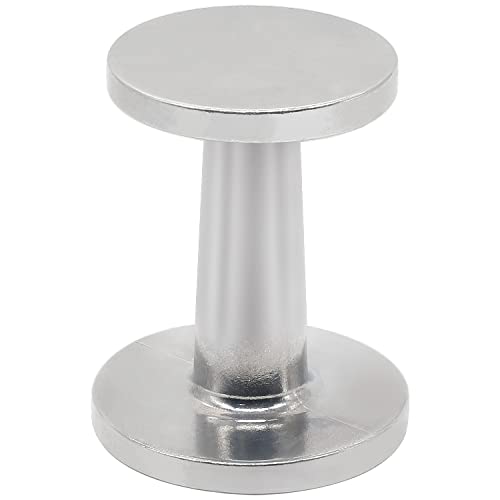
The cheapest tool here and the only one that solves the size problem by refusing to pick a side. It has a 51mm face on one end and a 58mm face on the other, which covers the budget machines and the commercial standard from one lump of cast aluminum alloy. If you have two machines, or you are buying before you know which basket you own, that is genuinely useful. The alloy carries no chemical coating, which Ezebesta presents as a deliberate choice against the acids in coffee. Hand wash only; it is not for the dishwasher.
Pros:
- Cheapest tamper here
- 51mm and 58mm faces cover both common sizes
- Cast alloy with no coating to wear off
- Useful if you own more than one machine
Cons:
- Misses 53.3mm, so no good on a Breville or Sage
- Aluminum rather than stainless
- No calibration; hand wash only
Best for: covering two basket sizes for pocket change.
WYLOSUA 51mm
A plain tamper done properly, and the second best-selling thing on this page. The base is 51mm stainless steel, the handle is solid wood shaped to sit in the palm, and the weight is chosen so the tool does some of the work for you rather than making you push. There is no spring and no click. What there is instead is the most useful sentence in this whole category, printed at the top of its own listing: check the diameter fits your basket before you buy. A brand that leads with the thing most likely to disappoint you is a brand paying attention.
Pros:
- Cheap, and the second-best seller here
- Stainless steel base with a solid wood handle
- Weighted so the tool does part of the work
- The listing warns about sizing before you order
Cons:
- No calibration; consistency is down to you
- 51mm only
- No leveling aid of any kind
Best for: a first tamper on a 51mm machine, with nothing wasted.
Apexstone 51mm
The cheapest way to buy repeatability. It is a spring-loaded calibrated tamper with a 51mm base in 304 stainless, which will not rust or corrode, and Apexstone is unusually forthcoming about the physical details: three and a half inches tall, about two thirds of a pound. The spring means every tamp lands at the same force, so the tamp stops being a variable and grind size becomes the only thing you adjust. It comes apart for cleaning and a soft brush under the tap is all it asks. No distributor, no needles, no leveling guide, just the one job.
Pros:
- Cheapest calibrated spring tamper here
- 304 stainless; will not rust or corrode
- Publishes its height and weight
- Disassembles for cleaning
Cons:
- Fixed spring force; no alternatives supplied
- No leveling guide, so it can still go in crooked
- 51mm only
Best for: making the tamp repeatable without buying a kit.
Y-Step 51mm Set
The cheapest pairing of the two tools that actually work together. The tamper is spring-loaded and calibrated to 30 pounds, on a 304 stainless base with a rosewood handle, and alongside it comes a needle distributor in walnut and food-safe stainless. That order matters: the needles break up the clumps, then the calibrated tamper presses the level bed at the same force every time. Y-Step says it suits any pump machine with a 51mm portafilter or larger, which is loose phrasing on a page where diameter is everything, so measure rather than assume.
Pros:
- Calibrated 30 lb tamper and a needle distributor together
- 304 stainless with rosewood and walnut handles
- Cheapest way to get both tools
- Attacks clumping and tamp force in one purchase
Cons:
- The least-selling item on this page
- “51mm or larger” is vague where precision is the point
- No dosing funnel; fixed spring force
Best for: fixing clumps and tamp force together, cheaply.
Reoszeank Kit
A four-piece kit built around a dual-head leveler rather than a calibrated tamper, which is the distinction to notice: one head distributes, the other tamps, and neither clicks at a set force. What you get instead is the rest of the workflow. The WDT tool uses ultra-thin 0.35mm stainless needles to break clumps and avoid channelling, and the dosing funnel holds itself to the portafilter magnetically so the grounds land in the basket rather than the bench. It is aimed squarely at DeLonghi and CASABERWS 51mm portafilters and says so by model.
Pros:
- WDT tool with fine 0.35mm needles; the real anti-channelling tool
- Magnetic dosing funnel keeps the grounds in the basket
- Two-in-one distributor and tamper head in stainless
- Names the machines it fits
Cons:
- The tamper head is not calibrated; no repeatable force
- Costs more than a calibrated tamper on its own
- 51mm machines only
Best for: the whole 51mm workflow, if you tamp by feel anyway.
GdHaHSP Kit
The kit that does not compromise on the tamper. This one is spring-loaded and calibrated, delivering over 30 pounds at a repeatable click, so unlike the cheaper kit here you get consistency as well as the rest of the workflow. The WDT tool is the best on this page: eight needles in 316 stainless, a step above the 304 everyone else uses, on a solid wood handle with its own stand so it is not rolling around the counter. A magnetic dosing funnel with a strong hold finishes it. Four tools, each of which is the version you would have chosen separately.
Pros:
- Calibrated spring tamper plus a WDT tool in one kit
- 316 stainless needles; better than the 304 elsewhere
- Eight-needle WDT with a wooden handle and stand
- Strong magnetic dosing funnel
Cons:
- Priciest 51mm option here
- Sells poorly; a little-known brand
- Fixed spring force, and no Breville fit
Best for: a 51mm machine and a genuine fix for inconsistent shots.
Normcore V4
The best-selling tamper here and the only one that fits the machines most home espresso is actually made on. The 53.3mm base is cut specifically for Breville and Sage 54mm portafilters, including the Bambino, and nothing else on this page will do that job. Three springs come in the box at 15, 25 and 30 pounds, so instead of accepting someone else’s idea of correct force you choose one and repeat it. An integrated leveling guide keeps the tamper horizontal, which removes the tilted-puck problem that no amount of force can fix. Force and level, both solved, in one tool.
Pros:
- The best-selling tamper here
- The only tamper on this page that fits Breville and Sage
- Three springs: pick your force, then repeat it
- Built-in leveling guide stops a crooked tamp
Cons:
- Most expensive tamper here by a distance
- Useless on a 51mm machine; the fit is the whole point
- No WDT tool or funnel included
Best for: a Breville or Sage, where nothing else here fits at all.
The verdict
Every pick below is void if the diameter is wrong. Check the basket before checking the price: 51mm covers DeLonghi, CASABERWS and most budget machines, 53.3mm is Breville and Sage, 58mm is commercial. The Normcore leads sales here and is the only 53.3mm tamper on the page, so for a large share of home machines the choice makes itself.
Best overall: GdHaHSP Kit. The plain answer to inconsistent shots on a 51mm machine, because it handles the real cause. Clumps in the grounds cause channelling and a tamper only presses them flat; the eight 316 stainless needles here break them up first. Then the calibrated spring tamper applies the same force every time, so grind becomes your only variable. The magnetic funnel keeps the coffee off the bench. Four tools, each the version worth owning.
Best value: WYLOSUA 51mm. A stainless base, a solid wood handle, sensible weight, and no pretending. It costs very little, it is the second-best seller here, and it leads its own listing by telling you to check the size first. There is no spring, so repeatability is your job. On a 51mm machine, for the money, nothing here is better judged.
Best premium: Normcore V4. The best seller, and the only tamper here that fits a Breville or Sage. Three springs at 15, 25 and 30 pounds let you choose a force rather than inherit one, and the built-in leveling guide fixes the tilted puck that force alone never solves. If you own a 54mm portafilter, this is not a preference, it is the only option on the page.
FAQ
What size tamper do I need?
Whatever your basket measures, exactly. 51mm suits DeLonghi, CASABERWS and most budget pump machines. Breville and Sage take a 54mm portafilter needing a 53.3mm face, which only the Normcore offers here. 58mm is the commercial size, found on the Ezebesta’s second face. A tamper a couple of millimeters small leaves a channel round the edge, which is the fault you were trying to fix.
Is a calibrated tamper worth it?
For most people, yes, though not for the reason it is sold. Thirty pounds is not magically correct. The point is that the spring removes tamp force as a variable, so when a shot runs wrong you adjust the grind knowing the tamp was identical. Normcore’s three springs let you choose the force; the rest fix it for you.
What is a WDT tool and do I need one?
It is a set of fine needles you stir through the grounds before tamping, to break up clumps. Clumps cause most channelling, and a tamper cannot undo one, it just flattens it. The Reoszeank, GdHaHSP and Y-Step kits include one. If your shots are unpredictable, this is more likely to help than a better tamper.
Why do my shots run fast and taste sour?
Usually a tilted tamp or a clump, not weak pressing. Water races through the thin side of a sloped puck and pushing harder makes it worse. A leveling guide like the Normcore’s, or a distributor as in the kits, fixes the geometry. Fix that before touching the grinder.
Stainless or aluminum?
Stainless for a tool that lives wet. Most here use 304, which resists coffee acids; GdHaHSP’s needles are 316, a step better. Ezebesta’s uncoated cast alloy is a fair budget choice. Chrome plating over aluminum is the one to think twice about, since plating on a daily-scrubbed surface eventually wears.
This article may contain affiliate links; see our Affiliate Disclosure.