There are two machines sold under the same name here and they do not do the same job. One makes dough and pushes it through a die, so flour and water go in and penne comes out. The other flattens dough you already made and slices it into ribbons. No amount of money spent on the second one will ever produce a tube of pasta. Work out which you want before you look at a single price.



Extruders knead and shape in one box, unattended. Rollers need dough you have already mixed and rested, and they give you flat shapes: fettuccine, spaghetti cut from a sheet, lasagne. Most of this page is rollers, because most of the market is. Two machines here are extruders, and they are the only ones that make a shape you cannot make with a rolling pin and a knife.
At a glance
| Machine | Standout feature | Price tier | Link |
|---|---|---|---|
| VEVOR | Extruder; 8 shapes, feeds four in 14 minutes | Budget | |
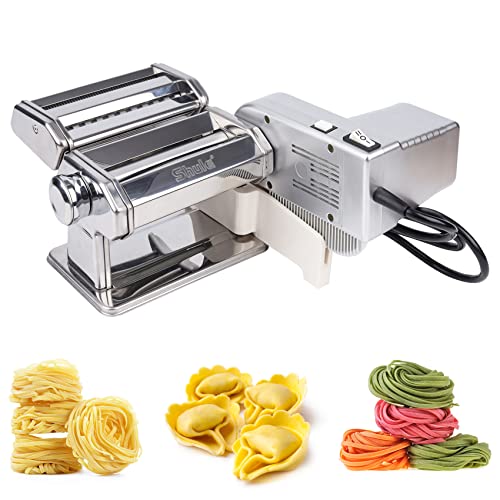
| Shule | Only roller here with a ravioli attachment | Budget | |
| GVODE Aluminum | Cheapest 700W roller; thin 0.4mm setting | Mid-range | |
| GVODE All Metal | Two speeds, reverse, and auto dough feeding | Mid-range | |
| Dyna-Living | 304 stainless; 9 settings from 1 to 4mm | Mid-range | |
| Philips | Extruder; kneads and shapes in 18 minutes | Premium | |
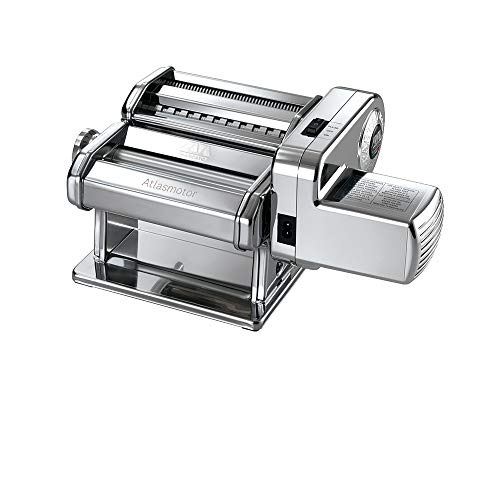
| MARCATO Atlasmotor | Made in Italy; works powered or by hand | Premium | |
How to choose an electric pasta maker
Extruder or roller, and it is not a close call
An extruder is a mixer and a shaper in one. You tip in flour and liquid, it kneads, and it forces the dough through a disc with holes in it. Change the disc, change the shape: spaghetti, penne, macaroni, tubes. A roller does none of that. It takes dough you mixed and rested by hand, squeezes it thinner between two rollers, and cuts the sheet into strips. Everything a roller makes is flat, by definition, because a sheet cut into ribbons is all it can produce. If you want penne, only an extruder will do. If you want proper fresh fettuccine and tagliatelle, a roller does it better and costs less.
Check it is actually electric
Worth saying because the biggest seller in this category is not. Manual pasta machines sit right alongside the electric ones in the listings, share the same photographs and the same three-in-one roller-and-cutter description, and are a fraction of the price for the obvious reason. If the listing mentions a hand crank and nothing about wattage, you are looking at a machine you turn yourself. That is a perfectly good thing to buy; it is just not what this page is about.
Watts tell you which machine you are looking at
The numbers look backwards until you understand the jobs. The rollers here run 700W motors because squeezing stiff dough between steel rollers takes real force. The VEVOR extruder runs on 150W, because kneading and pushing dough through a die is slow, torquey work rather than fast work. A low wattage on an extruder is not a weak machine, and a high one on a roller is not overkill. Compare like with like or the figures mislead you.
Reverse matters more than speed
Dough jams. It is the single most common frustration with a powered roller, and when a sheet catches and the motor keeps driving forward you have a mess and a machine to dismantle. The GVODE all-metal model is the only one here with a reverse function and two speeds, which lets you back a jam out instead of fighting it. That one control is worth more day to day than most of the specifications above it.
Watch what you are actually adding to the basket
MARCATO sells two things with nearly identical names and nearly identical prices, and one of them is not a pasta machine. The Atlasmotor set includes the Atlas 150 machine, the hand crank, the clamp and the Pastadrive motor: everything. The other listing is the motor attachment on its own, for an Atlas you are assumed to already own, and it costs almost as much as the complete set. If you do not already have the machine, that is a package holding one part.
Thickness range is where rollers differ
This is the one specification worth comparing across the rollers, because it decides what you can make. GVODE runs 8 settings from 0.4 to 2mm, and 0.4mm is genuinely thin, the territory of translucent sheets for filled pasta. Dyna-Living gives 9 settings but across 1 to 4mm, so it is thicker at both ends and better suited to robust noodles than delicate ravioli. Shule sits between with 7 settings from 0.5 to 3mm. MARCATO offers 10 clearly marked positions and the widest sheet here at 150mm.
VEVOR
The cheapest machine on this page is also an extruder, which makes it the cheapest route to shapes a roller physically cannot make. Its published numbers are strong: a 500g flour capacity, enough noodles for about four people in 14 minutes, 8 shapes and 4 modes. The kneading uses a two-way rod with four-dimensional mixing meant to imitate working the dough by hand, and it ships with recipes and ratios, which matters more than it sounds because extruder dough is far drier than dough you would knead yourself and getting that ratio wrong is the usual failure. Cleaning means letting the flour dry and tapping it out.
Pros:
- Cheapest machine here, and an extruder
- 500g flour; roughly four people in 14 minutes
- 8 shapes and 4 automatic modes
- Recipes and ratios included, which extruders need
Cons:
- Extruded pasta is coarser than a rolled sheet
- Sells modestly against the roller machines
- Dies need drying and tapping out rather than a quick rinse
Best for: penne and tubes, hands-off, for the least money.
Shule
The only machine here that will make ravioli. Alongside the usual pasta cutter is a dedicated ravioli roller, which is a genuinely different capability rather than another ribbon width, and if filled pasta is the reason you are shopping then this is a short list of one. The body is stainless steel with anodized aluminum roller cutters, thickness runs across 7 settings from 0.5 to 3mm, and it comes with both a motor and a hand crank so you can drive it either way. That flexibility is useful when the power is off or the motor is more than the job needs.
Pros:
- The only ravioli attachment on this page
- Motor and hand crank both included
- Stainless body with anodized aluminum cutters
- 7 settings from 0.5 to 3mm
Cons:
- Sells poorly; a little-known brand
- No wattage published
- Fewer thickness steps than its rivals
Best for: filled pasta, which nothing else here attempts.
GVODE Aluminum
The cheaper of GVODE’s two, and the best-selling powered roller here. A 700W motor drives a premium aluminum three-in-one set: sheet roller, fettuccine cutter and spaghetti cutter. The thickness range is the reason to look, 8 settings from 0.4 to 2mm, and that 0.4mm bottom end is thinner than anything else on this page, which is the difference between a decent sheet and one you can see through. Attachments clip on and off without tools, so the awkward part of owning a pasta machine is at least quick. It is aimed at home cooks and small professional kitchens alike.
Pros:
- The best-selling powered roller here
- 0.4mm at its thinnest; nothing else here goes that fine
- 700W motor; three-in-one roller and cutters
- Tool-free attaching and detaching
Cons:
- Aluminum rather than the stainless of its stablemate
- One speed and no reverse when dough jams
- Rollers cannot make tubes, only flat shapes
Best for: fine sheets and ribbons at the sensible end of the money.
GVODE All Metal
The same 700W machine with the three things that matter fixed. The attachments are stainless steel rather than aluminum. The motor has two speeds and, crucially, a reverse, which is the answer to a jammed sheet and the only reverse on this page. And a dedicated roller guide feeds dough into the cutter automatically, so you are not steering a sheet with one hand while the machine pulls it with the other. It separates for cleaning, installs without tools, and it costs meaningfully more than the aluminum version for what amounts to a better-behaved machine.
Pros:
- The only two-speed motor with reverse here; backs out jams
- Stainless steel attachments throughout
- Automatic dough feeding into the cutter
- Tool-free installation and cleaning
Cons:
- Costs a good deal more than the aluminum version
- No thickness range published, unlike its stablemate
- Still a roller; no tubes, ever
Best for: using a roller often enough that jams start to matter.
Dyna-Living
Built from 304 stainless steel, food grade and anti-corrosive, which is the most specific material claim among the rollers here. It combines the three usual functions, sheet roller, fettuccine cutter and spaghetti cutter, and rolls 5.5 inch sheets across 9 thickness settings from 1 to 4mm. Read that range carefully: it is thicker at both ends than GVODE’s, so it favors substantial noodles over delicate work, and 1mm is not the paper-thin sheet a filled pasta wants. It switches from pressing to cutting while running, which keeps a batch moving.
Pros:
- 304 food-grade stainless steel throughout
- 9 thickness settings; 5.5 inch sheets
- Switches from pressing to cutting mid-run
- Three functions in one machine
Cons:
- 1 to 4mm range; too thick for fine sheets
- Costs more than the GVODE that rolls thinner
- Sells poorly
Best for: hearty noodles in a machine that will not corrode.
Philips
The famous one, and the machine that made automatic extrusion a domestic idea. It kneads and extrudes two to three servings in 18 minutes using a purpose-shaped stirring bar, with three discs in the box for spaghetti, penne and fettuccine, and more shapes sold separately. Because it mixes the dough itself you control what goes in, so egg pasta, herb pasta or spinach and carrot juice are all just a matter of what you pour in. It is compact enough to live on the counter, which is what makes an everyday machine an everyday machine. It is also the second most expensive thing here, and the VEVOR extruder beats it on every published number.
Pros:
- Kneads and extrudes automatically in 18 minutes
- Three discs included; more shapes available
- Any dough you like: egg, herb, vegetable juice
- Compact enough to leave out and actually use
Cons:
- Two to three servings; the VEVOR feeds four, faster
- Three shapes against the VEVOR’s eight
- Costs roughly three times the VEVOR extruder
Best for: a small household that wants an extruder from a known name.
MARCATO Atlasmotor
The proper one. Made and assembled entirely in Italy in chrome steel, and sold as a complete set: the Atlas 150 machine, the hand crank, the clamp and the Pastadrive motor. That last point matters, because the same motor is also sold on its own for a machine you are assumed to own, at almost the same price. This is the set. It rolls sheets up to 150mm wide, the broadest here, with 10 clearly marked thickness positions, and it works powered or by hand as you prefer. Eleven separate accessories add shapes over time, which is what makes it a machine you keep.
Pros:
- Complete set: machine, motor, crank and clamp
- Made and assembled in Italy in chrome steel
- 150mm sheets, the widest here; 10 marked positions
- Works powered or manually; 11 accessories available
Cons:
- Most expensive machine on this page
- Still a roller, so no tubes or penne
- Accessories are all separate purchases
Best for: buying one roller and never replacing it.
The verdict
Pick the type first, because the picks below cannot cross that line. Rollers make flat pasta from dough you have already made. Extruders make dough and push it through a die, which is the only way to get penne or a tube.
Best overall: GVODE All Metal. The best-selling roller family here, in the version worth owning. Two speeds and a reverse mean a jammed sheet is backed out rather than fought, and nothing else on this page offers that. The attachments are stainless rather than aluminum, dough is fed into the cutter automatically instead of steered by hand, and the whole thing separates without tools. The 700W motor is the same as the cheaper model; the manners are not.
Best value: VEVOR. The cheapest machine here and the only cheap extruder, which means it makes shapes no roller on this page can. Its numbers are better than the famous extruder that costs about three times as much: 500g of flour, roughly four people fed in 14 minutes, 8 shapes against three. It ships with the ratios, which extruder dough genuinely needs.
Best premium: MARCATO Atlasmotor. Chrome steel, made and assembled in Italy, and sold as the complete set with the machine, motor, crank and clamp in one box, which is the point worth checking before you order. The widest sheets here at 150mm, 10 marked thickness positions, and it runs by hand when you want it to. Eleven accessories mean it grows rather than dates.
FAQ
Can a roller make penne?
No, and no roller ever will. A roller squeezes dough flat and cuts the sheet into strips, so everything it makes is flat: fettuccine, tagliatelle, lasagne, spaghetti cut from a sheet. Tubes and shells need an extruder pushing dough through a die. The VEVOR and the Philips are the only two here that can.
Why is the extruder only 150W when the rollers are 700W?
Different jobs. Squeezing stiff dough between steel rollers needs force fast; kneading and pushing dough through a die is slow, heavy work where torque matters more than speed. A low figure on an extruder is not a weak machine. Only compare wattage within a type.
How do I avoid buying a manual machine by mistake?
Look for a wattage. Manual machines sit in the same listings with the same photos and the same three-in-one roller-and-cutter wording, and they are much cheaper for the obvious reason. A hand crank mentioned with no wattage means you are the motor.
Which thickness range should I want?
Thin, if you like fine pasta. GVODE reaches 0.4mm, the finest here and the territory of translucent sheets. Dyna-Living’s 9 settings run 1 to 4mm, thicker at both ends and better for robust noodles. Shule sits between at 0.5 to 3mm. MARCATO gives 10 marked positions and the widest sheet.
What is the MARCATO motor attachment listing?
The motor by itself, for an Atlas you already own, at close to the price of the whole set. If you do not have the machine, it is a box with one part in it. The Atlasmotor set is the one that includes everything.
This article may contain affiliate links; see our Affiliate Disclosure.