Nearly every power bank here says TSA approved. Here is the awkward part: there is no such thing. The TSA does not certify or approve individual power banks. The rule is a number, watt-hours, and the airline checks it against a limit. So the only listing that helps you at security is one that prints the watt-hour figure, and most of these do not.



The rule itself is simple. Spare lithium batteries up to 100 watt-hours go in your carry-on with no permission needed. Between 100 and 160 watt-hours you need the airline to agree, and there is a limit on how many. Above 160 they do not fly. Everything here is meant to sit under the first line.
At a glance
| Power bank | Standout feature | Price tier | Link |
|---|---|---|---|
| LISEN 10000mAh | Cheapest here; CCC marked and half an inch thick | Budget | |
| VEEKTOMX 10000mAh | Best seller here; four cables built in | Budget | |
| LISEN 20000mAh | CCC marked, for flights within China | Budget | |
| Makoval 24000mAh | 65W and four outputs at a low price | Budget | |
| Volessence 27000mAh | A real AC outlet; 99.9Wh, published | Mid-range | |
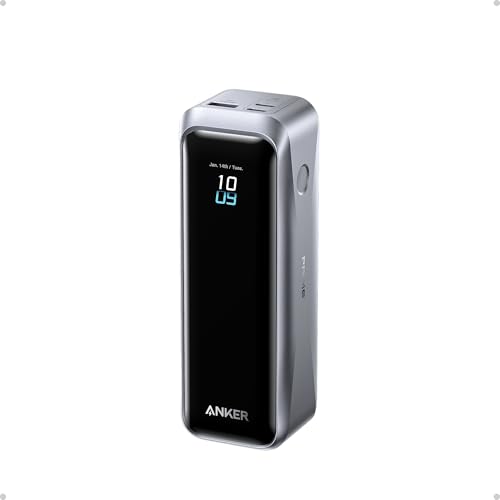
| Anker Prime 20,100mAh | Prints its watt-hours: 72.36Wh | Premium | |
| AOHI 20000mAh | 310W total; 74Wh, published | Premium | |
How to choose a power bank you can fly with
Watt-hours are the rule; mAh is not
This is the whole thing. The limit is written in watt-hours, and mAh on its own cannot tell you whether a bank clears it, because watt-hours are the capacity multiplied by the cell voltage. Three banks here do the arithmetic for you. Anker prints 20,100mAh alongside 72.36Wh. AOHI prints 20,000mAh alongside 74Wh. Volessence prints 27000mAh alongside 99.9Wh. Everyone else quotes mAh, adds the words TSA approved, and leaves the number that actually matters off the page.
Nobody approves a power bank
TSA approved appears on most of these listings and it describes nothing. There is no approval scheme, no list of models, no certificate. What exists is a capacity limit that the airline applies to whatever you are carrying. A bank under 100Wh complies whether or not the box says so; a bank over it does not comply no matter what the box says. Take the phrase as decoration and look for the figure instead.
Watch the big ones especially closely
The margin narrows as capacity climbs, which is exactly where the missing figure starts to matter. Volessence prints 99.9Wh on a 27000mAh bank, which is one tenth of a watt-hour under the line, and knowing that is worth a great deal at a security desk. Other high-capacity banks here quote only mAh. On a 10000mAh bank the question is academic, since nothing that size comes close to the limit. On anything above 20000mAh, find the watt-hour figure before you fly with it.
Flying to China? Look for the CCC mark
This is the one certification on this page that genuinely exists and genuinely gets enforced, and LISEN is the only brand here that mentions it. Chinese domestic flights require power banks to carry the CCC mark, and LISEN states plainly that uncertified banks get confiscated at security. That is a real, current, checkable requirement that the TSA phrasing on every other listing has nothing to do with. If China is on the itinerary, this narrows the page to two.
Built-in cables solve the actual problem
The failure with a power bank is rarely capacity. It is that you packed the bank and left the cable at home. VEEKTOMX builds in four, covering iPhone, USB-A, USB-C and Micro-USB, so whatever anyone hands you at the gate is covered. LISEN and Makoval build in USB-C, which handles most modern devices and doubles as the recharge cable for the bank itself. It is a small design decision that removes the whole category’s most common annoyance.
Output decides whether it charges a laptop
Phone banks and laptop banks are different tools. Anker’s 220W total with 140W on a single port will fast charge a 16-inch laptop through a 5A cable. AOHI goes to 310W with dual 140W USB-C ports. Makoval’s 65W handles a small laptop or several phones. The 10000mAh banks at 22.5W are phone chargers, and that is fine. The two AC-outlet designs go the other way entirely, offering a 110V socket at 130W for things with no USB option at all.
LISEN 10000mAh
The cheapest bank here, and the one with the certification that actually gets checked. It carries the CCC mark, which Chinese domestic flights require and without which, LISEN says, power banks get confiscated at security. That is a real requirement with a real consequence. Around it is a seamless aluminum alloy body half an inch thick and 6.7 oz, with a built-in USB-C cable supporting 22.5W fast charging that also recharges the bank itself, so one cable does both jobs and there is nothing to forget. At 10000mAh the flight limit is not a question.
Pros:
- Cheapest bank here
- CCC marked; the certification China actually enforces
- Half an inch thick, 6.7 oz, seamless aluminum alloy
- Built-in USB-C works both ways; nothing to pack
Cons:
- Quotes no watt-hour figure, like most here
- 22.5W is a phone charger; no laptop
- One cable type only
Best for: a slim everyday bank, and any itinerary through China.
VEEKTOMX 10000mAh
The best-selling bank here by a wide margin, and it wins on the thing that actually goes wrong. Four cables are built in, iPhone, USB-A, USB-C and Micro-USB, which means there is no cable to forget, no cable to tangle, and no device at the departure gate it cannot help. Ten thousand mAh of lithium polymer is enough for roughly 2.3 iPhone charges or 1.8 on a Samsung, which is a weekend. It is slim enough to live in a jacket pocket. At this capacity nothing about the flight limit is in doubt, whatever the listing calls itself.
Pros:
- Comfortably the best-selling bank here
- Four built-in cables; covers essentially any device
- Slim, cheap, and roughly 2.3 iPhone charges
- Well under the flight limit at 10000mAh
Cons:
- No watt-hour figure published
- No CCC mark for flights within China
- A phone bank; it will not charge a laptop
Best for: never packing a cable again, which is why it outsells everything.
LISEN 20000mAh
Double the capacity, the same CCC mark, and a build argument worth hearing. LISEN points out that most banks are assembled from several parts that crack and bulge over time, and answers it with a single alloy body, which is a specific claim about a specific failure rather than a general boast about quality. Twenty thousand mAh is quoted as more than 40 hours of extra power, with a built-in USB-C cable and 35W fast charging, enough for a tablet or a very light laptop. It is aimed at weekends away and cruises as much as flights.
Pros:
- CCC marked; cleared for Chinese domestic flights
- One-piece alloy body; a real answer to bulging and cracking
- 35W and a built-in USB-C cable
- Double the capacity for a small step in price
Cons:
- No watt-hour figure, and capacity is where that starts to matter
- 35W is marginal for a laptop
- Sells modestly
Best for: a long trip through China, in a body that will not swell.
Makoval 24000mAh
The most capacity per pound on this page. Twenty-four thousand mAh with 65W output is real laptop territory, and 65W is the figure that separates a bank which tops a laptop up from one that actually runs it, at a price the premium brands do not approach. Four outputs run at once, so a phone, tablet, earbuds and laptop all charge together, and a built-in USB-C cable doubles as a carry strap. An LED display shows the exact percentage left rather than four ambiguous dots. What it does not print, at a capacity where you would want it, is a watt-hour figure.
Pros:
- 24000mAh at 65W; genuine laptop charging
- Four devices at once
- LED display shows the exact percentage remaining
- Built-in cable doubles as a carry strap
Cons:
- No watt-hour figure, at a capacity where it matters
- 65W is well short of the 140W flagships
- Sells poorly
Best for: laptop power on a budget, with the percentage on a screen.
Volessence 27000mAh
A mains socket in a bag, and the most useful number on this page. It prints 99.9Wh next to its 27000mAh, which is a tenth of a watt-hour below the limit, and knowing that with certainty is exactly what you want when a bank this size meets a security desk. The 110V AC outlet delivers up to 130W, which powers things that have no USB option at all: a camera charger, a projector, an older laptop brick. Two QC 3.0 USB ports handle phones. It is 6.5 by 5.9 by 1.6 inches and 2.6 lb, recharging in four to five hours from its DC input.
Pros:
- Publishes 99.9Wh; you know exactly where you stand
- A real 110V AC outlet at up to 130W
- Runs devices with no USB option at all
- Two QC 3.0 ports; full dimensions and weight published
Cons:
- 2.6 lb; the heaviest thing here by far
- 99.9Wh leaves no margin at all under the limit
- Needs its own DC charger to refill
Best for: a mains socket at 30,000 feet, with the paperwork settled.
Anker Prime 20,100mAh
The one that does it properly. Anker prints 20,100mAh and 72.36Wh together in the same sentence, which is the whole answer to the question this page exists for, and describes it as flight-ready rather than leaving you to guess. Behind that clarity is the most complete bank here: 220W total across two USB-C and one USB-A, with 140W on a single port to fast charge a 16-inch laptop through a 5A cable, and 100W input that puts it back to half in 25 minutes. Anker quotes 4.2 days of video streaming on a phone. Two-way charging throughout.
Pros:
- Prints both mAh and 72.36Wh; the flight question answered
- 220W total; 140W on one port for a 16-inch laptop
- 100W input; back to half in 25 minutes
- Three ports, two-way charging, from an established brand
Cons:
- Expensive; roughly six times the best seller
- No CCC mark for Chinese domestic flights
- 140W needs a 5A cable you may not own
Best for: flying with a laptop, and knowing the number before you go.
AOHI 20000mAh
The most output on the page, and it publishes its watt-hours too: 20,000mAh and 74Wh, well clear of the limit. Three hundred and ten watts total across dual USB-C and a USB-A, with both USB-C ports capable of 140W, means two laptops at full speed at once, which nothing else here manages. Those same ports take 180W in, refilling the bank fully in about an hour, so a coffee stop is enough. A color display shows remaining charge and what each port is doing. It is the most expensive bank here and the most capable per gram.
Pros:
- Publishes 74Wh alongside 20,000mAh
- 310W total; dual 140W USB-C ports
- 180W input refills it in about an hour
- Color display showing charge and live port activity
Cons:
- The most expensive bank here
- Sells poorly against Anker
- 310W needs chargers and cables most people do not own
Best for: two laptops at once, refilled in an hour.
The verdict
One rule above all the picks: ignore the words TSA approved and find the watt-hour figure. Under 100Wh flies in your carry-on without permission. Only three banks here print the number.
Best overall: Anker Prime 20,100mAh. It prints 20,100mAh and 72.36Wh in the same breath and calls itself flight-ready, which is the only listing behavior that actually helps at a security desk. Behind that it is the most complete bank here: 220W across three ports, 140W on one of them for a 16-inch laptop, and a 100W input that returns it to half in 25 minutes. You pay a lot for it, and you know exactly what you are carrying.
Best value: VEEKTOMX 10000mAh. The best seller here by a distance, because it fixed the problem people actually have. Four cables are built in, so there is nothing to forget and nothing to tangle, and at 10000mAh no flight limit is remotely in question. Roughly 2.3 iPhone charges, slim enough for a jacket pocket, and cheap. It will not charge a laptop and it was never trying to.
Best premium: AOHI 20000mAh. The most powerful thing here and it publishes its 74Wh, well under the line. Dual 140W USB-C ports out of a 310W total mean two laptops charging at full speed at once, and 180W in refills the whole bank in about an hour. It costs the most on this page and needs cables and chargers to match, and nothing else comes close on capability per gram.
FAQ
What is the actual rule?
Spare lithium batteries up to 100 watt-hours go in carry-on with no permission needed. Between 100 and 160 watt-hours you need airline approval, and there is a cap on how many. Above 160 watt-hours they cannot fly. Everything on this page is meant to sit under the first line.
Is “TSA approved” a real certification?
No. There is no approval scheme and no list of approved models. The limit applies to whatever you are carrying regardless of what the box says. A bank under 100Wh complies without the phrase; one over it does not comply with the phrase.
How do I convert mAh to watt-hours?
You cannot, from mAh alone, because it depends on cell voltage, which most listings omit. That is why the figure matters. Anker prints 72.36Wh for 20,100mAh, AOHI 74Wh for 20,000mAh, and Volessence 99.9Wh for 27000mAh. Everyone else leaves you guessing.
Which one should I avoid taking to China?
Anything without the CCC mark. Chinese domestic flights require it, and LISEN states plainly that uncertified banks are confiscated at security. LISEN’s two models are the only ones here that mention it, which is the certification that genuinely gets enforced.
Do I need laptop charging?
Only if you have a laptop. The 10000mAh banks at 22.5W are phone chargers and are clear about it. Makoval’s 65W runs a small laptop, Anker’s 140W fast charges a 16-inch one, and AOHI does two at once. For a phone and a weekend, none of that is money well spent.
This article may contain affiliate links; see our Affiliate Disclosure.