Kitsch spends a line of its own listing pointing at what everyone else is selling: unlike porous stone alternatives, its tool is non-absorbent and easy to sanitize. That is a competitor’s weakness named out loud, and it is the real fork in this category. You are dragging this thing through oil, across your face, repeatedly, and then putting it back in a drawer. What it is made of decides what happens next.




Worth knowing before you start: several tools sold under this search are body scrapers for physical therapy, with different edges for muscle and fascia work. They are a different instrument. Everything below is made for a face.
At a glance
| Tool | Standout feature | Price tier | Link |
|---|---|---|---|
| Rena Chris Jade | Cheapest here; traditional jade stone | Budget | |
| Rena Chris Steel | Cheapest steel; cool without a freezer | Budget | |
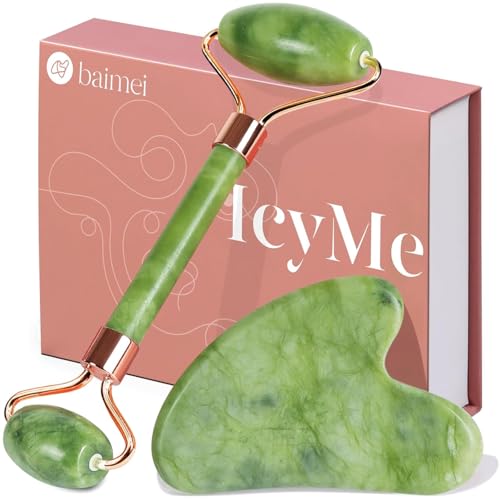
| BAIMEI IcyMe Set | Roller and gua sha; made to be frozen | Budget | |
| Rena Chris 4-Piece | Four shapes for four parts of the body | Mid-range | |
| TWPER Set | The only listing publishing its dimensions | Mid-range | |
| PLANTIFIQUE Jade | Includes a detailed guide to using it | Premium | |
| Kitsch Steel | Best seller; weighted, and names the hygiene issue | Premium | |
How to choose a gua sha tool
Steel or stone is the whole decision
Everything else here is detail. Stainless steel is non-porous, so oil and product sit on the surface and wipe off, and Kitsch makes exactly that argument against the stone alternatives. Jade and other stones are mineral and porous to some degree, which is why they feel the way they do and why they absorb what you drag across them. Neither is wrong and one asks more of you: a stone tool used daily with serum needs cleaning properly, and steel needs a wipe. If the tool lives in a bathroom and gets used every morning, that difference compounds.
Steel is cold; stone has to be made cold
The cool sensation is a large part of why people reach for these, and the two materials get there differently. Metal sits below room temperature and Rena Chris describes its steel tool as self-cooling, which is simply what steel does against skin. Stone does not, which is why BAIMEI builds its whole pitch around chilling or freezing the set first, and calls it IcyMe. That is a real workflow difference: steel is cold when you pick it up, and stone is cold if you remembered yesterday to put it in the fridge.
Weight is what does the work
A gua sha tool is drawn across skin under light pressure, and how much of that pressure comes from the tool rather than your hand changes how controlled the stroke is. Kitsch is the only brand here that mentions it, describing the tool as expertly weighted for precision and control. That is worth noticing because a very light tool means you press, and pressing is where technique goes wrong. Steel is denser than jade, so a steel tool of the same shape carries more of its own weight down.
The shape decides where it fits
The classic gua sha outline has a long curve for a cheekbone, a notch for a jaw, and a point for smaller areas, and most single tools try to cover all of it. Rena Chris sells a four-piece set in various shapes aimed at different parts, from face to neck to hands and feet. TWPER’s is heart-shaped. If you only work on your face, one well-shaped tool is enough; if you want to run it down a neck, a shoulder or a calf, the shapes stop being interchangeable and the set makes sense.
Only one listing tells you how big it is
This is a tool you hold, and its size decides whether it fits a jawline or overshoots it. TWPER is the only brand on this page that publishes dimensions: a brush at 3.15 by 2.36 inches and a gua sha at 3.35 by 2.17. Everybody else shows a photo against no reference at all and lets you guess. A tool that turns out palm-sized when you wanted something to work under an eye is a tool you use once. Ask before ordering if it is not stated.
A guide is worth more than the tool
Gua sha is a technique before it is an object, and direction, angle and pressure are the whole thing. PLANTIFIQUE includes a detailed guide, and both Rena Chris tools reference an instruction of use, which is the real acknowledgement that a stone with no method is a stone. All of them say to use it with oil or serum, and that is not a sales line: dragging a hard edge across dry skin is the mistake beginners make. If you have never done this, the instructions matter more than the material.
Rena Chris Jade
The cheapest thing here by some way, and it is the traditional article: a jade stone with an ultra-smooth cool-touch surface that Rena Chris says glides freely without pulling. That last phrase is the one to notice, because pulling is what a badly finished edge does and what makes people stop using these. It arrives in a presentation box, which at this price is faintly absurd and makes it a genuinely easy gift. Rena Chris describes gua sha as a traditional Chinese practice and points you at its instructions, which is a more accurate framing than most.
Pros:
- Cheapest tool on this page by a wide margin
- Ultra-smooth finish; glides rather than pulls
- Traditional jade stone; cool to the touch
- Presentation box; instructions referenced
Cons:
- Stone is porous; it needs proper cleaning after oil
- Cool only if you chill it first
- No dimensions published
Best for: trying the traditional material for the price of a coffee.
Rena Chris Steel
The cheapest steel tool here and Rena Chris aims it squarely at beginners, which is fair. Steel is the forgiving material: it is durable, it does not chip if you drop it on a tiled floor the way stone does, and it is self-cooling, which means it is already cold against your face without anybody having planned ahead. It works with massage oils or lotions, which is the correct way to use any of these, and it comes with instructions. It is the second best-selling tool on this page and costs a fraction of the leader.
Pros:
- Cheapest steel tool here; the second best seller
- Self-cooling; cold without a fridge
- Will not chip on a tiled bathroom floor
- Non-porous; wipes clean after oil
Cons:
- No dimensions published
- No weight or balance described
- Plainer than the branded steel tools here
Best for: starting with steel, for almost nothing.
BAIMEI IcyMe Set
Two tools rather than one, and BAIMEI is upfront about how the cold gets there: chill or freeze them first. That is the real instruction stone requires and most stone listings leave out. The roller and the gua sha do different jobs, the roller for broad passes and the flat tool for the jawline with gentle upward pressure, so the set is not padding. The jade is natural with a reinforced frame BAIMEI says will not loosen, which is the usual failure of a cheap roller: the stone works free of the axle and rattles.
Pros:
- Roller and gua sha together; two different strokes
- Real that stone needs chilling or freezing first
- Reinforced frame; the roller should not work loose
- Natural jade, polished to roll quietly
Cons:
- Only cold if you planned ahead
- Stone is porous; the roller especially is hard to clean
- No dimensions published
Best for: the cold sensation, if you will remember the freezer.
Rena Chris 4-Piece
Four stones in four shapes, which is the answer if the face is not the only thing you want to work on. Rena Chris is clear about the range: neck, back, hands, wrists, shoulders and feet, and those are genuinely different geometries that one outline cannot cover. A tool shaped for a cheekbone is the wrong tool for a calf. The stone is smooth-finished so it does not catch, and it arrives as a set rather than as four separate purchases. It is the worst-selling tool on this page, which says more about what people use these for than about the set.
Pros:
- Four shapes for genuinely different body parts
- Covers neck, shoulders, hands and feet as well as face
- Smooth finish that does not catch
- Cheaper than buying shapes separately
Cons:
- The worst-selling tool here
- Four porous stones to keep clean instead of one
- No dimensions published for any of them
Best for: working below the jawline, where one shape stops fitting.
TWPER Set
The only listing on this page that tells you how big anything is: the brush measures 3.15 by 2.36 inches and the gua sha 3.35 by 2.17. On a tool you hold against your own face that is not a small courtesy, and everybody else expects you to judge from a photograph of a stone on a white background. The pairing is a heart-shaped stainless steel scraper and a soft golden-bristled brush with an ergonomic arc, which are two quite different sensations, and both come with covers and a compact case so they travel without collecting the inside of a bag.
Pros:
- The only listing publishing dimensions for both tools
- Steel scraper and soft brush; two different sensations
- Protective cover and compact case; travels clean
- Non-porous steel, easy to wipe down
Cons:
- Sells modestly; a little-known brand
- Bristles need cleaning like any brush
- No weight described
Best for: knowing what size it is before it arrives.
PLANTIFIQUE Jade
Authentic jade, handcrafted, and the thing that earns the price is not the stone: it is the detailed guide in the box. Gua sha is a technique rather than an object, and the difference between a tool that gets used every morning and one that goes in a drawer after a week is almost always whether anybody explained the direction, the angle and the pressure. PLANTIFIQUE includes that. It also says the tool is quality inspected for durability, which on a stone that will meet a bathroom floor eventually is a fair thing to check.
Pros:
- Includes a detailed guide; the technique is the product
- Authentic handcrafted jade
- Quality inspected for durability
- Shaped for the jawline specifically
Cons:
- Among the priciest here, for a single stone
- Porous; needs real cleaning after serum
- No dimensions or weight published
Best for: a first tool with somebody explaining how to use it.
Kitsch Steel
The best-selling tool here and the only listing that argues rather than describes. It names the hygiene problem with stone directly, being non-absorbent and easy to sanitize where a porous alternative is not, and on something used daily with oil that is the strongest point anybody on this page makes. It is 100% stainless steel, so it adapts to temperature naturally rather than needing a freezer, and it is the only tool here described as expertly weighted, which matters because weight in the tool means less pressure from your hand. Shaped for face and neck.
Pros:
- The best-selling tool on this page
- Names the hygiene problem with porous stone directly
- The only one described as weighted for control
- Naturally cool; no freezer required
Cons:
- Among the most expensive tools here
- No dimensions or actual weight published
- Steel lacks the ritual appeal of stone, for some people
Best for: daily use with oil, cleaned properly, without thinking about it.
The verdict
Two things decide this page. Steel is non-porous and cold on its own; stone is porous and cold if you planned ahead. And several tools under this search are body scrapers for physical therapy, not facial tools at all.
Best overall: Kitsch Steel. The best seller here, and the only listing that makes an argument rather than a description: non-absorbent and easy to sanitize, unlike the porous stone everyone else sells, which on a tool used every morning with serum is the point that matters most. It is also the only one describing itself as weighted, and weight in the tool means less pressure from your hand, which is where technique usually goes wrong.
Best value: Rena Chris Steel. The cheapest steel tool on this page and the second best seller, at a fraction of the leader’s price. It is self-cooling, so it is cold when you pick it up rather than cold if you remembered the fridge, it will not chip on a bathroom floor, and it wipes clean. Rena Chris aims it at beginners and includes instructions, which is the right call.
Best premium: PLANTIFIQUE Jade. If you want the traditional material, this is the one that also tells you what to do with it. Gua sha is a technique before it is an object, and the detailed guide in the box is the difference between a tool used daily and a stone in a drawer. Authentic handcrafted jade, quality inspected, and porous like all stone, so clean it properly.
FAQ
Steel or jade?
Steel is non-porous, wipes clean, will not chip, and is cold on its own because metal sits below room temperature. Stone is the traditional material, feels different, absorbs some of what you drag across it, and needs chilling first, which is why BAIMEI’s whole pitch is to freeze it. Kitsch names the hygiene difference directly.
Do I need to chill it?
With stone, yes, if you want it cold. BAIMEI says chill or freeze, and that is the real instruction. Steel is already cool against skin without anybody planning ahead, which Rena Chris describes as self-cooling. It is a workflow difference more than a performance one.
Are all of these for the face?
No. Several tools under this search are muscle scrapers for physical therapy, with S-shaped and C-shaped edges for fascia and large muscles. They are a different instrument for a different job. Rena Chris’s four-piece set is the middle ground, with shapes for the neck, shoulders, hands and feet as well.
How big are these?
Only TWPER says: a 3.35 by 2.17 inch gua sha and a 3.15 by 2.36 inch brush. Everyone else shows a photo against nothing. On a tool you hold against your own jaw, size decides whether it fits or overshoots, so ask if it is not stated.
Do I need oil?
Yes, and every listing here says so. Dragging a hard edge across dry skin is the beginner’s mistake. Both Rena Chris tools point you at an instruction sheet, and PLANTIFIQUE includes a detailed guide, which on a technique-led practice is worth more than the material it is made from.
This article may contain affiliate links; see our Affiliate Disclosure.