One charger here does 100 watts on its USB-A port and 25 on its USB-C. That is backwards from every other charger on earth, and its last bullet explains why: the five-pin USB-A design is the exclusive trigger for the fast charging. This family’s proprietary protocol lives on a modified USB-A port with an extra pin. Plug into the USB-C socket expecting speed and you get a quarter of it, from the same brick.



At a glance
| Product | What it actually is | Price tier | Link |
|---|---|---|---|
| Jelanry USB-C to C | A cable. Claims 125 watts | Budget | |
| Jelanry 6FT 2-Pack | A cable. Rapid data syncing, and no Android Auto | Budget | |
| Jelanry USB-A to C | A cable. 100 watts in the title, 120 in the bullet | Budget | |
| OnePlus Car Charger | A car charger. USB-A does 100W, USB-C does 25 | Mid-range | |
| OnePlus 65W Warp Charger | The only wall brick on the page | Premium | |
How to choose
One of these is a brick
You searched for a charging brick. Three results are cables, one is a car charger that plugs into a cigarette lighter, and exactly one is a thing you put in a wall socket. That is worth establishing before anything else, because the cables are cheap and appear first and they will not charge anything on their own. One of them says so, noting in brackets that it needs to be used in conjunction with the proper charger.
The fast charging is on the USB-A port
Read the car charger’s first bullet twice. Its USB-A port does 80 or 100 watts. Its USB-C port does 25. Everywhere else in electronics that ratio is the other way round, and the reason is in the last bullet: the five-pin USB-A design is the exclusive trigger for the fast charging. A standard USB-A connector has four pins. This family added a fifth to signal its own protocol, which means the fast charging is a modified USB-A thing and the USB-C socket is left doing ordinary, slower, universal charging.
Six amps, not three
This protocol works by pushing a lot of current at low voltage rather than raising the voltage the way the universal standard does, and that current has to go down a wire. An ordinary USB-C cable carries three amps. Look at what these carry: six, six and a half, seven and a bit, and one claiming ten. That is why the cable is not an accessory here; it is part of the charger. Plug the right brick into the wrong cable and the phone falls back to slow charging, and nothing will tell you why.
The brick, the cable and the phone all have to agree
This is what makes this family different from everything else you own. Universal fast charging negotiates: any compliant charger and any compliant cable will find a speed together. A proprietary protocol does not negotiate, it recognizes, and it needs all three parts to be in on it. That is why the one brick here ships with its own cable rather than expecting you to have one, and why every cable listing on this page names the phones by model number.
Check the model list, not the wattage
The only brick here lists the phones it charges and the list stops at one generation. The cables list phones several generations newer. Nothing on this page is a wall charger for a current handset, which is a strange gap and an easy one to walk into, because 65 watts sounds like a number rather than a compatibility statement. On this page the wattage is a property of the pairing rather than of the charger.
Rapid data syncing, and no Android Auto
One cable puts rapid data syncing in its title and then explains in its third bullet that it does not work with Android Auto. Those two facts sit oddly together, because Android Auto is data over the same cable. What it really means is that this is a charging cable with the conductors optimized for current rather than signal, which is a legitimate design and is the trade you are making. If the cable is going in your car, that bullet is the one to read.
The resistor is the real detail
One listing mentions a 56 kilohm resistor in the connector. That is not marketing; it is the component that tells a device how much current the cable can safely carry, and a cable without the right one either undercharges or lies about its capacity. It is the only genuinely technical claim in this whole set, on a nine-dollar cable, and it tells you somebody there knows what the part does.
Watch the wattage drift between title and bullet
One cable is titled at 10 amps and 100 watts. Its first bullet says 120 watts max. Its second says 120 max and 100 fast charging. Those are three numbers for one product, and the plain reading is the smallest. Cables do not have a wattage of their own; they have a current rating, and the watts depend entirely on what the brick at the other end decides to push.
Jelanry USB-C to C
Two USB-C to USB-C cables for under ten dollars, at 3.3 feet, which is the desk length rather than the sofa one. The listing covers a wide spread of phones across several brands, which is the real thing about a C-to-C cable: it is the universal shape, so it will charge almost anything at the speed the universal standard negotiates. What it will not do is trigger the five-pin USB-A protocol this page is really about, because that protocol is not on this connector. Its 125 watt claim is a property of the brick.
Pros:
- Two cables for under ten dollars
- USB-C to USB-C; the universal shape that fits everything
- Works across many brands and phones, not just one family
- 3.3 feet; the right length for a desk
Cons:
- It is a cable, not a brick
- Not the connector the five-pin fast charging uses
- Its watt figure belongs to whatever charger you plug it into
Best for: everything except the protocol you came for.
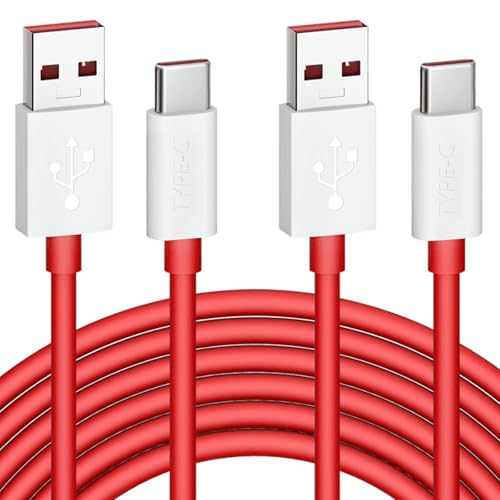
Jelanry 6FT 2-Pack
Two six-amp cables at six feet for ten dollars, which is double the current an ordinary USB-C cable carries and is the whole requirement of this protocol. It also names the 56 kilohm resistor in its connectors, which is the component that tells your phone what the cable can take and is the only real engineering detail on this page. Then its third bullet says it does not work with Android Auto, in a listing whose title promises rapid data syncing. It is a charging cable, and a good one.
Pros:
- Six amps; double an ordinary USB-C cable
- Names the 56 kilohm resistor; the only technical detail here
- Two cables at six feet for ten dollars
- Tested to 5,000 bends; reinforced joints
- 180 days of cover
Cons:
- Says rapid data syncing and then rules out Android Auto
- It is a cable, not a brick
- The 80 watt figure depends entirely on the charger
Best for: six amps and a real bullet about what it cannot do.
Jelanry USB-A to C
Ten amps, which is the highest current rating here and is the right shape for this protocol, because USB-A to USB-C is the direction the five-pin trigger works in. It is also real about the one thing that matters, noting in brackets that it needs to be used together with the proper charger, which is the sentence every cable on this page should carry. Its wattage wanders: the title says 100, the first bullet says 120, and the second says both. Six and a half feet, which it argues is the length that reaches both front seats.
Pros:
- Ten amps; the highest current rating here
- USB-A to USB-C; the direction the fast protocol uses
- Says outright that it needs the proper charger to work
- Two cables at 6.6 feet; reaches both front seats
Cons:
- Title says 100 watts, bullet says 120
- It is a cable, not a brick
- No resistor or protocol detail given
Best for: the right shape, if you already own the brick.
OnePlus Car Charger
It explains the whole page in one line: the five-pin USB-A interface is the exclusive trigger for the fast charging. That is why its USB-A port does 80 or 100 watts and its USB-C port does 25, which looks like an error and is the architecture. It publishes both ports plainly, names every protocol each one speaks, includes a 7.3-amp cable, powers two devices independently, and adds a battery voltage monitor and a lit connector so you can find it in the dark. It is a car charger, not a wall brick.
Pros:
- Explains the five-pin trigger; the only listing that does
- Publishes both ports separately, and every protocol each speaks
- A 7.3-amp cable included; two devices powered independently
- Battery voltage monitor; lit connector for the dark
- Works on 12V and 24V vehicles
Cons:
- It is a car charger, on a page about wall bricks
- Its USB-C port is capped at 25 watts
- The fast port is USB-A, so bring the right cable
Best for: the only listing that explains how any of this works.
OnePlus 65W Warp Charger
The only wall charger on this page, which makes it the only answer to the question. It comes with its own 6.5-amp cable rather than assuming you own one, and that is not generosity, it is necessity: a three-amp cable cannot carry this protocol and the phone will silently fall back to slow charging. It takes 100 to 240 volts, so it travels anywhere with a plug adapter. Its plug is tested to ten thousand cycles. Its compatibility list stops at one generation of handsets, several behind the phones the cables here name.
Pros:
- The only wall brick on this page
- Includes the 6.5-amp cable the protocol requires
- 100 to 240 volts; travels worldwide
- Plug tested to ten thousand cycles
- Names exactly which phones it charges
Cons:
- Its phone list stops several generations back
- 65 watts, where the cables here claim 80 and up
- One port; no second device
Best for: the only brick here, if it matches your phone.
The verdict
This protocol does not negotiate, it recognizes, and it needs the brick, the cable and the phone all to be in on it. That is why the fast port here is a five-pin USB-A rather than the USB-C you would expect, why the cables carry six to ten amps instead of three, and why every listing names phones by model rather than quoting a standard.
Best overall: OnePlus 65W Warp Charger. It is the only wall brick on a page you came to looking for one, and it ships with the 6.5-amp cable the protocol requires rather than assuming your drawer contains a suitable one, which it almost certainly does not. It runs on any mains voltage in the world. Check its compatibility list against your phone before ordering, because it stops several handset generations back, and on this page the wattage is a property of the pairing rather than of the charger.
Best value: Jelanry 6FT 2-Pack. Two six-amp cables for ten dollars, and six amps is double what an ordinary USB-C cable carries, which is the entire physical requirement here. It is also the only listing anywhere on this page that names a real component, the 56 kilohm resistor that tells your phone what the cable can take. Read its third bullet before you put one in the car: the title says rapid data syncing and the bullet rules out Android Auto.
Best premium: OnePlus Car Charger. Buy it for the car and read it for the education. It is the only listing on this page that explains why any of this behaves the way it does, telling you the five-pin USB-A is the exclusive trigger, which is why its own USB-A port does a hundred watts and its USB-C does twenty-five. It publishes both ports separately, names every protocol each one speaks, and includes a 7.3-amp cable. No other listing here is that straight.
FAQ
Why is the USB-A port faster than the USB-C?
Because the fast protocol lives on a modified five-pin USB-A connector, which one listing here explains. Standard USB-A has four pins. The USB-C socket is left doing ordinary universal charging, which is why it caps at 25 watts.
Can I use any USB-C cable?
No. This protocol pushes high current rather than high voltage, and an ordinary cable carries three amps. These carry six, six and a half, seven and ten. The wrong cable means silent slow charging with no explanation.
Will a cable alone charge my phone fast?
No, and one listing says so in brackets: it needs the proper charger too. Cables have a current rating, not a wattage. The watts are whatever the brick decides to push.
Does the wattage tell me if it fits my phone?
No. Every listing here names phones by model, because a proprietary protocol recognizes rather than negotiates. The only brick here lists handsets several generations behind the phones its neighboring cables name.
Will these work with Android Auto?
One says outright that it will not, in the same listing that promises rapid data syncing. It is a cable built for current rather than signal, which is a fair trade and worth knowing before it goes in the car.
This article may contain affiliate links; see our Affiliate Disclosure.