Two pieces of gear promise to protect your lower back under a loaded bar, and they work in almost opposite ways. A back brace splints the spine and limits how far it can move; a lifting belt does the reverse, giving your abs something firm to push against so your own core does the bracing. Knowing which job you actually need is the difference between a belt that adds pounds to your deadlift and a brace that quietly weakens the muscles you came to train.


Most gym gear sold for back support during lifting is, despite the names, a lifting belt: a firm band you cinch around the waist to brace against, not a medical splint that immobilizes the spine. The picks below are all training belts, and they span the full range of how that bracing job gets done, from competition-narrow nylon to a wide, padded back panel that reads almost like a brace. They lead with the proven best sellers, so whether you squat heavy, deadlift for reps, do mixed functional work, or simply want your lower back to feel steadier under load, the most-bought options come first.
| Belt | Standout features | Price | Link |
|---|---|---|---|
| Element 26 Self-Locking 4" | Self-locking metal buckle, uniform 4" nylon, competition-approved, PT-designed | Mid-range | |
| Jaffick Leather (suede-lined) | Double-sided genuine leather, suede lining, double-pin steel buckle | Mid-range | |
| Jaffick Leather (lumbar) | Widened leather, suede pads, top-stitched, double-prong buckle | Budget | |
| RDX Auto-Lock 6.5" Padded | Auto-lock roller buckle, 6.5" padded back, contoured, EVA cushioning | Budget | |
| RDX Auto-Lock 6.5" Padded (alt color) | Auto-lock roller buckle, 6.5" padded back, contoured, EVA cushioning | Budget | |
| RDX Auto-Lock 6.5" Padded (alt color) | Auto-lock roller buckle, 6.5" padded back, contoured, EVA cushioning | Budget | |
| LPONNQ Padded Leather | Leather with suede lining, padded lumbar, double-prong roller buckle | Budget | |
| ProFitness Leather "Back Brace" | Genuine leather, core-stability focus, form-support marketing, durable | Mid-range | |
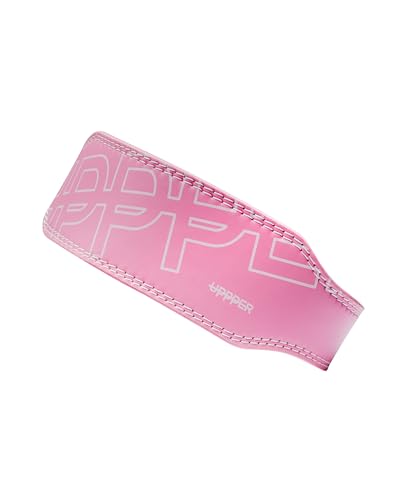
| UPPPER Tapered 4"-to-2.5" | Tapered vegan microfiber, 8 mm, double-prong, back padding, sweat-resistant | Premium | |
The price column shows a general tier only. Prices move often, so tap a link for the live figure on Amazon.
How to choose between a lifting belt and a back brace
The first decision is conceptual, not about color or buckle. A true back brace, the kind sold in a pharmacy for an injured back, wraps the lumbar region and restricts movement to take load off a sore spine while it heals. A lifting belt does something different and is what every product here actually is: it gives your abdominal wall a rigid surface to brace against, raising the pressure inside your trunk so the spine is stabilized from the inside by your own muscles. One immobilizes; the other amplifies. For training, you almost always want the belt.
Brace versus belt: which job do you need?
If your goal is to lift more safely and feel solid under a heavy squat or deadlift, a lifting belt is the tool, and you brace against it on purpose. If you are recovering from a genuine back injury, that is a medical question for a clinician, and a rigid medical brace, not a training belt, is the relevant device. Wearing a movement-limiting brace for everyday lifting can let the very muscles you are trying to strengthen switch off. The belts here that lean toward a brace-like feel, the wide padded RDX and the leather ProFitness marketed as a gym back brace, still work as belts you push against; they simply offer a broader, more reassuring band of contact.
Width and shape: where the support sits
Belt width drives the feel. A uniform 4-inch belt like the Element 26 puts even pressure all the way around, which is why it is favored for Olympic lifts and fast functional work where you bend and rotate. A tapered belt like the UPPPER is wider at the back (4 inches) and narrower at the front (2.5 inches), trading some front coverage for freedom to hinge at the hips during deadlifts without the belt digging into your ribs or thighs. The RDX goes widest of all at 6.5 inches of padded back support, the closest thing here to a brace-like wrap, with cushioning that spreads the contact across more of the lower back.
Material: nylon, leather, or microfiber
Nylon belts (Element 26) are flexible, low-profile, and need no break-in, which suits high-rep and varied training. Genuine leather (Jaffick, LPONNQ, ProFitness) is stiffer and offers a hard, unyielding wall to brace against, prized for maximal squats and deadlifts, though it can take time to soften. Vegan microfiber leather (UPPPER) aims to split the difference: a leather-like firmness that resists sweat and stays breathable. None is universally best; the stiffer the material, the more rigid the brace and the more it favors slow, heavy singles over fast circuit work.
Buckle and closure: speed versus rigidity
How the belt fastens decides both convenience and how hard you can cinch it. Self-locking and auto-lock buckles (Element 26, RDX) snap tight and release fast, ideal when you strip the belt between sets. Double-prong steel buckles (Jaffick, LPONNQ, UPPPER) take longer to thread but lock at a fixed, repeatable tightness that many heavy lifters prefer for a consistent brace every set. Single-prong and lever systems sit between the two. If you change the belt constantly, lean to a quick buckle; if you set one tightness and grind out heavy work, a prong buckle rewards you.
Sizing: measure your waist, not your pants
Every maker here repeats the same warning because it is the most common mistake: order by your measured waist, not your pant size. Wrap a flexible tape around your midsection at the navel, over the belly button, and match that number to the brand’s chart, since sizing differs between them. A belt that is too loose cannot give you a wall to brace against, and one too tight cannot be cinched at the notch you need. When you fall between sizes, most makers suggest sizing up.
Element 26 Self-Locking Weight Lifting Belt (4-Inch Nylon)
The best seller of this group earns it by solving the everyday annoyances of a training belt. A full-metal self-locking buckle engages automatically under load and stays put through squats, deadlifts, and cleans, while a quick-release roller lets you strip it off in a second between sets without grinding down any velcro. The straight 4-inch nylon body puts uniform pressure across the midsection for solid intra-abdominal stability, yet it is pliable and low-profile enough to need no break-in. It was designed by a doctor of physical therapy, meets the rules for sanctioned Olympic lifting and functional fitness events, and works equally for men and women across a clear XS-to-XL size range.
Pros
- Self-locking metal buckle stays tight under heavy load
- Quick-release roller for fast on-and-off between sets
- Uniform 4-inch nylon spreads even pressure all around
- Flexible, low-profile, and needs no break-in period
- Competition-approved and engineered by a physical therapist
Cons
- Nylon flexes more than stiff leather for maximal singles
- Mid-range price, above the cheapest options here
- Narrow uniform width offers less back coverage than padded belts
Best for: mixed functional training and Olympic lifts where a fast buckle and even, no-break-in support matter most.
Mid-range tier. Check price on Amazon
Jaffick Genuine Leather Lifting Belt (Suede-Lined)
This is the classic leather route to a hard bracing wall. Double-sided genuine leather gives a stiff, unyielding surface to push your abs against, the kind of rigidity that heavy squatters and deadlifters chase, while a widened structure spreads support across the lower back and abdomen. The detail that sets it apart is comfort: an inner suede lining adds padding so the belt firms up your brace without the sharp pinch a bare leather edge can cause. A sturdy double-pin steel buckle locks at a repeatable tightness, and top-stitched construction is built to hold up to heavy use over the long term. Remember to order by true waist measurement, not pant size.
Pros
- Stiff double-sided leather for a hard brace wall
- Suede lining cushions the skin and reduces pinching
- Double-pin steel buckle locks at a consistent tightness
- Widened body supports both back and abdomen
- Top-stitched leather built for years of heavy use
Cons
- Stiff leather needs a break-in period
- Double-pin buckle is slower to fasten than auto-lock
- Heavier and bulkier than a nylon belt
Best for: heavy squats and deadlifts where a rigid leather wall and a fixed, repeatable brace matter most.
Mid-range tier. Check price on Amazon
Jaffick Genuine Leather Lifting Belt (Lumbar Support)
The same leather formula in a slightly more budget-friendly package, with the lumbar back support front and center. It carries the brand’s hallmarks: double-sided leather for strength, suede pads to keep a tight belt from hurting the spine and back muscles, and reinforced top stitching that aims to withstand years of training. The widened design encourages a stable brace for squats, deadlifts, cross training, and general fitness, and a sturdy double-prong steel buckle keeps it locked under load. It reads as a near-twin to the suede-lined version, so the choice between them usually comes down to color, finish, and price on the day.
Pros
- Budget tier among the genuine-leather options
- Double-sided leather gives a firm, durable brace
- Suede pads protect the spine from a hard, tight edge
- Reinforced top stitching for long-term durability
- Widened lumbar design for stable back support
Cons
- Leather requires a break-in before it softens
- Double-prong buckle is slower than a quick-release
- Very similar to the other Jaffick, so compare current prices
Best for: lifters who want a stiff leather belt with strong lumbar support at the lowest leather price here.
Budget tier. Check price on Amazon
RDX Auto-Lock 6.5-Inch Padded Lifting Belt
If any belt here feels brace-like, it is this one. A 6.5-inch padded back panel, built from layered fabric, compressed EVA foam, and SpongEX cushioning, wraps a wide swath of the lower back, the broadest contact in this lineup and the closest a training belt gets to the reassuring coverage of a brace. The auto-locking roller buckle pairs with a long hook-and-loop strap so it will not spring open mid-lift, and the contoured shape is cut to follow the body so it supports your lumbar without fighting your movement. Made from durable polyester and nylon and offered in several colors, it brings wide, cushioned support at a budget price; just size by your waist measurement, not your pants.
Pros
- Wide 6.5-inch padded back, the most brace-like coverage here
- Layered EVA and SpongEX cushioning spreads pressure comfortably
- Auto-lock roller buckle resists springing open under load
- Contoured cut supports the lumbar without restricting movement
- Durable polyester-nylon build at a budget price
Cons
- Wide padded back can feel bulky during fast or rotational work
- Softer than stiff leather for maximal singles
- Hook-and-loop strap can wear over heavy long-term use
Best for: anyone wanting wide, cushioned, brace-like back coverage for squats and deadlifts on a budget.
Budget tier. Check price on Amazon
RDX Auto-Lock 6.5-Inch Padded Lifting Belt (Alternate Color)
Mechanically identical to the RDX above, this is the same 6.5-inch padded, contoured, auto-locking belt in a different colorway. Everything that makes the design appealing carries over: the wide cushioned back panel of fabric, EVA, and SpongEX for brace-like coverage, the tension-based roller buckle that stays shut through grueling sets, the body-following contour, and the durable polyester-nylon construction. The only meaningful difference is appearance, so if the first color is out of stock or this shade suits you better, you lose nothing in support or build. As always, choose your size from the waist chart rather than your pant size.
Pros
- Identical 6.5-inch padded support in a different color
- Auto-lock roller buckle holds firm through tough sets
- EVA and SpongEX cushioning for comfortable wide contact
- Contoured fit supports the lumbar without binding
- Budget price with durable polyester-nylon build
Cons
- Wide padded design feels bulky for fast circuit work
- Less rigid than leather for absolute-max attempts
- Differs from the other RDX only in color
Best for: the same wide, cushioned back support as the other RDX, chosen for color or availability.
Budget tier. Check price on Amazon
RDX Auto-Lock 6.5-Inch Padded Lifting Belt (Third Color)
A third color option of RDX’s popular padded belt, sharing the exact specification of its siblings. You get the same 6.5 inches of contoured back support built from layered fabric, compressed EVA, and SpongEX, the same auto-locking roller buckle backed by a long hook-and-loop strap that refuses to pop open, and the same resilient polyester-and-nylon shell rated for long, hard training sessions. Picking among the three RDX listings is purely a matter of which color you prefer and which is in stock and best priced, since the support and durability are the same across all of them. Size by your measured waist for the right fit.
Pros
- Same proven 6.5-inch padded back support, new color
- Reliable auto-lock buckle and strap combination
- Compressed EVA and SpongEX layers for cushioned contact
- Contoured shape eases movement while supporting the spine
- Resilient build at a budget price point
Cons
- Bulkier feel than narrow belts for varied training
- Padded fabric is softer than a rigid leather wall
- Identical to the other two RDX belts apart from color
Best for: buyers who want RDX’s wide padded support and prefer this particular colorway.
Budget tier. Check price on Amazon
LPONNQ Padded Leather Lifting Belt
The LPONNQ is the straightforward, affordable leather belt for someone who wants firm lumbar support without overthinking it. It pairs a leather body with a soft suede lining, so the padded belt cushions the lower back while still giving you something solid to brace against during squats, deadlifts, and other powerlifts. A double-prong, seamless roller buckle with a double loop secures the tab and holds the tension you set, and reinforced heavy-duty double stitching backs up the build. The feature list is shorter than the premium options here, but the essentials, leather firmness, lumbar padding, and a dependable buckle, are all present at the budget end.
Pros
- Leather body with a soft suede lining for comfort
- Padded lumbar support for heavy lifts
- Double-prong roller buckle with a securing double loop
- Reinforced heavy-duty double stitching
- One of the most affordable leather belts here
Cons
- Fewer documented features than premium belts
- Double-prong buckle is slower to fasten
- Leather may need breaking in to soften
Best for: a simple, budget-friendly padded leather belt for general strength training and lumbar support.
Budget tier. Check price on Amazon
ProFitness Genuine Leather Gym "Back Brace" for Lifting
Despite the name, this is a leather lifting belt, and it makes the brace-versus-belt point cleanly: marketed as a gym back brace, it actually works by increasing core stability, helping activate the abdominal muscles that stabilize the spine, exactly what a belt does. Built from genuine leather for durability under heavy use, it is positioned to improve form and posture during exercises so you can lift heavier with less injury risk. The maker emphasizes a soft-to-the-touch material that is comfortable, easy to adjust, and less prone to chafing, plus long-term value from leather that resists wearing out. For men or women who like the idea of a brace but want true training support, it bridges the two ideas.
Pros
- Genuine leather for durability under heavy training
- Boosts core stability by engaging the abdominal wall
- Supports better lifting form and posture
- Comfortable, skin-friendly material that resists chafing
- Long-lasting leather offers good value over time
Cons
- "Back brace" naming can mislead; it is a lifting belt
- Leather needs a break-in to soften
- Mid-range price among these options
Best for: lifters drawn to a brace concept who actually want firm, form-supporting belt-style core stability.
Mid-range tier. Check price on Amazon
UPPPER Tapered 4-Inch Premium Lifting Belt
The premium pick here is built around a smart shape. A tapered design runs 4 inches wide at the back for maximum lumbar support and narrows to 2.5 inches at the front, so it stays out of the way when you hinge into a deadlift instead of digging into your ribs or thighs. The body is 8 mm premium vegan microfiber leather with reinforced double stitching, engineered to be sweat-resistant, breathable, and long-lasting, while added back padding cushions the contact for comfort across long sessions. A double-prong buckle locks at a repeatable tightness, and it comes in standout colorways for men and women. It is the most refined balance of rigidity, comfort, and freedom of movement in this group.
Pros
- Tapered 4-inch back, 2.5-inch front for hinge-friendly lifting
- 8 mm vegan microfiber leather, firm yet sweat-resistant
- Reinforced double stitching for long-lasting durability
- Added back padding for comfort over long sessions
- Double-prong buckle locks at a consistent tightness
Cons
- Premium tier, the priciest belt here
- Double-prong buckle is slower than an auto-lock
- Narrower front offers less coverage than a uniform belt
Best for: deadlift-focused lifters who want a premium, hinge-friendly belt with firm support and lasting comfort.
Premium tier. Check price on Amazon
The verdict
Best overall
The Element 26 Self-Locking 4-Inch Belt takes the top spot, and not only because it is the best seller. It nails the core job of a lifting belt, an even 4-inch wall of pressure to brace against, then removes the friction: a self-locking metal buckle that holds under heavy load, a quick-release for fast changes between sets, no break-in, and competition approval. Designed by a physical therapist and suited to men and women across a wide size range, it is the most broadly capable belt here for squats, deadlifts, and varied functional work alike. Check price on Amazon
Best value
The RDX Auto-Lock 6.5-Inch Padded Belt wins on value, and it is the pick for anyone who really wanted brace-like coverage. For a budget price you get the widest, most cushioned back panel in this lineup, layered EVA and SpongEX over 6.5 inches, plus an auto-lock buckle that will not spring open and a contoured cut that supports without restricting. It delivers the broad, reassuring wrap people associate with a brace while still functioning as a belt you push against. With three colorways to choose from, availability is rarely an issue. Check price on Amazon
Best premium
The UPPPER Tapered 4-Inch Belt is the premium choice. Its tapered shape, 4 inches at the back and 2.5 at the front, gives maximal lumbar support while clearing the hips for clean deadlift hinges, and the 8 mm sweat-resistant microfiber leather with reinforced stitching and back padding feels both rigid and comfortable. For lifters who want the most refined balance of support, durability, and freedom of movement, it is worth the step up. Check price on Amazon
Frequently asked questions
What is the difference between a back brace and a lifting belt?
They do opposite jobs. A back brace wraps and restricts the lumbar spine to limit movement, typically to rest an injured or sore back. A lifting belt gives your abdominal muscles a firm surface to brace against, raising the pressure inside your trunk so your own core stabilizes the spine while you lift. Every product in this guide is a lifting belt, even the one named a gym back brace; they support you by giving you something to push against, not by immobilizing you.
Should I use a brace or a belt for strength training?
For training, use a belt. A movement-limiting brace can let the muscles you are trying to strengthen switch off, which is the opposite of what you want in the gym. A lifting belt, by contrast, helps you brace harder and lift with more stability while your core still does the work. A medical back brace is for recovering from an actual injury and is a question for a clinician, not a substitute for a training belt.
How wide should my lifting belt be?
It depends on your lifts. A uniform 4-inch belt, like the Element 26, gives even support and freedom to move, which suits Olympic lifts and varied functional training. A tapered belt, like the UPPPER, is wide at the back and narrow at the front so it does not interfere with the deadlift hinge. A wide 6.5-inch padded belt, like the RDX, spreads the most contact across the lower back for a brace-like feel during squats and deadlifts but can be bulky for fast, rotational work.
Leather or nylon: which belt material is better?
Neither is universally better. Stiff leather (Jaffick, LPONNQ, ProFitness) offers a hard, unyielding wall ideal for maximal squats and deadlifts, though it needs breaking in. Nylon (Element 26) is flexible, low-profile, and ready immediately, which suits high-rep and mixed training. Vegan microfiber leather (UPPPER) aims for leather-like firmness with better sweat resistance. Choose stiffer materials for heavy singles and more flexible ones for varied, faster work.
How do I choose the right belt size?
Measure your waist, not your pants. Wrap a flexible tape around your midsection at the navel, over the belly button, and match that figure to the specific brand’s size chart, since charts differ between makers. A belt that is too loose gives you nothing solid to brace against, and one that is too tight cannot be cinched where you need it. If you fall between sizes, most makers recommend choosing the larger one.
This article may contain affiliate links; see our Affiliate Disclosure.