Your TV is a 4K panel, but the built-in apps stutter, the interface lags, and half your services are missing. A streaming stick the size of a key fob fixes all of that for the price of a couple of takeout meals, plugging into a spare HDMI port and turning any set into a fast, up-to-date 4K streamer.


What separates a great 4K stick from a merely adequate one is a mix of picture support, snappy performance, and an interface you enjoy using every day. The good news is that the most popular options are all inexpensive and easy to set up, so the real decision is which ecosystem and which tier fits you. That serves a wide range of viewers: someone reviving an older 4K set, a traveler who wants their apps in a hotel, a household tired of a sluggish smart-TV menu, and a movie fan chasing the best possible picture. Here are five proven best-sellers compared.
At a glance
| Product | Standout feature | Price tier | Link |
|---|---|---|---|
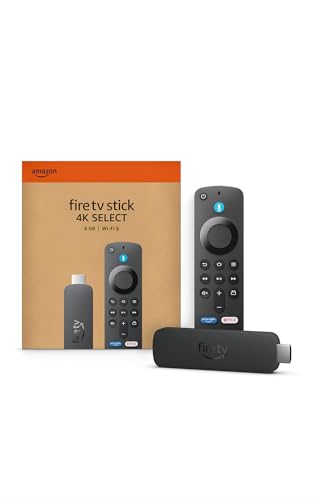
| Fire TV Stick 4K Select | Best-selling 4K stick with HDR10+ and Alexa voice | Budget | |
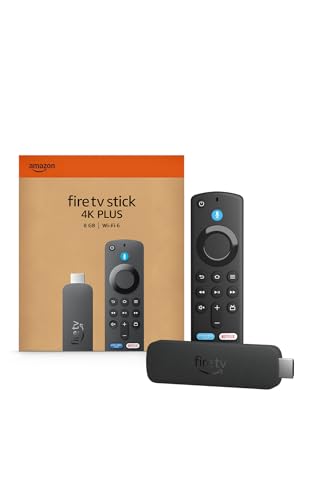
| Fire TV Stick 4K Plus | Wi-Fi 6, Dolby Vision, HDR10+, and Dolby Atmos | Mid-range | |
| Fire TV Stick 4K Max | Wi-Fi 6E, most storage, fastest navigation | Premium | |
| Roku Streaming Stick Plus | Simple 4K HDR interface, powers from the TV | Mid-range | |
| Roku Streaming Stick 4K | Dolby Vision and long-range Wi-Fi for far rooms | Premium | |
How to choose a 4K streaming stick
4K, HDR, and Dolby Vision
Every stick here outputs 4K Ultra HD, so the meaningful differences are in high dynamic range. HDR expands contrast and color so bright highlights and deep shadows both keep detail. HDR10 is the baseline; HDR10+ and Dolby Vision add scene-by-scene tuning for a more refined image, with Dolby Vision the format many film fans prize. If your TV supports Dolby Vision, a stick that matches it is worth prioritizing. If your set only does basic HDR, a mid-tier stick already covers you and you can save the premium for other features.
The ecosystem: two different philosophies
The platform you live in every day matters as much as the hardware. Fire TV leans on Alexa and rich, recommendation-driven rows, so it feels at home if you already use Alexa devices and like content surfaced to you. Roku takes a simpler, more neutral approach: a clean grid of your apps, easy search across services, and less pushing of any one provider. Both carry the major apps and a deep bench of free, ad-supported channels. Neither is wrong; pick the one whose style you would rather see every time you turn on the TV.
Wi-Fi and performance
Buffering usually traces back to the network, not the app. Newer sticks support Wi-Fi 6 or Wi-Fi 6E, which hold up better when many devices share your router and help keep 4K streams smooth. If your TV sits far from the router, a stick with a long-range receiver can be the difference between a clean picture and a spinning wheel. A faster processor also means quicker app launches and less lag scrolling menus, which is the kind of everyday speed you notice more than a spec sheet suggests.
Storage, gaming, and extras
Most people never think about a streaming stick’s storage until apps stop fitting. More onboard space lets you keep more apps, games, and downloads installed at once. Several sticks now support cloud gaming through a subscription and a compatible controller, turning the TV into a casual console without extra hardware. Ambient or screensaver modes that display art and photos are a nice touch when the TV would otherwise sit black. These extras rarely make or break a choice, but they can tip a close decision.
Power, ports, and physical fit
The dull details decide how tidy the result is. Some sticks draw power from the TV’s own USB port over a supplied cable, which means no wall adapter and no visible cord, while others want a mains plug for stable performance. A slim body matters if your HDMI ports are packed close together, since a fat stick can block the neighboring port; several here are shaped specifically to avoid that, and a short HDMI extender solves it when they cannot. Consider heat too, as a stick wedged behind a wall-mounted panel sits in still, warm air. If your TV’s ports face straight back against a wall mount, check clearance before you buy rather than after.
Free content and what you already subscribe to
It is easy to focus on hardware and forget the thing you will actually watch. Every stick here carries the major services, so no platform locks you out of the mainstream, but the free, ad-supported side differs in character: both ecosystems bundle hundreds of free live channels and large on-demand libraries at no cost, which genuinely offsets the purchase for casual viewers. If you lean on one provider’s app heavily, it is worth a moment to confirm it behaves well on your chosen platform. And if you share the TV, think about whose profile and recommendations you want on the home screen, because that shapes the daily experience more than any specification.
The remote and voice control
You touch the remote more than anything else, so its design counts. Look for dedicated power and volume buttons that control your TV, soundbar, or receiver, so one remote runs the whole setup. Voice search that understands natural requests, by actor, plot, or even a quote, saves a lot of on-screen typing. Preset app buttons jump straight to favorites. A remote that also helps you find itself is a small but genuinely appreciated feature for anyone who loses it in the couch cushions.
Amazon Fire TV Stick 4K Select
The 4K Select is the runaway best-seller, and it is the easiest recommendation for most people. It covers the essentials cleanly: brilliant 4K Ultra HD with HDR10+, fast performance, and instant access to Prime Video, Netflix, Disney+, YouTube, and thousands more apps, including a deep well of free, ad-supported content. Setup is plug-in-and-connect simple, Alexa handles search and launches by voice, and it doubles as a smart-home hub for lights, weather, and cameras. It even supports cloud gaming through Xbox Game Pass with a compatible controller. As the lowest-priced pick here that still delivers the full 4K experience, it is the value leader.
Pros
- Best-selling 4K stick with HDR10+ support
- Lowest price in this comparison
- Alexa voice search and smart-home control
- Cloud gaming support with a compatible controller
Cons
- No Dolby Vision, unlike the step-up models
- Interface pushes recommendations more than some prefer
Best for: most viewers who want a proven, affordable way to add fast 4K to any TV.
Amazon Fire TV Stick 4K Plus
The 4K Plus is the sweet spot in Amazon’s lineup, adding the picture and network upgrades most people actually want. It brings full cinematic support with Dolby Vision, HDR10+, and Dolby Atmos audio, so a capable TV and sound system get everything the content offers. Wi-Fi 6 keeps 4K streams smooth even when other devices crowd your router, and the improved processor makes navigation quicker. Alexa search is smarter here too, finding movies by actor, plot, or a memorable line. It also supports cloud gaming and the full app catalog. If you have a Dolby Vision TV or a soundbar with Atmos, this is the model that earns its modest step up in price.
Pros
- Dolby Vision, HDR10+, and Dolby Atmos support
- Wi-Fi 6 for smoother streaming on busy networks
- Faster performance than the entry model
- Smarter Alexa search and cloud gaming
Cons
- Costs more than the Select
- Less storage than the Max
Best for: viewers with a Dolby Vision TV or Atmos audio who want the best-value upgrade.
Amazon Fire TV Stick 4K Max
The 4K Max is the top of Amazon’s stick range and the one for people who want the fastest, most capable option. It pairs a powerful processor for lightning-quick app starts and fluid navigation with Wi-Fi 6E, the fastest wireless band represented here, for the smoothest streams on a capable router. It carries double the storage of the other Fire sticks, which means more room for apps, games, and downloads before you have to manage space. Picture support spans Dolby Vision, HDR10+, and Dolby Atmos, and an Ambient Experience turns an idle screen into a gallery of art and photography. For power users and smart-home enthusiasts, it is the most future-ready Fire stick.
Pros
- Fastest processor and Wi-Fi 6E support
- Double the storage of other Fire sticks
- Dolby Vision, HDR10+, and Atmos support
- Ambient art-and-photo screen when idle
Cons
- Highest price of the Fire options
- Wi-Fi 6E benefits need a compatible router
Best for: power users who want the quickest, most storage-rich Fire stick.
Roku Streaming Stick Plus
If you would rather have a simple, neutral interface than a busy one, the Roku Streaming Stick Plus is the friendliest 4K stick around. It delivers brilliant 4K picture with vivid HDR color and keeps the experience clean: a straightforward home screen that gets you to what you want fast, with every top app in one place and easy voice search across them. The sleek design tucks behind your TV and powers directly from the set, so there is no wall outlet, no extra cords, and no clutter. One voice remote handles TV power and volume, and you can even take it traveling to stream on other TVs. It also opens the door to hundreds of free live channels. For a fuss-free 4K experience, it is a standout.
Pros
- Clean, neutral interface that is easy to navigate
- Powers from the TV with no extra cords
- Voice remote controls TV power and volume
- Hundreds of free live channels built in
Cons
- No cloud-gaming focus like the Fire sticks
- Standard Wi-Fi rather than Wi-Fi 6 or 6E
Best for: viewers who prize a simple, clutter-free 4K setup.
Roku Streaming Stick 4K
The Roku Streaming Stick 4K is the step-up Roku for people who want the best picture and reliable reception. It adds Dolby Vision on top of sharp 4K and HDR10+, bringing rich, lifelike color to a capable TV, and its long-range Wi-Fi receiver is built for rooms farther from the router where lesser sticks stumble. You still get Roku’s clean home screen, easy cross-app voice search, and a single remote that runs TV power and volume. Like its sibling, it hides neatly behind the TV and travels well for streaming on the road. For a bedroom, a back room, or anywhere the signal gets weak, the stronger antenna and Dolby Vision make it the Roku to choose.
Pros
- Dolby Vision plus HDR10+ for a premium picture
- Long-range Wi-Fi for rooms far from the router
- Clean Roku interface and cross-app voice search
- Compact, travel-friendly design
Cons
- Highest price among these sticks
- No cloud-gaming emphasis
Best for: Roku fans who want top picture quality and strong reception in far rooms.
The verdict
Best overall: the Fire TV Stick 4K Select. As the best-seller, it delivers the full 4K experience, Alexa voice, and a huge app library at the lowest price here, which makes it the right call for most people.
Best value: the Fire TV Stick 4K Plus. Dolby Vision, HDR10+, Atmos, and Wi-Fi 6 for a small step up in price is the upgrade that pays off if your TV and sound system can use it.
Best premium: the Fire TV Stick 4K Max for its Wi-Fi 6E, extra storage, and top speed. Among Roku fans, the Streaming Stick Plus is the simple, clutter-free pick, while the Streaming Stick 4K adds Dolby Vision and long-range Wi-Fi for tougher rooms.
Frequently asked questions
Do I need a 4K TV to use these? To see 4K, yes. On a 1080p TV the sticks still work and give you a faster interface and all the apps, but the picture tops out at your TV’s resolution.
What is the difference between HDR10+ and Dolby Vision? Both improve contrast and color scene by scene. Dolby Vision is supported by many premium films and TVs; if your set lists it, a stick that matches it gets you the best image. Otherwise HDR10 or HDR10+ is plenty.
Fire TV or Roku, which is better? Neither is objectively better. Fire TV suits Alexa users and people who like rich recommendations; Roku suits those who prefer a simple, neutral grid of apps. Both carry the major services.
Can I take a streaming stick traveling? Yes. These are pocket-sized and work on hotel and other TVs with an HDMI port and Wi-Fi, letting you use your own apps without signing into someone else’s device.
Will a stick fix buffering? Often, especially models with Wi-Fi 6 or a long-range receiver. Buffering usually comes from a weak network, so a stick with better wireless, or moving it closer to the router, tends to help.
Do I still need a stick if my TV is already smart? Many people find it worthwhile. Built-in TV software often slows down and drops app support long before the panel wears out, and a stick restores speed and a current app library for very little.
Will it block my other HDMI ports? These are designed to be slim enough to avoid that, and several plug in without covering neighboring ports. If clearance is tight behind a wall mount, a short HDMI extender cable solves it.
This article may contain affiliate links; see our Affiliate Disclosure.