Lay a cupped, twisted board on your bench and every joint you cut from it will fight you. A jointer is the machine that fixes that at the source, turning rough, warped lumber into a dead-flat face and a square edge you can actually build from. A 6-inch benchtop model brings that power to a small shop without a cabinet-saw footprint, and the picks below cover budget starters to a professional helical head.
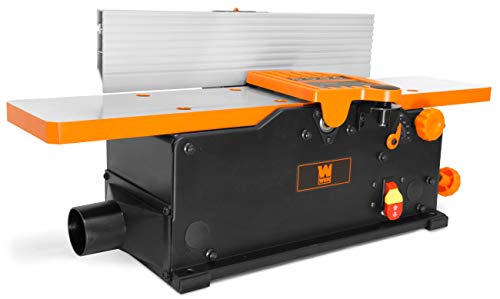


A good benchtop jointer comes down to a flat, adequately long table, a rock-solid fence, and a cutterhead that leaves a clean surface. These picks suit a hobbyist building furniture from rough stock, a DIYer squaring up big-box lumber, or a small shop that needs jointer capability without a full floor-standing machine. Below is the quick comparison, then a guide to the features that separate a frustrating jointer from one you trust.
| Jointer | Standout features | Price | Link |
|---|---|---|---|
| WEN JT630H 6" Spiral | Spiral head, 12 HSS blades, 30" table, 10-amp, 45° fence | Mid-range | |
| VEVOR 6" Spiral | 12-blade spiral head, 2 HP, cast aluminum table, dust port | Budget | |
| Cutech 40160HB Spiral | Spiral head, 12 two-sided inserts, Teflon-coated aluminum table | Mid-range | |
| CRAFTSMAN CMEW020 | Variable speed 6,000–11,000 RPM, 2-knife head, 10-amp | Mid-range | |
| JET JJ-6HHBT Helical | True helical head, 14 four-sided carbide inserts, cast iron tables | Premium | |
How to choose a 6-inch benchtop jointer
Every jointer here handles the same core job, so the differences come down to the cutterhead, the table and fence, and the build. Get these right and flattening stock becomes routine.
Cutterhead: spiral, helical, or straight knife
This is the most important decision. A straight two-knife head is the traditional design; it cuts well and knives are cheap, but it can tear out figured grain and is louder. A spiral or helical head uses many small carbide or steel inserts arranged around the cutterhead, which shears the wood gradually for a smoother finish, far less tearout on tricky grain, and noticeably lower noise. Helical heads use indexable four-sided carbide inserts you rotate when dull; spiral heads here use similar staggered inserts. If you work figured hardwoods or hate blade noise, a spiral or helical head is worth every penny.
Table length and flatness
A jointer references the board against its own tables, so length and flatness dictate accuracy. A longer bed, around 30 inches on the WEN, supports more of the board and produces straighter edges on longer stock, while shorter tables limit how long a board you can flatten reliably. Material matters too: cast iron tables, as on the JET, are heavy, dead-flat, and dampen vibration; cast aluminum is lighter and easier to move, sometimes with a coating to resist scratches. Whatever the material, the tables must be coplanar, so check and adjust them on setup.
Fence and bevel
The fence squares the edge to the face, so it needs to lock solidly at 90 degrees and hold there. Positive stops at 90 and 135 degrees speed up repeat setups, and a fence that tilts up to 45 degrees lets you cut clean bevels. A flimsy fence that shifts under pressure will ruin otherwise good work, so a rigid, well-supported fence is as important as the cutterhead for square results.
Motor, depth of cut, and speed
A 10 to 15-amp motor gives a benchtop jointer enough muscle to feed hardwood without bogging down. All of these remove up to about one-eighth inch per pass, though light passes give the cleanest surface. Variable speed, like the Craftsman’s, lets you slow the cutterhead for dense or figured wood to reduce tearout, a genuinely useful feature. More important than raw numbers is steady power delivery, since a motor that lugs under load leaves ripples in the cut.
Dust collection and setup
Jointers make a surprising volume of chips, so a dust port that fits your shop vacuum or collector keeps the workspace and the cut clean, and some designs even blow chips away from the motor. Also weigh setup: benchtop jointers ship needing table alignment and fence squaring, and a clear depth scale and pointer make dialing in the cut far easier. Budget a little time for that first calibration and the machine will reward you with accurate results.
Safety, push blocks, and real expectations
A jointer spins an exposed cutterhead just below your hands, so safety habits are not optional. Always use push blocks to keep your hands well above and behind the cutterhead, never joint stock shorter than the manufacturer allows, and keep the guard in place over the head. Push blocks are included with some models and cheap to add to any of them, and they are the single best investment you can make alongside the machine. It also helps to set realistic expectations: a benchtop jointer is not a floor-standing cabinet machine. It excels at edge jointing and flattening the face of moderate boards, but it asks for light passes, a steady feed, and a properly aligned table to do its best work. Take it as a precision tool rather than a hog that removes stock fast, and you will get clean, square results while staying safe. Combined with a thickness planer, even the most affordable model here lets a small shop mill rough lumber to finished dimension without a full-size machine.
WEN JT630H 6-Inch Spiral Benchtop Jointer
The best seller here hits the value sweet spot by putting a spiral cutterhead at an accessible price. Twelve staggered HSS blades shear the wood for an ultra-fine finish with less tearout and lower noise than a straight-knife head, which is a real upgrade for a shop working varied lumber. A spacious 30-by-6-inch table supports longer boards for straighter edges, the 10-amp motor removes up to one-eighth inch per pass, and the adjustable fence bevels up to 45 degrees for angled work. It is the machine that gives most hobbyists the biggest jump in finish quality for the money, which is exactly why it leads the pack.
Pros
- Most-bought pick with a spiral cutterhead
- Long 30-inch table for straighter edges
- Fine finish with reduced tearout and noise
- Fence bevels to 45 degrees
Cons
- HSS spiral blades, not carbide inserts
- Aluminum table needs careful alignment on setup
Best for: hobbyists who want a spiral finish and a long table at a fair price.
VEVOR 6-Inch Spiral Benchtop Jointer
The VEVOR is the budget entry, and impressively it still brings a 12-blade spiral cutterhead to the lowest price in the group. That spiral head delivers a smooth surface and reduces how often you touch the blades, and a strong 2 HP motor spinning up to 12,000 RPM feeds both softwood and hardwood. The compact 6-by-23-inch cast aluminum table suits a small studio and is easy to move and store, depth adjusts from zero to one-eighth inch, and a dust port connects to a shop vacuum for tidy cleanup. The table is shorter than the WEN’s, so very long boards need care, but for a first jointer or a tight budget, getting a spiral head at this price is a standout deal.
Pros
- Lowest price with a 12-blade spiral head
- Strong 2 HP motor for all wood types
- Compact, easy to move and store
- Dust port for clean operation
Cons
- Shorter table limits long-board accuracy
- Basic fit and finish versus premium brands
Best for: beginners and value seekers who still want a spiral finish.
Cutech 40160HB Spiral Cutterhead Jointer
The Cutech is built around a refined spiral cutterhead with six rows of staggered, two-sided inserts that sit in precise alignment, which the maker credits for smooth finishes, low noise, and a notably low amp draw. Those two-sided inserts have a non-cutting edge to keep them from skewing, giving cleaner results than some four-sided designs. The standout everyday feature is the 6H Teflon-coated aluminum table, which resists scratches and hardens the surface so boards glide and the tables stay flat over time. A clear depth pointer and a 19-5/8-inch fence with quick stops at 90 and 135 degrees round it out. For a woodworker who wants an efficient, quiet spiral head with a durable table, it is a smart mid-range choice.
Pros
- Precise spiral head with two-sided inserts
- Scratch-resistant Teflon-coated table
- Low noise and low amp draw
- Quick fence stops at 90 and 135 degrees
Cons
- Aluminum table, not cast iron
- Priced above the value picks
Best for: woodworkers wanting a quiet, efficient spiral head and a durable table.
CRAFTSMAN CMEW020 Benchtop Jointer
The Craftsman takes a different route to a clean cut: variable speed. Its 6,000 to 11,000 RPM range lets you match the cutterhead speed to the size and hardness of the material, slowing down for dense or figured wood to reduce tearout, which a fixed-speed straight-knife jointer cannot do. The two-knife head uses a jackscrew leveling arrangement that makes replacing and adjusting knives straightforward, and a center-mounted fence supports the board throughout the cut for accurate edge jointing. A heavy-duty 10-amp motor handles hard and soft woods. From a brand many DIYers already trust, it is a dependable, adjustable option for those who prefer traditional knives with the flexibility of speed control.
Pros
- Variable speed to match the material
- Easy jackscrew knife leveling and replacement
- Supportive center-mounted fence
- Trusted brand and 10-amp motor
Cons
- Straight two-knife head can tear figured grain
- Knives are louder than a spiral head
Best for: DIYers who want speed control and simple, familiar knife maintenance.
JET JJ-6HHBT Helical Benchtop Jointer
The JET is the professional-grade pick and the only true helical head here. Fourteen indexable four-sided carbide inserts deliver a shearing cut that leaves a glassy finish on even difficult grain, and when an edge dulls you simply rotate the insert rather than resharpen. Heavy-duty cast iron tables and fence give the flatness, mass, and vibration damping that aluminum cannot match, an internal blower moves dust and chips away from the motor, and a 1 HP, 15-amp motor turns the head at a steady 10,000 RPM. A highly visible depth scale and a removable safety key add polish. It costs far more than the rest, but for a serious shop that wants floor-standing quality in a benchtop footprint, it is the benchmark.
Pros
- True helical head with four-sided carbide inserts
- Flat, stable cast iron tables and fence
- Internal blower keeps the motor clean
- Glassy finish on figured wood
Cons
- Much higher price than the others
- Heavy, less portable than aluminum-table models
Best for: serious woodworkers who want professional helical performance on a bench.
The verdict
Best Overall: the WEN JT630H. As the top seller, it delivers the biggest upgrade most shops care about, a spiral cutterhead for a smooth, low-tearout finish, on a long 30-inch table at a mid-range price. For the majority of hobbyists it is the right balance of quality and cost.
Best Value: the VEVOR 6-Inch Spiral. Getting a 12-blade spiral head and a 2 HP motor at the lowest price here is remarkable, and it covers a beginner’s flattening and edge-jointing needs while saving real money.
Best Premium: the JET JJ-6HHBT. Its true helical carbide head, cast iron tables, and refined build bring near-industrial results to a benchtop, the pick for a serious shop that wants the best finish and durability.
FAQ
What does a jointer actually do? It flattens one face of a board and squares an adjacent edge to it, giving you a true reference surface. From there you can plane the opposite face parallel and rip a parallel edge, turning rough or warped lumber into straight, square stock ready for joinery.
Is a spiral or helical head worth the extra cost? For most people, yes. The many small inserts shear the wood for a smoother finish, cause far less tearout on figured grain, and run much quieter than straight knives. You also just rotate a dull insert instead of resharpening a knife.
Can a 6-inch jointer flatten wide boards? Only up to its 6-inch width in one pass. Wider boards must be ripped, jointed, and reglued, or flattened another way such as with a planer sled. If you routinely work wide stock, plan around that limit or step up to a wider machine.
How long a board can these handle? Longer tables support longer stock more accurately, so the 30-inch table on the WEN edges out the shorter aluminum beds for long boards. For very long pieces, add infeed and outfeed support stands to keep the cut consistent.
Do I need dust collection? Strongly recommended. Jointers produce a lot of chips quickly, and every model here has a dust port that fits a shop vacuum or collector. It keeps the tables clear for accurate cuts and your shop far cleaner.
Are they hard to set up? They need initial calibration: aligning the tables so they are coplanar and squaring the fence. It takes some patience the first time, but a clear depth scale helps, and once dialed in a benchtop jointer holds its settings well.
This article may contain affiliate links; see our Affiliate Disclosure.