You open the basement door and the smell tells the whole story: damp, earthy, faintly like an old book left in the rain. That musty edge is mold and bacteria doing quiet work in air that never moves, and no amount of scented spray fixes it. A purifier with the right filters pulls spores and odor molecules out of the air, and paired with drier air it turns a basement back into a room you want to stand in.


Basements ask more of a purifier than a bedroom does. The air is still, often damp, frequently dusty from a workshop or laundry, and the musty smell needs activated carbon rather than a particle filter alone. This guide compares strong picks across sizes and budgets, so someone finishing a basement office, a family using it as a playroom, or anyone just tired of the smell drifting upstairs can find a fit. One caution up front, explained below: skip ozone generators for any space people use.
At a glance
| Product | Standout feature | Price tier | Link |
|---|---|---|---|
| BLUEAIR Blue Pure 211i Max | Covers up to 3,235 sq ft, smart auto mode | Premium | |
| AromaRoom H13 HEPA | H13 HEPA at a budget price, 22 dB sleep mode | Budget | |
| GermGuardian HEPA Tower | Carbon for odors, optional UV-C, Zero Ozone Verified | Mid-range | |
| Afloia 3-Stage Purifier | Odor-focused triple filter, up to 1,076 sq ft | Mid-range | |
| VEWIOR H13 HEPA (2-Pack) | Two units, washable filter, PM2.5 display | Mid-range | |
How to choose a basement air purifier
Deal with the damp first
This is the part most guides skip, and it decides whether anything else works. Mold grows because the air is humid, so a purifier that captures spores is working on the symptom while the source keeps producing more. Aim to keep basement humidity under about 50 percent, which usually means a dehumidifier, fixing any water coming in, and moving air that otherwise sits still. Do that and the purifier stops fighting a losing battle: it clears the spores and musty odor already in the air while the drier conditions stop new growth. Buy the purifier for the air quality, but solve the water problem or you will be replacing filters forever.
HEPA catches spores, carbon catches the smell
These are two different jobs and you need both in a basement. A true HEPA filter, often labeled H13, captures 99.97 percent of fine particles including mold spores, dust, and pollen, which handles everything you can physically filter out of the air. But musty odor is made of gas-phase molecules that sail straight through a particle filter, and only activated carbon adsorbs those. A purifier without carbon will make basement air cleaner while leaving it smelling exactly the same. Look for a multi-stage filter that stacks a pre-filter for big debris, a HEPA layer for particles, and a genuine activated carbon layer for odor.
Size it to the room, then size up
Coverage claims need reading carefully. A figure like “up to 1,076 square feet” usually means one air change per hour at top speed, which is not enough for a problem room. What matters is air changes per hour: for mold and odor, target four or five changes, which is why makers also quote a smaller area, such as 269 square feet at four changes per hour. Use the smaller number. Basements also tend to have low ceilings but awkward, partitioned layouts, so air does not travel; a single unit in one corner will not clean a divided basement, and two smaller purifiers often beat one large one.
Skip ozone generators and be wary of ionizers
Ozone machines are heavily marketed for musty basements, and they do knock down odors, but ozone is a lung irritant and these units are explicitly for empty, sealed spaces with people, pets, and plants removed, followed by a long airing out. They are not air purifiers for a room you use, and some are not even sold in every state. Filterless plug-in ionizers are a gentler version of the same concern, since some produce ozone as a byproduct and none actually remove particles from the room, they just make dust cling to surfaces. If you want reassurance, look for models that carry a Zero Ozone verification and CARB certification, and stick with filters.
Noise, filters, and running costs
A basement purifier often runs constantly, so both noise and consumables matter. Quiet sleep modes in the low 20s of decibels barely register, which matters if the basement doubles as a bedroom or office, though the highest fan speed is what actually clears a room quickly. Filters typically need replacing every three to six months, faster in a dusty or damp basement, so check what a replacement costs before committing to a model. A washable pre-filter cuts that cost by catching the big stuff, and an air quality sensor with auto mode saves power by running hard only when needed.
BLUEAIR Blue Pure 211i Max
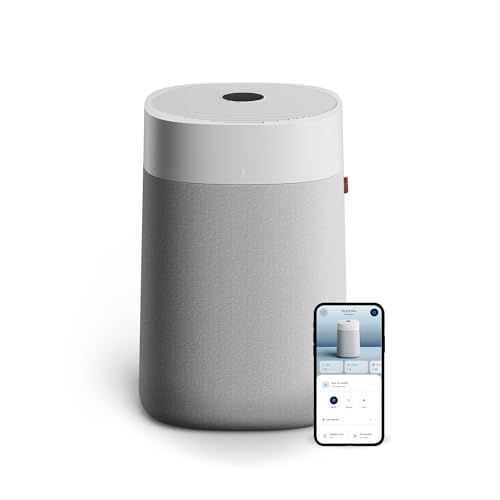
For a large or open basement, this Blueair is the most capable pick here. Its HEPASilent dual filtration captures dust, pollen, wildfire smoke, pet hair, dander, and mold particles, and the numbers behind it are genuinely strong: 674 square feet cleaned in 12.5 minutes, or up to 3,235 square feet in an hour. That first figure is the useful one, and it means a big basement gets several air changes an hour rather than a token one. Built-in air quality sensors raise the fan automatically when pollution climbs, and the app tracks air quality and filter life from anywhere. A 360-degree air intake helps in a room where air does not circulate on its own, and it runs quietly and efficiently enough to leave on permanently.
Pros
- Highest coverage here, strong air changes in big rooms
- Air quality sensors with automatic fan adjustment
- App control and filter life tracking
- 360-degree intake suits still basement air
Cons
- Premium price
- Larger footprint than compact units
Best for: large or open-plan basements that need serious coverage and hands-off automation.
AromaRoom H13 HEPA
The budget entry proves you do not need to spend much to get real filtration. It uses a genuine H13 HEPA filter capturing at least 99.97 percent of dust, pollen, and airborne particles between 0.1 and 0.3 microns, in a 3-in-1 filter that also tackles smoke, dander, hair, and smells. It circulates the air twice per hour in a room of about 323 square feet, so take it as a purifier for a modest basement room, a workshop corner, or a laundry area rather than a whole open basement. Sleep mode drops it to a barely audible 22 decibels, timers run 2, 4, or 8 hours, and a fragrance pad takes essential oils if you want scent on top of clean air. One caution the maker gives is worth heeding: keep it out of high-humidity spots, so pair it with a dehumidifier in a damp basement.
Pros
- Genuine H13 HEPA at a budget price
- Very quiet 22 dB sleep mode
- 3-in-1 filter also targets odors and dander
- Timer options and optional fragrance pad
Cons
- Only about two air changes per hour in 323 sq ft
- Maker advises against high-humidity placement
Best for: a single basement room or office on a tight budget, alongside a dehumidifier.
GermGuardian HEPA Tower
This is the pick that reads like it was written for a basement, and the maker says as much. Its HEPA filter captures 99.97 percent of allergens as small as 0.1 microns, trapping dust, pollen, and dander, while a genuine activated carbon filter reduces the scents that a particle filter cannot touch, which is exactly what a musty room needs. An optional UV-C light adds a further reduction in airborne particles for those who want it. Coverage runs a small room of 153 square feet every 12.5 minutes, or 743 square feet hourly, and three speeds include a quiet sleep mode. The reassurance is the certification: it is CARB Certified, ETL Certified, and Zero Ozone Verified, so it will not add ozone to a room you use. A slim 22-inch tower fits where floor space is tight.
Pros
- Activated carbon filter genuinely targets musty odor
- Zero Ozone Verified, CARB and ETL certified
- Optional UV-C and a quiet sleep mode
- Slim tower fits tight basement corners
Cons
- Coverage suits a room, not a whole open basement
- Replacement filters and bulbs add running cost
Best for: musty basement rooms where odor control and certified ozone-free operation matter most.
Afloia 3-Stage Purifier
The Afloia leans hard into odor, which is the basement complaint people actually notice. Its imported triple-stage filter captures pet dander, dust, pollen, smoke, mold, and stubborn smells, and it delivers four full air changes per hour in a 269 square foot room, or clears up to 1,076 square feet in an hour. Those four changes in a realistic room size are the figure that matters, and they put it ahead of budget units on paper. Sleep mode runs an ultra-quiet 22 decibels with white noise and auto-dimming, timers cover 2, 4, or 8 hours, and fan speeds adjust to taste. A 7-color night light is a nice touch in a dark basement. Usefully, you can pick specialized replacement filters, including pet allergy and antibacterial versions, to match your particular problem.
Pros
- Four air changes per hour in a realistic room size
- Triple filter aimed squarely at stubborn odors
- Ultra-quiet 22 dB sleep mode with night light
- Choice of specialized replacement filters
Cons
- No air quality sensor or auto mode
- Filters need changing every four to six months
Best for: a medium basement room where the musty smell is the main problem.
VEWIOR H13 HEPA (2-Pack)
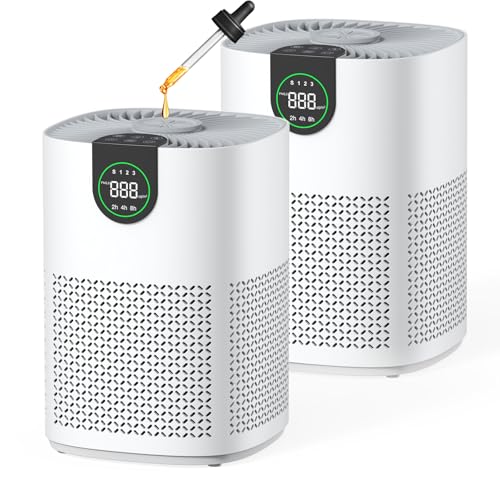
Two units in one box is a smarter answer to a partitioned basement than one big machine in a corner. Each VEWIOR uses a 3-stage system, a washable pre-filter, an H13 HEPA layer, and activated carbon, capturing 99.97 percent of contaminants including pet hair, smoke, odor, and fine PM2.5 particles, with 360-degree intake refreshing the air five times per hour in a room of the right size. The washable filter is the money-saver here, since vacuuming or rinsing the pre-filter extends life and cuts replacements. A built-in laser-free air quality sensor shows live PM2.5 on the display and auto mode adjusts fan speed by itself. Sleep mode drops to a whisper-quiet 15 decibels, and there are 2, 4, and 8 hour timers plus a child lock and an aromatherapy pad.
Pros
- Two purifiers cover divided basement layouts
- Washable pre-filter lowers running costs
- PM2.5 display with automatic fan adjustment
- Very quiet 15 dB sleep mode with child lock
Cons
- Each unit covers less than one large purifier
- HEPA layer still needs replacing every few months
Best for: basements split into several rooms where one purifier cannot reach everywhere.
The verdict
Best Overall: the BLUEAIR Blue Pure 211i Max. It is the strongest performer here for a real basement, clearing 674 square feet in 12.5 minutes with 360-degree intake and sensor-driven auto mode, which is what still, dusty basement air needs. For a large or open space, nothing else here keeps up.
Best Value: the AromaRoom H13 HEPA. A genuine H13 HEPA filter, odor handling, and a 22 dB sleep mode at a budget price make it an easy way to clean up one basement room, provided you keep the humidity down.
Best Premium: the GermGuardian HEPA Tower. Its activated carbon filter is aimed squarely at musty smells, the optional UV-C adds another layer, and the CARB, ETL, and Zero Ozone Verified certifications mean it cleans the air without adding anything to it.
Frequently asked questions
Will an air purifier remove radon from my basement? No. Radon is a radioactive gas that seeps in from the ground, and no household air purifier removes it. If you are concerned, test for radon and, if levels are high, use a proper mitigation system such as sub-slab depressurization installed by a qualified contractor.
Will a purifier stop mold growing? It captures spores already in the air but does not stop growth, because mold needs moisture. Keep humidity under about 50 percent with a dehumidifier and fix any water intrusion, then let the purifier handle the airborne spores and smell.
Do I need activated carbon for a musty smell? Yes. Musty odor is gas-phase, so it passes straight through a HEPA particle filter. Only an activated carbon layer adsorbs those molecules, which is why odor-focused basements need a multi-stage filter rather than HEPA alone.
Are ozone generators good for basement odors? Not for a space you use. Ozone irritates the lungs, and these machines are meant for empty, sealed rooms with people, pets, and plants removed, followed by a lengthy airing out. For an occupied basement, choose a filter-based purifier, ideally one that is Zero Ozone Verified.
One big purifier or two smaller ones? Basements are often partitioned, and air does not travel around walls. If your space is divided, two smaller units usually clean better than a single large one stuck in a corner. For one open room, size a single unit by air changes per hour rather than the headline coverage figure.
This article may contain affiliate links; see our Affiliate Disclosure.