A toddler learns to climb before they learn caution, and a staircase is the one hazard in the house with no second chances. The right gate turns the top and bottom of the stairs into a boundary they cannot simply push through.


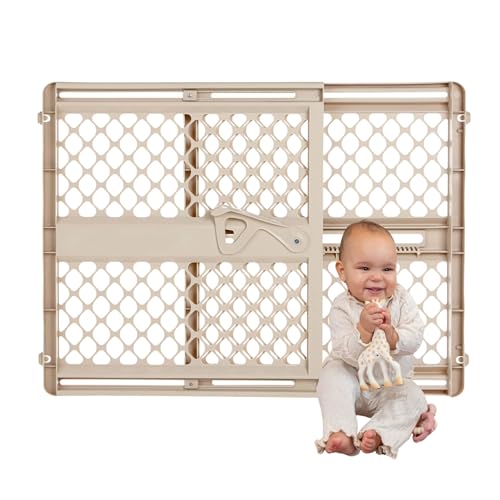
Baby gates for stairs are judged on how securely they mount, how wide an opening they cover, and how easily an adult can pass while a child cannot. This guide compares proven sellers across pressure-mount, retractable, and walk-through designs, with a clear note on where each one belongs. Safety guidance here is general; always follow the gate’s own instructions and mounting requirements for your specific opening.
| Product | Standout | Price | Link |
|---|---|---|---|
| Regalo Easy Step Pressure-Mount Baby Gate | Pressure-mount, walk-through door, 29-38.5 inch | Mid-range | |
| Cumbor Extra-Wide Auto-Close Baby Gate | Fits 30-46 inch, auto-close, hardware option | Premium | |
| Cideny Auto-Close No-Drill Baby Gate | No-drill pressure, auto-close, 29-40 inch | Mid-range | |
| probebi Retractable Mesh Baby Gate | Retractable mesh, extends to 54 inch | Budget | |
| Toddleroo Ergo Plastic Baby Gate | Lightweight plastic, one-hand latch | Budget | |
How to choose a baby gate for stairs
Top of stairs versus bottom: this matters most
At the top of stairs, child-safety guidance strongly favors a hardware-mounted gate that screws into the wall or banister, because a pressure-mounted gate can be pushed loose and its bottom bar is itself a trip hazard right where a fall would be worst. Pressure-mounted and retractable gates are well-suited to the bottom of stairs, doorways, and between rooms. The single most important decision is matching the mounting type to the location.
Opening width and fit
Measure the exact width between the walls or banister posts at the height the gate will sit, then match it to the gate’s stated range, such as 29 to 46 inches. Angled or extra-wide stair openings may need extension panels, and round banister posts often call for an adapter kit. Confirming the fit before you buy saves the frustration of a gate that will not tension or mount securely.
Walk-through door, auto-close, and one-hand use
A swinging walk-through door beats stepping over a barrier a dozen times a day, and it removes the temptation to leave the gate open. Auto-close hinges swing the door shut and latch it behind you, so a busy adult never accidentally leaves a gap. One-hand operation is a real help when your other arm is holding a child or a laundry basket.
Retractable mesh versus rigid barrier
Retractable mesh gates roll away into a housing when not needed, keeping hallways clear and suiting wide or awkward spans. They have no footholds to climb, but you must confirm they lock firmly for stair use. Rigid metal gates act as a harder, sturdier barrier. Where a fall is the risk, firmness and a confident latch matter more than a tidy look.
Materials, height, and extras
A taller gate deters an ambitious climber, and steel is sturdier than plastic for a hard barrier, though plastic keeps a gate light and easy to move. Look for closely spaced slats or mesh with no toeholds, and a latch an adult can work but a child cannot. A built-in pet door or step-through is a useful bonus in a mixed household.
Regalo Easy Step Pressure-Mount Baby Gate
The Regalo is the best-selling gate here and a doorway-and-bottom-of-stairs staple: a pressure-mounted, walk-through gate with a swinging door that saves you stepping over a barrier a dozen times a day. It fits openings from about 29 to 38.5 inches and sets up without drilling, which renters and quick installers appreciate. The pressure mount is exactly right for the bottom of a staircase, a doorway, or between rooms. Note that pressure gates are not recommended for the very top of stairs, where a hardware-mounted gate is safer. Within its proper place, it is affordable, sturdy, and genuinely convenient, which is why so many households start their child-proofing right here. Setup takes minutes with the tension knobs, and the gate lifts out just as quickly when you want to move it to another doorway.
Pros
- Best-selling, proven pressure-mount design
- Walk-through swinging door
- No drilling required for setup
- Fits common openings around 29 to 38.5 inches
- Affordable and widely available
Cons
- Not for the top of stairs; use a hardware-mounted gate there
- Bottom bar is a small trip hazard
- Pressure mount can loosen and needs checking
Best for: Doorways and the bottom of stairs where a no-drill, walk-through gate is convenient.
Cumbor Extra-Wide Auto-Close Baby Gate
The Cumbor is the do-it-all premium pick: it fits a wide range of openings from about 30 to 46 inches, swings open as a walk-through door, and auto-closes so it latches behind you every single time. Auto-close is the feature that quietly avoids the most accidents, since a gate only protects when it is actually shut. Crucially, it includes hardware-mounting hardware, so with the screws installed it can be set up appropriately for the top of stairs, not just doorways. Wider and pricier than basic gates, it earns the step up with flexibility, a solid latch, and the reassurance of a gate that closes itself. It is the versatile choice for a whole-house solution. The taller frame and firm latch also add reassurance against a determined climber that a short budget gate cannot match.
Pros
- Fits a wide range, about 30 to 46 inches
- Auto-close hinges latch it every time
- Walk-through door for easy adult passage
- Hardware-mount option suits the top of stairs
- Sturdy, taller build deters climbing
Cons
- Priciest gate here
- Hardware mounting takes more effort to install
- Wider frame needs a matching opening
Best for: A versatile whole-house gate, including the top of stairs when hardware-mounted.
Cideny Auto-Close No-Drill Baby Gate
The Cideny brings auto-close convenience to a no-drill pressure design, fitting openings from about 29 to 40 inches and swinging shut on its own after you pass. It doubles neatly as a gate for pets as well as toddlers, and the tool-free setup makes it easy to move between a doorway and the bottom of the stairs as your needs change. As a pressure-mounted gate, it belongs at the bottom of stairs, doorways, and between rooms rather than at the top. For a household that wants the self-closing feature without drilling into trim, it is a practical, mid-priced middle ground that installs in minutes and latches itself every time.
Pros
- Auto-close hinges for hands-free latching
- No-drill pressure setup
- Fits openings about 29 to 40 inches
- Works for toddlers and pets
- Quick to move between locations
Cons
- Pressure mount, not for the top of stairs
- Bottom bar to step over
- Needs periodic tightness checks
Best for: Renters wanting auto-close convenience without drilling, at doorways and stair bottoms.
probebi Retractable Mesh Baby Gate
The probebi retractable gate is the disappearing option: a mesh barrier that pulls across an opening up to about 54 inches and rolls neatly back into its housing when not needed, keeping hallways and doorways clear. That makes it ideal for wide or awkward spans and for spaces where a permanent gate would be an eyesore or an obstacle underfoot. The mesh is easy for adults to unclip and pass, and it offers no footholds for a small child to climb. As with any gate near stairs, install it per the instructions and confirm it locks firmly before relying on it. For wide openings and a tidy look, the retractable design is genuinely clever. Because it rolls away completely, it also suits a hallway shared with an adult who uses a walker or wheelchair, where a fixed gate would be in the way.
Pros
- Retracts out of sight when not in use
- Extends to about 54 inches for wide spans
- Mesh has no footholds to climb
- Keeps hallways clear when open
- Neat, low-profile appearance
Cons
- Must confirm it locks firmly for stair use
- Mesh is less rigid than a metal barrier
- Retractable mechanism needs correct tensioning
Best for: Wide or awkward openings where a tidy, roll-away gate keeps the space clear.
Toddleroo Ergo Plastic Baby Gate
The Toddleroo Ergo is the lightweight, budget-friendly plastic gate: easy to lift, carry room to room, and set up without fuss. Its plastic build keeps it light and affordable, and the ergonomic latch is simple for an adult to work one-handed while holding a child. It suits doorways and low-traffic openings where a hard steel barrier is more than you need. Like other pressure-style gates it is not intended for the top of stairs. For a second gate, a grandparent’s house, or a simple room divider on a budget, it covers the basics without weighing down your arms or your wallet, and it stores easily when the toddler years pass. It also makes a handy travel gate, light enough to pack for a stay with relatives without hogging the car.
Pros
- Lightweight and easy to move
- Very affordable
- Simple one-hand latch
- Good for doorways and low-traffic spots
- Easy, tool-light setup
Cons
- Plastic is less sturdy than steel
- Not for the top of stairs
- Best as a secondary or low-traffic gate
Best for: A light, low-cost second gate for doorways, travel, or a grandparent’s house.
The verdict
Best Overall: Regalo Easy Step Pressure-Mount Baby Gate. The best-seller and the easiest first gate: affordable, no-drill, and convenient for doorways and the bottom of stairs, exactly where a pressure gate belongs.
Best Value: Cideny Auto-Close No-Drill Baby Gate. Auto-close convenience without drilling at a mid price, a smart pick for stair bottoms and doorways.
Best for the Top of Stairs: Cumbor Extra-Wide Auto-Close Baby Gate. Its hardware-mount option and self-closing latch make it the safest, most versatile choice where a fall hazard demands a screwed-in gate.
Frequently asked questions
Can I use a pressure-mounted gate at the top of the stairs?
It is not recommended. At the top of stairs, a hardware-mounted gate screwed into the wall or banister is far safer, because pressure gates can be pushed loose and their bottom bar is a trip hazard. Save pressure and retractable gates for the bottom of stairs, doorways, and between rooms.
How do I measure my opening?
Measure the exact width between the walls or banister posts at the height where the gate will mount, then match it to the gate’s stated range. For angled or extra-wide stair openings, check whether the gate offers extension panels or banister adapters before buying.
What is the benefit of an auto-close gate?
An auto-close gate swings shut and latches on its own after you pass, so a busy adult carrying a child or laundry never accidentally leaves it open. Since a gate only protects when it is closed, self-closing is one of the most useful safety features you can get.
Are retractable mesh gates safe for stairs?
They can be, when installed correctly and confirmed to lock firmly. Mesh gates have no footholds to climb and suit wide openings. For the top of stairs specifically, follow the manufacturer’s mounting instructions carefully and choose a model rated and hardware-mounted for that use.
How long will my child need a stair gate?
Most families use stair gates through the toddler years, until a child reliably navigates stairs safely, often around two years old and up. Watch your own child’s climbing ability rather than a fixed age, and remove gates once they can be climbed, since that creates its own hazard.
This article may contain affiliate links; see our Affiliate Disclosure.