A warbler flits into a treetop, and for a few seconds you can either fumble with the wrong binoculars or lock on and see the flash of color that names the bird. Good birding binoculars find the target fast, hold a bright, steady image, and stay comfortable through a morning of scanning. The wrong pair leaves you with a dim, shaky, hard-to-aim view and a bird already gone.

The two numbers on every pair, like 10×42, tell you most of what you need: magnification and the size of the light-gathering objective lens. For birds, a bright image and a wide, easy-to-aim field matter more than sheer zoom, though there is a place for high power too. The five proven sellers below range from pocketable compacts to bright full-size and high-power models, so a casual backyard watcher and a dedicated birder are both covered.
At a glance
| Binoculars | Standout feature | Price tier | Link |
|---|---|---|---|
| occer 12×25 Compact | Pocketable, large eyepiece, waterproof | Budget | |
| Hontry 10×25 Compact | Steady 10x image, palm-size, great value | Budget | |
| FLYANT 20×50 High-Power | 20x reach for distant and water birds | Mid-range | |
| Adorrgon 12×42 HD | Bright 42mm lens, tripod and phone adapter | Mid-range | |
| Adasion 12×42 Waterproof | Bright optics, IPX7 waterproof, tripod kit | Premium | |
How to choose binoculars for bird watching
Magnification and objective size
Those two numbers define the binocular. The first is magnification: 8x or 10x is the classic birding range because it brings birds close while staying steady enough to hand-hold. The second is the objective lens diameter in millimeters, which controls brightness; a larger lens like 42mm gathers more light for a brighter image than a compact 25mm. Higher magnification like 15x or 20x reaches farther but narrows the view and amplifies every hand tremor, so it usually wants a tripod.
Brightness and low light
Birds are most active at dawn and dusk, exactly when light is scarce, so brightness matters. A larger objective lens, quality BAK4 prisms, and fully multi-coated lenses all boost light transmission for a brighter, higher-contrast image in dim conditions. A bright full-size pair reveals plumage detail under a canopy or at first light that a small compact simply cannot, which is why serious birders lean toward 42mm and up.
Field of view and finding the bird
A wide field of view, the width of the scene you see, makes it far easier to locate a small, moving bird and follow it through branches. Lower magnifications naturally give a wider field, another reason 8x and 10x suit birding. High-power binoculars show a narrow slice of the world, which is great for a distant, stationary target but frustrating for a flitting songbird. Match the field to the birds you watch.
Comfort, eye relief, and glasses
You will hold these to your eyes for long stretches, so comfort counts. Twist-up or fold-down eyecups and generous eye relief let eyeglass wearers see the full field without a black ring, and a large eyepiece reduces eye strain. An adjustable interpupillary distance fits different faces, including younger family members. A comfortable pair is one you will actually keep raising to your eyes all morning.
Weight and portability
There is a real trade-off between brightness and pocketability. Compact 25mm binoculars slip into a jacket pocket and are perfect for travel, casual walks, and sharing with kids, but they gather less light. Full-size 42mm and 50mm models are brighter and steadier but heavier around the neck. Think about how you bird: a compact for grab-and-go, or a full-size on a strap for dedicated outings.
Durability and extras
Birding happens in the weather, so a rubber-armored body that resists knocks and at least splash resistance is worth having, with fully waterproof and fog-proof models best for serious use. Handy extras include a phone adapter for snapping photos through the lens and a tabletop tripod that steadies higher magnifications. A comfortable strap and a case round out a kit you can rely on outdoors.
occer 12×25 Compact Binoculars
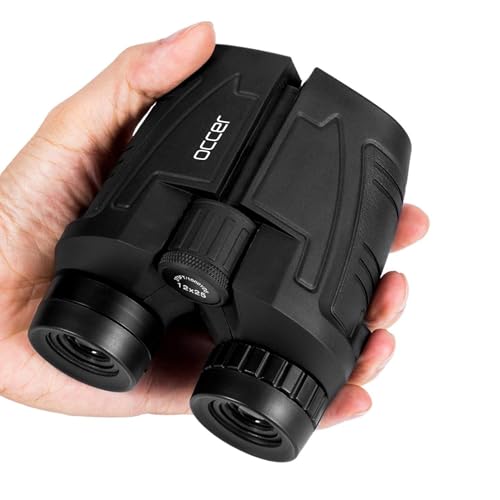
The occer 12×25 is the best seller here and a superb grab-and-go compact. It packs 12x magnification and a 25mm objective into a pocket-size body, with a wide field of view and fully multi-coated lenses over BAK4 prisms for a clear, true-to-life image. Adjustable eyecups fold down for eyeglass wearers and rise for everyone else, and the large 15mm eyepiece gives a more comfortable, clearer view than many travel binoculars. A one-hand focus and light waterproof body make it easy to use on the move.
It is genuinely versatile, equally at home for backyard birding, travel, concerts, and sightseeing, and light enough for kids to handle. As a compact it gathers less light than a full-size pair in deep shade, but for casual birding and portability at a low price, it is the popular, do-everything choice.
Pros
- Pocketable and light for grab-and-go birding
- Wide field of view with a large eyepiece
- BAK4 prisms and fully multi-coated lenses
- Eyecups suit glasses wearers, easy one-hand focus
Cons
- Small 25mm lens is dimmer in low light
- Compact size is less steady at 12x than 8x or 10x
Best for: casual and travel birding where portability comes first.
Hontry 10×25 Compact Binoculars
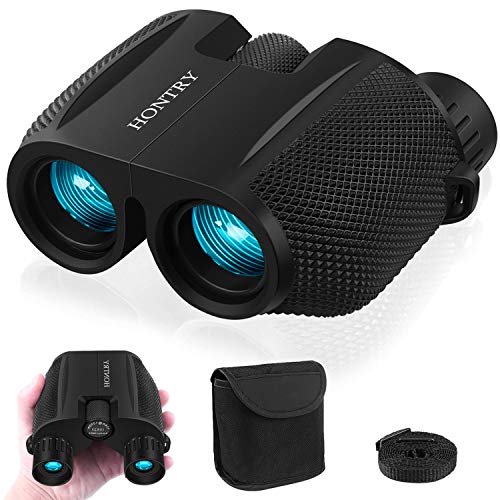
The Hontry 10×25 is the value pick, and its 10x magnification is a sweet spot for hand-held birding. Ten power strikes a nice balance between zooming in on a bird and keeping the image steady, which makes it more forgiving than higher-power compacts. BAK4 prisms deliver images with 3D depth and rich detail, holding up reasonably even as the light fades. At about the size of your palm and just over half a pound, it goes wherever you do.
A wide interpupillary adjustment fits both kids and most adults, so the whole family can share it, and it works just as well at a ballgame, a concert, or in the backyard. It is a compact, so it gathers less light than a full-size pair, but for a steady, pocketable, budget-friendly starter, it is an easy recommendation.
Pros
- Steady, hand-holdable 10x magnification
- BAK4 prisms for detailed, 3D-depth images
- Palm-size and light for everyday carry
- Wide fit adjustment for kids and adults
Cons
- Small 25mm lens limits low-light brightness
- Compact build lacks full waterproofing
Best for: a steady, affordable compact the whole family can share.
FLYANT 20×50 High-Power Binoculars
The FLYANT 20×50 is the reach specialist, built for spotting distant birds across a field, a lake, or a shoreline. Its 20x magnification pulls faraway detail in close, and a 50mm objective with a BAK4 Porro prism and green multi-coating gathers plenty of light for bright, high-contrast views. A large 26mm eyepiece helps maintain a stable, comfortable image and reduces eye fatigue, and a sensitive center focus wheel makes fine adjustments easy with one finger.
The trade-off with any 20x binocular is a narrower field and more visible hand-shake, so it shines on stationary, distant subjects and benefits from bracing against something steady or using a tripod. A rubber-armored, water-resistant body handles the outdoors. For watching waterfowl, raptors, or shorebirds at a distance, its extra reach is the draw.
Pros
- High 20x reach for distant birds
- Bright 50mm lens with BAK4 prisms
- Large eyepiece for comfortable viewing
- Rubber-armored, water-resistant body
Cons
- Narrow field and hand-shake at 20x favor a tripod
- Bulkier and heavier than a compact
Best for: watching distant waterfowl, raptors, and shorebirds.
Adorrgon 12×42 HD Binoculars
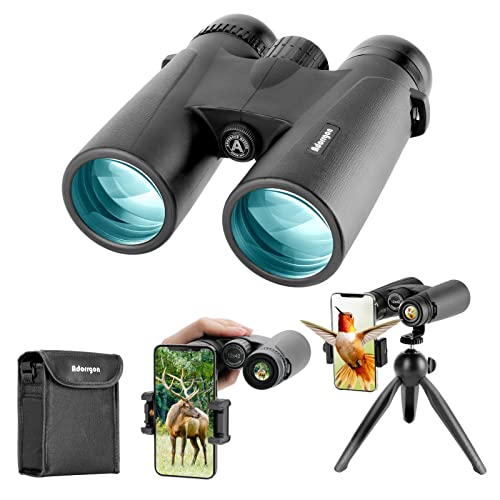
The Adorrgon 12×42 is the serious-birding pick, pairing a useful 12x magnification with a bright 42mm objective, the kind of full-size lens that separates real birding binoculars from compacts. It delivers a wide 367-foot field of view at 1,000 yards and clear low-light performance thanks to fully multi-coated optics and large BAK4 prisms, so plumage detail stays visible at dawn or under a canopy. At only about 1.1 pounds it stays manageable around the neck.
It also arrives ready to grow with you, including a phone adapter for photographing birds through the lens and a tabletop tripod for steady, shake-free viewing at 12x. The larger eyepiece delivers a bigger, brighter image than a compact can. For a birder who wants genuine brightness, a wide field, and useful extras at a mid-range price, it is the standout.
Pros
- Bright 42mm lens for low-light detail
- Wide field of view for finding birds
- Includes a phone adapter and a tripod
- Lightweight for a full-size pair
Cons
- 12x benefits from the tripod for long viewing
- Larger than a pocket compact
Best for: dedicated birders wanting brightness, a wide field, and extras.
Adasion 12×42 Waterproof Binoculars
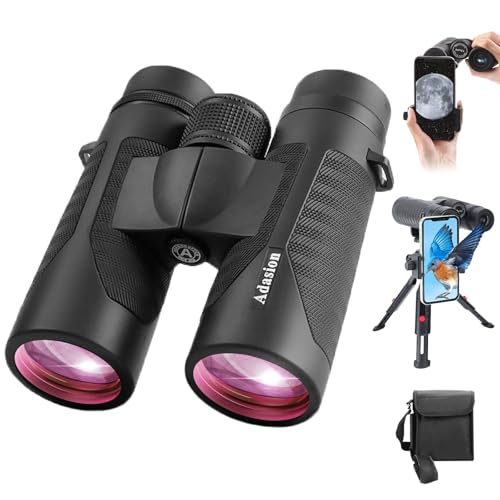
The Adasion 12×42 is the premium, all-weather pick, offering the same bright full-size formula with rugged, fully waterproof construction. A 12x magnification and 42mm objective give a wide field and clear, vivid images, and professional-grade BAK4 prisms with fully multi-coated lenses enhance color accuracy and cut dark edges for crisp views even in dim light. Twist-up eyecups with a generous eye-relief range suit both glasses wearers and non-wearers.
The standout is durability: an IPX7 waterproof and fog-proof body handles rain, mist, and humidity, making it dependable on serious outings, and it comes with a phone adapter and a swivel tripod plus a crossbody case with a phone pocket. It costs the most here, but for a birder who wants brightness, a wide field, and true weatherproofing in one kit, it is the premium standout.
Pros
- Bright 42mm optics with a wide field
- IPX7 waterproof and fog-proof body
- Includes phone adapter, tripod, and case
- Comfortable eye relief for glasses wearers
Cons
- Highest price in the group
- Full-size weight over a compact
Best for: serious birders who want bright optics and true weatherproofing.
The verdict
Best Overall: occer 12×25 Compact. As the top seller, it delivers a bright, clear, wide-field view in a truly pocketable body at a low price. For casual birding, travel, and sharing with the family, its portability and value make it the easy choice for most people.
Best Value: Hontry 10×25 Compact. Its steady 10x image and palm-size build make a great, forgiving starter for the lowest spend. For a first pair or a backup to keep in the car, it is hard to beat.
Best Premium: Adasion 12×42 Waterproof. Bright full-size optics, a wide field, and true IPX7 weatherproofing plus a tripod and phone adapter make it the standout for serious outings. The Adorrgon 12×42 is the close-value alternative with the same bright formula, and the FLYANT 20×50 is the pick for distant waterfowl and raptors.
Match the binocular to how you bird: a compact for portability, a bright 42mm full-size for detail and low light, or a high-power pair for distant subjects. Get the balance of brightness, field, and comfort right, and you will spend your mornings watching birds instead of chasing the view.
FAQ
What magnification is best for bird watching? For hand-held birding, 8x or 10x is the classic choice, because it brings birds close while keeping the image steady and the field wide enough to find them. Higher powers like 12x, 15x, or 20x reach farther but are shakier and narrower, and often want a tripod.
What do the two numbers mean? The first is magnification, so 10x makes a bird look ten times closer. The second is the objective lens diameter in millimeters, which sets brightness; a larger number like 42mm gathers more light for a brighter image than a compact 25mm.
Are compact binoculars good enough for birds? For casual and travel birding, yes, and their pocketability is a real advantage. The trade-off is a smaller lens that gathers less light, so a full-size 42mm pair shows more detail at dawn, dusk, or under a canopy.
Do I need waterproof binoculars? Not essential, but very welcome for serious outdoor use. At minimum, look for splash resistance and a rubber-armored body. Fully waterproof and fog-proof models, like an IPX7-rated pair, are the most dependable in rain, mist, and humidity.
Can I take photos through binoculars? Yes, with a phone adapter that lines your phone’s camera up with the eyepiece, as several of these include. Pair it with a tripod for steady shots, especially at higher magnifications where hand-shake blurs the image.
How do I get the clearest view? Set the eyecups for your eyes, adjust the spacing so the two circles merge into one, and use the center wheel to focus, fine-tuning the right eyepiece once. Bracing your elbows or using a tripod steadies higher magnifications for a sharper image.
This article may contain affiliate links; see our Affiliate Disclosure.