Rolling up a spare fleece for a pillow works right up until 2 a.m., when your neck is bent wrong and the whole tent feels colder for it. A proper camping pillow weighs almost nothing, packs down to the size of a soda can, and is the difference between waking up rested and waking up cranky on the trail.
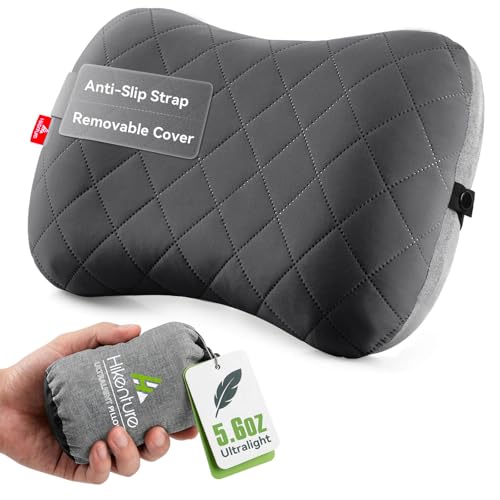


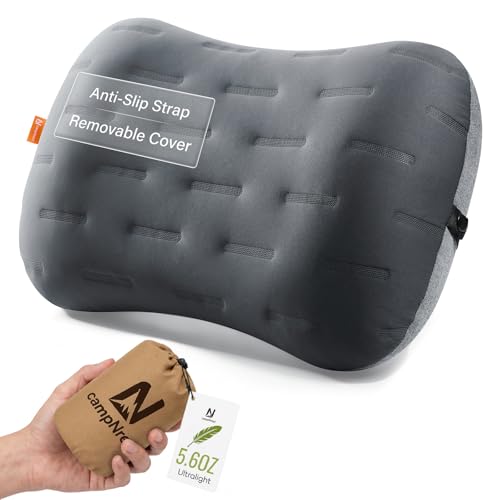
Camping pillows split into two camps. Inflatable models blow up in a few breaths, pack down tiniest, and weigh the least, ideal when every gram and every cubic inch counts. Compressible foam pillows feel more like home, cushioning your head with no setup, at the cost of a slightly bigger packed size. The right one depends on how you travel: an ultralight backpacker counting ounces, a car camper who wants comfort over compactness, a road-tripper who naps in the passenger seat, or a frequent flyer chasing better sleep. Below we compare five popular picks across both styles.
At a glance
| Product | Standout feature | Price tier | Link |
|---|---|---|---|
| Hikenture Ultralight Inflatable | Best-seller, one-click valve, packs to a soda can | Mid-range | |
| Wise Owl Outfitters Foam Pillow | Memory foam comfort with a waterproof stuff sack | Premium | |
| PEUJEW Shredded Foam Pillow | Conforming shredded foam, medium-firm feel | Budget | |
| Vekkia Memory Foam Travel Pillow | Lightest on the wallet, roll-up and washable | Budget | |
| CAMPNREST Inflatable Pillow | No-leak thick TPU bladder, quiet washable cover | Mid-range | |
How to choose a camping pillow
Inflatable versus compressible foam
This is the first fork in the road. Inflatable pillows use an air bladder you fill in a few breaths, so they pack down smallest and weigh least, which is why backpackers love them. The trade-off is a firmer, more clinical feel and the small chance of a leak. Compressible foam pillows, usually shredded or solid memory foam, feel closer to your bed at home, need no setup, and never go flat, but they take up more room in the pack. If ounces and inches rule your trip, go inflatable; if comfort and simplicity win, go foam.
Packed size and weight
How small it stuffs decides whether it comes along at all. The best inflatable models collapse to roughly the size of a soda can or smaller and disappear into a side pocket, ideal for thru-hikes and minimalist kits. Foam pillows compress into an included stuff sack too, but land larger, which is a non-issue for car camping and a bigger deal on a tight backpack. Match the packed size to your load: if you are carrying everything on your back for days, prioritize the smallest, lightest option.
Comfort, height, and firmness
A pillow only helps if it holds your head at the right angle. Inflatable models let you fine-tune firmness and height by adding or releasing air through the valve, and many use an ergonomic curve to cradle your neck for back or side sleeping. Foam pillows offer a fixed but familiar cushioning that many people find more restful, and some shredded-foam designs let you add or remove fill to tune the loft. Side sleepers generally want more height; back sleepers less. Consider your sleep position before you buy.
Cover, cleaning, and noise
The surface against your face matters more than the spec list suggests. A soft, breathable cover, cotton or brushed polyester, feels better than bare plastic and cuts the crinkly noise cheap inflatables make when you turn over. Removable, washable covers keep the pillow hygienic trip after trip, which is worth a lot after a sweaty summer week. If you tend to overheat, look for breathable or ventilated materials. A quiet, washable cover is one of those small features you appreciate every single night.
Warmth, and why an air pillow can feel cold
Here is something the listings rarely mention: air conducts cold. On a chilly night an inflatable pillow full of outside air can feel noticeably cooler against your cheek than foam, because the air inside keeps circulating and pulling heat away. Foam traps still air and warms to your skin instead. A fabric cover closes most of that gap, which is one more reason to favour inflatables with a proper removable cover over bare plastic ones, and it is why some campers slip a buff or a spare shirt over an air pillow on cold trips. In summer the same property works in your favour, since an air pillow will not hold heat the way foam can.
Durability and what tends to fail
The two styles fail in different ways, which is worth knowing before you choose. Inflatables fail at the seams and the valve, usually as a slow leak that has you half-deflated by morning rather than a dramatic pop, and a thicker separate bladder is the main defence against that. Foam pillows rarely fail outright; they simply pack down over months of compression and lose some loft, and shredded fill holds up better here than a solid block because you can shake it back to life. Neither style loves being stored compressed at home, so let a foam pillow sit uncompressed between trips and it will keep its shape far longer.
Staying put and easy valves
Even a comfortable pillow is useless if it slides off your pad at midnight. Some models add an elastic strap or a non-slip backing to anchor them to a sleeping pad, a genuinely helpful touch on a slick surface. For inflatables, a one-click or one-way valve that fills in a few breaths and deflates instantly beats fiddly twist valves in the dark. Little conveniences like these are what separate a pillow you keep packing from one that stays home after the first trip.
Hikenture Ultralight Inflatable Pillow
The Hikenture is the best-seller here, and it earns it by fixing the usual inflatable-pillow complaints. A separate, thickened TPU bladder resists the slow leaks that plague thin single-layer designs, and a removable, washable cover with a breathable cotton face makes it more comfortable and hygienic while cutting the crinkle noise when you shift. An ergonomic shape gives real neck support for back or side sleepers, and you adjust firmness through the valve to taste. The one-click valve fills it in a few breaths and deflates in seconds, and a detachable elastic strap keeps it anchored to your sleeping pad. It packs to about the size of a soda can. As an all-around ultralight pick, it is hard to beat.
Pros
- Best-seller with a leak-resistant thickened TPU bladder
- Removable, washable cover that reduces crinkle noise
- Adjustable firmness and ergonomic neck support
- One-click valve and strap to stay on your pad
Cons
- Inflatable feel is firmer than foam
- Needs a few breaths of setup each night
Best for: backpackers and ultralight campers who want the proven all-rounder.
Wise Owl Outfitters Memory Foam Camping Pillow
For campers who prize comfort over shaving grams, the Wise Owl is the plush choice. It uses soft micro-suede over memory foam that adapts gently to your head and neck, a home-like feel that suits plane rides, car trips, and tent nights alike. There are no valves to fuss with and no fluffing required; it simply cushions the moment you lie down. A machine-washable cover removes for easy cleaning, and the whole thing weighs under twelve ounces and compresses into an included waterproof stuff sack. Two size options let side and back sleepers pick their fit. It packs larger than an inflatable, but for comfort-first campers that is a fair trade.
Pros
- Plush memory foam with a soft micro-suede cover
- No setup, no valves, no fluffing
- Machine-washable cover and waterproof stuff sack
- Two sizes for different sleepers
Cons
- Packs larger than inflatable options
- Highest price in this group
Best for: car campers and travelers who want at-home comfort with zero setup.
PEUJEW Shredded Memory Foam Pillow
The PEUJEW takes the comfort of foam and makes it more packable by using shredded memory foam that squishes down for transit and springs back with a medium-firm feel. The shredded fill conforms to your head and neck better than a flat cushion, relieving pressure for a more restful night in a tent, hammock, car, or plane. A soft microfiber cover keeps it pleasant against the skin, and it comes with a practical travel bag that clips to luggage or hangs in the car. The removable cover is machine washable and dries quickly. As a budget-friendly compressible option, it delivers a lot of the plush-pillow experience without the premium price.
Pros
- Conforming shredded foam with a medium-firm feel
- Soft microfiber cover, gentle on skin
- Compresses into an included travel bag
- Budget-friendly and machine-washable cover
Cons
- Still bulkier than an inflatable
- Fixed fill unless you open the cover to adjust
Best for: comfort-seekers who want conforming foam on a budget.
Vekkia Compressible Memory Foam Travel Pillow
The Vekkia is the value leader, pairing a comfortable foam feel with the lowest price here. It combines memory foam with a high-density foam core for a balance of softness and support that conforms to your head, and it is light and roll-up so it stows easily in a backpack or bag without hogging space. The included pillowcase is machine washable, so upkeep is effortless between trips. It suits long flights, road trips, and tent nights equally, and works well for side sleepers who want a soft yet supportive cushion. For anyone testing the waters on a dedicated camp pillow, or outfitting the whole family without overspending, it is an easy, affordable choice.
Pros
- Lowest price of the group
- Memory foam plus high-density core for balanced support
- Light and roll-up for easy packing
- Machine-washable pillowcase
Cons
- Compact size may be small for some sleepers
- Bulkier packed than an inflatable
Best for: budget shoppers and families who want comfortable foam for less.
CAMPNREST Inflatable Camping Pillow
The CAMPNREST is the second inflatable here, and it goes after reliability and quiet comfort. A durable, thickened TPU air bladder is built to prevent leaks and hold firmness through the night, delivering stable neck and lumbar support for camping, hiking, or travel. A breathable, skin-friendly cover adds cushioning and, importantly, kills the plastic-crinkle noise that makes cheap inflatables annoying to turn on; it is fully removable and washable. The ergonomic shape matches your neck’s natural curve and supports back, side, and stomach sleepers, with firmness and height set through an easy valve. A one-click valve inflates it in a handful of breaths and deflates it instantly, and it folds to a palm-size pouch smaller than a soda can.
Pros
- No-leak thick TPU bladder holds firmness overnight
- Quiet, washable cover with a skin-friendly feel
- Ergonomic support for back, side, and stomach sleepers
- One-click valve, packs smaller than a soda can
Cons
- Firmer, air-supported feel over foam
- Requires a few breaths of setup nightly
Best for: ultralight campers who want a quiet, leak-resistant inflatable.
The verdict
Best overall: the Hikenture Ultralight Inflatable. As the best-seller, its leak-resistant bladder, quiet washable cover, adjustable support, and soda-can packed size make it the most versatile pick for the widest range of trips.
Best value: the Vekkia Memory Foam Travel Pillow. It brings comfortable, no-setup foam at the lowest price, which is ideal for budget campers and families kitting out several sleepers at once.
Best premium: the Wise Owl Outfitters Memory Foam Pillow for its plush, at-home comfort and quality build. If you want a second inflatable option, the CAMPNREST is a quiet, leak-resistant alternative, and the PEUJEW splits the difference with conforming foam on a budget.
Frequently asked questions
Which is better, inflatable or foam? Neither wins outright. Inflatable pillows pack smallest and weigh least, best for backpacking. Foam pillows feel more like home and need no setup, best for car camping and travel where a little extra bulk is fine.
Do inflatable pillows leak? Cheap ones can, but models with a thick, separate TPU bladder, like the Hikenture and CAMPNREST here, are built to resist leaks and hold air through the night.
Are these washable? The covers are. Every pillow here has a removable cover you can machine wash; note that memory foam itself should not go in the washer or dryer.
Will a camping pillow stay on my sleeping pad? Some help more than others. Look for an elastic strap or non-slip backing; the Hikenture, for example, includes a detachable strap to keep it anchored on a slick pad.
Are they good for side sleepers? Yes, with the right height. Inflatables let you add air for more loft, and foam options come in sizes; side sleepers generally want a taller, firmer pillow than back sleepers.
How should I store a foam pillow at home? Uncompressed. Leaving it squashed in its stuff sack for months costs it loft over time. Take it out between trips and it holds its shape far longer.
Can I use these on a plane or in the car? Yes, all five are pitched for travel as much as camping. The compact foam models and the inflatables both double as lumbar support on long drives and flights.
This article may contain affiliate links; see our Affiliate Disclosure.