A dip is the most accurate rep in a home gym. There is nothing to lean on, no machine path to follow, no way to cheat the bottom of the movement – just your own bodyweight and a pair of bars that either hold steady or make you flinch. That flinch is the whole problem. The moment a frame shifts a quarter inch under load, you stop driving through your chest and start bracing for a fall.


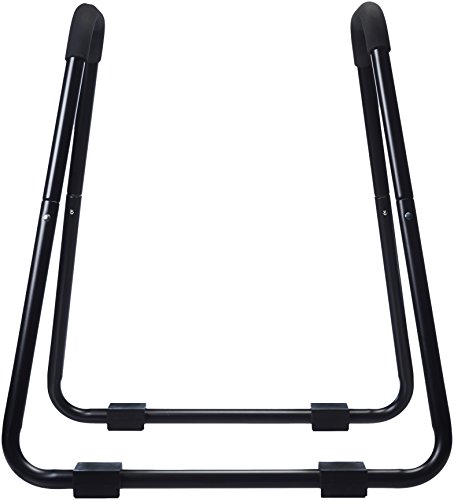

A great dip station is mostly about geometry and mass: a base wide enough that the frame cannot rock, grips set at a width that suits your shoulders, and steel thick enough that the whole thing feels boring under load. Boring is the compliment. The five stations below span a compact parallette-style stand you can carry to the patio, a full power tower that adds pull-ups, and a heavy fixed frame with the highest weight ceiling of the group.
At a glance
| Product | Standout features | Price tier | Link |
|---|---|---|---|
| RELIFE Dip Bars & Dip Station | 4 height settings, 20.08-26.77 in width range, rotating rubber feet for uneven ground, 400 lb capacity | Mid-range | |
| RELIFE Power Tower Pull Up Bar Station | Dips, pull-ups, knee raises and push-ups in one frame; 9 pull-up bar heights; 4 backrest settings | Premium | |
| SPORTSROYALS DP3 Dip Station | 2 mm thickened steel, bottom safety connection bar, 4 heights and 4 widths, sweat-wicking armrests | Mid-range | |
| Amazon Basics Dip Bar Station | 661 lb capacity, foam floor pads, works with push-up rings or straps, 34.25 x 32.5 x 38.4 in | Mid-range | |
| OLIXIS Dip Bar Station | 4 heights, 20-26.8 in handlebars, wide base with safety bar, high-density foam grips | Budget | |
How to choose a dip station
Weight capacity is not just your bodyweight
The rated capacity on a dip station has to absorb more than the number on your scale. A dip is a dynamic movement: you drop into the bottom position, reverse it, and the frame briefly carries considerably more than your static weight. Add a weighted vest or a belt with plates and the gap widens again. Four of the five stations here are rated to 400 lb, which leaves generous headroom for most people even with added load. The Amazon Basics frame is rated to 661 lb, and that margin is worth having if you are a larger lifter, if you train dips with heavy added weight, or if you simply want a number you never have to think about again.
Adjustable width matters more than adjustable height
Height adjustment sounds like the important spec, but on a dip station it mostly decides whether your feet clear the floor at the bottom. Width is what your shoulders actually feel. Grips set too wide push the elbows out and load the shoulder joint; set too narrow, and the movement collapses into a triceps press with your elbows scraping your ribs. A comfortable dip usually sits a little wider than shoulder width, and shoulders vary. The RELIFE stand and the OLIXIS both slide from roughly 20 to 27 inches, and the SPORTSROYALS DP3 offers four width steps alongside four heights. The Amazon Basics station is fixed, so its geometry has to suit you as delivered.
Base design and where the frame will live
Two things stop a dip station from rocking: base width and what the feet do against the floor. Rubber foot covers grip and protect a hard floor; foam pads spread load and stay put on smooth surfaces. If your training space is a garage slab, a patio, or a deck, look for feet that can compensate for a floor that is not perfectly flat – the RELIFE stand’s foot covers rotate to different thicknesses to level the frame on uneven ground, which is a small feature that quietly avoids a lot of annoyance. Also measure before you buy. A parallette-style stand takes up a little more than a yard square; a power tower needs that footprint plus enough ceiling height to hang from a bar without ducking.
One job or several
A dedicated dip stand does dips, push-ups, L-sits, knee raises and inverted rows well, and it stores in a corner or the boot of a car. A power tower adds pull-ups and chin-ups – the pulling half of an upper-body routine that dips alone never cover – but it is a piece of furniture, not a portable accessory. Decide plainly which one your space and routine can live with, because a tower folded into a spare room and never assembled trains nothing.
Grip comfort is a real spec
Foam handles are not a luxury on this equipment. Bare steel gets slick with sweat and bites into the palms on longer sets, and a slipping hand on a dip is a genuine hazard. High-density foam holds its shape rather than crushing flat, and padded armrests on the tower-style frames make knee raises tolerable rather than something you cut short because your elbows hurt.
RELIFE Dip Bars & Dip Station
This is the best-selling dip station in the group, and the reason is not hard to find: it does the fundamentals without asking for a corner of the room. The frame is heavy-duty steel rated to 400 lb, with anti-loosening nuts on both sides to keep the bolts from working free over months of loading and unloading. Four height settings run from 30.7 to 35.04 inches, and the connecting rod gives four holes per side so the handlebars slide between roughly 20 and 27 inches apart – pull the knob, move the rod, set it where your shoulders want it. The rubber foot covers are the clever part: they are molded to different thicknesses and rotate, so a frame standing on a slightly uneven patio can be leveled instead of rocked.
Pros
- Heavy-duty steel rated to 400 lb with anti-loosening nuts on both sides
- Four heights (30.7-35.04 in) and a 20.08-26.77 in handlebar width range
- Rotating rubber foot covers level the base on uneven ground
- Soft foam handles resist sweat and slipping
- Baked-on gloss paint resists scratching and rust
- Backed by a one-year warranty with a lifetime warranty on other materials
Cons
- 400 lb ceiling is well short of the Amazon Basics frame
- Dips and push-ups only – no pull-up bar or backrest
- Needs assembly, and the screws want re-tightening once everything is together
Best for: anyone who wants a proven, adjustable dip stand that fits a small space and moves outdoors when the weather is good.
RELIFE Power Tower Pull Up Bar Station
The tower is the answer for a room that has to be an entire gym. Dips, pull-ups, chin-ups, vertical knee raises, bodyweight rows and push-ups all live in one frame rated to 400 lb, with a safety locknut and four suction cups at the base to stop the shuffle that plagues cheap towers. Nine pull-up bar heights mean it can be set low enough for a child or high enough for a tall adult to hang clear, and the dip handles offer three armrest levels for different arm lengths. Four backrest positions cover knee raises without pinning shorter torsos against the pad. The push-up bars are welded into the bottom tubing rather than bolted on, which keeps the load path short and the base rigid.
Pros
- Replaces several pieces of equipment: dips, pull-ups, knee raises, rows, push-ups
- Nine pull-up bar heights, three armrest levels, four backrest settings
- 400 lb capacity with a safety locknut and four stabilizing suction cups
- Thickened steel tubing with the push-up bars integrated into the base
- Compact footprint for a tower, and straightforward to assemble
Cons
- Premium tier, roughly double the cost of the plain dip stands here
- Needs real floor space and ceiling clearance, and does not pack away
- Considerably more assembly than a two-piece dip stand
Best for: a home gym where one frame has to cover both pushing and pulling.
SPORTSROYALS DP3 Dip Station
The DP3’s signature is the adjustable safety connection bar running along the bottom, which ties the two uprights together and takes the sway out of the frame at the point where sway starts. Built from 2 mm thickened steel and rated to 400 lb, it adjusts four ways in height and four ways in width, so the grip spacing is a setting rather than a compromise. The armrests are padded with a covering meant to wick sweat and repel water – a detail that matters on the fifth set, not the first. It stacks flat for storage and is light enough to carry outside in one trip, and assembly is a three-step job.
Pros
- Bottom safety connection bar adds stability where these frames usually flex
- 2 mm thickened steel, 400 lb capacity
- Four height and four width settings
- Sweat-wicking padded armrests
- Stackable, space-saving, and quick to move indoors or out
Cons
- 400 lb ceiling
- No pull-up option
- Padding on armrests will compress with heavy long-term use
Best for: lifters who want the steadiest plain dip stand here and train in a space they have to share.
Amazon Basics Dip Bar Station
The headline here is a 661 lb weight capacity, which is not a number the rest of this group comes close to. For a heavier lifter, or for anyone who plans to hang plates from a dip belt and keep adding them, that margin removes the frame from the list of things to worry about. The trade is flexibility: this is a fixed-geometry steel stand at 34.25 by 32.5 by 38.4 inches, with foam slip-free grips and foam floor pads to keep it planted. It is compatible with push-up rings or straps sold separately, which broadens what it can do without adding parts you have to store. Simple, heavy, and no settings to fiddle with.
Pros
- 661 lb capacity – by far the highest ceiling in this comparison
- Foam floor pads keep it stable across different surfaces
- Works with push-up rings or straps for more exercise variety
- Compact, known dimensions make it easy to plan a space around
- Lightweight enough to reposition, easy to assemble
Cons
- No height or width adjustment – the geometry either suits your shoulders or it does not
- Foam grips only, with no padded armrests for knee raises
- Fewer comfort touches than the adjustable stands
Best for: heavier lifters and weighted-dip training, where capacity beats adjustability.
OLIXIS Dip Bar Station
The OLIXIS is the cheapest entry here and gives up remarkably little for it. The adjustment range mirrors the best-seller almost exactly – four height levels from 30.7 to 35.04 inches, handlebars from 20 to 26.8 inches – on a heavy-duty steel frame rated to 400 lb. Stability comes from a wide base, non-slip feet and a safety bar tying the structure together. The high-density foam grips are the same idea as the pricier stands: thick enough to stay comfortable through a long set rather than flattening under the first heavy one. If a dip station is the first serious piece of equipment you are buying, this is a low-risk way to find out how much you will use it.
Pros
- Budget tier with the same 20-26.8 in width range as far pricier stands
- Four height levels (30.7-35.04 in)
- 400 lb capacity on heavy-duty steel
- Wide base, non-slip feet and a safety bar for stability
- High-density foam handles reduce hand fatigue
Cons
- 400 lb ceiling
- No pull-up bar or backrest
- No warranty terms stated with the product
Best for: a first dip station, a second set for the garage, or anyone who wants full adjustability at the lowest outlay.
The verdict
Best overall: RELIFE Dip Bars & Dip Station. It is the most popular dip station in this group by a wide margin, and the spec sheet explains the popularity rather than contradicting it: full height and width adjustment, 400 lb of steel, anti-loosening nuts, and feet that can level the frame on a floor that is not quite true. It does the job most people actually want done, at a mid-range price.
Best value: OLIXIS Dip Bar Station. Same adjustment range, same 400 lb rating, same foam-handle approach, at the lowest price here. The gaps are the warranty and the leveling feet, and if you train on a flat indoor floor neither will trouble you.
Best premium: RELIFE Power Tower Pull Up Bar Station. Buy it if you want pulling and pushing from one frame. Nine bar heights, three armrest levels and four backrest settings make it fit a range of bodies, and the suction-cup base addresses the wobble that makes cheap towers unusable.
One extra note on the Amazon Basics station: if you are a heavier lifter or you already train weighted dips, its 661 lb capacity outweighs every adjustment feature in this comparison. Capacity is the one spec you cannot add later.
FAQ
Will a dip station tip over during a set?
Not if the base is wide, the feet are planted, and you keep your torso between the bars. Tipping usually comes from swinging into the movement or leaning hard past the frame’s footprint rather than from the stand itself. The bottom connecting bars on the SPORTSROYALS and OLIXIS frames exist to lock the uprights against each other, and rubber or foam feet stop the whole stand from sliding as you move.
How much weight capacity do I actually need?
Take your bodyweight, add anything you plan to hang from a dip belt, then leave clear headroom on top for the dynamic load of reversing at the bottom. A 400 lb rating covers most people comfortably, including moderate added weight. If you are well over 250 lb or you train dips with serious plates, the 661 lb Amazon Basics frame is the safer choice.
Can I do pull-ups on a dip station?
Not on a plain dip stand – the bars sit at roughly waist height, which is right for dips and wrong for hanging. Pull-ups need the power tower, a doorway bar, or a wall mount. This is the single biggest reason to consider a tower instead of a stand, because dips and pull-ups together cover far more of the upper body than dips alone.
Do dip bars work for beginners who cannot do a full dip yet?
Yes, and that is one of their strengths. The same bars support elevated push-ups, negatives lowered slowly from the top, band-assisted dips, L-sits and knee raises – all of which build toward a first clean rep. Set the bars at their lowest height, keep your feet on the floor for support, and take away that support as you get stronger.
How much space does a dip station need?
A parallette-style stand occupies a little over a yard square and stores upright in a corner. A power tower needs the same floor area plus room to walk around it, and enough ceiling height to hang from the bar with your arms locked out. Measure the ceiling before you commit to a tower.
This article may contain affiliate links; see our Affiliate Disclosure.