The moment a swirl-filled hood turns into a deep, wet-looking reflection is what hooks people on machine polishing. The good news for first-timers is that a dual-action polisher is built to give you that result without the fear of burning through paint. Its pad spins and wobbles on a random orbit, so it corrects defects while staying forgiving of a shaky hand. The choices come down to throw, power, and whether you want a ready-to-go kit.



A great beginner polisher pairs a safe random-orbital action with steady power, variable speed, and a comfortable grip you can control for an hour. This comparison spans a top-selling cordless kit, corded budget tools, a well-regarded starter kit, and a premium long-throw machine. Whether you are correcting your daily driver for the first time, refreshing a partner’s car, or building a home detailing setup, there is a friendly place to start here.
At a glance
| Product | Standout features | Price tier | Link |
|---|---|---|---|
| Niusken Cordless Buffer Kit | Best seller, cordless, 8mm throw, LED display, big accessory kit | Budget | |
| AOBEN 6-inch Dual Action | Corded, six speeds, detachable handle, budget price | Budget | |
| SPTA 5-inch Dual Action | Compact 5-inch pad, constant speed, compounds included | Mid-range | |
| Chemical Guys TORQX Kit | Trusted brand, 8mm throw, complete beginner kit | Premium | |
| Adam’s 9mm Dual Action Kit | Long 9mm throw, strong motor, corrects faster | Premium | |
How to choose a dual-action polisher
The features below decide how safe, easy, and effective your first polishing sessions will be.
Why dual-action is beginner-friendly
A dual-action, or random orbital, polisher spins the pad while also moving it in a small orbit, and that motion is not fixed. If the pad catches or you pause too long, it tends to stall rather than dig in, which dramatically lowers the risk of burning paint or leaving swirl-like holograms. A rotary polisher corrects faster but is far less forgiving. For learning, dual-action is the safe, sensible tool, and every pick here is one.
Orbit throw and pad size
Throw is how far the pad travels in its orbit, usually 8mm or 9mm on these machines. A longer throw covers more area and corrects a little faster, while a shorter throw offers more control in tight spots. Pad size matters too: a 5-inch pad is nimble around mirrors and badges, while a 6-inch pad clears flat panels quickly. Beginners often find an 8mm throw with a 5 or 6-inch pad an easy balance.
Corded versus cordless
Corded polishers deliver constant power for as long as you work, which suits long correction sessions, but the cord needs managing. Cordless tools free you from outlets and are great for quick jobs, spot fixes, and reaching awkward areas, though you watch the battery and heat. Think about how big your jobs are and whether an outlet is always handy.
Kits, speed control, and comfort
A kit that includes pads, and ideally polish and compound, saves you from guessing what to buy and lets you start the same day. Variable speed is essential: low for spreading product and applying wax, higher for cutting defects. Finally, weight, grip, and a detachable side handle decide comfort, and polishing a whole car takes a while, so a balanced, low-vibration tool keeps fatigue down.
Pads and polish do the cutting, not the machine
New detailers usually credit the tool for the result, when most of the work is done by the pad and product combination. Pads come in grades: a cutting pad is firm and aggressive for removing defects, a polishing pad is medium for refining, and a finishing pad is soft for waxes, glazes, and sealants. Compounds are gritty and cut hard; polishes are finer and restore gloss. The golden rule is to start with the least aggressive combination that works, test it on one small section, inspect the result, and only step up if the defects survive. Pads also load up with spent product and need cleaning between panels, since a clogged pad stops cutting and starts smearing. Buying a machine with a kit is genuinely useful here because the pads and products are already matched to the tool.
Backing plate size and matching your pads
The backing plate is the disc the pad sticks to, and its size must suit your pads. A 5-inch plate takes 5 or 5.5-inch pads and suits tight areas; a 6-inch plate takes 6 or 6.5-inch pads and clears big flat panels faster. Pads are usually slightly larger than the plate on purpose, so the hard plate edge cannot touch and scratch your paint during rotation. Smaller plates also let the motor spin the pad more easily under pressure, which is why a big pad on an underpowered tool tends to stall. Keep the pairing sensible, and buy replacement pads in the size your plate expects.
Your first polishing session
Do the boring parts properly and the result looks professional. Start with a thorough wash and dry, then clay the paint to pull out embedded grit, because polishing over trapped contamination just grinds it into the finish. Tape off delicate trim, badges, and sharp body lines, since edges have the thinnest paint and are where beginners cause damage. Work one small section at a time, roughly two feet square, in the shade on cool panels. Apply a few pea-sized drops of product to the pad, dab it around the section with the machine off, then spread it at the lowest speed before raising to a working speed. Keep the pad flat against the paint, let the tool’s weight supply most of the pressure, and move slowly in overlapping passes, up and down then side to side. Work the product until it turns nearly clear, wipe the section with a clean microfiber towel, and inspect it under good light before deciding whether to repeat. Clean the pad regularly, and swap to a fresh one when it stops cutting. Two habits keep you safe: never let the machine sit spinning in one place, and never run it off the edge of a panel. Once you are happy, protect the fresh paint with a sealant, wax, or coating, because polished paint is bare and needs a layer on top.
Niusken Cordless Buffer Kit
The Niusken is the best seller here, and it wins beginners over with cordless freedom and a generous kit. Its 8mm random orbital action delivers smooth, swirl-free results, and two 21V batteries plus a fast charger keep you going without a cord to manage. Six speeds with an LED display show speed and battery at a glance, and overheat protection guards against pushing it too hard. At around 3.3 pounds it is light and easy to steer, and it arrives with pads, bonnets, and sanding discs to start right away.
Pros
- Best seller with a complete, ready-to-use kit
- Cordless convenience with two batteries included
- Safe 8mm throw with six speeds and an LED display
- Light, ergonomic, and beginner-friendly
Cons
- Battery run time limits very long sessions
- Auto shut-off can trigger during extended high-speed use
Best for: first-timers who want cordless ease and everything in the box.
AOBEN 6-inch Dual Action
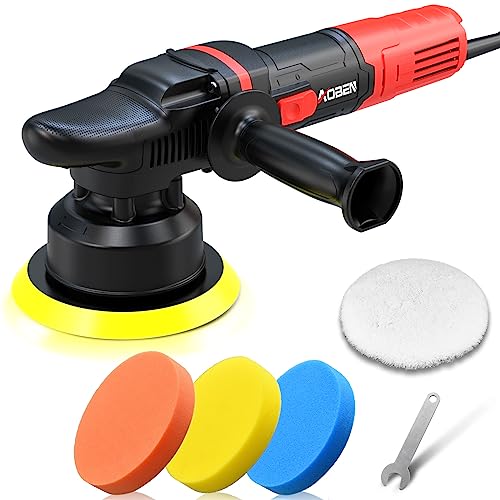
The AOBEN is the low-cost corded entry that still covers the basics well. Its 700W motor and random orbital action aim for a swirl-free finish, and six speeds let you match low for waxing, medium for polishing, and high for defect removal. A detachable handle mounts on either side or up top, so you can pick the grip that feels natural, and heat-insulating housing helps during longer work. It ships with foam and wool pads to get going. It is a friendly, affordable way to learn corded polishing.
Pros
- Very affordable corded polisher
- Six speeds for waxing through defect removal
- Detachable handle mounts multiple ways
- Includes foam and wool pads
Cons
- Can stall under heavy pressure at low speeds
- Build is basic compared to premium tools
Best for: budget-minded beginners who want corded power.
SPTA 5-inch Dual Action
The SPTA pairs a nimble 5-inch pad with a 750W motor and constant-speed electronics that hold your setting steady as you press into a panel. That stability makes it easy to control while removing swirls and light scratches, and the compact head reaches tighter areas around mirrors and trim. A detachable side handle and a D-handle let you choose your grip, and the kit throws in coarse and fine compounds, multiple pads, and sanding discs. It is a well-equipped step up for someone ready to invest a bit more.
Pros
- Constant-speed electronics for steady control
- Compact 5-inch pad reaches tight areas
- Two handle styles for comfort
- Kit includes compounds, pads, and sanding discs
Cons
- Smaller pad covers flat panels more slowly
- Costs more than the budget corded tools
Best for: beginners who want a controllable, well-stocked starter kit.
Chemical Guys TORQX Kit
The TORQX is a favorite starting point among detailers, and this all-in-one kit is why: it bundles the polisher with pads, polishes, and compounds so you can correct paint from day one. An 8mm random orbital throw and a 700W motor deliver smooth, controlled polishing that is safe for paint, clear coat, headlights, and wheels. Simple controls, an ergonomic shape, and balanced weight make it comfortable through a full detail. It costs more, but the trusted design and complete package make it a confidence-building first machine.
Pros
- Respected, detailer-approved design
- Complete kit with pads, polishes, and compounds
- Safe 8mm throw with a controlled feel
- Ergonomic and beginner-friendly
Cons
- Premium price for a starter tool
- Corded, so you manage the cable
Best for: beginners who want a proven, complete kit and room to grow.
Adam’s 9mm Dual Action Kit
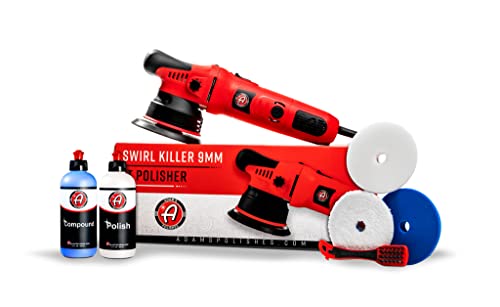
The Adam’s long-throw kit is the powerful pick that still stays beginner-safe. Its 9mm orbit and strong 1000W motor cover more surface per pass and displace product evenly, so a full vehicle goes faster once you find your rhythm. Concave rubber contact points absorb vibration and a balance block improves control, keeping the tool steady in your hands. It weighs under about 5.5 pounds and includes polish, compound, and pads to get started. It is the choice for someone who wants to move quickly and keep the machine for years.
Pros
- Long 9mm throw corrects larger areas faster
- Strong motor with even product displacement
- Vibration-damping design for steady control
- Kit includes polish, compound, and pads
Cons
- Premium price and a longer throw to get used to
- Heavier feel than the compact tools
Best for: ambitious beginners who want speed and a lasting tool.
The verdict
Best overall: the Niusken Cordless Buffer Kit. As the best seller it hits the beginner sweet spot, a safe 8mm throw, six speeds with a clear display, cordless freedom, and a full accessory kit, all at a budget price. It is the easiest way for most people to start.
Best value: the AOBEN 6-inch Dual Action, an inexpensive corded tool with six speeds and a flexible handle for learning the fundamentals.
Best premium: the Adam’s 9mm Dual Action Kit, whose long throw and strong motor correct faster while a vibration-damping design keeps it controllable and built to last.
Frequently asked questions
Can a beginner really use a dual-action polisher safely? Yes. The random orbital action tends to stall rather than dig in, which makes it very forgiving compared to a rotary. Start at a moderate speed, keep the pad flat, and use a proper polish for your defect level.
What is the difference between 8mm and 9mm throw? A 9mm throw covers slightly more area per pass and can correct a bit faster, while an 8mm throw offers more control. Both are excellent for learning.
Do I need a kit with pads and polish? A kit is the simplest way to start, since it includes matched pads and products so you are not guessing what to buy. Several picks here include everything you need.
Corded or cordless for a first polisher? Cordless is convenient for quick jobs and awkward spots, while corded gives constant power for long correction sessions. Choose based on your job size and outlet access.
How long does it take to polish a car? Expect a few hours for a full single-stage correction as a beginner, longer for heavier defects. Comfortable weight, variable speed, and low vibration all help you go the distance.
Can a dual-action polisher burn through paint? It is very unlikely with normal use, because the random orbit stalls rather than digging in. Risk rises at panel edges and on sharp body lines, where paint is thinnest, so tape those off and keep the pad moving.
Which pad and polish should I start with? Begin with the least aggressive combination that works, usually a polishing pad and a fine polish. Test one small section, inspect it, and only move to a cutting pad and compound if the defects remain.
Do I need to wax or seal after polishing? Yes. Polishing removes a microscopic layer and leaves the paint bare, so finish with a wax, sealant, or coating to protect the fresh surface and hold the gloss.
Can I use it on more than my car? Most of these work on boats, motorcycles, furniture, metal, and floors, and several include sanding discs. Just match the pad and speed to the surface you are working on.
This article may contain affiliate links; see our Affiliate Disclosure.