If raised beds are the reason you are shopping, start with a tape measure rather than a spec sheet. The best-selling tillers here are 18 inches wide with an H-handle you steer from behind, and a raised bed is typically four feet across with walls. You cannot turn an 18-inch machine inside one. The tillers that fit a raised bed are the small ones nobody puts on the front page.




The corded versus cordless question turns out to be the same question in different clothes. Corded machines here are 16 to 18 inches wide and dig 8 to 9 inches deep. The cordless ones are narrow and shallow, because a battery cannot sustain that. Which means the cord is really asking how big your ground is, not how much you hate extension leads.
At a glance
| Tiller | Standout feature | Price tier | Link |
|---|---|---|---|
| MZK 12-Inch | Cheapest here; fastest tines at 430 RPM | Budget | |
| DEKOPRO 18-Inch | Most amps here; publishes its weight | Budget | |
| Saker 22V | Cordless; 9-inch width suits a bed | Budget | |
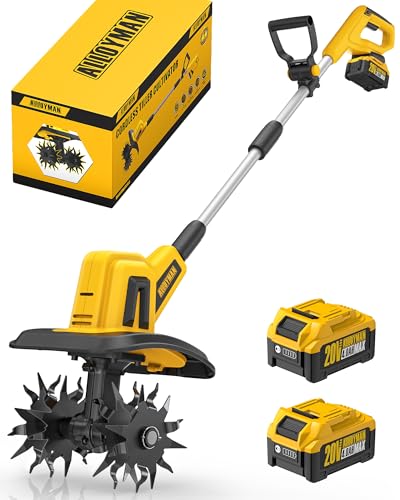
| Alloyman 20V | Cordless with two 4.0Ah batteries included | Mid-range | |
| LawnMaster TE1318M | Best seller; 18 inches wide, 9 inches deep | Mid-range | |
| Sun Joe 16-Inch | 16 inches; the middle width nobody else offers | Premium | |
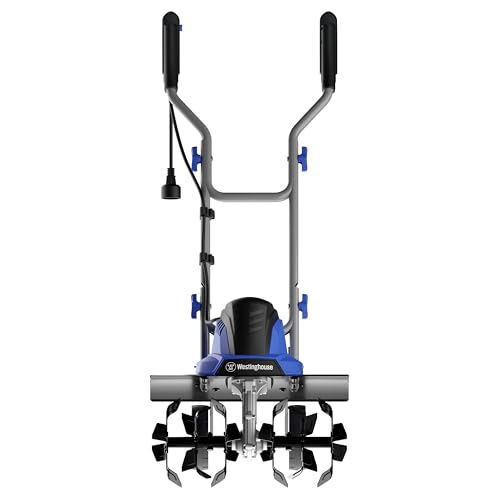
| Westinghouse 18-Inch | Publishes weight and full dimensions | Premium | |
How to choose an electric tiller
Width decides where it can go
This is the specification that should come first and usually comes fourth. An 18-inch machine, which is the LawnMaster, the DEKOPRO and the Westinghouse, needs open ground and room to turn at the ends. A 16-inch Sun Joe is a little more forgiving. The 12-inch MZK will work between rows and inside a bed. Saker’s cordless tills a 9-inch path, which sounds feeble until you are inside a four-foot frame trying not to hit the walls. Match the width to the narrowest place you need to work, not the widest.
Ignore any motor RPM figure in the thousands
DEKOPRO quotes a 15A motor generating up to 19,000 RPM, and then, further down, tells you the blades spin at 335 RPM. Both are true. The first is the motor before the gearbox reduces it; the second is the tines, which are the only part that touches soil. That 19,000 has no bearing on anything you will experience. The number to compare is tine speed, and on that measure the cheapest machine here is quickest: MZK at 430 RPM, then Westinghouse at 400, LawnMaster at 380, the two cordless units at 360, and DEKOPRO last at 335.
Amps are the real corded number
For a mains machine, amp draw is a fair proxy for how hard it can work, and it tracks width closely here. The 12-inch MZK pulls 10.5 amps. The 16-inch machines run 12 to 13.5. The 18-inch DEKOPRO and Westinghouse both draw 15. What that tells you is that nobody is cheating physics: a wider cut needs more current, and a brand quoting big width on small amps would be worth a second look. None here do.
Cordless buys access, not power
The two battery machines are clear about their place. Saker runs at 22V, Alloyman at 20V with two 4.0Ah batteries and a charger in the box, which is the more useful arrangement because one charges while the other works. Both spin at 360 RPM. Both are narrow and light with auxiliary handles and safety triggers. What neither will do is what the 15-amp corded machines do, which is chew through compacted ground nine inches down all afternoon. For beds, borders and topping up compost, that was never the job.
Weight matters and two brands say it
You wrestle a tiller, especially at the ends of a row where you lift and turn it. DEKOPRO publishes 25 lbs and Westinghouse 24 lbs, and Westinghouse goes further with full open dimensions of 39.4 by 17.1 by 40.2 inches, which is the only listing here that tells you what it takes up in a shed. Everyone else says lightweight and leaves it there. On a machine with a spinning steel business end, an actual figure is worth having.
Overload protection is the feature that saves the machine
Tines find rocks and roots. What happens next is the difference between an interruption and a repair. LawnMaster fits mechanical overload protection that shuts the cultivator off if something jams it, and pairs it with a two-stage gearbox and an anti-clock clutch on its other model. That is a specific answer to the specific way tillers die. Folding handles and adjustable transit wheels, which most here have in some form, are convenience; overload protection is insurance.
MZK 12-Inch
The cheapest tiller here and, for raised beds, quietly the most sensible. Twelve inches of cutting width means it fits between rows and inside a frame where the 18-inch machines simply cannot be turned, and it still digs 8 inches down, which is deeper than most beds need. The 10.5-amp pure copper motor spins the tines at 430 RPM, the fastest on this page, because a narrow tiller has less soil to move and can afford the speed. Plug it in and go: no fuel, no oil, no starting ritual. It is aimed at vegetable beds and orchards rather than open field.
Pros:
- Cheapest tiller here by a clear margin
- 430 RPM at the tines; the fastest on this page
- 12 inches wide; fits inside a bed or between rows
- 8-inch depth from a 10.5-amp copper motor
Cons:
- Too narrow for a large open plot
- No weight or overload protection published
- Sells modestly against the big-name 18-inch machines
Best for: raised beds and rows, where an 18-inch machine will not turn.
DEKOPRO 18-Inch
Eighteen inches of width and 15 amps behind it, which is the most current on this page, at a price well below the other 18-inch machines. Six rust-resistant blades, four of them angled to break soil rather than push it, and DEKOPRO publishes the weight at 25 lbs with an H-handle and four quick knobs so it folds down for the shed. The listing’s 19,000 RPM headline is the motor before gearing; the tines turn at 335 RPM, which is the slowest here. That is not a fault, since 15 amps of torque at 18 inches is a lot of soil moved per pass, but read the right number.
Pros:
- 15 amps; the most current here, and cheap for 18 inches
- Publishes its weight at 25 lbs
- Six blades with four angled to break soil
- Folds with quick knobs for storage
Cons:
- 335 RPM at the tines; the slowest on this page
- The 19,000 RPM figure describes the motor, not the blades
- 18 inches will not fit in a raised bed
Best for: the most width and amps for the money, on open ground.
Saker 22V
The most popular cordless machine here, and the one whose dimensions actually suit the job the title asks about. It tills a 9-inch path at 22V and 360 RPM, which is narrow enough to work inside a raised bed frame without clouting the walls, and there is no cord to drag through your seedlings or reach an outlet that may be fifty feet away. Lightweight construction with an adjustable auxiliary handle keeps it manageable, and a safety button plus trigger means it will not start in your hand. It will not break new compacted ground, and it was never meant to.
Pros:
- The best-selling cordless tiller here
- 9-inch path works inside a raised bed frame
- No cord to drag through planting or reach an outlet
- Two-stage safety button and trigger
Cons:
- Half the width of the corded machines
- Battery count and runtime not stated
- Not for breaking compacted ground
Best for: beds and borders far from any power outlet.
Alloyman 20V
The cordless one that answers the question cordless machines usually dodge: it comes with two 4.0Ah batteries and a charger, so one is on charge while the other is in the garden and the afternoon does not end when the first runs flat. Four steel tines turn at 360 RPM on a 20V pack, and the whole machine is light enough to carry one-handed to wherever the work is, with an auxiliary handle for control and a safety switch that stops it starting by accident. Alloyman puts the case for cordless plainly: a power outlet is not always near the work.
Pros:
- Two 4.0Ah batteries and a charger included
- One charges while the other works
- Light enough to carry to the far end of a plot
- Safety switch and auxiliary handle
Cons:
- Four tines against six on the corded machines
- No tilling width or depth published
- Costs more than corded machines that dig deeper
Best for: a long session away from power, without a battery swap to buy.
LawnMaster TE1318M
The best-selling tiller here, and it earns that on the numbers that matter rather than the ones that shout. Eighteen inches wide and nine inches deep is the biggest bite on this page, driven by 13.5 amps through six rust-resistant steel blades at 380 RPM. The part worth paying for is the mechanical overload protection, which cuts the motor the moment a root or a rock jams the tines, and that is the exact failure that ends cheaper machines. Handles fold for storage. For medium to large gardens it is the obvious choice, and for a raised bed it is far too wide.
Pros:
- Comfortably the best-selling tiller here
- 18 inches wide and 9 inches deep; the biggest bite here
- Mechanical overload protection against jams
- Folding handles; 380 RPM through six steel blades
Cons:
- Far too wide to turn inside a raised bed
- 13.5 amps, less than the 15-amp machines
- No weight published
Best for: a medium to large open garden, with the jam protection built in.
Sun Joe 16-Inch
The middle width, which is a real gap in this lineup and the reason to consider it. Sixteen inches with 13.5 amps behind it means it turns in places an 18-inch machine will not, while still covering ground far faster than a 12-inch cultivator, and it digs 8 inches deep through six rust-proof steel-angled tines. Three-position wheel adjustment sets the depth and keeps control across different soil, and the handle folds for storage. Sun Joe is direct about what it is: a corded electric tiller, no gas, no oil, plug in and work. It is the most expensive machine here.
Pros:
- 16 inches; the only middle width on this page
- 13.5 amps and six rust-proof angled steel tines
- Three-position wheels set depth and control
- Folding handle; no gas or oil
Cons:
- Most expensive tiller here
- 8-inch depth, an inch less than the LawnMaster
- Still too wide for a raised bed
Best for: a garden that is awkward for 18 inches but too big for 12.
Westinghouse 18-Inch
The best-documented machine here. It is the only listing that tells you what it weighs, 24 lbs, and what it occupies when opened out, 39.4 by 17.1 by 40.2 inches, which is the difference between a tiller that fits your shed and one that lives outside under a sheet. Behind that, 15 amps drives six integrated steel blades at 400 RPM, the second-fastest tine speed here, across an 18-inch working width and up to 9 inches of depth. An ergonomic H-type handle keeps it controllable. It matches the biggest cut on this page and spins faster while doing it.
Pros:
- Publishes weight and full open dimensions; nobody else does
- 15 amps at 400 RPM; second-fastest tines here
- 18-inch width with up to 9-inch depth
- Ergonomic H-type handle at 24 lbs
Cons:
- Among the priciest here
- No overload protection mentioned
- 18 inches rules out raised beds
Best for: the biggest cut, from the brand that tells you what it is.
The verdict
If this really is for raised beds, stop reading the 18-inch machines. They are the popular ones and they will not turn inside a frame. The 12-inch MZK or the 9-inch Saker are the plain answers, and both cost less than the machines outselling them.
Best overall: LawnMaster TE1318M. The best seller, and right for open ground: 18 inches wide, 9 inches deep, the biggest bite here, driven by 13.5 amps through six steel blades at 380 RPM. The feature worth the money is mechanical overload protection, which stops the motor the instant a root jams the tines, and that jam is exactly how cheaper tillers end their lives. Handles fold away afterwards.
Best value: MZK 12-Inch. The cheapest thing here and the one that fits where the popular machines cannot. Twelve inches works inside a bed and between rows, it still digs 8 inches down, and its 10.5-amp copper motor spins the tines at 430 RPM, faster than anything else on this page. You give up width and overload protection. For beds, neither was ever the point.
Best premium: Westinghouse 18-Inch. The only brand here that tells you what it weighs and what space it takes: 24 lbs, and 39.4 by 17.1 by 40.2 inches open. Behind that clarity is a real machine, 15 amps driving six blades at 400 RPM across 18 inches and down to 9. It matches the best seller’s cut and turns faster doing it.
FAQ
Which of these actually fits a raised bed?
The narrow ones. Saker’s cordless tills a 9-inch path and the MZK is 12 inches, both of which turn inside a typical four-foot frame. The 16 and 18-inch machines, which are the best sellers here, need open ground and room to turn at the ends.
Corded or cordless?
It is really a size question. The corded machines here are 16 to 18 inches wide and dig 8 to 9 inches; the cordless ones are narrow and shallow, because a battery will not sustain that work. If your ground is big and compacted, take the cord. If it is beds and borders far from an outlet, take the battery.
What does 19,000 RPM mean on a tiller?
It means the motor, before the gearbox slows it down. DEKOPRO’s blades actually turn at 335 RPM, which is the number that touches soil. Compare tine speed: MZK 430, Westinghouse 400, LawnMaster 380, the cordless pair 360, DEKOPRO 335.
How many amps do I need?
Enough for the width you are buying, and the market prices that plainly. The 12-inch MZK draws 10.5 amps, the 16-inch machines 12 to 13.5, and the 18-inch DEKOPRO and Westinghouse 15. A wide cut on low amps would be the thing to question.
What is overload protection and do I need it?
It cuts the motor when a rock or root jams the tines, which is the usual way a tiller dies rather than wears out. LawnMaster fits it, and pairs a two-stage gearbox and anti-clock clutch on its other model. Folding handles are convenience; this is insurance.
This article may contain affiliate links; see our Affiliate Disclosure.