The box says 20 bar. The shot says otherwise: thin, sour, and gone in eight seconds, under a head of foam that collapses before you sit down. Nothing on the spec sheet warned you, because the number everyone advertises is not the number that makes espresso.





Espresso at the affordable end is a game of knowing which specs are real. Pressure ratings are mostly theater. Temperature control is not. A machine without a grinder is only half a purchase. And one of the cheapest machines in this group is not making espresso at all, in a way its own listing quietly admits. Here is what separates the ones that pull a genuine shot.
At a glance
| Machine | Standout feature | Price tier | Link |
|---|---|---|---|
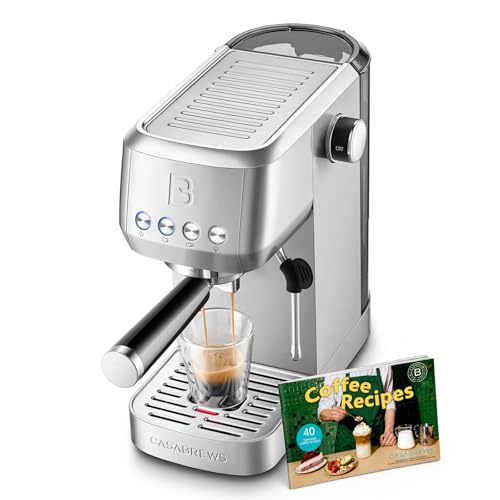
| CASABREWS CM5418 | Best seller here; compact with a real steam wand | Mid-range | |
| atatix | Names its true brew pressure and temperature band | Budget | |
| De’Longhi Stilosa | The simple one; stainless boiler, no electronics | Budget | |
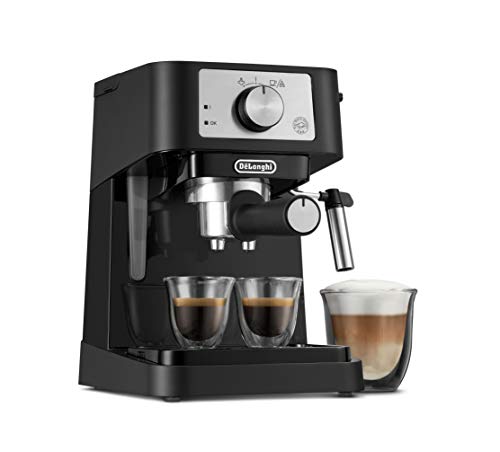
| De’Longhi Classic Signature | Thermoblock heating and preset doses | Mid-range | |
| CASABREWS 3700 | Largest tank of the compact machines | Budget | |
| Mr. Coffee 4-Shot | Steam-brewed, not pump-brewed; cheapest here | Budget | |
| AMZCHEF | The only pick with a grinder built in | Premium | |
How to choose an affordable espresso machine
The bar rating is the most misleading number in coffee
Espresso is extracted at around nine bar. That is the target, and it has been for decades. So when a machine advertises 20 bar, it is quoting what the pump can produce at full tilt, not what reaches your coffee. The atatix listing is refreshingly straight about it and says the 20-bar system exists to hold nine to ten bar through the shot, which is exactly right and exactly what everyone else leaves out. It also means De’Longhi’s 15 bar is not a weaker machine than a 20-bar rival. Both overshoot nine. Stop comparing the number.
Steam-brewed is not pump-brewed
This is the one that catches people. The Mr. Coffee uses a steam-brewing process rather than a pump, which builds far less pressure than a pump machine, closer to what a stovetop pot makes. It brews something dark and strong, and it is genuinely good for a Cuban-style coffee, which its own listing points to. It is not going to give you a nine-bar shot with proper crema, and no amount of technique will change that. If the word espresso is the reason you are buying, buy a pump machine.
Temperature is the spec worth paying for
Water that is too hot burns the shot bitter, too cool and it draws sour. That is where cheap machines actually fall down, not on pressure. Only two here publish what they do about it: atatix quotes an NTC control system holding 90 to 96 degrees C with a 30 second preheat, and AMZCHEF lets you set anywhere from 190 to 201 degrees F to suit the roast. De’Longhi’s Classic Signature uses Thermoblock heating for fast, stable temperature without naming a band. Everything else asks you to trust it.
The grinder is the hidden half of the price
Espresso needs a fine, even, freshly ground dose, and pre-ground supermarket coffee will not give you one no matter what machine it goes into. Only the AMZCHEF here has a grinder built in, with 44 settings. Every other pick assumes you own one or will buy one, and a burr grinder good enough for espresso is a real second purchase. Factor that in before you decide the cheapest machine is the cheapest option.
One boiler means waiting
These machines heat one water circuit, and brewing and steaming want different temperatures. So you pull the shot, then wait for the machine to climb to steam heat, then froth. CASABREWS is plain enough to print the reverse warning in its listing: do not brew straight after frothing, because the machine is too hot and will trip its overheat protection. That is not a defect. It is what a single circuit does, and it is worth knowing before you try to make four drinks for guests.
Tank size decides how often you are at the sink
The spread is real: 34 oz on the CASABREWS CM5418, 43.9 oz on the CASABREWS 3700, 44 oz on the atatix, 60 oz on the AMZCHEF. If one person pulls a shot each morning, none of this matters. If you are making milk drinks for a household, the steam wand drinks water fast, and the small tanks turn into a refill every couple of days.
CASABREWS CM5418
The best seller of this group, and it is a sensible package rather than a spec-sheet winner. A 1350 W boiler behind an Italian pump, a proper articulating steam wand for texturing microfoam by hand, a 34 oz removable tank, and a stainless body small enough for a cluttered counter. It makes single or double shots with crema. CASABREWS also prints the real caveat that you must let it cool between frothing and brewing, which is the kind of thing most brands leave you to discover.
Pros:
- The best-selling machine here
- Real steam wand for hand-textured microfoam
- Compact stainless body; removable 34 oz tank
- Listing is upfront about the cool-down between steam and brew
Cons:
- Smallest tank of the compact machines
- No published brew temperature control
- No grinder
Best for: a first real pump machine on a small counter.
atatix
The most accurate listing in the group, and the machine backs it up. It states that its 20-bar pump exists to hold nine to ten bar through the shot, which is the truth other brands bury, and it names its temperature band: 90 to 96 degrees C, held by an NTC control system, preheated in 30 seconds. Manual extraction lets you run the pump as long as you like, up to 102 seconds, so you can pull ristretto short or stretch a lungo. A 44 oz tank, a dry-steam wand, and silicone suction feet that stop it walking on the counter.
Pros:
- Publishes its real brew pressure and its temperature band
- Manual extraction for shot length control
- 44 oz tank and a 30 second preheat
- Suction feet keep it planted while the pump runs
Cons:
- Largely ABS plastic body with stainless trim
- A less familiar brand than De’Longhi
- No grinder
Best for: anyone who wants to control the shot rather than press a button.
De’Longhi Stilosa
The one with nothing to go wrong. A 15-bar pump, a stainless steel boiler De’Longhi builds to last years, a manual steam wand, and a portafilter with filters for single and double shots. No screen, no presets, no electronics to fail. What you get for the lowest price of any real pump machine here is a competent, repairable, boring machine from a brand that has been making them a very long time. The listing is short because there is genuinely not much to say.
Pros:
- Cheapest true pump machine here
- Stainless boiler engineered for longevity
- Manual wand and both single and double filters included
- Nothing electronic to break
Cons:
- No temperature control worth the name
- Sparse listing; few published specs
- No grinder, no presets
Best for: learning on a machine that will outlast your interest in it.
De’Longhi Classic Signature
The Stilosa’s better-equipped sibling. Same 15-bar Italian pump, but Thermoblock heating gets it to temperature fast and holds it steadily, which is the upgrade that actually shows up in the cup. The steam wand has two settings, so you can pick silky steamed milk or thick microfoam rather than fighting one setting for both. Customisable presets brew your single or double dose automatically, which is the difference between a ritual and a routine on a weekday morning.
Pros:
- Thermoblock heating for fast, stable temperature
- Two-setting steam wand for steamed milk or microfoam
- Customisable single and double presets
- Compact stainless build
Cons:
- No temperature band published
- Costs half again what the Stilosa does
- No grinder
Best for: a weekday machine that gets it right without you thinking.
CASABREWS 3700
CASABREWS at its simplest: the same 1350 W heating system and pump as the CM5418, in a plainer package with a bigger 43.9 oz tank. It makes the same drinks with the same wand and the same crema, and the tank means fewer trips to the sink if you are making milk drinks for more than yourself. The listing includes an easily missed setup step: pull the rubber plug from the tank base and run a first-use cycle before you brew, or the machine will not behave.
Pros:
- Nearly 44 oz tank at the lowest CASABREWS price
- Same 1350 W heating and steam wand as the CM5418
- Detachable tank and drip tray
- Straightforward, few things to misuse
Cons:
- Sells well behind the CM5418
- Fussy first-use setup that is easy to skip
- No temperature control, no grinder
Best for: milk drinks for a household, on the cheap.
Mr. Coffee 4-Shot
The cheapest machine here, and the one that needs the clearest label: it brews with steam, not a pump. That means far lower pressure than a true espresso machine, and a cup closer to strong stovetop coffee than to a nine-bar shot. Judged as what it is, it does well: an extra-large portafilter pulls up to four shots at once, there is a frothing wand and a stainless frothing pitcher in the box, and the water pitcher is marked for repeatable measures. Mr. Coffee points at Cuban coffee in its own copy, which is the real use for it.
Pros:
- Cheapest way into steamed milk drinks at home
- Four shots at once from an extra-large portafilter
- Stainless frothing pitcher included
- Genuinely suited to dark, strong, Cuban-style coffee
Cons:
- Steam-brewed, so not true espresso pressure or crema
- No control over temperature or shot length
- No grinder
Best for: strong milk coffee on the smallest possible budget, with eyes open.
AMZCHEF
The only pick here that solves the grinder problem in the box, and that changes the arithmetic completely. Its conical grinder offers 44 settings, fine enough for espresso and coarse enough for French press, so one appliance covers several brewing habits. Brew temperature adjusts from 190 to 201 degrees F to suit light or dark roasts, which is real control rather than a claim. Add a 60 oz tank, the largest here, a one-touch cold brew mode, a descaling routine, an 8 mm steam wand on a 1350 W system, and a touch screen showing grind time, brew time and temperature.
Pros:
- Built-in grinder with 44 settings; no second purchase
- Adjustable brew temperature from 190 to 201 degrees F
- Largest tank here at 60 oz, plus a descaling function
- Cold brew mode and a clear touch screen
Cons:
- The lowest seller of this group by a wide margin
- Most expensive pick here
- A grinder built to a price is still a compromise
Best for: going from beans rather than a bag of pre-ground.
The verdict
Best overall: CASABREWS CM5418. The best seller here, and it earns that with balance rather than any single spec: a real pump, a real steam wand you texture milk with by hand, a compact stainless body, and a listing plain enough to tell you about the cool-down between steaming and brewing. It gives you the parts of espresso that matter and skips the parts that are marketing.
Best value: De’Longhi Stilosa. The cheapest true pump machine here, from a brand that has made them forever, with a stainless boiler and nothing electronic to die. You get no temperature control and no presets. What you get instead is a machine that will still work when a cleverer one has failed, at a price that leaves budget for the grinder you will need anyway.
Best premium: AMZCHEF. Every other pick here assumes you own a burr grinder or will buy one, and that hidden cost is what makes a cheap machine expensive. This one includes it, with 44 settings, and adds the temperature control the category usually skips. It sells the least of anything here, so it is the least proven pick, but it is the only one that gets you from beans to a shot on its own.
FAQ
Is a 20 bar machine better than a 15 bar machine?
No. Espresso extracts at about nine bar, so both numbers are above what your coffee ever sees. The rating describes the pump at maximum, not the shot. The atatix listing says so openly: its 20-bar pump is there to hold nine to ten bar through the shot. Judge on temperature control and build instead.
Do I need a separate grinder?
For every pick here except the AMZCHEF, yes, if you want a real shot. Espresso needs a fine, even, fresh grind, and pre-ground coffee is neither fine enough nor fresh enough. Budget for a burr grinder alongside the machine, or buy the one with a grinder inside.
Why can’t I froth milk and pull a shot back to back?
Because these machines heat one water circuit, and brewing and steaming need different temperatures. After steaming, the machine is too hot to brew and needs to cool, and CASABREWS prints that warning in its own listing. It is normal for the price, not a fault.
What is wrong with the cheapest machine here?
Nothing, as long as you know what it is. The Mr. Coffee brews with steam rather than a pump, at much lower pressure, so it makes strong dark coffee rather than true espresso with crema. It is good at that job. It just is not the same job.
Which spec should I actually pay more for?
Temperature control, then a grinder. Water that runs too hot turns the shot bitter and too cool turns it sour, and that is where affordable machines really fail. The atatix and the AMZCHEF are the only picks that publish a temperature band you can hold them to.
This article may contain affiliate links; see our Affiliate Disclosure.