You hear the footsteps before you see anything: a scuff of gravel behind and to your left, and you turn and win the fight. That is what a good gaming headset buys you, and the same drivers that place an enemy in space also turn a storm, a soundtrack, or a distant explosion into something you feel rather than just hear.


Immersion comes from three things working together: capable drivers, a seal that keeps the room out, and spatial processing that convincingly places sound around your head. The picks below cover wired and wireless, budget to premium, and every one of them takes positional audio seriously. Whether you play competitive shooters, sink into long single-player worlds, or just want to hear a film properly at midnight, there is a match here.
At a glance
| Headset | Standout feature | Price tier | Link |
|---|---|---|---|
| Razer BlackShark V2 X | 7.1 surround, 50mm Triforce drivers | Mid-range | |
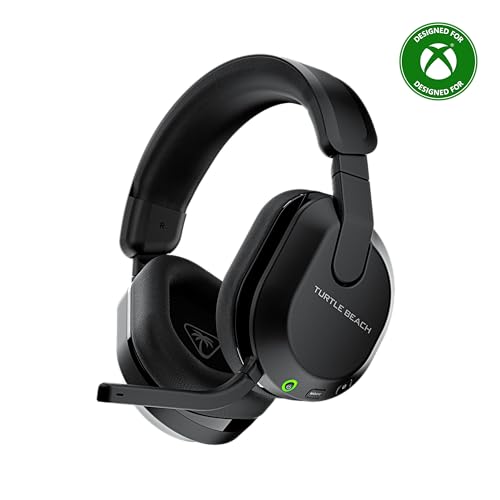
| Turtle Beach Stealth 600 | Wireless, 80-hour battery | Premium | |
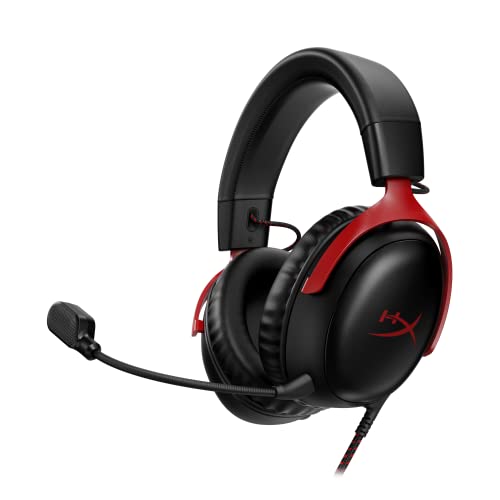
| HyperX Cloud III | Angled 53mm drivers, DTS spatial | Mid-range | |
| BENGOO G9000 | Lowest price, works everywhere | Budget | |
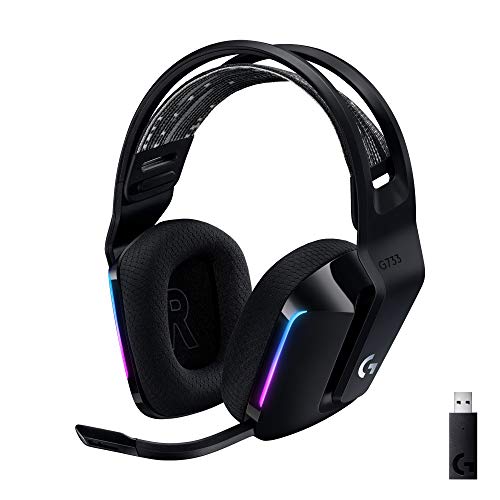
| Logitech G733 | Lightspeed wireless, Blue VO!CE mic | Premium | |
How to choose a gaming headset for immersive audio
Marketing in this category leans hard on big numbers. These are the things that genuinely change what you hear.
Where immersion actually comes from
Three ingredients. Drivers, the small speakers in each cup, do the heavy lifting: bigger and better-tuned ones, like Razer’s 50mm Triforce design or HyperX’s angled 53mm drivers, separate a rumble from a footstep instead of blending them into mush. A good seal around your ears blocks the room so quiet detail survives. Then spatial processing places those sounds around your head. Skip any one of the three and the effect falls apart.
Surround and spatial audio, plainly
Almost every “7.1 surround” gaming headset has two drivers, not fourteen. The surround effect is created in software, whether that is Razer’s 7.1, DTS Headphone:X, or Windows Sonic. That is not a criticism; well-implemented virtual surround genuinely helps you place sounds, and DTS in particular is well regarded. It does mean two practical things: the effect usually depends on the maker’s software, and some implementations are Windows-only. If you game mainly on a console, check that the spatial features work there rather than assuming.
Wired or wireless
Wired headsets over a 3.5mm jack are the simplest thing in gaming: no battery, no pairing, no latency, and they work on almost anything with a headphone socket. Modern 2.4GHz wireless, using a small dongle, has effectively solved latency for gaming and buys you freedom to walk away mid-match. Bluetooth is convenient for phones but generally adds too much delay for competitive play, which is why good wireless headsets offer 2.4GHz for gaming and Bluetooth alongside it for everything else.
Comfort over a long session
The best-sounding headset loses to the one you can wear for four hours. Weight matters, and the lightest here is around 240 grams. Memory foam cushions spread pressure, breathable fabric beats leatherette if you run hot, and a suspension headband distributes weight without a hot spot on the crown. If you wear glasses, look for cushions designed to accommodate frames, since clamping force on the arms of your glasses is the fastest route to a headache.
Sound signature: bass you feel, detail you use
Gaming headsets are often tuned with a lift in the bass, because explosions and engines feel better that way. The risk is that heavy bass masks the quiet, high-frequency detail that tells you someone is reloading behind a wall. The better headsets solve this by tuning frequency ranges separately, as Razer’s three-part driver design does, or by keeping distortion low so cues stay distinct, which is the argument for Logitech’s PRO-G drivers. If you play competitively, favor clarity and separation. If you mostly play story-driven games and watch films, a warmer, bassier tuning is genuinely more enjoyable, and EQ modes let you have both.
The microphone
If you play with other people, the mic is half the product. A cardioid or unidirectional pattern picks up your voice and rejects the room, which is the difference between clear comms and your squad hearing your keyboard. Flip-to-mute is the most useful convenience feature there is, and noise reduction or voice filters, like Logitech’s Blue VO!CE, clean up a voice further. Detachable mics are handy if the headset doubles as everyday headphones.
Platform compatibility
A 3.5mm jack is the universal key: PC, Mac, PlayStation, Switch, mobile, and Xbox controllers all take one, though some older Xbox controllers need an adapter. Wireless headsets are pickier, so check the specific platform. Some 2.4GHz models cover PlayStation and PC but not Xbox, and Bluetooth on consoles is often not supported directly. Read the compatibility line before buying, because this is where most disappointment happens.
Razer BlackShark V2 X
This is one of the best-selling gaming headsets anywhere, and it is the one to beat on value. Its custom-tuned 50mm Triforce drivers split the diaphragm into three sections so highs, mids, and lows are tuned separately, which is why footsteps stay crisp while explosions still land with weight. Closed earcups seal properly for passive noise isolation, and software-enabled 7.1 surround handles positional audio. At around 240 grams with breathable foam cushions, it disappears on your head during long sessions. The HyperClear cardioid mic keeps your voice front and center, and a plain 3.5mm jack means it works on PC, Mac, PlayStation, and Switch. Note the 7.1 mode is a Windows feature.
Pros
- Custom 50mm Triforce drivers with separately tuned ranges
- Strong passive isolation from sealed closed cups
- Very light at around 240 grams, comfortable for hours
- Cardioid mic and universal 3.5mm compatibility
Cons
- The 7.1 surround mode is Windows-only
- Wired, so no freedom to walk away
Best for: almost anyone wanting serious positional audio without spending much.
Turtle Beach Stealth 600 Wireless
If you want to cut the cable without compromising, this is the versatile pick. It runs low-latency 2.4GHz wireless for gaming and Bluetooth 5.4 for everything else, with a QuickSwitch button to hop between them, so you can take a call without unplugging your game. It is genuinely multiplatform, covering Xbox, PlayStation, PC, and mobile, which is rare and valuable. The 50mm Nanoclear drivers deliver vibrant spatial audio, built-in EQ modes let you tune the sound, and an 80-hour battery means charging is a monthly chore rather than a daily one. Memory foam cushions include glasses-friendly channels, and the flip-to-mute mic uses noise reduction to keep comms clean.
Pros
- 2.4GHz wireless plus Bluetooth with instant switching
- Genuinely multiplatform, including Xbox and PlayStation
- Huge 80-hour battery life
- Glasses-friendly memory foam and flip-to-mute mic
Cons
- Premium price
- More features and buttons to learn than a plain wired set
Best for: players who move between consoles, PC, and phone and want one wireless headset for all of it.
HyperX Cloud III
HyperX built its reputation on comfort, and the Cloud III keeps that promise while sharpening the audio. Angled 53mm drivers sit at a slight angle to your ears, tuned by HyperX’s engineers to bring out the dynamics of games rather than flatten them, and a lifetime activation of DTS Headphone:X spatial audio adds precise sound localization and a convincing 3D stage. Memory foam and an aluminum frame mean it survives being thrown in a bag and still feels good hours in. The upgraded 10mm mic is noise-canceling with a mesh filter and an LED mute indicator, so you always know your status. USB-C, USB-A, and 3.5mm connections cover PC, PlayStation, and Xbox.
Pros
- Angled 53mm drivers tuned for game dynamics
- DTS Headphone:X spatial audio included for life
- Outstanding long-session comfort and a durable aluminum frame
- USB-C, USB-A, and 3.5mm for broad compatibility
Cons
- Wired only
- Costs more than the entry-level options
Best for: long sessions where comfort and clean spatial detail matter most.
BENGOO G9000
The G9000 has been a fixture of the best-seller charts for years, and it is the answer when the budget is genuinely tight. It uses 40mm magnetic neodymium drivers with a surround effect and decent ambient noise isolation, enough to give you a real sense of where sounds are coming from in a shooter. Protein over-ear pads and a multi-point headband keep it wearable, LED-lit earcups add the gamer look, and an omni-directional noise-isolating mic on a flexible arm handles chat. An in-line volume dial and mic mute sit on the braided cable. It works with PlayStation, Xbox, PC, Switch, and more via 3.5mm, though older Xbox controllers need an adapter.
Pros
- Remarkable price for a full over-ear gaming headset
- Works across nearly every platform via 3.5mm
- In-line volume control and mic mute
- Comfortable padded cups and headband
Cons
- Smaller 40mm drivers do not match the premium sets
- Build and materials reflect the low price
Best for: first headsets, spare setups, and anyone on a strict budget.
Logitech G733 Lightspeed Wireless
The G733 is the showpiece. Lightspeed wireless gives a 20-meter range with up to 29 hours of play, and PRO-G drivers keep distortion low so audio cues stay precise and rich rather than smeared. Its party trick is the reversible suspension headband, which spreads weight like a hammock and is genuinely one of the most comfortable designs for very long sessions, alongside dual-zone Lightsync RGB in 16.8 million colors if you want your setup to look the part. The Blue VO!CE mic filters make your voice noticeably richer and cleaner, which streamers value. It covers PC, PlayStation, and Switch, and the RGB and voice filters are configured in Logitech’s G HUB software.
Pros
- Lightspeed wireless with a long 20-meter range
- PRO-G drivers deliver precise, low-distortion audio
- Suspension headband is superb over long sessions
- Blue VO!CE mic filters clean up your voice
Cons
- Highest price here, and battery life trails the Stealth 600
- RGB and mic filters need G HUB software
Best for: PC players and streamers who want premium wireless comfort, mic quality, and lighting.
The verdict
Best overall: the Razer BlackShark V2 X. It is one of the most popular gaming headsets for a reason, pairing genuinely capable 50mm Triforce drivers and strong isolation with a featherweight fit and a price that undercuts far less capable rivals.
Best value: the BENGOO G9000. It gives you surround-effect over-ear audio and a mic that works on every platform for pocket change, which makes it the obvious first headset.
Best premium: the Logitech G733. PRO-G drivers, a suspension headband built for marathon sessions, and Blue VO!CE mic processing make it the pick if you want the full experience and play mainly on PC.
Frequently asked questions
Does 7.1 surround actually help? Yes, when it is done well. Almost all gaming headsets create surround in software from two drivers, and good implementations like DTS Headphone:X noticeably improve your sense of direction and distance. Just know the effect often depends on the maker’s software and may be Windows-only.
Should I go wired or wireless? Wired is simpler, cheaper, has no battery, and works on nearly anything with a 3.5mm jack. Modern 2.4GHz wireless has solved gaming latency and buys you freedom to move. Bluetooth is fine for music and calls but usually adds too much delay for competitive play.
Will these work on PlayStation and Xbox? Any 3.5mm headset here works on both, though some older Xbox controllers need an adapter. Wireless is pickier: the Stealth 600 covers Xbox and PlayStation, while some 2.4GHz headsets support PlayStation and PC only. Always check the compatibility line.
What makes a headset comfortable for hours? Low weight, memory foam cushions, gentle clamping force, and a headband that spreads pressure rather than concentrating it. Breathable fabric beats leatherette if you run warm, and glasses wearers should look for cushions designed around frames.
Is a more expensive headset worth it? Up to a point. Moving from a budget set to a mid-range one buys clearly better drivers, isolation, and comfort. Beyond that you are mostly paying for wireless freedom, mic processing, battery life, and build. A great mid-range wired headset beats a mediocre expensive one.
How do I get the most immersion from the headset I have? Get the seal right first, since cushions that sit properly around your ears do more than any software setting. Then turn on the spatial mode in the maker’s software, set the game’s own audio output to headphones rather than speakers, and avoid stacking two surround effects at once, which muddies positioning rather than improving it.
Do I need a separate mic for streaming? Not necessarily. Headset mics with voice processing, like Blue VO!CE, sound clean enough for casual streaming and comms. A dedicated microphone still sounds better, but it is a step to take later rather than a requirement.
This article may contain affiliate links; see our Affiliate Disclosure.