One set here has the word “Preheated” in its title, in front of the word oven. That is not filler. It is a rule about how you are allowed to use the bowl, sitting in the product name, and it is the only listing on this page plain enough to put its own constraint where you cannot miss it. Everything else says oven safe, or says nothing.


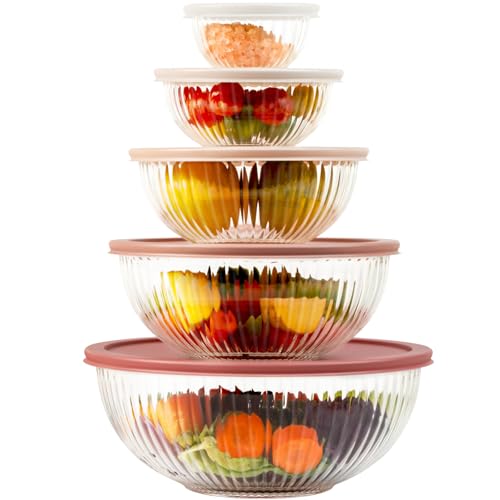


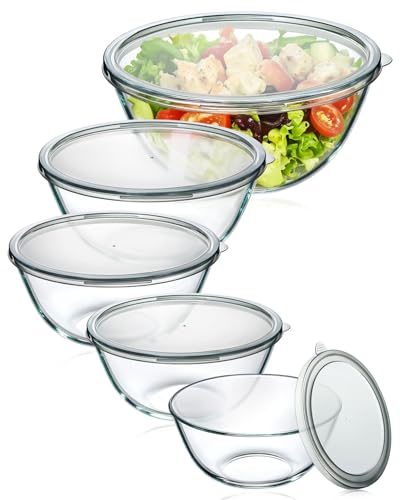

At a glance
| Product | Glass and oven | Price tier | Link |
|---|---|---|---|
| Pyrex Essentials | Tempered. Preheated oven only, and it says so | Budget | |
| Anchor Hocking 4pc | Oven safe. Says non-porous, correctly | Budget | |
| 5-Pack with Lids | Borosilicate, and no oven claim at all | Budget | |
| Pyrex Colors Tinted | Tempered. And this one drops the oven entirely | Mid-range | |
| 5pc Nesting Set | 100% borosilicate. Same five sizes as the set below | Mid-range | |
| 5-Set with Lids | Borosilicate, and the only published temperature range | Mid-range | |
| Cuiselect 5pc with Lids | Borosilicate, and it names what is not in it | Premium | |
How to choose
Tempered and borosilicate are two different glasses
Four sets here are borosilicate and two are tempered, and the difference decides how they die. Borosilicate barely expands when heated, so it shrugs off a sudden change in temperature. Tempered glass is stronger against a knock and less happy about heat arriving quickly. Neither is better; they are answers to different kitchens. If you take things from the fridge to the oven, buy borosilicate. If you drop things, tempered has the edge.
Which is exactly what “preheated” means
The tempered set’s title tells you: preheated oven. Put a bowl into an oven that is still climbing and the element is glowing, throwing radiant heat unevenly at one side of the glass while the other side is still cool. That uneven arrival is what cracks it. Wait for the oven to settle and the heat is even. It is a small rule and it is in the product name, which is more than any other listing here manages.
The two endpoints are not the risk
One borosilicate set publishes a range: -4 degrees F to 1040 degrees F. The high figure is the material’s own limit and is roughly double what any domestic oven reaches, so it is real and useless. What no listing on this page publishes is the number that actually breaks bowls, which is how big a temperature change the glass will take at once. Freezer to oven is a swing of a thousand degrees. The endpoints tell you nothing about the journey.
Watch the same brand drop the oven
One brand sells two sets here. The clear one says preheated oven, dishwasher, freezer and microwave. The tinted one from the same brand says freezer, microwave and dishwasher, and never mentions the oven at all. Same maker, same tempered glass, and the colored one quietly loses a whole cooking method. Elsewhere a borosilicate set advertises high temperature resistance in one bullet and then lists only dishwasher safe in its safety bullet, claiming no oven either.
Glass does not absorb odor, so watch who hedges
Glass is non-porous. It cannot take on the smell of last night’s garlic, because there is nowhere for the smell to go. One listing states that plainly: non-porous, so it will not absorb odors or stain. Another says its glass resists stains and odors, which is a hedge about a property glass simply has. When a listing softens a claim that did not need softening, it tells you something about the claims that did.
Check the smallest bowl before you count the pieces
Two five-piece sets here start at 0.85 quarts. One starts at 0.2, which is about six ounces, and that is a ramekin rather than a mixing bowl. It is genuinely useful for a beaten egg or chopped garlic, and it means the set is realistically four bowls and a dish. Count the sizes you would actually mix in, then compare. A three-piece set spanning one to two and a half quarts may be more usable than a five-piece starting at a splash.
The lid usually has a rule the bowl does not
Four sets here come with plastic lids and all four call them BPA-free. Only one tells you where the lid goes in the dishwasher: top rack. The bowls are glass and go anywhere; the lids are plastic and the bottom rack is where the heating element is. Every other listing here says dishwasher safe about the whole set and leaves you to work out that the lid means something narrower.
Pyrex Essentials
The cheapest set here and the most accurate title on the page: preheated oven, dishwasher, freezer and microwave safe. That word preheated is the tempered glass rule stated where you cannot miss it. Three bowls at 1, 1.5 and 2.5 quarts, which is a tight and genuinely usable spread rather than a set padded out with ramekins, in tempered glass that resists stains and odors, with a limited warranty behind it. The brand’s number one claim comes with a named research firm, a metric and a measurement window attached.
Pros:
- Puts its own thermal rule in the title
- The lowest price on this page
- 1, 1.5 and 2.5 qt; a tight, usable spread
- Backs its number one claim with a named source
Cons:
- Tempered, so heat must arrive gradually
- Three bowls; no lids
- Says it resists odors, which glass simply does not absorb
Best for: a small real set at the lowest price.
Anchor Hocking 4pc
Four bowls, made in the USA by a company that has been doing it for well over a century, and the only listing here that describes glass correctly: non-porous, so it will not absorb odors or stain. Not resists. Will not. It is microwave, oven and dishwasher safe with no preheating caveat attached, which is more freedom than the tempered sets here offer. Five bullets, no adjectives, no gift-occasion filler. What it does not tell you is the sizes, or which glass it is.
Pros:
- States non-porous correctly, rather than hedging
- Oven safe with no preheating condition attached
- Made in the USA by a long-established maker
- Four bowls; plain, unpadded listing
Cons:
- Never says which glass it is
- Publishes no sizes at all
- No lids included
Best for: oven use without a rule attached.
5-Pack with Lids
Five borosilicate bowls with airtight BPA-free lids at a low price, with vertical striping that is more than decoration since it gives a wet hand something to hold. The sizes run 0.2, 0.5, 1.1, 2.1 and 3.7 quarts, and that smallest one is six ounces, which is a ramekin rather than a bowl you would mix in. Its glass bullet claims high temperature resistance and high strength, and then its safety bullet lists only dishwasher safe, with no oven and no freezer mentioned anywhere.
Pros:
- Five borosilicate bowls with lids, cheaply
- Vertical striping gives a wet hand grip
- Airtight flexible lids; stackable
- Small sizes suit prepped ingredients
Cons:
- Claims high temperature resistance, then only dishwasher safe
- Smallest is 0.2 qt; a ramekin, not a mixing bowl
- Prints its dishwasher sentence twice
Best for: prep pots and storage, not the oven.
Pyrex Colors Tinted
The prettiest set here, sculpted and tinted, made in the USA, with three bowls at 1.3, 2.3 and 4.5 quarts, which is the widest spread of any three-piece set on this page and includes a genuinely large bowl. The BPA-free lids are freezer, microwave and top-rack dishwasher safe, and it is the only listing here that names the rack. The thing to notice is what its bullets do not say: this tinted set, unlike its clear sibling from the same brand, never claims the oven at all.
Pros:
- 1.3 to 4.5 qt; the widest three-piece spread here
- Lids included; the only listing naming the rack
- Made in the USA; sculpted for grip
- Nests down to save space
Cons:
- Never claims oven safe, unlike its clear sibling
- Tempered rather than borosilicate
- Three bowls at a five-bowl price
Best for: prep, storage and looking good; not baking.
5pc Nesting Set
The same five sizes as the dearer set from the same maker, 4.65, 2.80, 1.64, 1.16 and 0.85 quarts, in the same 100 percent borosilicate, minus the lids. If you do not store in your mixing bowls, that is the whole difference and it costs less. The extra-wide anti-slip rim is the useful design here: it gives you something to hold when the bowl is full and wet, and the deepened base keeps batter in rather than over the side. Microwave, oven and freezer safe, and free of BPA, lead and cadmium.
Pros:
- Same five sizes as the lidded set, for less
- 100 percent borosilicate; names three excluded substances
- Extra-wide anti-slip rim and deepened base
- Microwave, oven and freezer safe
Cons:
- No lids; storage means transferring
- Publishes no temperature range
- Its own last bullet names a brand its title does not
Best for: five borosilicate bowls, if you never needed the lids.
5-Set with Lids
The only set here that publishes a temperature range at all, at -4 degrees F to 1040 degrees F, and the plain read is that the low end is the one you will meet: 1040 is the material’s limit and roughly double any home oven. It has the largest bowl on this page at 4.78 quarts, big enough to knead dough in, down through 2.2, 1.7, 1.1 and 0.85. High borosilicate, thickened, with a raised rim that is doing two jobs at once, adding strength and giving you something to grip when you pour.
Pros:
- The only published temperature range in this search
- 4.78 qt; the largest bowl on this page
- High borosilicate, thickened, with a raised gripping rim
- Microwave, oven, fridge and dishwasher safe, with lids
Cons:
- Its 1040 degrees F figure is double any domestic oven
- Snap-on lids need pressing down, as its own note says
- No thermal shock figure, which is the number that matters
Best for: a big borosilicate bowl with numbers behind it.
Cuiselect 5pc with Lids
The complete version: five sizes from 0.85 up to 4.65 quarts in 100 percent food-grade borosilicate, with lids, an extra-wide non-slip rim and a deep base for stirring anything liquid without wearing it. It names three things it does not contain, BPA, lead and cadmium, where most listings here name one or none. Borosilicate means the fridge-to-oven trip is the one it is built for, and it is microwave, oven and freezer safe with the lids handling storage. It is the highest price here and the least is missing.
Pros:
- Five borosilicate bowls with lids; 0.85 to 4.65 qt
- Names BPA, lead and cadmium as excluded
- Extra-wide non-slip rim; deep base for liquids
- Microwave, oven and freezer safe throughout
Cons:
- The highest price on this page
- Publishes no temperature range
- Identical sizes to its own cheaper lidless set
Best for: the full borosilicate set, nothing left out.
The verdict
Two glasses, two personalities. Borosilicate takes sudden heat and tempered takes knocks, and one listing here puts its own rule in the title with the word preheated. Then check what each set quietly declines to claim: one brand’s tinted bowls drop the oven that its clear bowls keep, and one borosilicate set advertises high temperature resistance and then lists only the dishwasher.
Best overall: 5-Set with Lids. It is borosilicate, which is the glass for anyone who moves food between the fridge and the oven, and it is the only set on this page that publishes a temperature range at all rather than the word safe. Its 4.78 quart bowl is the biggest here and large enough to knead in, with four more nesting down to 0.85. The raised thickened rim earns its place twice, adding strength and giving you a grip when the bowl is full.
Best value: Pyrex Essentials. The cheapest set here and the only one that puts its own limitation in its title: preheated oven. That single word is the tempered glass rule stated plainly, where every other listing on this page either says oven safe without conditions or avoids the subject. Three bowls at 1, 1.5 and 2.5 quarts is a tight spread with no ramekins padding the count, and there is a warranty behind it.
Best premium: Cuiselect 5pc with Lids. Five borosilicate bowls from 0.85 to 4.65 quarts with lids, an extra-wide non-slip rim and a deep base, and it names three substances it excludes where most listings here manage one. Note before you buy that the same maker sells the identical five sizes without lids for less, so the gap between the two is the storage, not the glass.
FAQ
Borosilicate or tempered?
Borosilicate barely expands when heated, so it takes sudden temperature changes. Tempered is tougher against a knock and fussier about heat arriving fast. Four sets here are borosilicate and two are tempered, and one never says.
Why does one title say “preheated oven”?
Because a still-heating oven throws uneven radiant heat at one side of the glass, and uneven is what cracks it. It is the tempered glass rule, and that set is the only one here that puts it in the product name.
Is a range of -4 degrees F to 1040 degrees F useful?
Half of it. 1040 is the material’s own limit, roughly double any home oven. The number nobody publishes is how big a temperature swing the glass takes at once, and that is what actually breaks bowls.
Do glass bowls hold smells?
No. Glass is non-porous and there is nowhere for a smell to go. One listing here states that correctly. Another says its glass resists odors, which is a hedge about something glass does not do at all.
Are five bowls better than three?
Check the smallest. One five-piece set here starts at 0.2 quarts, which is about six ounces and a ramekin, so it is really four bowls and a dish. A three-piece spanning 1 to 2.5 quarts may be more usable.
This article may contain affiliate links; see our Affiliate Disclosure.