Wheatgrass and leafy greens are where cheap juicers go to die. Spin a handful of spinach or a tray of wheatgrass through a fast centrifugal machine and you get foam, heat, and a sad trickle of juice. Getting a real shot of green juice takes the right kind of juicer, one that crushes and presses slowly instead of shredding, and the payoff is a richer, brighter, more nutrient-dense glass.


For greens, the two tools that work are slow masticating (cold-press) electric juicers and dedicated manual wheatgrass juicers. Both crush at low speed to squeeze out juice with minimal heat and foam. Which suits you depends on how much you juice, whether wheatgrass is the main event or one of many ingredients, and how hands-on you want to be. The five proven sellers below span both types and every budget.
At a glance
| Juicer | Standout feature | Price tier | Link |
|---|---|---|---|
| Ninja NeverClog Cold Press | High-torque masticating motor, pulp control | Premium | |
| Elite Gourmet Mini Masticating | Compact single-serve cold press, easy to clean | Budget | |
| BRECIOUS Slow Masticating | Two speeds, reverse, high juice yield | Mid-range | |
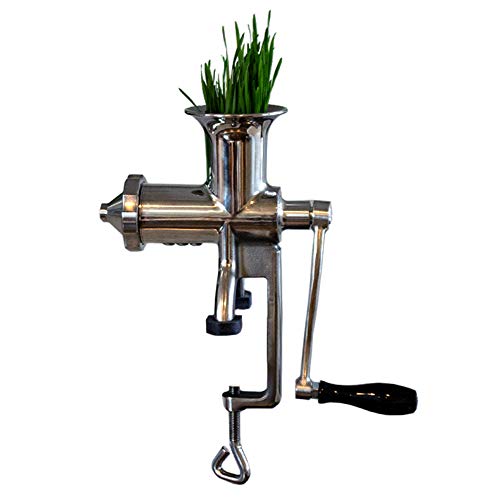
| Luzrise Manual Wheatgrass Juicer | Hand-crank stainless steel, greens specialist | Mid-range | |
| Handy Pantry Manual Wheatgrass | Classic all-stainless hand-crank juicer | Premium | |
How to choose a juicer for greens and wheatgrass
Why masticating beats centrifugal for greens
Centrifugal juicers spin a fast blade that shreds produce and throws it against a screen. That works on hard fruit but struggles with leafy greens and wheatgrass, which slip past the blade and come out as pulp with little juice. The fast spin also whips in air and generates heat, which adds foam and speeds oxidation. Slow masticating and manual juicers instead crush and press the greens at low speed, wringing out far more juice with less heat and foam. For wheatgrass, this difference is the whole game.
Electric or manual
An electric masticating juicer is the versatile choice: it handles wheatgrass and greens plus carrots, apples, celery, and more, all at the push of a button, so it suits daily mixed juicing. A dedicated manual wheatgrass juicer is simpler and often better at wheatgrass specifically, but you turn a crank by hand and it is aimed at greens rather than hard produce. Choose electric for variety and convenience, manual if wheatgrass and soft greens are your main focus.
Juice yield and quiet operation
A good masticating juicer squeezes ingredients dry, and multi-stage augers are designed to push yield high while leaving the pulp genuinely spent. Low-speed motors also run quietly, often under 60 decibels, which is a real plus early in the morning. A reverse function is worth having too, since it clears clogs and keeps stubborn fibrous greens moving through the machine.
Cleaning and everyday use
The dealbreaker for many juicers is cleanup. Look for a design with few parts, ideally dishwasher-safe, and an included brush for the mesh filter. Manual juicers disassemble into a handful of stainless pieces that rinse quickly. A compact footprint matters too if counter space is tight or you want to tuck it under a cabinet between uses.
Prep, chute size, and pace
Smaller feed chutes mean more chopping, so if you juice large batches, a wider chute saves prep time. Many masticating juicers also work best fed slowly and in small amounts, especially with fibrous greens, which reduces clogging and lifts yield. Manual wheatgrass juicers ask for small handfuls at a time. Matching your patience and batch size to the machine keeps juicing enjoyable rather than a chore.
Ninja NeverClog Cold Press Juicer
The Ninja NeverClog is the best seller here and the most versatile pick for anyone who wants green juice without limiting themselves to greens. Its high-torque motor turns the auger slowly to power through tough produce, from apples and carrots to celery and leafy greens, delivering smooth, nutrient-rich cold-press juice while resisting the clogs that plague cheaper machines. Two interchangeable pulp filters let you choose less or lots of pulp, and simple Start/Stop and Reverse programs keep it easy to run and unjam.
It also solves the two things people hate about juicing: mess and cleanup. A built-in anti-drip lever stops spills when you pause, and all juice-contact parts are dishwasher safe. The compact body tucks under cabinets, so it earns its counter space. For a daily driver that does wheatgrass and greens alongside everything else, it is the easy recommendation.
Pros
- High-torque motor handles greens and hard produce alike
- Two pulp filters for custom texture
- Anti-clog design with a reverse function
- Dishwasher-safe parts and a compact footprint
Cons
- Priced at the top of the electric options
- Wheatgrass juices best fed slowly in small amounts
Best for: daily juicing of greens and mixed produce with minimal fuss.
Elite Gourmet Mini Masticating Juicer
The Elite Gourmet is the compact, budget-friendly way into cold-press juicing. It is a genuinely mini juicer built for one to two servings at a time, with a low-speed 70 RPM masticating action that produces smooth juice with less foam and oxidation than fast centrifugal machines. Its small size suits tight counters, dorms, and RVs, and with only three removable parts plus an included brush, cleanup is quick. Overload and overheat protection add peace of mind for daily single servings.
The trade-offs are fair: a small feed chute means cutting produce into smaller pieces, and it is not meant for large-batch juicing. But for a solo green juice or a daily wheatgrass shot without spending much or storing a big appliance, it is a smart, space-saving entry.
Pros
- Low price and a compact, space-saving body
- Slow 70 RPM cold-press action for smooth juice
- Only three parts to clean, brush included
- Overload and overheat protection
Cons
- Single-serve size, not for large batches
- Small chute means more chopping
Best for: solo juicers who want a compact, affordable cold-press machine.
BRECIOUS Slow Masticating Juicer
The BRECIOUS sits in the value sweet spot, a full-size slow masticating juicer with an upgraded multi-stage auger that targets a high juice yield while reducing oxidation to retain more nutrients and flavor. Dedicated Soft, Hard, and Reverse modes let you match the machine to whatever you are juicing, from delicate greens to firmer produce, and a triple-layer filter delivers silky, low-pulp juice. The motor runs quietly at under 60 decibels, so early-morning juicing will not wake the house.
One-touch disassembly and dishwasher-safe parts make cleanup painless, and a small feed chute plus BPA-free, blade-free construction keep it family-safe. For someone who wants proper cold-press performance across greens and mixed produce without a premium price, it is a strong middle-ground choice.
Pros
- Multi-stage auger targets high juice yield
- Soft, Hard, and Reverse modes for any produce
- Quiet operation under 60 decibels
- Easy disassembly and dishwasher-safe parts
Cons
- Small feed chute means extra prep
- Full-size body needs more counter space than a mini
Best for: value-focused daily juicing across greens and mixed ingredients.
Luzrise Manual Wheatgrass Juicer
The Luzrise is a dedicated manual wheatgrass juicer, and it is clear about what it does best: wheatgrass, celery, kale, spinach, parsley, and softer produce like pomegranate, apple, and grape, rather than carrots or sugarcane. Built from polished 304 stainless steel, it resists wear and keeps the juice fresh and clean, and it disassembles into a few pieces for thorough hand-washing. A countertop clamp secures it firmly to tables up to a couple of inches thick, so you can crank with steady leverage.
Because it is hand-powered, there is no heat, no noise, and nothing to burn out, which many green-juice devotees prefer. Feed small handfuls and juice in repeated small batches for the best yield. For anyone whose focus is wheatgrass and leafy greens, it is a purpose-built tool at a reasonable price.
Pros
- Purpose-built for wheatgrass and leafy greens
- Durable polished 304 stainless steel
- No electricity, no heat, and quiet operation
- Disassembles easily for hand-washing
Cons
- Manual cranking takes effort and time
- Not suited to carrots, mango, or sugarcane
Best for: greens-focused juicers who want a dedicated wheatgrass tool.
Handy Pantry Manual Wheatgrass Juicer
The Handy Pantry is the premium classic of the manual wheatgrass world, an all-stainless-steel hand-crank juicer long favored by dedicated wheatgrass drinkers. Like other manual wheatgrass juicers, it works by slowly crushing greens through a screen as you turn the handle, extracting juice without heat or oxidation and preserving the fresh, vivid character of the shot. The solid stainless construction is built to last and disassembles for straightforward hand-cleaning.
It costs more than the other manual option, reflecting its reputation for durability and its standing as a long-running favorite. If wheatgrass is a daily ritual and you want a robust, no-electronics tool you will keep for years, it is the enthusiast’s pick. As with any manual juicer, feed small handfuls and expect to put in a little arm work.
Pros
- Robust all-stainless-steel construction
- A long-standing favorite for wheatgrass
- No heat or oxidation, preserving fresh juice
- Simple to take apart and hand-clean
Cons
- Highest price in the group
- Manual operation, focused on greens rather than hard produce
Best for: committed wheatgrass drinkers who want a durable, classic manual juicer.
The verdict
Best Overall: Ninja NeverClog Cold Press. As the top seller, it juices wheatgrass and greens beautifully while also handling carrots, apples, and celery, with easy cleanup and pulp control. For most people it is the versatile, do-everything choice.
Best Value: Elite Gourmet Mini Masticating. A genuine cold-press machine at the lowest price, compact enough for any counter. For solo servings and daily green shots without a big spend, it is the smart entry.
Best Premium: Handy Pantry Manual Wheatgrass. For a wheatgrass devotee, this classic all-stainless hand-crank juicer is built to last and dedicated to the job. The Luzrise is the more affordable manual alternative, and the BRECIOUS is the mid-range electric that balances yield and value.
Decide by focus. If you juice a variety of produce daily, an electric masticating juicer is the way to go. If wheatgrass and leafy greens are the whole point, a dedicated manual juicer does that one job exceptionally well. Either way, slow and cold is the secret to a better green glass.
FAQ
Can I juice wheatgrass in a regular juicer? Not well in a centrifugal one. The fast blade shreds wheatgrass without extracting much juice. You need a slow masticating juicer or a dedicated manual wheatgrass juicer, both of which crush and press to get real yield.
What is cold-press juice? Cold press simply means the juicer works at low speed, crushing and squeezing produce rather than spinning it fast. This generates less heat and foam and slows oxidation, which many people feel preserves flavor and nutrients better.
Are manual wheatgrass juicers worth it? If wheatgrass and soft greens are your focus, yes. They are simple, quiet, need no power, and are often excellent at wheatgrass specifically. The trade-off is hand-cranking and that they are not meant for hard produce like carrots.
How do I get more juice from greens? Feed slowly in small handfuls, alternate greens with a bit of firmer produce to help push them through, and use the reverse function to clear clogs. Rolling leafy greens into small bundles also helps them feed evenly.
Is masticating juice really better? For greens and wheatgrass, the yield and quality difference is real, since slow crushing extracts far more than a fast blade. For hard fruit alone the gap is smaller, but a masticating juicer still runs quieter and foams less.
How hard is cleanup? Easier than you might expect. Look for few parts and dishwasher-safe components on electric models, and use the included brush for the filter. Manual juicers come apart into a few stainless pieces that rinse in seconds.
Should I drink green juice right away? Fresh is best. Cold-press juice keeps its color and flavor longer than centrifugal juice because it takes in less air, but any fresh juice is at its brightest soon after pressing. If you must store it, keep it cold, in a sealed container, and drink it within a day.
Can these juicers handle celery and other stringy vegetables? Yes. Masticating and manual juicers are well suited to fibrous, stringy produce like celery, kale stems, and parsley, which tend to defeat fast centrifugal machines. A reverse function on the electric models helps clear any fiber that wraps the auger.
This article may contain affiliate links; see our Affiliate Disclosure.