A cold, restless night in a too-big sleeping bag can sour a child on camping for good, while a warm, snug one sends them to sleep happy and eager for the next trip. Getting the warmth and fit right is what turns a first campout into a lasting love of the outdoors.


A good kids’ sleeping bag keeps a young camper warm and comfortable at their size, without the excess room that leaves a child cold or the bulk they cannot carry. Temperature rating, fit, and easy-to-use zippers matter most. The picks below span versatile family bags and dedicated kids’ models across warmth ratings, so parents can match a bag to their child and their camping climate.
| Product | Standout strength | Price tier | Link |
|---|---|---|---|
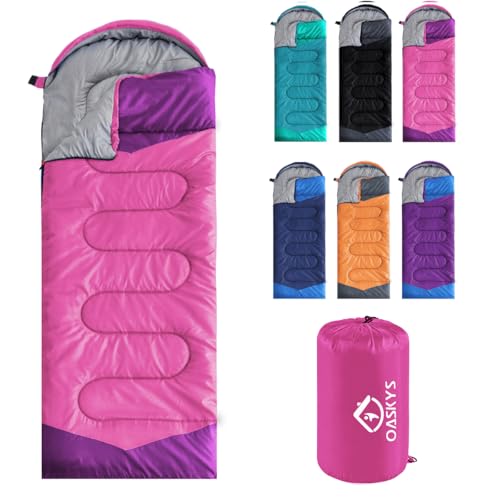
| oaskys 3-Season Sleeping Bag | Best-selling versatile 3-season bag for kids, teens, and adults | Budget | |
| tuphen Kids Sleeping Bag (3-4 Seasons) | Kid-specific bag rated for three to four seasons | Mid-range | |
| KingCamp 45F Kids Sleeping Bag | Lightweight, compact, and waterproof kids’ bag | Mid-range | |
| Coleman Kids 50F Sleeping Bag | Trusted brand, sized for children up to five feet tall | Mid-range | |
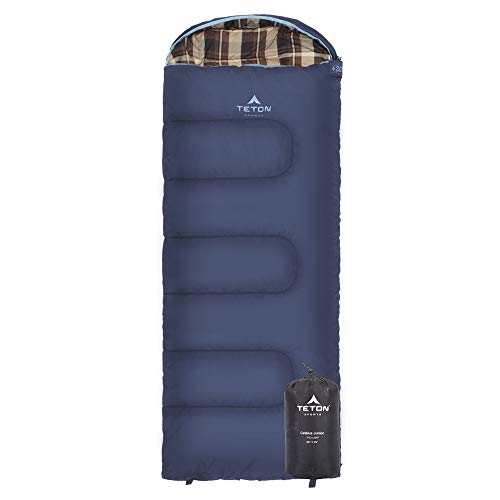
| TETON Sports Junior Sleeping Bag (20 Degree) | Warm 20-degree rating for cold-weather kids’ camping | Mid-range | |
How to choose a kids' camping sleeping bag
Temperature rating and season
The temperature rating tells you the lowest conditions a bag is built for, and matching it to your camping climate is the key to warm nights. A three-season bag suits spring through fall in mild to cool weather, while a lower-rated bag handles genuinely cold nights. It is wise to pick a rating with some margin below the temperatures you expect, since children feel cold more readily and ratings are guides, not guarantees. For summer car camping a milder rating is fine; for chilly mountain nights, choose a warmer bag to keep a child comfortable.
Size for a child
Fit is where kids’ bags differ most from adult ones. A bag sized for a child warms more efficiently because there is less empty space for the body to heat, so a right-sized or kid-length bag keeps them warmer than swimming in an adult bag. Some room to grow is fine, but too much space means cold air pockets. Check the bag’s length against your child’s height, and consider whether you want a dedicated kids’ size or a compact bag that leaves a little growing room. The snugger, appropriate fit is warmer and cozier.
Warmth versus weight
How the bag balances warmth and packability depends on your trip. For car camping, a warmer, heavier bag is no problem since it rides in the trunk, and extra insulation keeps a child toasty. For backpacking or hikes where the child carries their own gear, a lighter, more compressible bag matters more, even if it trades some warmth. Think about how the bag will travel: prioritize warmth and comfort for drive-up camping, or lighter weight and small pack size if your young camper has to carry it any distance.
Bag shape
Shape affects both warmth and comfort. Rectangular bags are roomy and let kids move and stretch, which many children prefer, and they can often unzip fully into a blanket, but the extra space is a little cooler. Mummy-shaped bags taper to the feet and have a hood, trapping warmth more efficiently for cold nights, though they feel more enclosed. For milder weather and wriggly sleepers, a rectangular bag is comfortable and easy; for colder conditions where warmth is the priority, a mummy shape with a hood keeps a child warmer.
Fabric, lining, and washing
The materials shape comfort and upkeep. A soft inner lining feels pleasant against skin and encourages a child to settle, while a durable outer shell survives being dragged around a campsite. Machine-washable bags are a real advantage with kids, since camping is messy and spills happen, so an easy-care bag stays fresh through many trips. Look for a comfortable lining and confirm the bag can be machine washed. A bag that is both cozy inside and simple to clean will hold up to the realities of children and the outdoors far better.
Easy for kids to use
A bag a child can manage themselves makes camping smoother. Smooth, snag-resistant zippers, ideally with a guard to stop the lining catching, let a child get in and out without help or frustration, and a two-way or easy-pull zipper is friendlier for small hands. A compression or stuff sack that a child can actually pack helps them take ownership of their gear. Little touches like these, easy zippers and a manageable stuff sack, turn a sleeping bag from something parents wrestle with into something a young camper handles proudly on their own.
oaskys 3-Season Sleeping Bag
The oaskys three-season bag is the best seller here and a hugely versatile pick that families reach for again and again, a comfortable, warm-and-cool-weather bag that suits older kids and teens and doubles for adults on the same trip. Its all-round three-season warmth handles the mild to cool conditions of most family camping, and being an affordable general bag it is easy to buy several so everyone matches. For a young camper with a bit of growing room, or a household that wants one dependable bag style for the whole family, its popularity and flexibility make it the natural leading choice.
The reason this outsells dedicated kids’ bags is sheer versatility and value: it keeps an older child or teen warm and comfortable, works just as well for a parent, and costs little enough to outfit the whole family. For camping trips where everyone needs a bag, having one proven style in several sizes simplifies packing and matching. Younger children may find it roomier than a kid-specific bag, so for the smallest campers a snugger fit is warmer, but for growing kids, teens, and adults sharing a trip, it is a practical, affordable, and dependable all-rounder.
Pros
- Best-selling and versatile
- Three-season warmth
- Suits older kids, teens, and adults
- Affordable for outfitting a family
- Comfortable and dependable
Cons
- Roomy for very young children
- General, not kid-specific sizing
- Milder rating for cold nights
Best for: Growing kids and families who want one versatile bag for everyone.
tuphen Kids Sleeping Bag (3-4 Seasons)
The tuphen kids’ bag is purpose-built for children and rated for three to four seasons, giving it more warmth range than a typical summer-only bag so it keeps a young camper cozy from mild nights into genuinely chilly ones. The kid-focused sizing warms more efficiently by cutting the empty space that leaves children cold, and the extended season rating means it is not left behind when temperatures drop. It comes with a stuff sack for packing and is aimed squarely at keeping kids warm and comfortable outdoors. For parents who want a dedicated children’s bag with real cold-weather capability, it is a strong, well-judged pick.
A kid-sized bag with a three-to-four-season rating hits a useful sweet spot: it fits a child properly for efficient warmth and stretches to colder nights that would leave a summer bag wanting. That makes it a good choice for families who camp beyond just warm weekends, into cooler shoulder seasons or higher elevations. The included stuff sack helps a child pack and carry their own bag. It is a touch warmer and more specialized than a basic summer bag, which is exactly the point for parents prioritizing a snug, warm fit for their young camper.
Pros
- Purpose-built kids’ sizing
- Three to four season warmth
- Efficient, snug fit
- Stuff sack included
- Handles cooler nights
Cons
- Sized for children, not adults
- Warmer bag may be much for hot summer nights
- Mid price
Best for: Kids camping into cooler shoulder-season nights.
KingCamp 45F Kids Sleeping Bag
The KingCamp kids’ bag pairs a mild forty-five-degree rating with a lightweight, compact, and waterproof design, making it a great fit for warmer-weather camping where packability matters. Its light weight and small packed size suit young campers who carry their own gear or families counting space in the car, and the waterproof shell adds protection against damp ground and dew. Sized for children, it warms efficiently for mild nights and stows away easily. For summer and warm-season camping with kids, especially trips involving any hiking or tight packing, its blend of light weight, compactness, and water resistance makes it an appealing choice.
Lightweight and compact are real advantages for children who want to carry their own kit or for families squeezing gear into a full car, and this delivers both along with a handy waterproof shell for damp conditions. The forty-five-degree rating is tuned for warmer nights, so it shines in summer rather than deep cold. A child can manage its small packed size themselves, which builds independence on the trail. For warm-weather family camping and light hikes where packability and a bit of weather protection matter most, it is a smart, kid-friendly pick.
Pros
- Lightweight and compact
- Waterproof shell
- Kid-appropriate sizing
- Easy for children to pack
- Good for warm-weather trips
Cons
- Mild rating, not for cold nights
- Best in summer
- Less roomy for stretching
Best for: Warm-weather camping and light hikes with young campers.
Coleman Kids 50F Sleeping Bag
The Coleman kids’ bag brings a long-trusted camping name to a fifty-degree children’s bag sized for kids up to about five feet tall, offering brand reliability and a comfortable fit for younger campers. The mild rating suits warm-weather family camping, and Coleman’s reputation for dependable, easy-to-use outdoor gear is a reassurance for parents. Sized specifically for children, it warms efficiently and is built to handle the realities of kids and camping. For families who value a familiar, trusted brand and want a comfortable, appropriately sized bag for summer trips, it is a dependable and approachable choice for young campers.
Choosing a well-known outdoor brand carries real appeal for gear that has to survive kids and campsites, and Coleman’s track record offers exactly that confidence. The child-specific sizing, fitting kids up to around five feet, keeps a young camper warm without excess space, and the fifty-degree rating covers comfortable summer nights. It leans on ease of use and durability rather than extreme warmth, which suits family car camping in mild weather. For parents who want a trusted, comfortable, correctly sized bag for warm-season trips, it is a solid and worry-free option.
Pros
- Trusted camping brand
- Sized for kids up to five feet
- Comfortable 50F rating
- Durable, easy to use
- Good for warm-weather camping
Cons
- Mild rating for cold nights
- Best in summer
- Fits younger, shorter campers
Best for: Families wanting a trusted, comfortable summer bag for kids.
TETON Sports Junior Sleeping Bag (20 Degree)
The TETON Sports Junior is the warmest pick here, a kids’ bag with a twenty-degree rating built for genuinely cold-weather camping when other children’s bags fall short. That lower rating and warmer insulation make it the choice for chilly mountain nights, shoulder-season trips, or any camping where staying warm is the priority, and it is sized for junior campers so the warmth is used efficiently. For families who camp in real cold or want a bag their child will not outgrow the warmth of quickly, its cold-weather capability sets it apart. When warmth is the deciding factor, this junior bag is the standout.
A twenty-degree rating is a meaningful step warmer than the summer-focused bags, which makes this the one to pick when cold nights are on the itinerary. Children lose warmth faster than adults, so a bag with real insulation margin keeps them comfortable when temperatures drop into conditions a fifty-degree bag cannot handle. It is a touch warmer than needed for hot summer nights, so it suits cooler climates and shoulder seasons best. For parents prioritizing warmth and cold-weather reliability for their young camper, the junior bag delivers where milder bags leave off.
Pros
- Warm 20-degree rating
- Built for cold-weather camping
- Junior sizing for efficient warmth
- Good insulation margin
- Reliable for chilly nights
Cons
- Warm for hot summer nights
- Bulkier than summer bags
- Sized for children
Best for: Cold-weather and shoulder-season camping with kids.
The verdict
Best Overall is the oaskys three-season bag: it is the best seller and the most versatile, keeping older kids, teens, and even adults comfortable while being affordable enough to outfit a whole family. Best Value is the KingCamp kids’ bag, a lightweight, waterproof, compact choice for warm-weather trips. Best Premium, for warmth, is the TETON Sports Junior with its cold-weather twenty-degree rating. The tuphen bag is the pick for cooler shoulder-season nights, and the Coleman kids’ bag suits families who want a trusted brand for comfortable summer camping.
Frequently asked questions
What temperature rating do kids' sleeping bags need?
Match the rating to your camping climate, with some margin for cold. A three-season or fifty-degree bag suits mild to cool summer camping, while a twenty-degree bag handles genuinely cold nights. Since children feel cold more readily and ratings are guides, choose a bag rated a bit warmer than the lowest temperature you expect.
Should a kids' bag be sized exactly or with room to grow?
A snug, kid-appropriate fit is warmer, because less empty space means fewer cold air pockets for the body to heat. A little room to grow is fine, but avoid a bag so large the child is swimming in it. Match the bag length to your child’s height rather than buying far oversized.
Can adults or older kids use these bags?
Some, yes. Versatile bags like the best-selling oaskys suit older kids, teens, and adults, which is why families buy them for everyone. Dedicated kids’ bags, though, are sized for children and will be too short for adults. Check the length: a general bag flexes across ages, a junior bag fits children specifically.
Are mummy or rectangular bags better for children?
It depends on the weather and the child. Rectangular bags are roomy and let kids stretch and wriggle, which many prefer, but they are a little cooler. Mummy bags taper with a hood to trap warmth for cold nights but feel more enclosed. Choose rectangular for mild weather and comfort, mummy for warmth in the cold.
How do you keep a child warm in a sleeping bag?
Start with a right-sized bag rated warmer than the expected low, add a sleeping pad underneath to block ground cold, and dress the child in dry, warm layers and socks. A snug fit, insulation from the ground, and warm sleepwear together make far more difference than the bag alone on a cold night.
This article may contain affiliate links; see our Affiliate Disclosure.