A chef’s knife is the star of the kitchen, but the paring knife is the one you reach for a dozen quiet times a day. Hulling strawberries, deveining shrimp, coring a tomato, peeling an apple in one ribbon, it is the small blade that makes fiddly work feel easy.


The best paring knife is sharp out of the box, nimble in the hand, and shaped for control right up at the tip. Whether you want a cheap set to scatter around a busy kitchen, one heirloom blade to keep for years, or a self-sharpening pick that stays keen with no effort, there is a paring knife here to match.
| Knife | Standout features | Price | Link |
|---|---|---|---|
| BYkooc 8-Piece Paring Knife Set | Four knives plus four sheaths, German steel, color-coded | Budget | |
| imarku 3.5-Inch Japanese Paring Knife | Japanese high-carbon steel, taper-ground edge, Pakkawood handle | Mid-range | |
| Victorinox Swiss Classic 3.25-Inch Paring Knife | NSF-approved, non-slip grip, dishwasher safe, balanced | Budget | |
| HENCKELS Forged Accent 2-Piece Paring Set | Forged bolster, 3-inch and 4-inch blades, long-lasting edge | Mid-range | |
| Farberware Edgekeeper Self-Sharpening Paring Knife | Built-in sharpener in the sheath, high-carbon stainless steel | Budget | |
The price column shows a general tier only. Prices move often, so tap a link for the live figure on Amazon.
How to choose a paring knife
Paring knives are simple tools, but small differences in blade, steel, and handle change how they feel in your hand. Here is what to weigh before you buy.
Blade length and shape
Paring knives usually run from about 2.5 to 4 inches. Shorter blades give the most control for tight jobs like hulling berries or deveining shrimp, while a 3.5 to 4-inch blade handles slightly larger work such as slicing an apple or trimming vegetables. A straight spear-point edge is the versatile all-rounder. If you do a lot of in-hand peeling and detail work, favor a shorter, nimble blade you can steer right up at the tip.
Blade steel
Most paring knives use stainless steel, prized for rust resistance and easy care. High-carbon stainless, like the imarku and Farberware blades, takes and holds a sharper edge, with the trade that high-carbon blades prefer to be dried promptly. German steel, as in the HENCKELS, is tough and durable. All of these resist stains and rust in normal use; the difference is mostly how keen an edge they reach and how long they keep it.
Forged versus stamped
Forged knives, such as the HENCKELS set, are shaped from a single piece of steel and often include a bolster, giving extra weight, balance, and durability. Stamped knives are cut from a sheet, making them lighter and more affordable, which is why sets and value single knives are usually stamped. Neither is simply better: forged blades feel substantial and last, while stamped blades are nimble and easy on the wallet.
Handle and grip
Because paring is done close and often with wet or slippery ingredients, the handle matters. Look for an ergonomic shape and a non-slip surface that stays secure when damp, like the textured Victorinox grip or the moisture-resistant Pakkawood on the imarku. A comfortable handle reduces fatigue during long prep and, more importantly, keeps your grip sure when you are working near the blade.
One knife or a set
Decide whether you want a single quality blade or several to spread around. A set, like the BYkooc four-pack, is handy for shared or busy kitchens where more than one person preps at once and you do not want to hunt for the good knife. A single premium blade rewards a cook who wants one trusted tool. A two-piece set splits the difference with a couple of useful sizes.
BYkooc 8-Piece Paring Knife Set (Best Overall)
The best seller here is a practical four-knife set, each blade paired with its own protective sheath, in four colors. Made from finely polished stainless steel, the blades arrive sharp and handle the everyday small jobs, slicing fruit, trimming vegetables, and light meat and fish prep, with an ergonomic handle designed for comfortable control. The color coding helps separate tasks, and the individual sheaths mean you can store them safely in a drawer or take one along without dulling the edge. For scattering sharp little knives around a busy kitchen, the value is hard to beat.
Pros
- Four knives cover a busy kitchen at once
- Protective sheath for each blade
- Sharp, finely polished stainless steel
- Color coding helps separate tasks
- Excellent price for the whole set
Cons
- Stamped blades, not forged
- Lighter feel than premium single knives
- Hand washing best preserves the edge
Best for: busy or shared kitchens that want several sharp paring knives on hand for little money.
Budget tier. Check price on Amazon
imarku 3.5-Inch Japanese High-Carbon Paring Knife
The imarku is the pick for anyone who wants one genuinely nice paring knife. It is forged from Japanese high-carbon stainless steel and hand-polished to a keen, taper-ground edge with a narrow per-side cutting angle, so it bites cleanly into fruit skins and slides through delicate work. There is a satisfying bit of heft that steadies precise cuts, and the ergonomic Pakkawood handle resists moisture and stays comfortable through long prep sessions. It chops, slices, peels, dices, and minces small ingredients with the control a good paring knife is all about.
Pros
- Forged Japanese high-carbon stainless steel
- Hand-polished, keen taper-ground edge
- Balanced heft for steady, precise cuts
- Moisture-resistant Pakkawood handle
- Comfortable for extended prep
Cons
- High-carbon steel needs drying to avoid spots
- Single knife at a mid-range price
- Best hand washed and dried
Best for: cooks who want one sharp, comfortable paring knife to keep and use daily.
Mid-range tier. Check price on Amazon
Victorinox Swiss Classic 3.25-Inch Paring Knife
Few knives have earned their reputation as plainly as the Victorinox Swiss Classic paring knife. The spear-point blade is weighted and balanced for easy, precise handling, and the textured handle keeps a non-slip grip even when wet, which matters when you are peeling something slick. It is NSF approved for commercial kitchens and dishwasher safe, though hand washing preserves the edge longest. This is the no-drama workhorse professionals and home cooks reach for again and again, and it costs a fraction of a fancy blade.
Pros
- Trusted, professional-grade workhorse
- Balanced for precise, easy handling
- Non-slip grip even when wet
- NSF approved and dishwasher safe
- Outstanding value for a single knife
Cons
- Simple looks, no premium flourish
- Stamped rather than forged
- One blade shape and size
Best for: anyone who wants a proven, no-fuss paring knife that just works, at a low price.
Budget tier. Check price on Amazon
HENCKELS Forged Accent 2-Piece Paring Knife Set
This HENCKELS set brings forged construction to the paring category, pairing a 3-inch and a 4-inch blade so you can match the knife to the task. The forged bolster gives a seamless, balanced transition from blade to handle and adds durability you can feel, while the satin-finished blades are honed for long-lasting sharpness that holds up with minimal care. Having two sizes covers everything from tight detail work with the 3-inch to slightly larger fruit and vegetable prep with the 4-inch. German engineering and stain-free blades round out a set built to last.
Pros
- Forged bolster for balance and durability
- Two blade sizes cover more tasks
- Honed for long-lasting sharpness
- German-engineered, stain-free blades
- Easy cleanup by hand or dishwasher
Cons
- Costs more than single stamped knives
- Two knives, not a full set
- Forged weight is not to every taste
Best for: cooks who want forged quality and two paring sizes for varied detail work.
Mid-range tier. Check price on Amazon
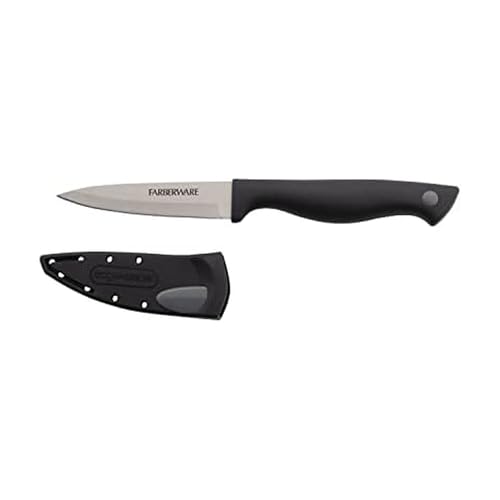
Farberware Edgekeeper 3.5-Inch Self-Sharpening Paring Knife
The clever idea here is that the sheath does the maintenance for you. Farberware’s EdgeKeeper cover has a built-in sharpener that hones the blade every time you draw the knife out or slide it back in, so the high-carbon stainless steel edge stays keen with no separate tool or effort. The compact 3.5-inch blade handles the usual peeling, chopping, dicing, and mincing, and an ergonomic handle keeps it comfortable. For anyone who never gets around to sharpening, this is the paring knife that quietly maintains itself.
Pros
- Sheath sharpens the blade with every use
- High-carbon stainless steel holds an edge
- Compact 3.5-inch blade for detail work
- Ergonomic, comfortable handle
- Low price with built-in maintenance
Cons
- Sharpening sheath must be used to benefit
- Hand washing recommended
- Single knife, entry-level build
Best for: cooks who want a keen paring edge without ever picking up a sharpener.
Budget tier. Check price on Amazon
The verdict
Best overall
The BYkooc eight-piece set is the best seller and the most flexible choice for most kitchens. Four sharp, sheathed blades in different colors mean everyone has a paring knife within reach, tasks stay separated, and storage is safe, all at a price that makes keeping several on hand painless. Check price on Amazon
Best value
The Victorinox Swiss Classic is the value single knife that professionals swear by. Balanced, sharp, NSF approved, and reassuringly cheap, it does everything a paring knife should with no fuss and no weak points. If you want one dependable blade rather than a set, start here. Check price on Amazon
Best premium
The imarku is the paring knife to own if you want one that feels special. Forged Japanese high-carbon steel, a keen taper-ground edge, and a comfortable Pakkawood handle make precise work a pleasure. For a cook who values a single fine blade, it is the standout. Check price on Amazon
Frequently asked questions
What is a paring knife best used for?
A paring knife handles the small, close, precise jobs a big chef’s knife is clumsy at. Think peeling apples and potatoes, hulling strawberries, deveining shrimp, coring tomatoes, segmenting citrus, trimming fat, and mincing a shallot or a clove of garlic. Its short blade gives fine control right at the tip, which is exactly what detail work needs, making it the second knife nearly every kitchen uses constantly.
What blade length should a paring knife be?
Most fall between 2.5 and 4 inches. A blade around 3 to 3.5 inches is the versatile sweet spot for the majority of tasks. Go shorter if you mostly do fine in-hand work like hulling and deveining, where maximum control matters. Go toward 4 inches if you often slice fruit or trim slightly larger vegetables. Several picks here sit right in that comfortable 3.25 to 4-inch range.
Are forged paring knives worth it over stamped ones?
It depends on what you value. Forged knives, shaped from a single billet and often with a bolster, feel heavier and more balanced and tend to be very durable, which suits cooks who want an heirloom feel. Stamped knives are lighter, nimble, and much cheaper, which is why sets and value picks use them. For a small paring blade, a good stamped knife performs beautifully, so forging is a preference, not a requirement.
How do I keep a paring knife sharp?
Use a honing steel or a pull-through sharpener periodically, and have blades professionally sharpened once they dull with heavy use. Cutting on wood or plastic rather than glass or stone preserves the edge, as does hand washing instead of the dishwasher, where jostling dulls blades. If you would rather not think about it, a self-sharpening design like the Farberware EdgeKeeper hones the edge automatically every time you use it.
Can paring knives go in the dishwasher?
Some, like the Victorinox, are rated dishwasher safe, but hand washing is best for every knife here. Dishwasher heat, detergent, and knocking against other items dull and can corrode blades over time, and it is safer to wash a small sharp knife by hand than to reach blindly into a rack. A quick wash, rinse, and dry right after use keeps any paring knife performing and looking its best.
This article may contain affiliate links; see our Affiliate Disclosure.