Stand in the tool aisle staring at two routers that look nearly identical, and the question stalls many a first project: plunge base or fixed base? The honest answer is that they excel at different jobs, and the smartest buy often gives you both.



A router spins a bit at high speed to cut, shape, and hollow wood, and its base determines how the bit meets the workpiece. A fixed base sets the depth and holds it; a plunge base lets you lower a spinning bit into the middle of a board. This guide compares five strong routers and combo kits, and explains which base suits which work. It suits new woodworkers weighing their first router, upgraders, and anyone unsure which type their projects actually need.
| Product | Standout | Price tier | Link |
|---|---|---|---|
| SKIL 14A Plunge & Fixed Combo | Best-selling combo, both bases, speed LCD | Mid-range | |
| Bosch 1617EVSPK Combo | Trusted 2.25 HP, both bases, table-ready | Premium | |
| DEWALT Fixed & Plunge Kit | Both bases, micro-fine depth, soft start | Premium | |
| WEN RT6033 Plunge Router | Budget 15-amp plunge, seven-stop turret | Budget | |
| WORKPRO Compact Router Combo | Compact, both bases, easy to handle | Budget | |
How to choose between a plunge and fixed-base router
Understanding what each base does, and where it shines, makes the choice straightforward. Start with the work you plan to do.
What a fixed-base router does best
A fixed-base router locks the bit at a set depth that stays put throughout the cut. You set the depth before you start, and the bit protrudes a constant amount, which makes fixed bases predictable, stable, and easy to control. They shine at edge work, routing profiles and roundovers along the outside of a board, cutting dadoes and rabbets, and general shaping, and their lower center of gravity feels steady in the hand. Fixed bases are also the standard choice for mounting in a router table. If most of your routing happens along edges or with the router inverted in a table, a fixed base is often all you need.
What a plunge router does best
A plunge router mounts on spring-loaded posts so you can lower, or plunge, a spinning bit straight down into the middle of a workpiece, then retract it when done. This is exactly what you need for cuts that start away from an edge: mortises, inlays, stopped dadoes, dado grooves that begin and end mid-board, and template work. The plunge action lets you make controlled, repeatable entries to a preset depth, and a depth turret lets you step through several depths in passes. If your projects involve interior cuts, deep grooves, or joinery like mortises, the plunge base is the tool that makes them possible and safe.
Why a combo kit is often the answer
Here is the practical secret: you do not have to choose. Many routers are sold as combo kits that include a single motor and both a fixed and a plunge base, so you swap the motor between them for the job at hand. This gives you edge-routing and table stability from the fixed base plus interior plunging from the plunge base, at far less cost than buying two separate routers. For most woodworkers, especially those still discovering what they build most, a combo kit is the flexible, economical choice that removes the decision entirely. Dedicated single-base routers still make sense for a specific, repeated task.
Power, speed, and control
Beyond the base, the motor matters. Power, rated in amps or horsepower, determines how easily the router drives larger bits and hardwoods without bogging down; mid-size routers around 2 to 2.25 horsepower handle most work, while compact routers suit lighter tasks and one-handed trimming. Variable speed lets you slow larger bits for safety and smoothness, and features like soft start ease the motor up gently to prevent a jarring kick on startup. Electronic feedback holds the set speed under load for cleaner cuts. Match the power to your bits and materials, and value smooth, controllable speed for quality results.
Depth adjustment and everyday use
How you set and fine-tune cutting depth affects both accuracy and enjoyment. Micro-adjustment rings and dials let you dial in depth in tiny, precise increments, which matters for clean joinery and repeatable results. On plunge bases, a multi-stop turret makes stepped, progressively deeper passes easy and safe. Tool-free base changes, comfortable grips, and clear scales all speed up real work. Consider dust collection and whether the router accepts both common bit shank sizes. These details separate a router that is a pleasure to use from one that fights you, so weigh them alongside power and base type.
SKIL 14 Amp Plunge and Fixed Base Combo: the best-selling all-rounder
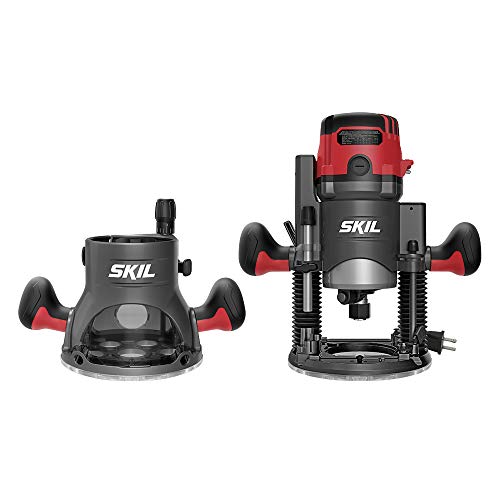
The top seller here is a combo kit that sidesteps the plunge-versus-fixed dilemma entirely, pairing a powerful 14-amp, 2.5-horsepower motor with both a fixed and a plunge base for a wide range of work. Its standout feature is a speed-control LCD display that suggests settings based on your bit type and material, a genuinely helpful guide for newer users unsure what speed to run. Electronic feedback keeps the motor holding its RPM as it cuts, and soft start provides a safe, controlled startup without a sudden jolt. With the versatility of two bases and thoughtful electronics at a mid-range price, it is an easy recommendation for anyone who wants one router to handle edges, tables, and interior plunge cuts alike.
Pros
- Includes both fixed and plunge bases
- Powerful 14-amp, 2.5 HP motor
- Speed-guidance LCD display
- Electronic feedback holds RPM
- Soft start for controlled starts
Cons
- Larger and heavier than compact routers
- Two bases mean more to store
- More features to learn at first
Best for: most woodworkers wanting one versatile router for edge work and plunging.
Bosch 1617EVSPK Combo: the trusted workshop standard
The Bosch 1617EVSPK is a longtime favorite in home shops, and it earns that reputation with solid engineering. It is a combination kit with both plunge and fixed bases and a durable 12-amp motor with adjustable speed to suit different bits and materials. One-piece armature shaft construction reduces vibration for smoother, more precise cuts, and constant-response circuitry stabilizes startup torque so the router comes up to speed predictably. A threaded three-hole base pattern makes it quick and secure to mount in a router table, a big plus for anyone building a table-based setup. Refined, reliable, and table-friendly, it is the premium pick for woodworkers who want a proven, precise router that will serve for years across edge work, plunging, and table use.
Pros
- Includes plunge and fixed bases
- Smooth, low-vibration motor
- Adjustable speed for any bit
- Table-ready mounting pattern
- Proven long-term reliability
Cons
- Premium price
- Heavier mid-size router
- No onboard speed-guidance display
Best for: serious hobbyists who want a proven, precise, table-friendly combo router.
DEWALT Fixed and Plunge Base Kit: the precision performer
DEWALT’s combo kit pairs both bases with a strong 2.25-horsepower, 12-amp electronic variable-speed motor that powers smoothly through the toughest hardwoods. Full-feedback speed control holds a constant RPM under load across a wide 8,000 to 24,000 range, and soft start eases the motor up gently. Its standout is precision: a micro-fine depth-adjustment ring sets depth in tiny 1/64-inch increments for exacting joinery and repeatable results, while a tool-free steel motor cam lock makes depth changes and base swaps quick and solid. For woodworkers who prize accurate, repeatable depth control and the muscle to handle demanding cuts, this kit delivers refined performance with the flexibility of two bases, making it a strong premium choice.
Pros
- Both bases plus strong 2.25 HP motor
- Micro-fine 1/64-inch depth adjustment
- Full-feedback variable speed
- Tool-free cam-lock base changes
- Soft start for smooth control
Cons
- Premium price
- Heavier to maneuver
- Learning curve for fine adjustments
Best for: precision-focused woodworkers who want exact, repeatable depth control.
WEN RT6033 Plunge Router: the budget plunge specialist
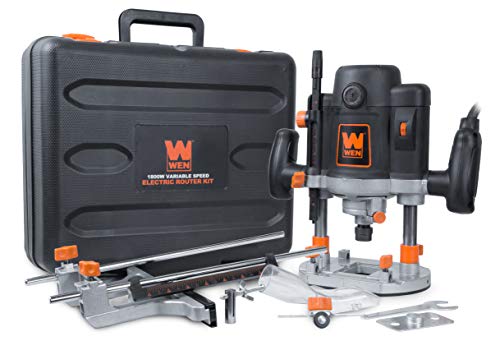
For woodworkers who specifically want plunge capability without spending much, the WEN RT6033 is a capable, affordable dedicated plunge router. A powerful 15-amp variable-speed motor with soft start runs from 8,000 to 23,000 RPM, giving plenty of muscle for grooves and joinery, and its plunge base also locks in the downward position so it can double as a fixed router for edge work when needed. It accepts both 1/4 and 1/2-inch bits, plunges up to 2-3/8 inches deep, and pairs a seven-stop turret with macro and micro adjustment dials for precise, stepped depth control. Bundled as a kit with a carrying case, it is a lot of plunge router for the money and a smart entry point for interior cuts and mortising on a budget.
Pros
- Affordable dedicated plunge router
- Powerful 15-amp variable-speed motor
- Locks for fixed-router use too
- Accepts 1/4 and 1/2-inch bits
- Seven-stop turret for stepped depths
Cons
- Single base rather than a true combo
- Heavier plunge-style body
- Fewer refinements than premium kits
Best for: budget buyers who mainly need plunge cuts and stepped-depth grooving.
WORKPRO Compact Router Combo: the lightweight starter
The WORKPRO compact router combo is the approachable, easy-to-handle option, pairing a 6.5-amp compact motor with both a fixed base and a plunge base in one budget-friendly kit. Compact routers are lighter and easier to control one-handed than full-size machines, which makes them well suited to trimming, edge profiling, roundovers, and lighter joinery, and having the plunge base included means you can still make controlled interior cuts when a project calls for them. It is a sensible first router for hobbyists and DIYers easing into woodworking who want versatility without the size, weight, or cost of a mid-size combo. For light-duty shaping and learning the craft, its blend of both bases and a manageable size is genuinely useful.
Pros
- Includes fixed and plunge bases
- Compact and easy to control
- Affordable entry price
- Good for trimming and edge work
- Beginner-friendly handling
Cons
- Less power for large bits
- Compact size limits heavy cuts
- Best for lighter woodworking
Best for: beginners and DIYers wanting a light, versatile router for lighter work.
The verdict
The plunge-versus-fixed question mostly disappears once you see that combo kits give you both. The best pick depends on your power needs, budget, and how much you plunge.
Best Overall: SKIL 14A Plunge & Fixed Combo – the best-selling combo that includes both bases, a strong motor, and helpful speed guidance, covering edge work, table use, and plunging in one buy.
Best Value: WORKPRO Compact Router Combo – a compact combo with both bases at a low price, the easy, versatile starting point for beginners and lighter woodworking.
Best Premium: Bosch 1617EVSPK Combo – a trusted, refined combo with a smooth motor and table-ready mounting that rewards serious woodworkers for years.
Frequently asked questions
Should a beginner buy a plunge or fixed-base router?
The best answer for most beginners is a combo kit that includes both bases, so you can learn edge work with the fixed base and interior plunge cuts with the plunge base without buying two tools. If you must pick one, a fixed base is a bit easier to control for edge profiling and general shaping, which is where many beginners start. A combo kit removes the decision and grows with your skills, which is why it is such a common recommendation.
Can a plunge router be used as a fixed-base router?
In many cases, yes. A plunge router can lock its base in the down position to hold a set depth, letting it work much like a fixed base for edge routing and profiling. It is a bit taller and more top-heavy than a dedicated fixed base, so it can feel slightly less stable for pure edge work, but it is perfectly usable. This flexibility is one reason some woodworkers buy a plunge router first if their projects lean toward interior cuts and joinery.
What jobs actually require a plunge base?
Cuts that start in the middle of a board rather than at an edge need a plunge base. That includes mortises, stopped dadoes and grooves that begin and end mid-board, inlays, and many template and sign-making tasks. The plunge action lets you lower a spinning bit safely and precisely into the surface and retract it afterward. If your work involves any of these interior cuts, a plunge base is the tool that makes them practical, whereas a fixed base cannot start a cut in the middle safely.
Is a compact router enough, or do I need a mid-size one?
It depends on your work. Compact routers are light, easy to control, and ideal for trimming, roundovers, edge profiles, and lighter joinery, and many come with both bases. Mid-size routers, around 2 to 2.25 horsepower, handle larger bits, deeper cuts, hardwoods, and router-table use with more authority. If you mostly do light shaping and value easy handling, a compact router serves well; if you plan heavier cuts or table mounting, step up to a mid-size model.
Do I need variable speed on a router?
It is highly worthwhile. Variable speed lets you slow the motor for large-diameter bits, which is safer and produces smoother cuts, and speed up for small bits. Larger bits in particular should be run slower to control their higher rim speed. Features like soft start and electronic feedback add smoothness and hold the set speed under load. For a versatile router that handles a range of bits and materials well, variable speed is a feature worth having.
This article may contain affiliate links; see our Affiliate Disclosure.