One of these plugs is rated 10 amps. Most of the others are 15. Plug a space heater into the wrong one and you are asking a 1,200 watt device to carry 1,500 watts, which is the sort of mistake a smart home should not let you make silently. Nobody puts that on the front of the box.

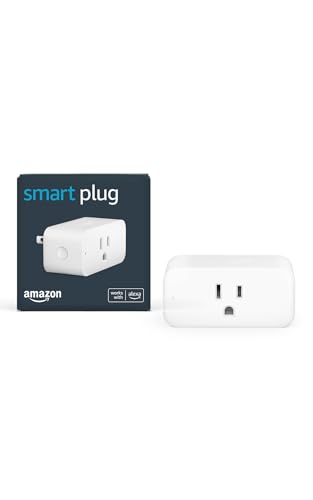


A smart plug is a switch you can reach from your phone. The hardware is nearly identical across the category, so what actually separates these is politics rather than engineering: which voice assistants they will talk to, whether they keep working when your internet drops, and how much current they are plainly rated to pass. Two of the seven below answer all three well.
At a glance
| Smart plug | Standout feature | Price tier | Link |
|---|---|---|---|
| GHome | Cheapest here; Bluetooth-assisted setup | Budget | |
| Amazon Smart Plug | One of the best-selling products anywhere | Budget | |
| Kasa Ultra Mini | UL certified 15A, Alexa and Google, 2-year warranty | Budget | |
| TP-Link Tapo P125M | Matter and UL, so it works with everything | Mid-range | |
| Linkind Matter | Matter at 1,800W, four in the box | Mid-range | |
| Amazon Basics | Zero-touch setup; sunrise and sunset routines | Mid-range | |
| Govee | Group control, but rated only 10A | Premium | |
How to choose a smart plug
Check the amps before anything else
This is the one specification with consequences. Kasa, Linkind and Tapo are all 15 amps, with the latter two spelling out 1,800 watts. Govee publishes 10 amps and 1,200 watts, which is fine for a lamp, a fan or a Christmas tree and is not enough for a space heater, a kettle or anything else that makes heat. Amazon does not publish a figure on either of its plugs at all. If you intend to switch something with a heating element, find the number first, and do not assume the plug matches the socket it lives in.
Matter is the difference between a plug you own and one the app owns
Only the Tapo and the Linkind support Matter, and it changes two things. It works with Apple Home, Alexa, Google and SmartThings rather than one of them, so switching phones or assistants later does not orphan your plugs. And once set up, Matter devices talk to each other over your own network, so as Tapo puts it plainly, they keep working when your home internet goes offline. Everything else here routes your light switch through somebody’s cloud. If your broadband drops, so does your automation.
The Amazon plugs only speak Alexa
Amazon Basics states it in the product name: works with Alexa only. The Amazon Smart Plug mentions no other assistant either. That is not a flaw if your house already runs on Echo, and the integration is genuinely seamless, including a zero-touch option that links the plug to your account before it ships. But if you have an iPhone household, or you might in three years, you are buying a switch that only one company’s software can reach.
No hub required, except when there is
Every plug here says no hub required, and every plug here means it for basic app control. Matter is where it gets interesting: Linkind’s own small print says a Matter-certified controller such as a HomePod, an Echo, a Nest device or a SmartThings hub is required to use the Matter features. So the thing that makes Matter worth having needs something in your house to co-ordinate it. Most people already have one. Check that you do before you buy Matter for the Matter.
They are all 2.4GHz, and your router may hate that
Not one plug here talks to a 5GHz network, and several say 2.4G Wi-Fi only right in the title. If your router broadcasts both bands under a single name, setup will often fail in a way the app blames on you. The fix is usually temporarily splitting the bands or using a guest network. The plugs that onboard over Bluetooth first, which the Tapo and the GHome both do, sidestep the worst of it.
Read which safety mark it carries
UL and ETL are both genuine electrical safety listings, and Kasa and Tapo state UL while GHome and Govee state ETL. Linkind lists FCC certification and fire-resistant materials, and FCC is about radio interference, not fire. That is not the same claim, and on a device carrying mains current through a plastic body all day, it is worth noticing which mark a brand chose to print.
Watch the cloud dependency in the fine print
GHome advertises that it works with Alexa and Google, then adds a note: the product cannot connect to them directly, and must first be joined to the network through the GHome app. That is fair and it is also the shape of the whole non-Matter category. Your voice command goes to Amazon, Amazon talks to the manufacturer’s cloud, the cloud talks to your plug. Three companies have to be having a good day for your lamp to come on.
GHome
The cheapest plug here and it covers the basics without pretending otherwise. Setup can go over Bluetooth or Wi-Fi, which is the more reliable route on an awkward router, and GHome specifically pitches the improved connection as staying stable rather than dropping off. Schedules can be circular or random, which is the useful one: random on and off looks like somebody is home. Group control lets you switch several with one tap, and you can share access with the household. ETL and FCC listed.
Pros:
- Cheapest plug here
- Bluetooth or Wi-Fi setup, which helps on fussy routers
- Random scheduling, useful when you are away
- ETL listed; group control and household sharing
Cons:
- No amperage or wattage rating published
- No Matter; everything routes through GHome’s cloud
- Its own note admits it cannot talk to Alexa or Google directly
Best for: a lamp on a timer, for the least money possible.
Amazon Smart Plug
One of the best-selling products on the entire site, not just this category, and the reason is that it removes every obstacle for one specific person: someone who already owns an Echo. Plug it in, open the Alexa app, done, no hub and no second account. It reconnects automatically after a power cut or a Wi-Fi drop, which sounds trivial until you have reset a cheaper plug for the third time. Routines and schedules can be built by talking rather than tapping. The compact body leaves the second socket free.
Pros:
- Among the best-selling products available anywhere
- The simplest possible setup if you own an Echo
- Reconnects itself after power and Wi-Fi outages
- Compact enough to leave the other socket usable
Cons:
- Alexa only; no Google, no Apple Home, no Matter
- No amperage or wattage published
- No safety certification stated in the listing
Best for: an Echo household that wants it to work in ninety seconds.
Kasa Ultra Mini
The one that publishes what matters: 15 amps, UL certified, two years of warranty, and it speaks both Alexa and Google rather than picking a side. TP-Link says Kasa is trusted by over six million users, and the Ultra Mini is the plug that got them there. Timers and countdown schedules handle the lamp, the fan, the humidifier and the Christmas lights, and the app reaches it from anywhere. It comes in packs of one, two and four, so you can buy one to try or four to do the living room properly.
Pros:
- UL certified and rated 15A, both published
- Works with Alexa and Google, not just one
- Two-year warranty, the longest stated here
- Sold in one, two and four packs
Cons:
- No Matter, so no Apple Home and no offline control
- Needs the Kasa app and account alongside your assistant
- 2.4GHz only, like everything here
Best for: a mixed household, where somebody has Google and somebody has Alexa.
TP-Link Tapo P125M
The most future-proof plug here. Matter means Apple Home, Alexa, Google and SmartThings all work, so you are not choosing an ecosystem at the checkout, and Tapo states the thing that matters most plainly: Matter devices on your local network keep working when your home internet goes offline. Add a UL certified flame-retardant body rated 15 amps and 1,800 watts, Bluetooth onboarding so setup does not fight your router, and a compact shape that leaves the second socket alone. Three in a pack.
Pros:
- Matter: Apple Home, Alexa, Google and SmartThings all supported
- Keeps working locally when your internet drops
- UL certified flame retardant, rated 15A and 1,800W
- Bluetooth onboarding for a smoother setup
Cons:
- No sales ranking, so no popularity signal to lean on
- Matter features need a controller such as an Echo or HomePod
- Three per pack, where rivals give four
Best for: not being locked into whichever assistant you happen to own today.
Linkind Matter
Matter, four in a box, at the lowest per-plug price of the Matter options. Linkind makes the argument for the standard well: no downloading a new manufacturer app every time you buy a device, and once the plugs are on your network they talk to each other directly over the local link. It is rated 15 amps and 1,800 watts with short-circuit protection and fire-resistant materials. Two real caveats from Linkind’s own text: it needs a Matter controller to do the Matter part, and it wants an IPv6 network as well as 2.4GHz.
Pros:
- Matter across Apple Home, Siri, Alexa, Google and SmartThings
- Local network control that survives an internet outage
- 15A and 1,800W with short-circuit protection
- Four plugs at the best per-plug price of the Matter options
Cons:
- Lists FCC certification, which covers interference rather than fire safety
- Needs a Matter controller and an IPv6 network
- Sells behind the established names
Best for: kitting out several rooms with Matter without paying twice.
Amazon Basics
Four plugs, and the smoothest setup in the category by a distance: choose to link the device to your Alexa account at checkout and it arrives already knowing who you are, with nothing to configure. Schedules run at fixed times, by voice, or at sunrise and sunset, which is the genuinely useful one for lamps because it tracks the season instead of drifting out of step with it. No third-party apps and no hub. The catch is in the product name, and it is not subtle: works with Alexa only.
Pros:
- Zero-touch setup; arrives linked to your Alexa account
- Sunrise and sunset routines that follow the season
- No third-party app or account to create
- Four in the pack, compact enough not to block the socket
Cons:
- Alexa only, stated in the product name
- No amperage, wattage or safety certification published
- Useless the day you switch to another ecosystem
Best for: an all-in Alexa house doing four rooms at once.
Govee
Four plugs with the best group control here: bundle several into one button so the whole room goes on or off together, which is what you actually want once you own more than two. Setup goes over Bluetooth or Wi-Fi for a more reliable pairing, and it is ETL certified. Then read the rating, because Govee is the only brand here plain enough to print it and the number is the low one: 10 amps, 1,200 watts, 120 volts. That is a lamp, a fan or a tree. It is not a heater, and the plugs that do not publish a figure at all are not automatically better.
Pros:
- Strong group control across multiple plugs
- Bluetooth or Wi-Fi pairing for reliability
- ETL certified for electrical safety
- Publishes its rating, which Amazon’s plugs do not
Cons:
- Rated 10A and 1,200W, the lowest here; no heaters
- Most expensive pack on this page
- No Matter; cloud-dependent like the rest
Best for: switching a whole room of lamps at once, nothing that gets hot.
The verdict
Best overall: Kasa Ultra Mini. It publishes the two numbers that matter, 15 amps and a UL certification, works with both Alexa and Google rather than making you choose, and backs itself with two years of warranty, which nothing else here offers. It sells in serious volume and comes in packs of one, two or four so you can scale into it. No Matter is the one real gap, and for most households today that is a gap you will not notice.
Best value: Amazon Smart Plug. It is one of the best-selling products anywhere and it earns that by being effortless: plug in, open the Alexa app, finished, and it puts itself back together after a power cut. It is Alexa only and publishes no rating or safety mark, which are real omissions. If your house already runs on Echo and you want a lamp on a schedule tonight, nothing is simpler or cheaper.
Best premium: TP-Link Tapo P125M. Matter is the thing worth paying for, and this is the version that also carries a UL certified flame-retardant body at a published 15 amps. It works with Apple Home, Alexa, Google and SmartThings, and it keeps switching your lights when your broadband falls over, which no cloud-only plug here can claim. You will need an Echo, HomePod or similar to co-ordinate it, and most houses already have one.
FAQ
Can I run a space heater off a smart plug?
Only if the rating says so, and check before you plug anything in. Govee publishes 10 amps and 1,200 watts, which is not enough for a typical heater. Kasa, Tapo and Linkind are 15 amps and 1,800 watts. Both Amazon plugs publish no figure at all, which is not the same as being fine.
What does Matter actually give me?
Two things. It works across Apple Home, Alexa, Google and SmartThings, so your plugs survive changing your mind about ecosystems. And it runs over your local network, so your automations keep working when the internet drops. Only the Tapo and the Linkind here support it.
Will the Amazon plugs work with Google or Apple?
No. Amazon Basics puts works with Alexa only in the product name, and the Amazon Smart Plug lists no other assistant. Within an Echo household they are excellent and effortless. Outside one they are a switch you cannot reach.
Why won’t my smart plug connect?
Almost always the router. Every plug here is 2.4GHz only, and if your router broadcasts 2.4 and 5GHz under one name, pairing tends to fail without explaining itself. Split the bands temporarily, or pick a plug that onboards over Bluetooth first, as the Tapo and GHome do.
Is no hub required actually true?
For basic app and voice control, yes, on all of these. For Matter it gets murkier: Linkind’s own fine print says a Matter controller such as an Echo, HomePod, Nest device or SmartThings hub is needed for the Matter features. That is the thing making it worth buying, so check you have one.
This article may contain affiliate links; see our Affiliate Disclosure.