Three days from the trailhead, a dead phone is more than an inconvenience, it is a lost map, camera, and lifeline. Clip a solar charger to your pack and every sunny mile you walk quietly tops up the batteries you depend on.
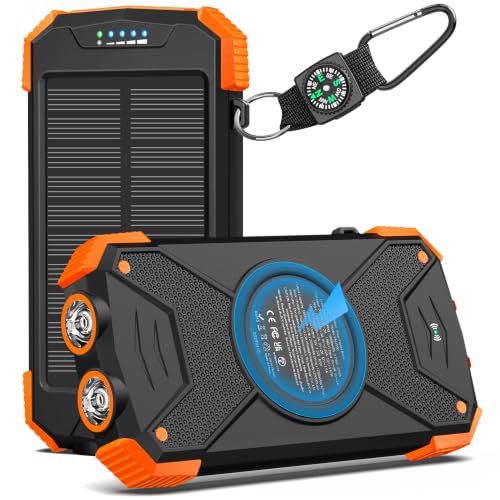

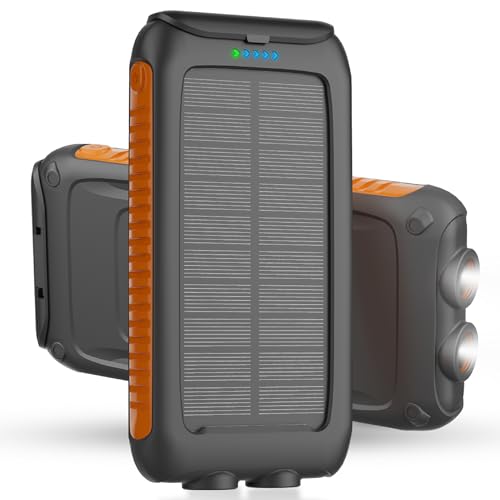


A backpack-mount solar charger clips to the outside of your pack and turns daylight into power for a phone, headlamp, or GPS while you hike. This guide compares five options across two families: solar power banks that store energy and trickle-charge in the sun, and dedicated foldable panels that put out real charging power on the move. It suits hikers, campers, festival-goers, and travelers who want backup power off the grid. Knowing which family you need is the key to not being disappointed.
| Product | Standout | Price tier | Link |
|---|---|---|---|
| BLAVOR 10,000mAh Solar Power Bank | Best-selling, wireless, 20W USB-C, carabiner | Budget | |
| SOARAISE 48,000mAh Solar Bank | Huge battery, four panels, built-in cables | Mid-range | |
| Luvknit 49,800mAh Solar Bank | Very high capacity, three-device charging | Budget | |
| BigBlue 28W Solar Panel | High-output foldable panel, triple ports | Premium | |
| FlexSolar 25W Solar Panel | Ultra-light foldable panel, dual ports | Mid-range | |
How to choose a backpack solar charger
The biggest mistake buyers make is expecting the wrong thing from the wrong type. Sort that out first and the choice gets easy.
Solar power bank or dedicated panel?
These are two different tools that both clip to a pack. A solar power bank is mainly a battery with a small built-in solar panel; you charge it from the wall before a trip, and the little panel slowly tops it up in the sun as a backup, not a fast fill. A dedicated solar panel is a larger, foldable array with no battery of its own, built to output meaningful charging power directly to your devices or a separate battery while the sun shines. If you want stored power ready to go with a trickle backup, choose a power bank; if you want to genuinely generate charge as you walk, choose a panel.
Be realistic about the small built-in panels
This is the honesty that saves frustration. The palm-sized panel on a solar power bank is small, so under direct sun it charges slowly, best thought of as an emergency top-up over many hours rather than a way to refill the whole bank in an afternoon. It is genuinely useful for keeping a phone alive when you cannot reach an outlet, but it will not fully recharge a large-capacity bank from sunlight alone in a day. A dedicated panel, by contrast, has many times the surface area and can put out real power. Match your expectations to the panel size.
Capacity, output, and what you charge
Think about the devices you need to keep alive. Battery capacity, measured in milliamp-hours, tells you how many phone charges a power bank stores, with larger banks refilling a phone many times over before they run dry. Output matters too: higher-wattage USB-C and quick-charge ports fill devices faster, and multiple ports let you power a phone, watch, and headlamp at once. For panels, the wattage rating indicates charging speed in good sun. Consider whether you carry power-hungry gear or just a phone, and size the capacity and output to your trip length and group.
Mounting, weight, and portability
Since the whole point is charging while walking, how it attaches and what it weighs are central. Power banks usually include a carabiner or loop to clip to a pack, keeping them small and pocketable. Foldable panels fold down to book or tablet size and use hanging loops or carabiners to hang flat against the back of a pack, angled toward the sun. Lighter is better on a long hike, so weigh the charging power you need against the grams you are willing to carry. A panel that folds compact and clips securely will not swing or snag on the trail.
Durability for the outdoors
Trail gear takes a beating, so build quality counts. Look for water resistance, with a stated rating on panels, so a passing shower or splash does not end your power supply, and rugged casing on power banks made from tough, flame-retardant materials. Foldable panels benefit from protective layers over the cells and reinforced stitching at the eyelets where they hang. Nothing here is fully submersible, so pack electronics away in heavy rain, but weather-resistant construction handles the dust, drizzle, and knocks of ordinary outdoor use. Sturdier gear simply lasts more trips.
BLAVOR 10,000mAh Solar Power Bank: the best-selling companion
The most popular pick here is a compact, do-it-all solar power bank from a brand with a long track record in the category. It stores 10,000mAh, enough to refill a typical phone a couple of times, and charges devices three ways: a 20W USB-C output for fast wired charging, a wireless charging pad on top, and the small built-in solar panel for topping up in the sun. A carabiner clips it straight to a pack, and a flame-retardant ABS and PC case with waterproof silicone protects the internals on the trail. As with any power bank, treat the solar panel as a backup top-up rather than the main charging method, and fill it from the wall before you leave. For a pocketable, versatile, proven charger, it is an easy recommendation.
Pros
- Best-selling, proven design
- Three ways to charge, including wireless
- Fast 20W USB-C output
- Carabiner and rugged waterproof case
- Compact and pocketable
Cons
- Small panel trickle-charges only
- 10,000mAh modest for long trips
- Wireless charging drains it faster
Best for: hikers wanting a compact, versatile power bank with a solar backup.
SOARAISE 48,000mAh Solar Bank: the high-capacity workhorse
SOARAISE answers longer trips with a large 48,000mAh battery that keeps a group’s devices going for days between wall charges. Four built-in solar panels give it more sun-catching area than a single-panel bank, so its trickle top-up is faster than most, though a wall charge is still the way to fill it quickly before you set out. Built-in cables and three ports, including USB-A outputs and a wireless charging pad, mean you can power several devices at once without hunting for cords. It is heavier than a pocket bank, as any high-capacity unit must be, but for base camp, multi-day treks, or keeping a family’s phones alive, the sheer stored capacity is the draw. Clip it to a pack and let the panels help between charges.
Pros
- Huge 48,000mAh capacity
- Four panels catch more sun
- Built-in cables and wireless pad
- Charges several devices at once
- Great for groups and long trips
Cons
- Heavy to carry
- Still slow to refill by solar alone
- Bulkier than a pocket bank
Best for: groups and multi-day trips needing lots of stored power.
Luvknit 49,800mAh Solar Bank: the big-battery budget pick
The Luvknit delivers enormous stored capacity at a budget price, making it a value standout for anyone who mostly wants a lot of power in reserve. Its 49,800mAh battery holds many phone charges, and it offers a solar-plus-USB-C dual charging mode, though as with all such banks the wall is far faster than the modest panel for filling it. One USB-C input-output port and two USB-A outputs let you charge up to three devices simultaneously, handy for a group or a gadget-heavy traveler. Sturdy, water-resistant ABS construction suits outdoor use, and it clips to a pack for topping up on the move. For maximum stored capacity per dollar with a solar safety net, it is a smart, economical choice.
Pros
- Very high 49,800mAh capacity
- Charges three devices at once
- Budget-friendly price
- Water-resistant rugged build
- Solar plus USB-C charging modes
Cons
- Panel is a slow backup only
- Heavy due to big battery
- Fastest refill is from the wall
Best for: budget buyers who want the most stored power with a solar backup.
BigBlue 28W Solar Panel: the real charging powerhouse
The BigBlue is a dedicated foldable panel, and it is the one that genuinely charges devices as you walk. Its 28-watt, shadow-free surface converts a high share of sunlight into power, with an industry-leading conversion efficiency that means faster charging in real conditions, and a triple-port layout with dual USB-C and a USB-A can push meaningful current to a phone or two directly, or into a separate power bank. It folds to a packable size, hangs flat against a backpack with its eyelets, and carries an IP44 rating to shrug off splashes and drizzle. There is no battery of its own, so it charges only in sunlight, which is exactly the point for a true charge-while-you-walk setup. For hikers who want to generate power rather than just store it, it is the premium performer.
Pros
- High 28W real charging output
- Industry-leading conversion efficiency
- Triple ports for multiple devices
- IP44 water resistance
- Folds flat to hang on a pack
Cons
- No built-in battery
- Charges only in good sun
- Larger than a power bank
Best for: hikers who want to genuinely charge devices from the sun on the move.
FlexSolar 25W Solar Panel: the ultralight generator
FlexSolar offers much of a dedicated panel’s real charging ability in an especially light, compact package. Rated at 25 watts with a high photovoltaic efficiency, it folds down to smaller than most tablets and weighs barely over a pound, so it earns its place on grams-conscious trips where every ounce counts. Dual USB-A and USB-C outputs deliver simultaneous power to two devices, and smart charging technology helps it draw the best output from available sun. A triple-layer protective construction, with a scratch-resistant coating, UV-stabilized encapsulation, and an impact-absorbing backing, keeps it durable on the trail. Like any panel, it has no battery and charges only in daylight. For backpackers who want genuine solar output without the weight, it is a compelling ultralight choice.
Pros
- Real 25W charging output
- Very light and compact
- Dual USB-A and USB-C ports
- Durable triple-layer build
- High conversion efficiency
Cons
- No onboard battery
- Needs direct sun to perform
- Lower output than the 28W panel
Best for: ultralight backpackers who want solar charging without the extra weight.
The verdict
Half of these store power and half generate it, so the winner depends on what you need. Match the pick to your trip length and whether you want reserve power or real solar charging.
Best Overall: BLAVOR 10,000mAh Solar Power Bank – the best-selling power bank that balances compact size, versatile wired and wireless charging, and a solar backup, the easy all-round choice for most hikers.
Best Value: Luvknit 49,800mAh Solar Bank – an enormous stored capacity for very little money, with three-device charging and a solar safety net for gadget-heavy trips.
Best Premium: BigBlue 28W Solar Panel – a high-output 28W folding panel that genuinely charges devices from sunlight as you walk, for those who want to generate power, not just carry it.
Frequently asked questions
Can a solar power bank fully recharge from the sun?
In practice, not quickly. The small panel built into a power bank charges slowly and is best treated as an emergency top-up over many hours of direct sun, not a way to refill a large bank in a day. Always charge the bank from the wall before a trip, then let the panel extend its life on the trail. To genuinely generate power from sunlight, use a dedicated foldable panel with much more surface area.
What is the difference between a solar power bank and a solar panel?
A solar power bank is mainly a battery with a small backup panel; it stores energy you charge from the wall and trickles a little from the sun. A dedicated solar panel is a larger foldable array with no battery, built to output real charging power directly to your devices or a separate bank while the sun shines. Power banks give you ready reserve power; panels let you generate power as you walk. Many people carry both, using a panel to refill a bank.
How do I attach these to my backpack?
Solar power banks usually include a carabiner or loop to clip to a strap or zipper pull, keeping them small and handy. Foldable panels have eyelets or carabiners at the corners so you can hang them flat against the back of your pack, angled toward the sun for the best output. Secure attachment matters so the charger does not swing, snag, or fall on rough trail. Position a panel to catch direct sunlight rather than shade for meaningful charging.
Will these charge my phone fast enough on the trail?
A power bank’s wired USB-C output charges a phone at normal speeds from its stored battery, which is fast; its solar panel alone is slow. A dedicated panel in good, direct sun can charge a phone at a useful rate, though clouds, angle, and heat reduce output. For dependable speed, charge from stored battery power and use solar to replenish that reserve. Managing expectations around sunlight conditions is key to being happy with any solar charger.
Are these chargers waterproof?
Most are water resistant rather than fully waterproof. Panels often carry a rating like IP44 to handle splashes and light rain, and power banks use rugged, weather-resistant casings, but none should be submerged. In heavy rain, stow your electronics and the charger in a dry pocket or dry bag. Weather-resistant construction is designed for the dust, drizzle, and knocks of ordinary outdoor use, not for soaking, so protect them in serious wet weather.
This article may contain affiliate links; see our Affiliate Disclosure.