Nine dozen cookies in one batch sounds like a boast right up until the week before the holidays, when it is midnight and you are creaming butter by hand for the third time. A stand mixer is the rare appliance you buy once and then quietly rebuild your recipes around.

A great stand mixer is decided by three unglamorous things: whether the beater actually reaches the whole bowl, whether the motor shrugs off stiff bread dough instead of straining, and whether the machine is pleasant enough to leave on the counter. Everything else is preference. The lineup below spans a compact mixer built for one or two people and a small kitchen, mid-size workhorses for regular baking, and the full-size machines that batch bakers and bread makers gravitate toward.
At a glance
| Product | Standout features | Price tier | Link |
|---|---|---|---|
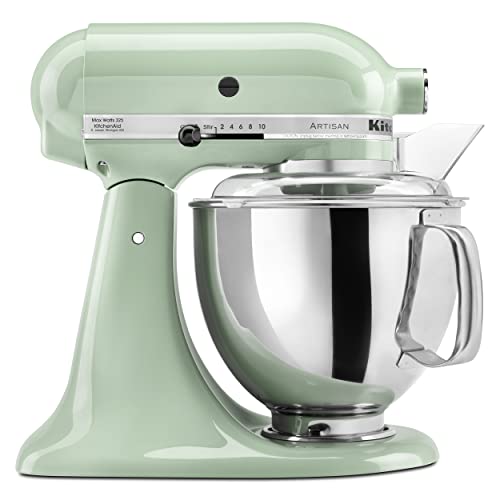
| KitchenAid Artisan Series 5 Quart | 5 quart bowl, 10 speeds, 59 bowl touchpoints, attachment hub, pouring shield included | Premium | |
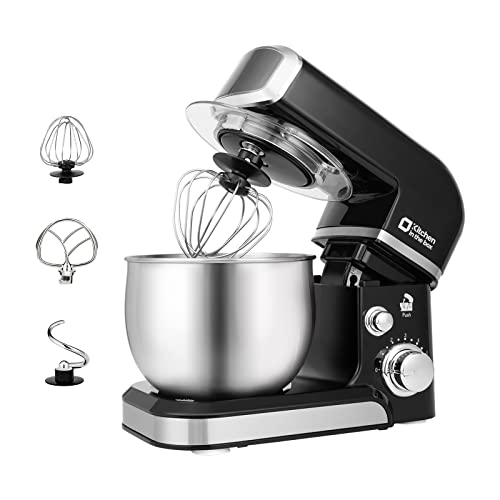
| Kitchen in the box 3.2Qt Stand Mixer | Under 7 pounds, 6 speeds, anti-splash lid, four suction feet | Budget | |
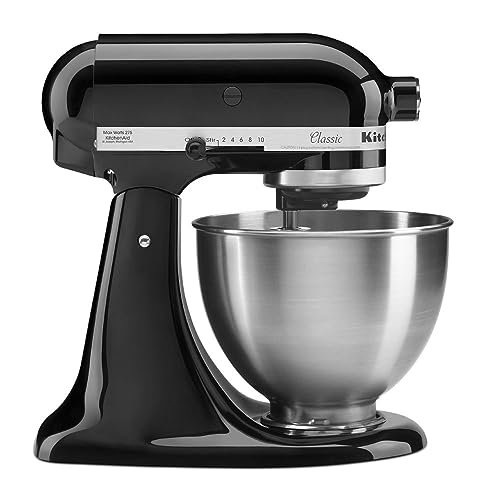
| KitchenAid Classic Series 4.5 Quart | 4.5 quart bowl, 10 speeds, metal construction, same attachment hub as the Artisan | Premium | |
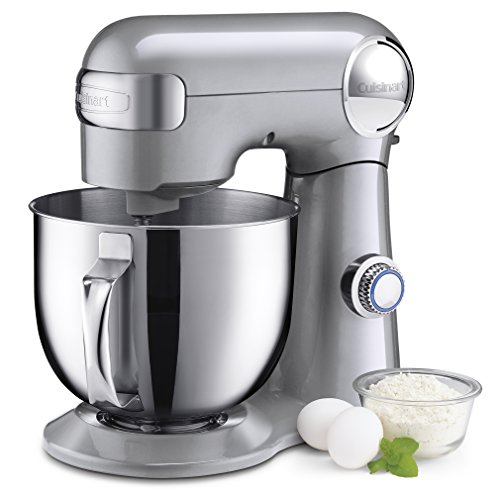
| Cuisinart 5.5-Quart Stand Mixer | Largest bowl here, 12 speeds, 500 watt motor, splash guard with pour spout | Mid-range | |
| Hamilton Beach Electric Stand Mixer | Planetary mixing, 7 speeds, built-in carry handle, full attachment set included | Mid-range | |
How to choose a stand mixer
Bowl size is about batch count, not ambition
Capacity is the first spec everyone reads and the one most often misjudged. KitchenAid rates the 4.5 quart Classic at eight dozen cookies per batch and the 5 quart Artisan at nine, using the flat beater and 28 gram portions. The Cuisinart’s 5.5 quart bowl is the largest here. Those numbers describe the ceiling, not the daily reality. The floor matters just as much: a big bowl handles a two-egg cake badly, because the beater sweeps mostly air above a shallow puddle of batter. If most of what you make is a single loaf or one tray of cookies, a 3.2 or 4 quart bowl will serve you better and take up less room.
Planetary action and the touchpoint question
Planetary mixing means the beater spins on its own axis while orbiting the bowl, so it sweeps the whole interior instead of carving two trenches. Every mixer here does it, including the Hamilton Beach, which points out it uses the same rotating action as pricier machines. KitchenAid’s 59 touchpoints figure is a claim about how completely the beater covers the bowl on each pass. In practice, what you notice is whether you keep stopping to scrape unmixed flour off the sides. Better coverage means fewer interruptions.
Tilt-head design and counter clearance
All five of these are tilt-head machines, where the motor housing hinges back so you can reach the bowl and swap attachments. It is the friendlier design for a home kitchen and it locks down for mixing. The catch is vertical space: the head needs room to tip back, so measure the gap under your upper cabinets before you commit, not after. Hamilton Beach adds a top handle, which does double duty for tilting the head and for hauling the machine to a cupboard.
Motor power, and where dough exposes it
Cake batter and whipped cream ask very little of a motor. Stiff bread dough asks everything. The Cuisinart lists 500 watts and the Hamilton Beach 300, and both include a dough hook. Wattage is a rough proxy rather than a promise, since gearing and build matter as much as the number, which is why KitchenAid leans on its metal construction instead. The practical test is simple: if you plan on regular bread, weight and metal gearing are worth paying for, because a mixer that walks across the counter under load will annoy you every single time.
The attachment hub changes what the machine is
The front power outlet is the quiet reason KitchenAid owners stay put. It drives a catalog of accessories, sold separately, that turn the mixer into a pasta roller, meat grinder, spiralizer or ice cream maker. Cuisinart has its own hub and its own accessory line covering similar ground. The compact and Hamilton Beach machines mix and nothing more. If you suspect you will want the mixer to grow into other jobs, that hub is the fork in the road.
What comes in the box
Check the accessory list before comparing prices, because it is not consistent. The Artisan includes a pouring shield; the Classic includes the flat beater, dough hook and six-wire whip but not the shield. Cuisinart supplies a chef’s whisk, dough hook, flat paddle and a splash guard with a pour spout. Hamilton Beach includes the guard, hook, whisk and beater, all dishwasher safe. The compact mixer comes with whisk, hook, beater and a clear anti-splash lid.
KitchenAid Artisan Series 5 Quart Stand Mixer
The Artisan is the best selling mixer in this group, and it is not hard to see why it sits on so many counters. The 5 quart stainless bowl with a handle takes a nine dozen cookie batch without complaint, the ten speeds run from a genuine stir crawl to a whipping-cream sprint, and the metal body gives it the mass that keeps it planted when a dough hook starts fighting back. KitchenAid claims 59 touchpoints around the bowl, which translates to less scraping and less flour surviving in the corners. It ships with the pouring shield, opens the attachment hub to a long accessory catalog, and comes in a color range wide enough that the choice becomes a decorating decision.
Pros:
- 5 quart bowl handles large batches, rated at nine dozen cookies
- Metal construction stays steady under stiff dough
- 10 speeds covering stir through high-speed whipping
- Attachment hub opens up pasta, grinding and more, sold separately
- Pouring shield included; bowl is dishwasher safe
- Over 20 colors to choose from
Cons:
- Highest price here by a clear margin
- Heavy, and it needs cabinet clearance to tilt back
- Attachments are an ongoing cost, not a bundle
Best for: regular bakers who want one mixer for the next decade and like the idea of it doing more than mixing.
Kitchen in the box 3.2Qt Stand Mixer
This one solves a problem the big machines cannot: it fits. Under seven pounds and roughly 12.9 by 7 by 10.2 inches, it lives in a cupboard between uses and comes out without a two-handed lift. The 3.2 quart stainless bowl is plainly sized for a couple, a solo baker, or anyone starting out, and the tilt head plus a clear anti-splash lid keeps flour where it belongs. Six speeds cover bread dough and thick batter at the top end and delicate folding at the bottom, and four suction feet on the base do real work stopping the machine from wandering. The aluminum hook and beater and stainless whisk all clip on quickly, with a gasket at the joint so residue does not pack into the coupling.
Pros:
- Under seven pounds and compact enough for a small kitchen or apartment
- Anti-splash lid keeps dry ingredients contained
- Four suction feet keep it stable in use
- Six speeds from delicate stirring up to dough
- Lowest price of the group by a wide margin
Cons:
- 3.2 quart bowl limits batch size
- No attachment hub, so it will only ever mix
- Light weight is a trade-off under heavy dough
Best for: solo bakers, couples, and small kitchens where storage space decides the purchase.
KitchenAid Classic Series 4.5 Quart Stand Mixer
The Classic is the Artisan with half a quart and some trim removed, and that is a better deal than it sounds. Same metal construction, same 59 touchpoints, same ten speeds, same attachment hub feeding the same accessory catalog. The bowl drops to 4.5 quarts and an eight dozen cookie rating, which is a distinction most home bakers will never bump into. The box gives you the bowl, coated flat beater, coated dough hook and six-wire whip. What you actually give up against the Artisan is the pouring shield, the bowl handle, and the very widest color palette.
Pros:
- Full KitchenAid attachment hub at a lower entry price
- Same metal build and 10 speeds as the Artisan
- 4.5 quart bowl still rated at eight dozen cookies
- Beater, dough hook and six-wire whip included
- Dishwasher safe stainless bowl
Cons:
- No pouring shield in the box
- Bowl has no handle, so pouring is a two-hand job
- Still a premium price and a heavy machine
Best for: bakers who want the KitchenAid ecosystem and do not need the extra half quart.
Cuisinart 5.5-Quart Stand Mixer
The Cuisinart brings the biggest bowl and the most speeds to the table for a mid-range price, which makes it the value play for anyone who bakes in volume. The 5.5 quart polished stainless bowl beats even the Artisan on capacity, the 500 watt motor is the highest published figure here, and twelve speeds give you finer control than the usual ten. Die-cast metal construction keeps it stable, the head tilts back for loading, and a single power outlet accepts Cuisinart’s own attachments: pasta roller and cutters, extruder, meat grinder, spiralizer and ice cream maker. The splash guard has a pour spout built in, so adding flour mid-mix does not redecorate the counter. A three-year limited warranty and a recipe book round it out.
Pros:
- 5.5 quart bowl, the largest capacity in this lineup
- 500 watt motor and die-cast metal construction
- 12 speeds for finer control than most
- Attachment outlet with its own accessory range
- Splash guard with pour spout included
- Three-year limited warranty
Cons:
- Attachment catalog is smaller than KitchenAid’s
- Large footprint for the counter space it occupies
- The big bowl is awkward for very small batches
Best for: batch bakers and bread makers who want capacity and power without the premium badge.
Hamilton Beach Electric Stand Mixer
Hamilton Beach makes an argument here that deserves a hearing: you are mostly paying for planetary mixing, and this machine has it. The beaters orbit a 4 quart stainless bowl for hands-free coverage, driven by a 300 watt motor that handles cookie dough and bread without drama. Seven speeds with a deliberately slow first speed make kneading and the flour-into-wet-ingredients moment far less messy, and there is a speed guide printed on top so you are not guessing. The built-in top handle is the detail owners end up appreciating most, useful both for tilting the head and for lifting the whole mixer into a cupboard. Bowl, splash guard, dough hook, whisk and flat beater are all included and all dishwasher safe.
Pros:
- Planetary mixing action at a mid-range price
- Slow first speed reduces splatter and suits kneading
- Carry handle makes moving and storing it easy
- Splash guard, hook, whisk and beater all included
- Every attachment and the bowl are dishwasher safe
Cons:
- No attachment hub for extra accessories
- 300 watts is the lowest published figure here
- 4 quart bowl is mid-sized rather than generous
Best for: everyday bakers who want proper planetary mixing and a machine that is easy to lift and store.
The verdict
Best overall: KitchenAid Artisan Series 5 Quart. It is the strongest seller of this group and the most complete machine in it. The 5 quart bowl, ten speeds, metal build and attachment hub cover the widest range of baking without asking you to compromise anywhere, and the pouring shield in the box is a small mercy. It costs the most, and it is the one people keep for fifteen years.
Best value: Cuisinart 5.5-Quart Stand Mixer. The largest bowl, the highest wattage and the most speeds in this lineup, at a mid-range price, with an attachment outlet of its own. If capacity and power are what you are shopping for and the badge is not, this is the sharpest arithmetic on the page.
Best budget: Kitchen in the box 3.2Qt. It will not knead a double batch of sourdough, and it does not pretend otherwise. What it does is put real planetary-style mixing and six speeds into something under seven pounds that fits in a cupboard, for a fraction of the cost of everything else here.
Two more worth a look. The KitchenAid Classic 4.5 Quart is the cheapest door into KitchenAid’s attachment catalog, and the half quart you lose is mostly theoretical. The Hamilton Beach is the pick if you want a proper mid-size mixer with everything included and a handle to carry it by.
Frequently asked questions
What bowl size do I actually need?
Match it to your usual batch, not your biggest ambition. A 3.2 to 4 quart bowl suits one or two people, a single loaf, or one tray of cookies. From 4.5 to 5.5 quarts covers double batches, party baking and regular bread. Oversizing has a real cost: in a large bowl a small quantity of batter sits below the beater’s sweep, so you end up scraping and folding by hand anyway.
Is a tilt-head mixer strong enough for bread dough?
For home quantities, yes. All five here include a dough hook and are built for it. What separates them is stability and gearing rather than the design itself. A heavier metal machine stays put where a light one shuffles across the counter. If you bake bread weekly, favor mass and metal construction; if bread is an occasional project, any of these will manage.
Are KitchenAid attachments worth it?
Only if you will use them. The hub is genuinely versatile, driving pasta rollers, grinders, spiralizers and ice cream makers from the same motor, and it is a large part of why the brand holds its value. But each accessory is a separate purchase, and a drawer of unused attachments is an expensive way to store regret. Buy the mixer for mixing, then add one accessory when a recipe demands it.
Do more speeds mean a better mixer?
Not on their own. Twelve speeds on the Cuisinart give finer steps than ten on the KitchenAids or seven on the Hamilton Beach, which is pleasant for delicate work. What matters more is how slow the slowest speed is. A genuinely gentle first speed is what stops flour erupting out of the bowl, and Hamilton Beach makes a point of it for exactly that reason.
Can these mixers go in the dishwasher?
The bowls and attachments generally can. The Hamilton Beach lists its bowl and all attachments as dishwasher safe, and both KitchenAid stainless bowls are too. The mixer body itself never goes in water; wipe it down instead. Check the manual for coated beaters, since some finishes last longer with a hand wash.
This article may contain affiliate links; see our Affiliate Disclosure.