A sunrise alarm clock has exactly one job that a normal clock does not: make light. Nine of the ten in this search never say how much. They promise to brighten from 1 percent to 100 percent, or from 10 percent to full, which sounds like a specification until you ask the obvious question. A hundred percent of what? One clock here answers it, in lumens, and it is not the expensive one.


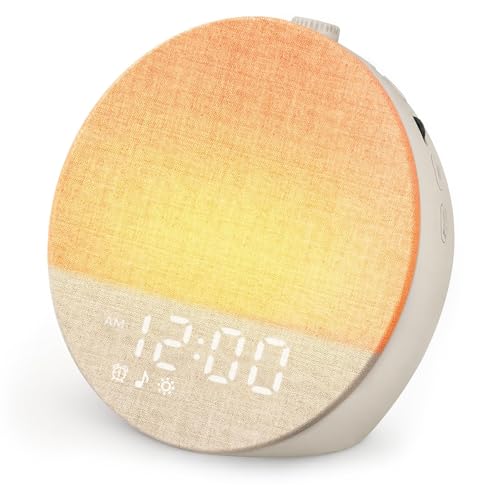


At a glance
| Product | How bright? | Price tier | Link |
|---|---|---|---|
| JALL 25-Sound | “10% to 100%”. Cheapest here. Dims fully off | Budget | |
| ecozy | Unstated. Files “no app” as a warning | Budget | |
| JALL Full-Screen | Unstated, but the whole face lights up | Budget | |
| Geuuap | Unstated. 20 dimming levels of an unknown | Mid-range | |
| Dekala | 400 lumens. The only figure in the search | Mid-range | |
| Philips SmartSleep | Unstated. 20 brightness settings, three asterisks | Premium | |
| Hatch Restore 3 | Unstated. Needs Wi-Fi and a subscription | Premium | |
How to choose
Percent of an unknown number is not a number
Nine listings here describe their sunrise as a climb to 100 percent and never say what 100 percent is. One says 1 percent to 100, another 10 to 100, a third goes from a soft glow to full intensity. All of those sentences are compatible with a light that could wake a house or one you would struggle to read by. A single clock in this search publishes lumens, and the moment it does, every percentage on the page is exposed as a description of a ratio rather than a brightness.
Why the number matters more here than anywhere else
You are buying this device to be woken by light instead of noise. If the light is not strong enough to do that through closed eyelids in a dark winter bedroom, the clock has failed at the only thing it exists for, and it will fail silently: you will just keep needing the alarm sound, and conclude sunrise clocks do not work for you. Brightness is not a nice-to-have specification in this category. It is the product.
The same fact is a feature on four boxes and a warning on one
Watch what happens to “no app”. One clock advertises no app, no subscription, no manual, works offline. Another leads with no Wi-Fi, no app, no complicated setup. A third says no complex phone apps or unstable Wi-Fi required. A fourth says no app needed. And a fifth files the identical fact at the bottom of its bullets under the heading “Important Note: Does not support app control”, as though confessing. Same capability, five listings, and one of them thinks it is bad news.
Ask what happens in a power cut
Three clocks here have a backup battery or a memory function that holds your alarm, sounds and settings through an outage. The most expensive clock in the search states the opposite in its own words: it will only work when plugged into a power outlet, and it needs Bluetooth to set up plus a stable 2.4GHz Wi-Fi connection for ongoing use. Not for setup. For ongoing use. A bedside clock that stops being a clock when the router does is a real trade, and at least it is disclosed.
Read where the subscription sits
The priciest device here includes a 30-day trial of the maker’s premium content, after which the subscription runs monthly or yearly, and the yearly figure is a sizeable fraction of the clock itself. That may well be worth it if you want the library. What matters is knowing the purchase is the beginning of the spending rather than the end of it, and three clocks on this page say plainly that they have no subscription at all.
Asterisks that lead nowhere
One listing carries a claim marked with one asterisk, a claim about physicians and pharmacists marked with two, and a claim about mood marked with three. None of the three footnotes appears anywhere in the listing. The markers are doing the work that the missing text was supposed to do: they signal that a source exists without letting you see it. It is a well-regarded product with genuine features, and the asterisks are still a promise with the receipt torn off.
If light alone will not wake you, say so now
Sunrise clocks are sold on gentleness, which is fine until you sleep through one. Two things here address that plainly. One clock offers pulsing light and sound at 95dB and argues, plausibly, that a steady alarm gets filtered out by a brain that has heard it every morning while an irregular one cannot. Another gives four alarms with three wake modes, so a heavy sleeper and a light sleeper can share a bed without one of them suffering. Gentle is the default, not the only setting.
JALL 25-Sound
The cheapest clock here and strong where it counts at night: the display dims on a seamless slider and then goes fully off, so the thing you bought to improve your sleep is not glowing at you all night. 25 sounds across 16 volume levels, split into 10 white noise options and 15 nature tracks. The sunrise runs 10 to 60 minutes climbing from 10 percent to 100, a memory function keeps your settings through a power cut, and it needs no app and no Wi-Fi. It never says how bright it gets.
Pros:
- Display dims all the way to fully off
- 25 sounds across 16 volume levels
- Memory keeps settings through a power outage
- No app, no Wi-Fi; the lowest price here
Cons:
- No brightness figure; 100 percent of an unknown
- Sunrise starts at 10 percent, not a true dark start
- Single alarm rather than dual
Best for: a genuinely dark bedroom, cheaply.
ecozy
A tidy, likeable clock with 26 sounds, 17 night light colors, dual speakers over Bluetooth, and a setup its listing says takes four steps: plug in, set time, set alarm, pick your light. It is on this page for the last line of its listing, filed under Important Note: does not support app control. Four rivals here sell that exact fact as the headline reason to buy them. It is the same clock either way, and the framing tells you the seller thinks an app is something you are missing rather than something you escaped.
Pros:
- 26 sounds and 17 night light colors
- Four-step setup with no app to install
- Dual Bluetooth speakers for music or podcasts
- Doubles as a reading lamp at adjustable brightness
Cons:
- Files “no app control” as a warning, not a feature
- No brightness figure and no sunrise duration published
- No battery backup mentioned
Best for: simple bedside use, if the framing does not bother you.
JALL Full-Screen
The clever idea here is area rather than intensity: the whole front panel lights instead of a ring or a dome, which spreads the same output across more of your field of view. It runs 10 to 60 minutes of sunrise, has 25 sounds with a 10 to 480 minute sleep timer, a blackout mode for total darkness, a 76 to 108 MHz FM radio you can wake to, 17 lighting effects and a 5W Bluetooth speaker. Dual alarms cover weekday and weekend, and it syncs its time from your phone over Bluetooth so you are never resetting it.
Pros:
- Full-screen panel spreads light across a wide area
- Dual alarms with weekday, weekend and daily modes
- Auto time sync over Bluetooth; no manual resetting
- FM radio, 25 sounds, 5W speaker, blackout mode
Cons:
- No brightness figure despite selling on light coverage
- Snooze fixed between 5 and 20 minutes
- Bluetooth sync means keeping a phone paired
Best for: spread-out light and a radio alarm.
Geuuap
The most generous feature list at its price: 30 sounds, 17 lighting modes, dual alarms with weekday, weekend and daily schedules, 10 wake sounds at 32 volume levels, unlimited snooze, Bluetooth 5.3, and an auto-off timer from 10 to 480 minutes. It has a backup battery that holds alarm, sound and light settings through an outage, and no Wi-Fi or app anywhere. The design is deliberately child-safe with no detachable small parts. The 20 dimming levels sound precise until you notice there is no figure they are levels of.
Pros:
- 30 sounds and 32 volume levels; a lot of control
- Backup battery holds settings through a power cut
- Dual alarms with three schedule modes; unlimited snooze
- No Wi-Fi, no app; Bluetooth 5.3 for music
Cons:
- 20 dimming levels of an unpublished brightness
- Sunrise starts 10 minutes out at the shortest
- Low-glare design may be too soft for heavy sleepers
Best for: the most settings without a phone involved.
Dekala
The only clock in this search that tells you how bright it is: a 400 lumen, three-channel sunrise. It also declines the whole modern arrangement, with no app, no subscription and no manual, running offline on two buttons and a dial with on-screen prompts. Four alarms each take their own wake mode, so a heavy sleeper gets pulsing light and sound at 95dB while their partner gets a gentle sunrise, or a light-only silent wake. The breathing light paces your inhale and exhale on preset patterns. Ten non-looping sounds, a 2.8 inch color display, FCC and UL certified.
Pros:
- 400 lumens published; the only figure in this search
- No app, no subscription, works offline
- Four alarms, three wake modes; couples covered separately
- Pulse Wake at 95dB for genuinely heavy sleepers
Cons:
- Ten sounds; fewer than the budget clocks here
- A color display is more light than some want at night
- Costs more than the simpler clocks above it
Best for: knowing what you are buying, and waking up anyway.
Philips SmartSleep
The established one, and the only clock here that is also a proper bedside lamp, with 20 brightness settings you would genuinely read by. It simulates sunset as well as sunrise, offers five natural wake sounds, an FM radio, tap snooze and an automatically dimming display. No app, no subscription, no Wi-Fi. Its listing carries three separate claims marked with one, two and three asterisks, about clinical proof, physician recommendation and morning mood, and not one of those three footnotes appears anywhere on the page.
Pros:
- A real reading lamp with 20 brightness settings
- Sunset simulation as well as sunrise
- Tap snooze and an auto-dimming display
- No app, no Wi-Fi, no subscription
Cons:
- Three asterisked claims with no footnotes anywhere
- Five sounds against 25 or 30 on cheaper clocks
- No brightness figure despite selling on light
Best for: a bedside reading lamp that also wakes you.
Hatch Restore 3
The most considered object here, designed around getting the phone out of the bedroom: one big button starts your routine, adjusts volume and snoozes without you reaching for a screen, and a separate button gives you a night light. Over 80 sleep sounds, curated bedtime routines, a growing content library, and a dimmable clock face that keeps the room dark. The costs are all disclosed and all real: a subscription after the 30-day trial, and a device that needs Bluetooth to set up, a stable 2.4GHz Wi-Fi connection for ongoing use, and mains power to work at all.
Pros:
- One big button for sleepy hands; no phone at bedside
- Over 80 sleep sounds and curated routines
- Dimmable clock face keeps the room dark
- Genuinely thoughtful physical design
Cons:
- Needs Wi-Fi for ongoing use, not just setup
- Subscription after the trial; the year costs real money
- Only works plugged in; no battery backup at all
Best for: a screen-free bedroom, if you want the content library.
The verdict
The one thing that separates a sunrise clock from a clock is how much light it makes, and nine of these ten will not tell you. Percentages fill the gap, and a percentage of an unpublished maximum is not a specification. Everything else on these listings is real: the sounds, the timers, the lights. The headline is the part that is missing.
Best overall: Dekala. 400 lumens, published, which makes it the only clock in this search you can judge before it arrives. It needs no app, no subscription and no Wi-Fi, running offline on two buttons and a dial. Four alarms with three wake modes means a heavy sleeper can have pulsing light and 95dB while their partner gets a gentle sunrise, and the argument behind Pulse Wake is a fair one: the brain learns to ignore a steady alarm and cannot ignore an irregular one.
Best value: JALL 25-Sound. The cheapest clock here, and it gets the night right: the display dims on a full-range slider and then switches off completely, so nothing glows at you until the sunrise starts. 25 sounds across 16 volume levels, a memory function that survives a power cut, and no app or Wi-Fi to depend on. It will not tell you how bright it is either, but nothing at this price does.
Best premium: Philips SmartSleep. The only device here that earns its place on the nightstand when the alarm is off, with 20 brightness settings and enough light to read by, plus sunset simulation, an FM radio and tap snooze. No app, no Wi-Fi, no subscription. Its three asterisked claims have no footnotes behind them anywhere in the listing, so weigh the lamp and the sunset, which are real, rather than the markers.
FAQ
How bright should a sunrise alarm clock be?
Bright enough to wake you through closed eyelids in a dark room, which is why the figure matters. Only one clock in this search publishes lumens at all. The rest describe a climb to 100 percent without ever saying what 100 percent is.
Do sunrise clocks work for heavy sleepers?
Light alone often will not. The clocks that take this seriously add a loud backup: one pulses light and sound at 95dB and argues that a steady alarm gets tuned out over time while an irregular one cannot. Another offers separate wake modes per alarm.
Do I need the app?
Four clocks here advertise having no app as a reason to buy them, and one files the same fact under Important Note as though it were a drawback. An app mostly buys a content library. It also buys a dependency on Wi-Fi.
What happens in a power cut?
Three clocks here keep your alarm and settings on a backup battery or memory function. The most expensive one states plainly that it only works plugged in and needs a stable Wi-Fi connection for ongoing use, not just for setup.
Is there a subscription?
On one of these, yes: a 30-day trial and then a monthly or yearly charge, with the yearly figure a sizeable fraction of the clock. Three others say outright that they have no subscription. Check before you buy, not after.
This article may contain affiliate links; see our Affiliate Disclosure.