The hotel room is dark, the baby is finally asleep, and the last thing anyone wants is a wobbly, half-assembled bed or a mystery about whether it is even safe. A good travel crib solves both: it pops up in seconds, packs down to something you can actually carry through an airport, and gives your little one a firm, familiar place to sleep whether you are two states away or just at the grandparents’ for the weekend.



A great travel crib is safe first, then light, compact, and quick to set up. What separates them is how they pack, whether they add a newborn bassinet or play-yard mode, and how much you pay for certified low-chemical materials. The five below suit a family flying often, grandparents wanting a spare bed, an apartment short on space, and parents who want the reassurance of named safety certifications.
At a glance
| Product | Standout feature | Price tier | Link |
|---|---|---|---|
| Dream On Me Zodiak Playard | Light, mesh sides, folds fast with carry bag | Budget | |
| Pamo babe Compact Pack and Play | Very light, one-hand carry, full mesh | Budget | |
| Guava Family Lotus | GreenGuard Gold, backpack, 15-second setup | Premium | |
| Delta Children Folding Mini Crib | Sturdy wood, casters, adjustable mattress height | Mid-range | |
| Sporary 3-in-1 Travel Crib | Crib, playpen, and bassinet modes, backpack | Mid-range | |
How to choose a travel crib
With a baby’s sleep space, safety leads and everything else follows. Once you have confirmed a crib is safe, the practical questions are how it packs, how fast it goes up, and which modes you actually need.
Safety and certifications
Any travel crib you consider should meet the current CPSC and ASTM safety standards; reputable brands state this plainly. Look for a firm, flat sleep surface and breathable full-mesh sides, which aid airflow and let you see in. Some cribs go further with a GreenGuard Gold certification, meaning the materials are tested for low chemical emissions, no lead, phthalates, or formaldehyde, which brings real peace of mind. A crucial safe-sleep rule applies to all of them: use only the firm mattress that comes with the crib, and do not add extra padding, pillows, or soft bedding.
Weight and packed size
How it travels decides how much you will use it. Mesh playards typically fold into a long duffel and weigh in the mid-to-high teens of pounds, fine for the car and grandparents’ house. If you fly, a backpack-style crib that folds compact and carries hands-free is worth a lot, letting you manage a stroller, a bag, and a baby without a spare hand. Check both the folded dimensions and the weight, since a light crib in a bulky bag is still awkward at the airport.
Setup speed and ease
A crib that fights you at bedtime gets left at home. The best options are tool-free and go up in seconds to a couple of minutes, folding down just as quickly. Practice once before your trip so the first real setup in a dim room is muscle memory rather than a puzzle.
Modes: crib, playard, bassinet
Think about your child’s age. A newborn benefits from a raised bassinet mode or a bedside setup, while a crawler needs a secure play-yard with a low, firm floor. Several cribs convert between these, and a lockable side-zip door lets you soothe or nurse without lifting the baby over a high rail. Buying a mode you will actually use beats paying for features you will not.
Materials and cleaning
Most travel cribs are aluminum or steel frames with mesh and fabric, light and quick to wipe down, and some have removable, washable covers, a genuine plus after a messy trip. A folding wood mini crib is a sturdier, more crib-like option that suits a home-plus-occasional-travel role better than air travel. Match the material to how you will use it most.
Helping baby actually sleep away from home
The best travel crib still needs a little help to earn its keep on the road. Set it up in a quiet, darker corner away from the door, and keep the same wind-down routine you use at home so the new room feels familiar. Because babies sleep better in a spot that smells and feels known, letting your little one nap in the crib a few times before the trip makes a real difference, turning it from a strange new bed into a portable version of their own. A small travel sound machine and a familiar sleep sack, sized to the child and used instead of loose blankets, round out an environment that travels well.
Dream On Me Zodiak Playard
The best-selling pick here is a straightforward, affordable playard that nails the basics. At around 16.6 pounds it folds quickly, tools-free, into an included travel bag, and full breathable mesh sides keep airflow high and let you keep an eye on your little one. Built to meet ASTM safety standards, it offers a roomy interior with a padded surface for naps, play, or diaper changes, and it works from infancy through the toddler years up to the stated height and weight limits. For families who want a dependable travel and grandparents’-house bed without spending much, it is the easy default.
Pros:
- Affordable and widely trusted
- Light, quick tool-free fold with carry bag
- Full breathable mesh sides
- Meets ASTM safety standards
Cons:
- Carry bag is bulkier than a backpack design
- No separate newborn bassinet mode
Best for: budget-minded families wanting a reliable travel and visiting bed.
Pamo babe Compact Pack and Play
The Pamo babe is the featherweight value option, folding down small enough to carry in one hand and slip into a closet or a car trunk. It weighs about 17.6 pounds, assembles and folds without tools, and uses a full-mesh design for maximum ventilation and clear visibility. The soft mattress pad inside gives a comfortable surface for sleep or play, and it suits babies from infancy through the toddler years within its weight limit. Simple, portable, and inexpensive, it is a fuss-free spare bed for visits to family and friends or short getaways.
Pros:
- Very light, one-hand carry when folded
- Compact fold for small spaces
- Full mesh for airflow and visibility
- Low price for occasional travel
Cons:
- Basic feature set, no convertible modes
- Duffel-style bag rather than a backpack
Best for: a light, cheap spare crib for grandparents or short trips.
Guava Family Lotus
The Lotus is the premium frequent-flyer’s crib, and its standout is certification: it is GreenGuard Gold certified for low chemical emissions, with no PVC, lead, phthalates, or formaldehyde, which is rare in this category. It folds compact enough to carry through airports as a lightweight backpack at around 15 pounds, sets up in roughly 15 seconds, and its lockable side door lets you nurse or soothe your baby at floor level and turn the crib into a play yard. An insulated, thick foam mattress is approved for overnight sleep, and a removable, washable cover plus a two-year warranty round out a crib built to last.
Pros:
- GreenGuard Gold certified, low-chemical materials
- Backpack carry, airport-friendly, very light
- Fast setup and a lockable side door
- Washable cover and two-year warranty
Cons:
- The most expensive option here
- Sheets sold separately
Best for: frequent flyers who want certified materials and easy carry.
Delta Children Folding Mini Crib
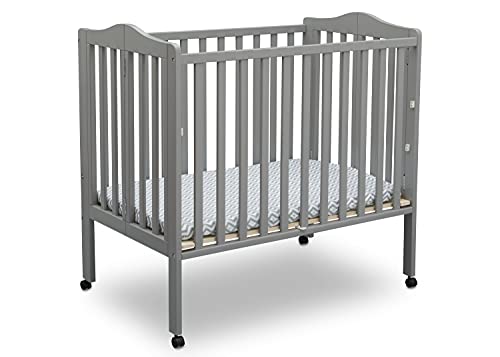
For a sturdier, more crib-like bed that still folds away, the Delta mini crib is the pick. Its strong wood construction feels closer to a nursery crib than a mesh playard, and it is JPMA certified to meet or exceed CPSC and ASTM standards, plus GreenGuard Gold certified and tested for lead and toxic elements. Casters make it easy to roll between rooms, it folds flat for storage or a car trip with the 1.5-inch mattress tucked inside, and a two-position mattress height lowers as your baby learns to sit and stand. It is better suited to home use and occasional car travel than flying, but as a compact second crib it shines.
Pros:
- Sturdy wood, more like a full crib
- JPMA and GreenGuard Gold certified
- Casters and folds flat with mattress stored inside
- Two-position adjustable mattress height
Cons:
- Heavier and bulkier, not for air travel
- No mesh play-yard or bassinet mode
Best for: a sturdy home-and-car second crib rather than a flight bag.
Sporary 3-in-1 Travel Crib
The Sporary is the do-it-all pick, converting between three modes: a crib approved for overnight sleep, a roomier play-yard when you unzip the side, and a bassinet mode that suits newborns or works bedside. Compact 3D Z-folding technology packs it down for a backpack carry, it weighs about 17.2 pounds, and the tool-free design sets up in around a minute. Soft breathable mesh sides and a side zipper door let you watch and reach your baby easily, and a trapezoidal frame adds stability as your child grows. For a single crib that adapts from newborn to toddler, it packs a lot of versatility into a mid-range price.
Pros:
- Three modes: crib, playpen, and bassinet
- Backpack carry with compact Z-fold
- Bassinet mode suits newborns and bedside use
- Side zipper door and full mesh sides
Cons:
- More moving parts to learn than a basic playard
- Heavier than the lightest premium cribs
Best for: parents who want one crib that grows from newborn to toddler.
The verdict
Best Overall: the Dream On Me Zodiak is the pick for most families. It is safe, light, quick to fold, and inexpensive, covering the core job of a travel and visiting bed without asking you to overspend, which is exactly why it is the most popular here.
Best Value: the Pamo babe Compact Pack and Play is even lighter on the wallet and on the arm, folding to a one-hand carry with full mesh and a soft pad, an easy spare crib for grandparents or short getaways.
Best Premium: the Guava Family Lotus is worth it for frequent flyers, pairing GreenGuard Gold certified materials with a true backpack carry, seconds-fast setup, and a lockable side door. If you want convertible modes instead, the Sporary adds a newborn bassinet, and the Delta mini crib is the sturdier home-and-car choice.
Frequently asked questions
Are travel cribs safe for overnight sleep? Yes, when they meet current CPSC and ASTM standards and you use them correctly. Use only the firm mattress that comes with the crib, keep it flat, and skip extra padding, pillows, or loose bedding. Several cribs here are certified for overnight sleep, and some add GreenGuard Gold certification for low-chemical materials.
What does GreenGuard Gold certification mean? It means the product has been tested for low chemical emissions and is free of substances like lead, phthalates, and formaldehyde. For a bed your baby breathes in all night, that testing is reassuring, and it is relatively uncommon in portable cribs, so it is a genuine mark of a premium pick.
Which is better for flying, a playard or a backpack crib? For air travel, a backpack-style crib wins. It folds compact, carries hands-free, and frees you to manage a stroller and bags. A mesh playard in a duffel is perfectly good for the car and family visits but is more awkward to haul through an airport.
From what age can my baby use a travel crib? Most work from newborn through toddlerhood within their stated weight and height limits, but a newborn is most comfortable in a raised bassinet mode or bedside setup, which some cribs here offer. Always follow the crib’s age and weight guidance, and switch a convertible crib to the right mode for your child’s stage.
Do I need to buy a separate mattress or sheets? The crib includes its own firm mattress or pad, and you should always use that one rather than adding another, since a second mattress can create an unsafe gap or surface. Sheets are sometimes sold separately; if you buy them, use only ones made to fit that specific crib snugly.
This article may contain affiliate links; see our Affiliate Disclosure.