Cast iron sears like a champion but weighs down your wrist; a nonstick pan is light but dies in a couple of years. Carbon steel is the quiet answer that borrows the best of both, and once you cook on one, the debate starts to make sense.



This guide settles the carbon steel versus cast iron question, then points you to carbon steel skillets worth buying. A great pan heats fast, sears hard, builds a natural nonstick surface, and lasts for decades. Whether you are chasing steakhouse crust, flipping eggs, or wanting one pan that does nearly everything, the picks below cover the range.
| Skillet | Standout features | Price | Link |
|---|---|---|---|
| Merten & Storck 12-Inch Carbon Steel Skillet | Pre-seasoned, all-cooktop and oven safe, triple-riveted handle | Budget | |
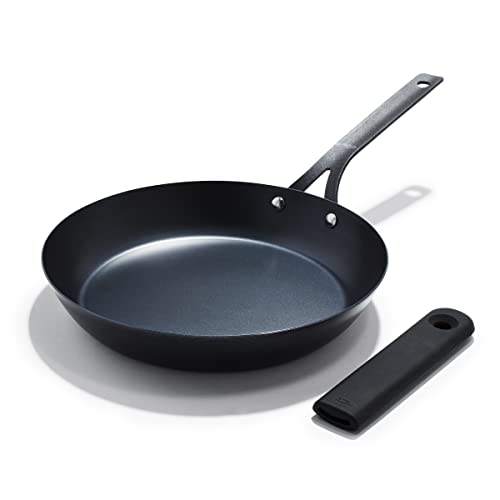
| OXO Obsidian 10-Inch Carbon Steel Skillet | Pre-seasoned, oven safe to 660F, removable silicone handle sleeve | Mid-range | |
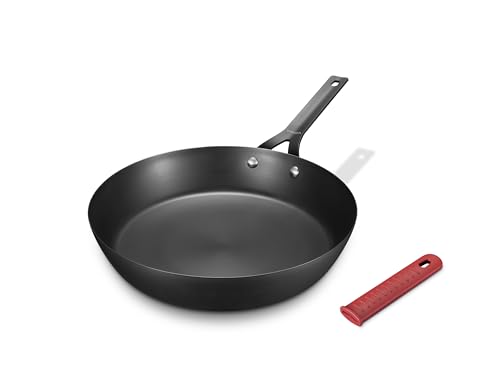
| Yonida 10-Inch Carbon Steel Skillet | Pre-seasoned with natural oil, removable silicone handle holder | Budget | |
| Lodge Carbon Steel Skillet | Lightweight, fast heating, PFAS-free, long handle, made in USA | Mid-range | |
| STRATA 3-Ply Carbon Steel Clad Skillet | 3-ply carbon steel with aluminum core, very light, stay-cool handle | Premium | |
The price column shows a general tier only. Prices move often, so tap a link for the live figure on Amazon.
Carbon steel vs cast iron, and how to choose a skillet
Before picking a specific pan, it helps to understand why carbon steel and cast iron behave differently, and what that means for your cooking. Then a few practical points narrow the field.
Carbon steel versus cast iron
Both are bare metal pans that build a seasoned, naturally nonstick surface and sear beautifully, but they feel different in use. Cast iron is thick, heavy, and slow to heat, which makes it hold temperature like a rock, great for a steady, screaming-hot sear. Carbon steel is thinner and lighter, heats and cools faster, and responds quickly when you adjust the burner, which suits everything from searing to eggs. If you want maximum heat retention, cast iron edges it; if you want lighter handling and faster control, carbon steel wins.
Seasoning and the nonstick patina
Neither pan is nonstick out of the raw metal; the slick surface comes from seasoning, thin layers of oil baked on until they polymerize into a hard, natural coating. Several pans here arrive pre-seasoned so you can cook right away, while a couple, like the STRATA, ship unseasoned and ask you to season first. Either way, the surface improves the more you cook fat in the pan, so it gets better with age rather than wearing out like a synthetic coating.
Weight and handling
This is where many people fall for carbon steel. A 10 to 12-inch cast iron skillet can be genuinely heavy to lift one-handed, especially full of food. Carbon steel is noticeably lighter, and clad designs like the STRATA are lighter still, which makes flipping, tossing, and pouring easier and kinder on the wrist. If you cook often or have found cast iron a chore to maneuver, the reduced weight is a daily quality-of-life upgrade.
Cooktop, oven, and grill compatibility
Bare steel and iron are wonderfully versatile: every pan here works on induction as well as gas, electric, and ceramic, and moves to the oven, grill, or even a campfire for high-heat finishing. Check each pan’s oven rating if you roast at high temperatures, and remember the all-metal handles get hot, so a cool-touch sleeve like those on the OXO and Yonida, or the stay-cool handle on the STRATA, is a welcome touch.
Care and cleaning
Carbon steel asks for a little routine in exchange for lasting decades. Hand wash it, avoid the dishwasher and long soaks, dry it promptly, and wipe on a thin film of oil to protect the seasoning. Go easy on very acidic foods like tomato sauce early on, since acid can strip young seasoning. Once the patina is well established, the pan becomes tougher, more nonstick, and close to maintenance-free.
Merten & Storck 12-Inch Carbon Steel Skillet (Best Overall)
The best seller is a widely recommended budget carbon steel pan, and the 12-inch size makes it a genuine everyday workhorse. It arrives pre-seasoned with natural oils, so it delivers nonstick performance right out of the box while the patina deepens with use. Like cast iron it sears, browns, and takes high heat, but it heats faster and handles lighter, and it works on induction, gas, electric, and ceramic, plus ovens, grills, and campfires. A sturdy triple-riveted steel handle gives a secure grip, and the tough surface shrugs off metal utensils. It is the no-nonsense pan most kitchens should start with.
Pros
- Pre-seasoned and ready to cook immediately
- Sears and browns like cast iron, heats faster
- Works on induction and every other cooktop
- Oven, grill, and campfire safe
- Sturdy triple-riveted handle, metal-utensil safe
Cons
- Large 12-inch size is less nimble for one egg
- Hand wash only to protect the seasoning
- Metal handle gets hot on the stovetop
Best for: cooks who want one versatile, high-heat pan that does nearly everything at a low price.
Budget tier. Check price on Amazon
OXO Obsidian 10-Inch Carbon Steel Skillet
OXO’s Obsidian is a frequent favorite among carbon steel pans, and the 10-inch size is the sweet spot for everyday cooking, from searing a couple of chops to building an omelet. It comes pre-seasoned so you can cook straight away, and it develops a natural nonstick patina the more you use it. The pan heats quickly and evenly, is oven safe up to a high 660 degrees Fahrenheit, and takes metal utensils without complaint. A removable silicone sleeve slips over the handle for a cool, comfortable grip on the stovetop, then comes off for oven and grill work. A polished, well-rounded choice.
Pros
- Ideal 10-inch everyday size
- Pre-seasoned, builds nonstick patina with use
- Fast, even heating for searing and frying
- Oven safe up to 660 degrees Fahrenheit
- Removable silicone handle sleeve for a cool grip
Cons
- Hand wash only to preserve the patina
- Costs more than the plainest carbon steel pans
- Silicone sleeve must be removed for high oven heat
Best for: everyday cooks who want a well-built mid-size pan with a comfortable, cool handle.
Mid-range tier. Check price on Amazon
Yonida 10-Inch Carbon Steel Skillet
The Yonida delivers the carbon steel experience at a budget price, arriving pre-seasoned with natural oil to form an easy-release surface that improves with every cook. The 10-inch pan heats quickly and holds heat well for restaurant-quality sears, and its surface resists hot spots for even cooking across the base. Its handy touch is a removable silicone handle holder that stays cool on the stovetop for a safe, comfortable grip, then comes off when you move the pan to the oven or grill. For a first carbon steel pan without much outlay, it covers the essentials.
Pros
- Pre-seasoned for immediate easy release
- Even heating with good heat retention
- Removable silicone handle holder stays cool
- Versatile for searing and sauteing
- Low price for a carbon steel skillet
Cons
- Hand wash only to keep the seasoning
- Lighter build than premium pans
- Seasoning still needs upkeep over time
Best for: first-time carbon steel buyers who want a cool-handle pan on a budget.
Budget tier. Check price on Amazon
Lodge Seasoned Carbon Steel Skillet
From a name long associated with cast iron, this Lodge carbon steel skillet offers the brand’s durability in a lighter, quicker-heating form. It comes seasoned and ready to build a natural, non-toxic nonstick surface, made with only carbon steel and vegetable oil, so it is PFAS-free with no synthetic coatings. The carbon steel responds fast to temperature changes, which suits searing, sauteing, and everyday cooking where you want control, and a long handle gives a comfortable grip and easy maneuvering. Made in the USA, it is a dependable, chemical-free pan from a trusted maker.
Pros
- Lighter and faster-heating than cast iron
- Seasoned and ready to build nonstick
- PFAS-free, no synthetic coatings
- Quick temperature response for control
- Long handle, made in the USA
Cons
- Long metal handle heats up in use
- Hand wash and re-oil to maintain
- Seasoning deepens gradually with cooking
Best for: cooks who want a trusted-brand, PFAS-free carbon steel pan with quick heat response.
Mid-range tier. Check price on Amazon
STRATA 3-Ply Carbon Steel Clad Skillet
The STRATA rethinks carbon steel with a three-ply clad construction wrapped around an aluminum core, so heat spreads fast and evenly with no hot spots, more like premium stainless cookware than a plain steel pan. It is remarkably light, around half the weight of traditional carbon steel, without giving up strength, and a cast stainless handle stays cooler for a comfortable, controlled grip. The surface is seasonable and naturally stick-resistant, improving over roughly 10 to 30 cooks, and it is metal-utensil safe and endlessly re-seasonable. It ships unseasoned, so you season it before first use. The premium, even-heating pick.
Pros
- 3-ply clad with aluminum core for even heat
- Very lightweight yet strong and durable
- Stay-cool cast stainless handle
- Naturally stick-resistant when seasoned
- Metal-utensil safe and re-seasonable for life
Cons
- Ships unseasoned, needs seasoning first
- Highest price of the group
- Stick resistance builds over many cooks
Best for: buyers who want the lightest, most even-heating carbon steel pan and will season it in.
Premium tier. Check price on Amazon
The verdict
Best overall
The Merten & Storck 12-inch is the best seller and the pan to buy first. Pre-seasoned, high-heat capable, induction and oven safe, and tough enough for metal utensils, it does nearly everything a cast iron pan can while heating faster and handling lighter, all at a budget price. For most kitchens it is the obvious choice. Check price on Amazon
Best value
The Yonida delivers real carbon steel cooking, a cool removable handle holder, and even heating for the least money. If you want to try carbon steel or add a capable mid-size pan without spending much, its pre-seasoned surface and comfortable grip make it the value pick. Check price on Amazon
Best premium
The STRATA is the standout for anyone who wants the best of the technology. Its 3-ply clad build with an aluminum core heats fast and evenly, it is remarkably light, and the stay-cool handle adds comfort. You season it in yourself, and in return you get the most refined carbon steel pan here. Check price on Amazon
Frequently asked questions
What is the main difference between carbon steel and cast iron?
Both are bare-metal pans that season into a natural nonstick surface and sear superbly, but carbon steel is thinner and lighter, so it heats and cools faster and responds quickly when you change the heat. Cast iron is thicker and heavier, so it holds temperature longer for a steady, intense sear. In short, cast iron retains heat best, while carbon steel is more agile and easier to handle day to day.
Do I have to season a carbon steel pan?
Every carbon steel pan needs seasoning to become nonstick, but many arrive pre-seasoned so you can cook immediately and simply let the surface improve with use. A few ship unseasoned and ask you to season before first use, usually by baking on thin layers of oil. Either way, cooking with fat continues to build the patina, so the pan performs better the more you use it.
Can carbon steel skillets be used on induction?
Yes. Carbon steel is naturally magnetic, so it works on induction cooktops, and every pan in this guide is induction compatible along with gas, electric, and ceramic. That universal compatibility, plus oven and grill safety, is a big part of why these pans are so versatile. Just confirm each pan’s maximum oven temperature if you plan to finish dishes at high heat.
Is carbon steel really nonstick, and can I cook eggs on it?
Once properly seasoned, carbon steel becomes impressively slick, and yes, it fries and flips eggs well with a little fat and a preheated pan. The nonstick quality comes from the seasoning, not a synthetic coating, so it is durable and free of PFAS chemicals. The surface keeps improving with use. Early on, use enough oil and give the pan time to build its patina for the best release.
How do I clean and care for a carbon steel skillet?
Hand wash it with hot water and a brush or gentle sponge, skip the dishwasher and long soaks, then dry it right away and wipe on a thin coat of oil to protect the seasoning. Avoid cooking very acidic foods until the patina is well established, since acid can strip young seasoning. Cared for this way, a carbon steel pan lasts for decades and only gets better.
This article may contain affiliate links; see our Affiliate Disclosure.