The first time force feedback yanks the wheel out of your hands mid-corner, you understand why a desk clamp is not enough. A beginner sim racing setup is really two purchases: the wheel and pedals that create the feel, and the stand or cockpit rigid enough to hold them still.


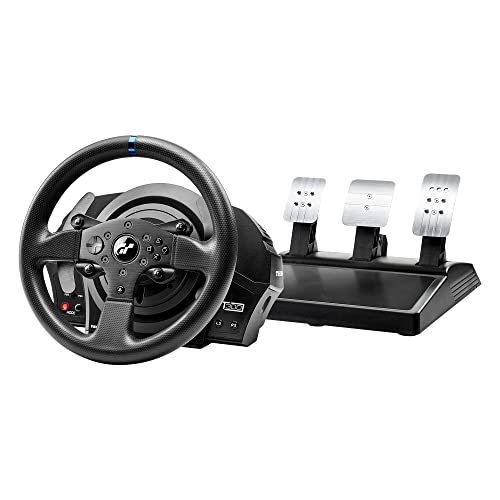


A good entry-level setup gives you real feedback through the wheel, pedals you can modulate, and a frame that does not flex when you fight a slide. That suits a newcomer stepping off a controller, a returning racer rebuilding a rig, and anyone sharing a living room who needs the whole thing to fold away. The five picks below cover both halves of the job: two wheel-and-pedal sets and three ways to mount them, since a stand or cockpit never includes the wheel.
| Product | Standout feature | Price tier | Link |
|---|---|---|---|
| GTPLAYER Wheel Stand | Folding steel stand, fits most wheels and pedals | Budget | |
| ARES WING Cockpit | Full cockpit with an adjustable padded seat | Premium | |
| Thrustmaster T300RS GT | Belt-driven force feedback with a three-pedal set | Premium | |
| Marada X Frame Stand | X-frame with a seat slot to lock a chair in place | Mid-range | |
| Thrustmaster T248 | Hybrid feedback, magnetic paddles, built-in display | Premium | |
How to build an entry-level sim racing setup
Start with the wheel and pedals
The wheel is where the simulation lives. Force feedback pushes back through the rim to tell you when the front tires are gripping, sliding, or riding a curb, and the quality of that signal is what turns a game into practice. Belt-driven wheels feel smooth and fluid, while hybrid systems blend belt and gear drive for stronger detail at a lower cost. Both are a large step beyond a controller, and both come with a pedal set, which is where most of your lap time improvement actually comes from as you learn to modulate the brake.
Then solve mounting, because clamps flex
A wheel bolted to a desk with a clamp will twist, creak, and slide once real force feedback loads it up, and that flex ruins your consistency. A dedicated stand puts the wheel and pedals on a rigid steel frame that resists the push, and it folds away when you are done. A full cockpit adds a fixed seat, so the pedals cannot slide away from you under heavy braking. It is worth noting plainly: stands and cockpits do not include a wheel, pedals, or shifter. You buy the frame and the hardware separately.
Check your platform before you buy
This trips up more beginners than anything else. Racing wheels are licensed per platform, so a wheel built for one console family will not simply work on another. The T300RS GT is aimed at PlayStation consoles and PC, while the T248 in this listing is specified for PC and Xbox Series consoles. Confirm the wheel matches the machine you actually play on before anything else, since no stand or cockpit can fix a compatibility mismatch.
Space, storage, and room to grow
Be realistic about where the rig will live. A folding stand slides under a couch and suits shared rooms; a cockpit is a permanent piece of furniture that pays you back in rigidity and comfort during long races. Look for adjustable wheel angle, pedal angle, and height so you can find a natural driving position. Finally, favor gear with an upgrade path: a frame pre-drilled for major brands, and a wheel ecosystem that accepts better pedals, a shifter, or a stronger base later, saves you replacing everything in a year.
Pedals are where the lap time hides
Newcomers obsess over the wheel and take the pedals as an afterthought, then wonder why they are slow. Almost all of your improvement comes from braking: knowing exactly how hard you are pressing, holding it at the limit, and easing off smoothly as you turn in. That demands a pedal you can feel, which is why adjustable brake pressure and contactless sensors that do not drift over time are worth more than another feature on the rim. A three-pedal set also opens up cars with a manual clutch, which matters if you want realistic starts.
What to buy first if the budget is split
If you cannot buy everything at once, the order matters. Get the wheel-and-pedal set that matches your platform first, since nothing else works without it, then solve mounting straight away rather than living with a clamp, because a flexing desk will teach you bad habits that are hard to unlearn. A folding stand is the cheapest way to do that properly. A cockpit and a fancy seat are comfort upgrades, and comfort is worth real money once you are racing for an hour at a time, but neither makes you faster than a rigid stand does.
GTPLAYER Wheel Stand
The clear best-seller of this group is also the cheapest way to stop your wheel wandering. GTPLAYER’s stand is built from high-strength carbon steel and fits the mainstream wheels and pedals from the big brands, with twenty degrees of tilt adjustment and a generous height range so drivers of different sizes find a comfortable position. It folds flat in seconds to slide under a couch or into a corner, which makes it the natural choice in a shared living room. The wheel, pedals, and shifter are not included.
One detail shows the design was thought through. The box includes both fixed feet and sliding wheels, so you can plant the stand solidly for racing, or roll it out of the way afterwards, and the fixed feet can sit under a gaming chair to stop the whole arrangement creeping across the floor under braking. Height adjusts by a decent range on a rotating knob and the wheel deck tilts through twenty degrees, which is enough to find a natural position whether you drive upright in an office chair or reclined on a couch. It supports the mainstream Logitech and Thrustmaster wheels and pedal sets rather than the highest-torque direct-drive bases.
- Pros: Rigid steel frame that resists flex; wide brand compatibility; adjustable tilt and height; folds away for storage; the least expensive foundation here.
- Cons: No seat, so you supply your own chair; not built for the highest-torque direct-drive wheels; hardware sold separately.
Best for: Beginners who need a solid, foldable mount without giving up a room to it.
ARES WING Cockpit
If you want the seat and wheel locked in a fixed relationship, the ARES WING is a complete cockpit at a reasonable price. A strengthened frame supports higher-torque wheels, eight non-slip feet keep it planted during hard braking, and the seat slides several inches with a backrest that tilts through a wide range to fit different heights. Wheel, pedal, shifter, and monitor mounts all adjust, the shifter can go on either side, and cable clips tidy the mess. Note that the wheel, pedals, shifter, and screen are not included.
The seat is the reason to choose a cockpit over a stand, and this one is properly specified: widened foam padding under a PU leather surface for long races, a backrest that reclines through a wide arc, and a slide range that fits drivers of very different heights. The powder-coated steel frame resists scratches and wear, eight non-slip feet keep it from drifting, and six cable clips let you route the inevitable tangle of wires out of the way. A monitor mount and a shifter mount that installs on either side round it out, and it takes wheels from all the major brands across the main consoles and PC.
- Pros: Rigid enough for stronger wheels; padded adjustable seat for long stints; every mount adjustable; tidy cable management; broad brand and console compatibility.
- Cons: Permanent footprint, no folding away; assembly takes real time; hardware sold separately.
Best for: Racers with a spare corner who want a fixed, comfortable seated position.
Thrustmaster T300RS GT
This is the wheel most beginners graduate to and keep. A belt-driven motor gives smooth, fluid force feedback that communicates curbs, drift, and the moment traction lets go, which is exactly the information you need to brake later and hold a slide. It ships with a three-pedal set that rewards careful modulation, targets PlayStation consoles and PC, and slots into a wider ecosystem of wheels, shifters, and pedals so you can upgrade a piece at a time instead of starting over.
Belt drive is the reason it feels the way it does. Instead of gears meshing, a belt transmits the motor’s force to the wheel shaft, which smooths out the notchy, grainy sensation cheaper wheels produce and lets subtle details through: the moment the front tires start to wash wide, the texture of a curb, the weight easing as a slide begins. That fidelity is what makes practice transfer into real improvement. The three-pedal set means you can drive cars with a clutch properly, and because the ecosystem is broad, a better rim or pedal set later bolts onto what you already own.
- Pros: Smooth, detailed belt-driven feedback; three-pedal set included; strong upgrade path; a long-term choice rather than a stopgap.
- Cons: The priciest item here; aimed at PlayStation and PC, not Xbox; needs a stand or cockpit to shine.
Best for: PlayStation and PC racers who want feedback quality they will not outgrow quickly.
Marada X Frame Stand
Marada’s X-frame sits between a bare stand and a full cockpit. The double-triangle geometry stiffens the frame against the twist that force feedback generates, and a seat slot secures your chair so it cannot slide backwards when you stamp the brake, which is the usual failure of a stand-plus-chair setup. It arrives mostly pre-assembled, folds down in seconds for storage, and takes wheels from the major brands with adjustable height, pedal angle, and a swappable cup holder and shifter panel.
Arriving largely built is a bigger deal than it sounds, because a flat-pack cockpit can swallow an evening before you turn a lap. Here you are racing within minutes. The seat slot is the standout idea: rather than asking you to buy a racing seat, it captures the chair you already own so it cannot slide backwards when you brake hard, which is the single most annoying failure of a stand-and-chair setup. Being able to swap the cup holder and shifter panel between left and right means it suits your room and your hands rather than dictating the layout.
- Pros: Reinforced X-frame resists flex; seat slot stops the chair sliding; mostly pre-assembled; folds quickly; broad compatibility.
- Cons: Costs more than a plain stand; you still supply the seat; wheel, pedals, and shifter not included.
Best for: Anyone who wants cockpit-like stability but still needs to fold the rig away.
Thrustmaster T248
The T248 is the feature-dense wheel-and-pedal set, using a hybrid drive that blends belt and gear systems for strong, responsive feedback. Contactless magnetic paddle shifters keep their crisp click instead of wearing out, and a screen built into the wheel shows telemetry and lets you adjust force feedback without leaving the track. The included pedal set uses contactless magnetic sensors with adjustable brake pressure, so you can tune the feel to your foot. This listing targets PC and Xbox Series consoles.
The magnetic parts are the quiet argument for it. Contactless sensors have nothing rubbing, so the paddles keep their crisp click and the pedals keep their calibration long after conventional potentiometers have worn into a vague, drifting mess, which is how many budget wheels die. Adjustable brake pressure lets you tune the feel to your leg rather than adapting to whatever the factory chose, and that directly helps consistency. The on-wheel display is genuinely useful too, letting you read telemetry and change force feedback strength mid-session without pausing, and it is plug-and-play with the mainstream racing titles.
- Pros: Strong hybrid force feedback; long-lasting magnetic paddles and pedal sensors; on-wheel telemetry display; adjustable brake pressure.
- Cons: Hybrid drive is a touch less fluid than a pure belt wheel; this version targets Xbox and PC, not PlayStation; still needs a stand or cockpit.
Best for: Xbox and PC racers who want the most features and adjustability in one box.
The verdict
Best overall: the GTPLAYER Wheel Stand. It is the runaway best-seller and the smartest first spend, turning any wheel into a stable, repeatable setup for the least money, then folding out of sight.
Best value: the Thrustmaster T248, which packs hybrid feedback, magnetic paddles, magnetic pedal sensors, and an on-wheel display into a set that undercuts the belt-driven flagship.
Best premium: the Thrustmaster T300RS GT for its smoother belt-driven feel and upgrade path, with the ARES WING Cockpit the pick if you would rather invest in a fixed, comfortable seated rig.
Frequently asked questions
Do stands and cockpits include a wheel and pedals? No. The GTPLAYER, Marada, and ARES WING frames are mounting hardware only, so you buy the wheel, pedals, and any shifter separately. Check that your specific model is on the compatibility list before ordering.
Can I just clamp a wheel to my desk instead? You can, but force feedback loads the clamp hard, and desks flex, creak, and let the wheel shift. A rigid stand or cockpit keeps the wheel and pedals in a consistent position, which makes your inputs consistent too.
Will any wheel work on my console? No, and this is the most common beginner mistake. Wheels are licensed per platform, so match the wheel to your machine first. The T300RS GT targets PlayStation and PC, while this T248 listing targets PC and Xbox Series consoles.
Stand or full cockpit for a beginner? If space is shared or tight, a folding stand gives most of the benefit and disappears afterwards. If you have a dedicated corner and plan long sessions, a cockpit locks the seat and pedals together and is more comfortable over time.
Do I need a separate shifter? No. Both wheels here have paddle shifters, which is what most modern race cars use anyway. A shifter is a later purchase for people who want to drive older manual cars or rally, and the stands and cockpits listed have somewhere to mount one when that day comes.
Can I upgrade the pedals later? Yes, and it is one of the best upgrades you can make. Both Thrustmaster sets belong to an ecosystem that accepts better pedals and rims, so you can improve the part that limits you most without replacing the whole wheel.
Will a stand hold a direct-drive wheel later on? Only up to a point. Entry-level stands are built for mainstream belt and hybrid wheels; the strongest direct-drive bases generate far more force and need a stiffer cockpit. If direct drive is your plan, buy the sturdier frame now rather than twice.
This article may contain affiliate links; see our Affiliate Disclosure.