Hand a young photographer a camera that is theirs alone, and the world changes shape: puddles become mirrors, the family dog becomes a movie star, and every walk turns into a hunt for the next shot. The trick is picking a first camera simple enough to spark that spark, not smother it.



A great starter camera is rugged, dead simple to point and shoot, and cheap enough that nobody panics if it gets dropped in the sand. This guide compares five affordable models made for young beginners, whether the goal is a birthday gift, a screen-free hobby, or a low-stakes way to learn before a pricey phone or DSLR enters the picture. The best choice serves the budding photographer and the person buying it equally well.
| Product | Standout | Price tier | Link |
|---|---|---|---|
| CAMKORY FHD Kids Camera | Best-selling, easy 44MP point-and-shoot | Mid-range | |
| Lecran FHD Kids Camera | Pocket size with dual batteries | Mid-range | |
| W & O Flip-Screen Camera | 180-degree flip screen and ring light | Premium | |
| ocxu 4K Kids Camera | 4K capture with a large SD card | Mid-range | |
| HILDCROA 48MP Kids Camera | Lowest price with scene modes | Budget | |
How to choose a first camera for a young photographer
The specs that impress adults rarely matter to a beginner. Focus instead on the handful of things that keep a new photographer shooting rather than frustrated.
Simplicity beats specs
For a young beginner, ease of use is the whole ballgame. A clear menu, big obvious buttons, and a genuine point-and-shoot design mean the camera gets used instead of abandoned in a drawer. Fancy manual controls and long feature lists tend to overwhelm rather than delight at this stage. Look for a camera that powers on and takes a decent photo with no setup, then reveals a few fun extras like filters or zoom as confidence grows. The best first camera disappears into the fun and lets the photographer concentrate on what they see.
Durability and size
First cameras get dropped, jammed in backpacks, and carried everywhere, so a tough, lightweight body earns its place. A compact, pocketable shape suits smaller hands and makes the camera easy to bring along on trips and walks. A wrist strap or lanyard is a small feature that avoids a lot of tumbles. Because these cameras are inexpensive, a stumble is a shrug rather than a disaster, which is exactly the freedom a nervous beginner needs. Rugged and small nearly always beats sleek and delicate for this audience.
Photo and video quality
Nobody should expect professional results at this price, but image quality still varies in ways that matter to a proud young shooter. Higher megapixel counts and sharper sensors produce photos that look good enough to print and share, which fuels enthusiasm. Full HD or even 4K video lets a beginner try vlogging and short films, an increasingly popular reason kids want a camera. Anti-shake features help steady the wobbly hands of a first-timer. Aim for quality that rewards effort without demanding technique the photographer does not yet have.
Battery, storage, and what is in the box
Practical extras decide how smoothly the first weeks go. A memory card included in the box means shooting can start immediately, with no confusing extra purchase. Two rechargeable batteries, or the ability to record while charging, avoids the heartbreak of a dead camera mid-adventure. Check the storage capacity too, since more room means more photos and longer videos before anything needs offloading. These unglamorous details are often the difference between a gift that gets used all weekend and one that stalls on day one.
Fun features that encourage creativity
The right playful features turn a camera into a hobby. Creative filters, fun frames, and a decent zoom invite experimentation and keep a beginner exploring. A flip or selfie screen and a fill light make self-portraits and vlogging easy, which many young photographers love. Scene modes quietly help by matching settings to the situation without the shooter having to understand why. None of this is essential, but a few well-chosen extras give a new photographer reasons to keep picking the camera up, which is the entire point.
CAMKORY FHD Kids Camera: the best-selling all-rounder
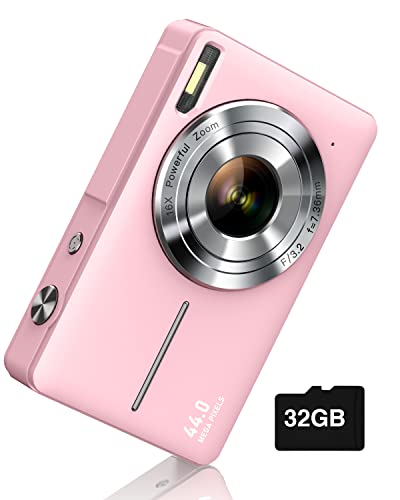
The top seller in this group earns its spot by nailing the fundamentals a beginner actually needs. It captures Full HD 1080p video and 44MP photos through a straightforward point-and-shoot design, with 16x zoom, anti-shake to steady unsteady hands, and a 32GB card in the box so shooting starts the moment it is unwrapped. The ergonomic layout keeps buttons easy to reach and the menu simple, while a petite, durable, lightweight body suits everyday carry and travel. It strikes the balance that makes a first camera succeed: capable enough to produce pleasing photos, simple enough that a young photographer never feels lost. That combination is exactly why it sells so well as a gift.
Pros
- Simple, genuine point-and-shoot design
- Sharp 44MP photos and Full HD video
- 16x zoom and anti-shake
- Includes a 32GB card to start immediately
- Best-selling, proven crowd-pleaser
Cons
- Small screen versus flip-screen models
- No 4K video
- Basic low-light performance
Best for: a first camera gift that just works out of the box for any young beginner.
Lecran FHD Kids Camera: the pocket-friendly gift
Lecran built a camera that feels made for gifting, from its pocket-size body to the thoughtful touches that keep a beginner shooting. It pairs a capable CMOS sensor and anti-shake for clear 44MP photos with a truly compact, take-anywhere shape, and it ships with a 32GB card, a lanyard, and two rechargeable batteries so nothing runs out mid-trip. Creative filters give a young photographer easy ways to play, and the safe, durable materials suit hands that are still learning to be gentle. It covers the same friendly ground as the top seller with a slightly more gift-ready package, making it an easy, affordable choice for a birthday or holiday.
Pros
- Truly pocketable and lightweight
- Two batteries plus a 32GB card included
- Clear 44MP photos with anti-shake
- Fun creative filters
- Safe, durable materials
Cons
- Fixed rear screen only
- Full HD rather than 4K
- Modest zoom reach
Best for: a compact, ready-to-give gift for a young or first-time photographer.
W & O Flip-Screen Camera: the vlogging-ready pick
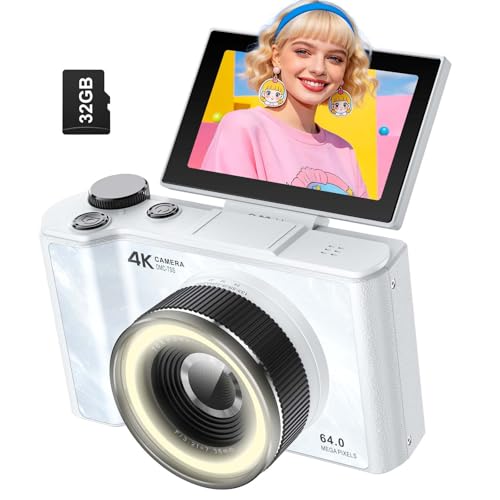
For a young creator who wants to be in front of the camera as much as behind it, the W & O stands out with a 3-inch 180-degree flip screen, a built-in beauty mode, and a front ring light for flattering selfies and vlogs. A retro-style CCD-type sensor gives images a distinctive, vibrant look that appeals to teens, and AI-assisted autofocus helps lock onto subjects quickly so shots stay sharp. It arrives with a 32GB card and a USB-C port for fast transfers and charging. This is the step-up option for the beginner whose interest leans toward self-portraits, short videos, and a bit of style, rather than plain snapshots.
Pros
- 180-degree flip screen for selfies and vlogs
- Front ring light and beauty mode
- Distinctive CCD-style color
- AI-assisted autofocus
- USB-C with a 32GB card included
Cons
- Priciest of this group
- Stylized look will not suit everyone
- More features to learn than a basic model
Best for: teens and young creators drawn to vlogging, selfies, and a retro photo style.
ocxu 4K Kids Camera: the video-forward choice
The ocxu leans into video, offering 4K-capable capture that lets a budding filmmaker shoot noticeably crisper clips than the Full HD crowd, backed by a generous 64GB card for plenty of footage. It keeps the operation firmly beginner-friendly with a power-on-and-shoot design, 16x zoom, and anti-shake, and it can record while charging so long adventures do not end in a dead battery. Marketed as a screen-free alternative to a smartphone, it is pitched at parents who want to steer a child toward real-world creativity rather than apps. For a young photographer more excited by making videos than stills, the extra resolution and storage make a real difference.
Pros
- 4K-capable video for sharper clips
- Large 64GB card included
- Record while charging
- Simple point-and-shoot operation with 16x zoom
- Screen-free alternative to a phone
Cons
- 4K on a budget sensor has limits
- Small screen for reviewing footage
- Zoom quality softens at the extremes
Best for: a young beginner who is more interested in shooting video than stills.
HILDCROA 48MP Kids Camera: the budget starter
When the goal is the lowest-risk possible entry, the HILDCROA delivers the essentials at the friendliest price here. It shoots 48MP photos and Full HD 1080p video with 16x zoom and anti-shake, adds eight scene modes that quietly match settings to the situation for the shooter, and comes complete with a pre-formatted 32GB card, two batteries, and a USB-C cable. A compact body, wrist strap, and standard tripod thread round out a genuinely usable little package. For a cautious first purchase, a spare to keep in a bag, or a gift where budget matters most, it covers the basics without asking much of anyone’s wallet.
Pros
- Lowest price in this lineup
- 48MP photos with eight scene modes
- Two batteries and a 32GB card included
- Compact with a tripod thread
- Anti-shake and 16x zoom
Cons
- Smaller, lower-resolution screen
- No wireless transfer
- Simplest feature set of the group
Best for: budget-first buyers wanting a capable, low-stakes first or spare camera.
The verdict
All five make an approachable first camera. The best one depends on whether stills, video, style, or price sits at the top of the list.
Best Overall: CAMKORY FHD Kids Camera – the top seller that balances simple operation, pleasing 44MP photos, and everything needed to start shooting the moment it is unwrapped.
Best Value: HILDCROA 48MP Kids Camera – the lowest price paired with 48MP photos, scene modes, two batteries, and a card, making it the easiest first purchase to justify.
Best Premium: W & O Flip-Screen Camera – the flip screen, ring light, and CCD-style color that make it the standout for a young creator focused on selfies and vlogging.
Frequently asked questions
What age is a beginner camera like these suitable for?
These simple point-and-shoot cameras suit a wide range, from younger children who need something rugged and foolproof to teens exploring photography and vlogging more seriously. The common thread is easy operation and a low price, so a stumble is no disaster. Match the extras to the interest: a basic model for a young child, a flip-screen or 4K model for an older beginner leaning into video.
Are these cameras better than just using a phone?
For many families, yes, and for reasons beyond image quality. A dedicated camera gives a young photographer something that is entirely theirs, encourages screen-free creativity away from apps and games, and removes the worry of damaging an expensive phone. The photos may not always beat a modern phone, but the focus, ownership, and freedom to experiment are exactly what help a beginner grow.
Do I need to buy a memory card separately?
Usually not with these models, which is a real convenience. Each of the cameras here includes a memory card in the box, and several add two batteries as well, so shooting can begin immediately with no confusing extra purchases. Always check the listing to confirm what is included, but this group is designed to be ready to use straight out of the packaging.
Can a beginner camera shoot good enough video for vlogging?
Several here can. Full HD is perfectly usable for casual clips, and the 4K-capable option produces noticeably sharper footage for a young filmmaker. For vlogging specifically, a flip or selfie screen and a fill light matter as much as resolution, since they let the creator frame themselves and light their face. Choose a model with those features if video and self-recording are the main goal.
How do I keep a first camera working for a long time?
Encourage a few simple habits: use the wrist strap or lanyard to avoid drops, keep the lens clean with a soft cloth, and store the camera in a bag away from sand and water. Charging the batteries fully and offloading photos regularly keeps storage free and the camera ready. Because these models are inexpensive and sturdy, gentle everyday care is usually all it takes to keep them going through plenty of adventures.
Photos or video: which type of camera should I pick?
Follow the young photographer’s interest. If they love capturing moments, animals, and scenery as stills, a strong point-and-shoot with good photo resolution and easy zoom is ideal. If they are drawn to making videos, short films, or vlogs, lean toward a model with sharper video and a flip screen for self-recording. Many beginners enjoy both, so a well-rounded camera that does each competently is a safe default when you are unsure which way their creativity will run.
This article may contain affiliate links; see our Affiliate Disclosure.