It is two in the morning, the feed went fine, and now there is a small furious person arching their back and screaming at the ceiling. Somewhere in that bottle, air went where milk should have been. An anti-colic bottle will not fix everything that makes a baby cry, but it will fix that, and at two in the morning that is a great deal.

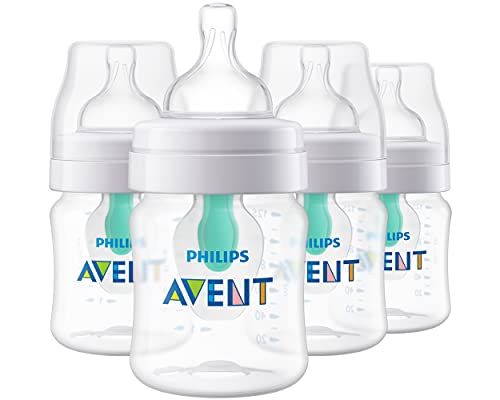


The interesting thing about this category is that the five picks below are not five versions of one idea. They are five genuinely different engineering answers to the same problem: a tube down the middle, a vent that floats air above the milk, a one-piece valve, a wand in the neck, and a vent in the base of an angled bottle. Each trades cleaning effort against how completely it separates air from milk. This guide is for anyone feeding a gassy baby, whether that is exclusively bottle feeding, combination feeding, or a partner taking the night shift.
At a glance
| Product | Standout feature | Price tier | Link |
|---|---|---|---|
| Dr. Brown’s Options+ Narrow | Internal vent tube, vacuum-free feeding, vent removable later | Mid-range | |
| Philips Avent with AirFree Vent | Keeps the nipple full of milk; allows upright feeding | Mid-range | |
| Evenflo Balance Plus Wide Neck | One-piece Proflo vent; only three parts to wash | Budget | |
| Tommee Tippee Advanced Anti-Colic | Vented wand, self-sterilizing in three minutes, 12-piece set | Premium | |
| Playtex Baby VentAire | Angled body and a bottom vent for semi-upright feeding | Budget | |
How to choose an anti-colic bottle
What these bottles do, and what they do not
Worth being straight about this. Colic is a pattern of prolonged crying in an otherwise healthy, well-fed baby, and its causes are not fully understood. Swallowed air is one contributor, and it is the one a bottle can address. Every maker here describes their venting as reducing colic, gas, spit-up, and burping, and several describe their vent systems as clinically proven; those are the manufacturers’ claims, and they are claims about air, not about every cause of crying. A better bottle is a reasonable, low-risk thing to try. Persistent inconsolable crying, poor feeding, or weight concerns are a conversation with your doctor or health visitor, not a shopping decision.
Five ways to keep air out of a baby
In an ordinary bottle, milk leaving creates a vacuum, so the baby either fights the suction or lets air in around the nipple and swallows it. Each design here breaks that differently. Dr. Brown’s runs an internal tube that carries air to the back of the bottle, so milk pours vacuum-free without bubbling through it. Avent’s AirFree vent holds air at the top of the bottle so the nipple stays full of milk even when the bottle is level. Evenflo’s Proflo is a single-piece valve that keeps bubbles in the bottle rather than in the baby. Tommee Tippee uses a vented wand in the neck to hold air away from the milk. Playtex vents through the base of an angled bottle. All are sound ideas. The differences show up mostly in the sink.
Count the parts before you fall in love
This is the trade nobody warns you about. The most thorough venting systems have the most components, and every component gets washed and sterilized after every feed, several times a day, for months. Dr. Brown’s separates into the most pieces and is the most effective at what it does; the two facts are related. Evenflo went the other way with a three-piece bottle and a one-piece vent. Neither is wrong. Just be clear with yourself about how much washing-up you are prepared to sign up for at 3am, because a bottle you resent is a bottle you stop using.
Narrow or wide neck
Wide-neck bottles are easier to fill, far easier to brush out, and their broader nipple shape suits babies moving between breast and bottle. Narrow bottles are slimmer to hold and fit sterilizer trays better. If you pump, check which flanges thread onto which bottles, since pumping straight into the bottle saves a transfer and a wash.
Flow rate matters more than parents expect
Every bottle here ships with slow flow, level 1 nipples, and that is correct for a newborn. A nipple that flows too fast makes a baby gulp to keep up, and gulping swallows air, which defeats the point of the vent entirely. Move up flow levels only when your baby shows they need it, by feeding impatiently or taking a long time. Slower for longer is the safer error.
Glass or plastic
Every bottle here is BPA free, and Playtex also states its bottles are free of PVC and phthalates. Beyond that it is a real choice. Plastic is light, cheap, and survives being dropped. Glass does not scratch or hold smells and cleans more thoroughly over years, but it weighs more.
Dr. Brown’s Natural Flow Anti-Colic Options+ Narrow
One of the best-selling baby products of any kind, and the bottle most parents of a gassy baby are eventually handed by someone who has been there. The internal vent system carries air past the milk to the back of the bottle, so there is no vacuum for the baby to fight and no bubbling through what they are drinking. The maker describes it as clinically proven to reduce colic and to decrease spit-up, burping, and gas, and states the vent helps preserve nutrients in the milk. The practical genius is the last feature: the vent can come out. As feeding matures and the venting is no longer needed, you remove the tube and carry on with the same bottles rather than buying a new set. It comes as four 8oz bottles with level 1 slow flow nipples, and the breast-like nipple shape is designed to make moving between breast and bottle less of a negotiation.
Pros
- The most thorough venting approach here; vacuum-free feeding
- Vent removes later, so the bottles grow with your baby
- Breast-like nipple shape eases switching between breast and bottle
- Consistent flow lets a baby feed at their own pace
- Enormously popular, so nipples and spares are easy to find anywhere
Cons
- The most parts to wash and sterilize, every single feed
- The vent can leak if the bottle is over-filled or shaken
Best for: the default recommendation, and the first thing to try for a genuinely gassy baby.
Philips Avent Anti-Colic with AirFree Vent
A different idea, and a clever one. Rather than routing air around the milk, the AirFree vent holds it at the top of the bottle so the nipple stays full of milk rather than air, even when the bottle is not tipped steeply. That unlocks the thing this bottle is really for: feeding a baby upright. Upright and semi-upright feeding is widely encouraged for babies prone to reflux, and most bottles fight you on it, because level means air in the nipple. This one does not. It is a wide-neck bottle with only a few parts, easy to assemble and easy to clean, and the vent is optional, so you can use the same bottles without it once things settle. Four 4oz bottles with flow 1 nipples, BPA free.
Pros
- Genuinely enables upright feeding, unlike most bottles
- Nipple stays full of milk rather than air
- Wide neck with few parts; easy to clean and assemble
- Works with or without the vent, so it adapts as you go
- Aimed at reflux as well as colic and gas
Cons
- The vent is another small part to lose and to wash
- 4oz is a newborn size; you will want larger bottles before long
Best for: babies with reflux, and anyone who has been told to feed more upright.
Evenflo Balance Plus Wide Neck
The pragmatist’s choice, developed by pediatric feeding specialists and clearly designed by someone who has done the washing-up. The patented Proflo venting is a gentle one-piece system that keeps milk bubbles in the bottle instead of in your baby, and because it is a single piece rather than an assembly, it barely adds to the cleaning. The whole bottle is three parts. That matters more at week six than it does in the shop. The wide neck carries a natural nipple shape built to help a good latch, which is the hard part of bottle feeding for many breastfed babies, and the flow is deliberately slower so nobody has to gulp to keep milk coming, which is the same gulping that swallows air. Wide-neck breast pump adapters are available separately if you want to pump straight into the bottle.
Pros
- One-piece vent and a three-part bottle: the easiest here to clean
- Developed by pediatric feeding specialists, with latch as the focus
- Deliberately slower, gulp-free flow rate
- Pump directly into the bottles with the optional adapters
- Cheaper than the Dr. Brown’s and Avent sets
Cons
- Simpler venting than the Dr. Brown’s tube system
- Pump adapters are an extra purchase
Best for: exhausted parents who want most of the benefit and a fraction of the washing-up.
Tommee Tippee Advanced Anti-Colic Set
The complete starter kit, and the one with the most interesting party trick. Its patented vented wand sits in the neck and keeps air away from the milk and away from the baby, which the maker describes as a proven reduction in colic symptoms. The bottles are self-sterilizing in about three minutes, which is genuinely useful traveling or when the sterilizer is full of everything else. The set covers the first year properly: three 9oz bottles, two 5oz bottles, medium flow nipples for later, a bottle and nipple brush, three travel lids, and removable handles for when your baby wants to hold it themselves. It is fully leakproof upside down once the ring, nipple, and cap are on, which is a real claim rather than a marketing one when the bottle is in a bag. The soft silicone nipple flexes and stretches to allow paced feeding.
Pros
- Self-sterilizes in about three minutes; excellent for travel
- Twelve pieces covering newborn through to self-feeding
- Both slow and medium flow nipples, so it grows with your baby
- Fully leakproof when assembled, even upside down
- Brush, travel lids, and handles all included
Cons
- The most expensive pick here, though it is a whole kit
- The wand is another part to clean
Best for: setting up from scratch, especially for a first baby or a baby shower gift.
Playtex Baby VentAire
The shape is the feature. Rather than adding a vent to a straight bottle, VentAire angles the whole body, which naturally holds milk in the nipple and promotes semi-upright feeding, a position pediatricians recommend partly because it helps avoid ear infections. A patented vent in the base lets air in behind the milk for air-free feeding without any of it passing through what your baby drinks. The included Nutralatch nipples are medium flow, so check that against your baby’s stage. It is the cheapest pick here, it is BPA, PVC, and phthalate free, and the wide body means every part goes in the dishwasher, top rack, and a brush actually reaches the bottom.
Pros
- Angled shape encourages semi-upright feeding without any effort
- Bottom vent keeps air entirely out of the milk path
- Cheapest pick here
- Wide body; all parts dishwasher safe on the top rack
- BPA, PVC, and phthalate free
Cons
- Ships with medium flow nipples, not slow flow for newborns
- The angled shape is awkward in a sterilizer and in some bags
Best for: reflux-prone babies and ear infection worries, at the lowest price here.
The verdict
Best Overall: Dr. Brown’s Natural Flow Anti-Colic Options+ Narrow. By a wide margin the most popular bottle here, and the most complete answer to air in the milk. The vent tube does the most thorough job of the five, the removable vent means the bottles stay useful long after you need it, and spares turn up in every supermarket. You will wash more parts. For a genuinely gassy baby, it is worth it.
Best Value: Playtex Baby VentAire. The cheapest set here, and it earns the place on design rather than price alone: the angled body does for feeding position what other bottles need an extra part to achieve. Just note the medium flow nipples and buy slow flow ones if you have a newborn.
Best Premium: Tommee Tippee Advanced Anti-Colic Set. Twelve pieces, two bottle sizes, two flow rates, a brush, lids, handles, and bottles that sterilize themselves in three minutes. If you are starting from nothing, this is one purchase instead of five.
Two situations override all of that. If your baby has reflux or you have been advised to feed upright, take the Philips Avent AirFree. And if the washing-up is what will break you, take the Evenflo Balance Plus: three parts, one vent, most of the benefit.
Frequently asked questions
Will an anti-colic bottle stop my baby crying?
It will help with crying caused by swallowed air, which is a common contributor and the one a bottle can do something about. Colic is broader than that and not fully understood, so a real expectation is improvement rather than a fix. These bottles are inexpensive and low-risk to try. If crying is prolonged and inconsolable, or feeding or weight gain worry you, speak to your doctor or health visitor.
Which venting system is best?
They work in different ways rather than in a straight ranking. Dr. Brown’s internal tube is the most thorough and the most to clean. Avent’s AirFree is the one that lets you feed upright. Evenflo’s one-piece Proflo is the easiest to live with. Playtex vents through the base of an angled bottle. Start with the one whose trade-off suits your situation, and change if it does not work; babies are not consistent about this.
Do I have to wash all those parts every time?
Yes, every part that touched milk, after every feed, plus sterilizing according to your local guidance. This is the real cost of the more elaborate venting systems, and it is why Evenflo’s three-part bottle and Playtex’s dishwasher-safe design are genuine features rather than filler. Buying more bottles than you think you need is the standard survival strategy.
What nipple flow should I start with?
Slow flow, level 1, for a newborn, which is what most of these ship with. A too-fast nipple makes a baby gulp, and gulping swallows air, which undoes the vent. Move up only when your baby is clearly working hard for their milk or taking a very long time. The Playtex set includes medium flow nipples, so factor in buying slow flow ones separately for a newborn.
Can I switch between breast and bottle?
Many babies do, and these bottles are designed with that in mind: Dr. Brown’s and Evenflo both build their nipples around encouraging a proper latch, and Tommee Tippee’s flexes to allow paced feeding. Wide-neck shapes tend to be easier for a breastfed baby to accept, and slow flow helps too, since it keeps bottle feeding closer to the effort of nursing.
This article may contain affiliate links; see our Affiliate Disclosure.