The lightest tent here weighs 2.76 pounds. The heaviest weighs 5.5. That is not a refinement, it is double, and it is the difference between a shelter you forget about and one you resent by the second hill. The reason is printed on the listings if you look: one of these is nylon and the rest are polyester, and that single choice decides almost everything else.


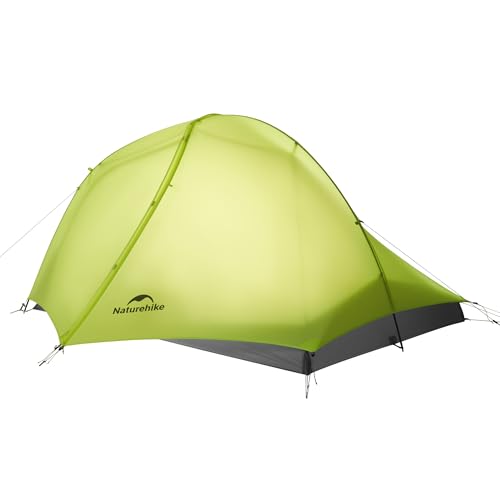
The second thing to sort out is whether a two-person tent holds two people. Two listings here say one person in their own descriptions while carrying two in the title, and the interior measurements settle the argument better than the name does.
At a glance
| Tent | Standout feature | Price tier | Link |
|---|---|---|---|
| Night Cat ZP-10 | Cheapest here; real that it fits one | Budget | |
| Night Cat 2-Person | Welded floor and seam-taped construction | Budget | |
| Clostnature | PU 5000 coating; the most waterproof here | Budget | |
| Forceatt | Best seller here; two doors, two vestibules | Budget | |
| Naturehike Mongar | Over 30 square feet of sleeping area | Mid-range | |
| Kelty Grand Mesa | Freestanding; pitch it then move it | Premium | |
| Naturehike Star Trail | 2.76 pounds; half the weight of the rest | Premium | |
How to choose a 2-person backpacking tent
Nylon is why the light one is light
Naturehike’s Star Trail uses 10D nylon for the fly and 20D for the floor, and weighs 2.76 pounds. Everything else here is polyester: Naturehike’s own Mongar uses 210T, Kelty uses 68D. Nylon is stronger for its weight, which is why the ultralight world runs on it, and it costs more and stretches when wet. That single material choice explains the entire weight table on this page. When you are comparing a 2.76 pound tent against a 5.2 pound one, you are comparing two different fabrics, not two levels of effort.
The lightest tent has the lowest waterproof rating, and that is physics
Here is the trade nobody puts on the front of the box. Clostnature coats its polyester to PU 5000, the highest figure here. Forceatt runs PU3000 to PU5000. The Naturehike Mongar is 3000mm. The featherweight Star Trail is PU1500mm and a plus sign, the lowest on this page. That is not corner-cutting; thinner fabric holds a shorter column of water, and every gram saved comes off the coating as well as the cloth. Three thousand millimeters is comfortably enough for real rain. Fifteen hundred is enough for most of it, and you will know when it is not.
Check the interior width before you believe the name
Night Cat’s cheapest tent is titled for one to two persons and then says, in its own features, that it fits one person perfectly, with an interior of 7.0 by 3.8 feet. Three foot ten is not two adults. Its two-person model gives 6.8 by 4.6 feet. Clostnature quotes 7 foot 3 by 4 foot 11, and Naturehike’s Mongar quotes over 30 square feet of sleeping area, which is the most useful way anyone here expresses it. Read the interior figure, not the number in the title.
Aluminum poles or fiberglass
This is the quality tell that survives every marketing word. Forceatt uses 7001 series aluminum, and Clostnature, Naturehike and Kelty all use aluminum too, with Kelty specifying compact folding pressfit poles. Night Cat uses fiberglass, upgraded and covered though it is. Fiberglass is heavier for the same strength and it splinters rather than bends when a gust overloads it, which is a problem you discover at the worst moment. It is also much cheaper, which is most of why that tent costs what it does.
Freestanding is worth more than it sounds
A freestanding tent stands up without being pegged, and Kelty explains exactly why that matters: you pitch it, then pick it up and move it to find the flat spot you did not notice first time. On hard ground, rock slabs or a wooden platform where pegs will not go, it is the difference between camping and not. Clostnature and the Naturehike Mongar are freestanding on two aluminum poles, and the Mongar’s Y frame is simple enough for one person to work out in the dark. Kelty’s Quick Corners hold the poles while you do it.
Two doors is the feature couples notice
One door means somebody climbs over somebody at three in the morning. Two doors with two vestibules means each person has their own way out and their own place for wet boots, and that is the difference between a shelter and a shelter you both still like at the end of the week. Forceatt and both Night Cat tents give two D-shaped doors and two vestibules. It costs weight, which is precisely why the ultralight tents are quieter about it.
Night Cat ZP-10
The cheapest tent here by a wide margin, and real in a way the title is not: Night Cat says in its own features that this fits one person perfectly, with an interior of 7.0 by 3.8 feet. Believe the features. As a solo shelter at 4.4 pounds, packing to 16.5 by 4.7 by 4.7 inches, it is a genuinely good deal, with PU 3000mm rainproof polyester and every seam and stitch sealed. The poles are fiberglass rather than aluminum, upgraded and fully covered to protect your hands, which is a fair description of a cheaper material handled thoughtfully.
Pros:
- Cheapest tent on this page by a distance
- Says plainly it fits one person, and publishes the interior
- 4.4 pounds; packs to 16.5 by 4.7 by 4.7 inches
- PU 3000mm polyester with every seam sealed
Cons:
- Fiberglass poles; heavier, and they splinter rather than bend
- 3.8 feet wide inside; not two adults
- Heavier than the ultralight tent that sleeps two
Best for: one person, one weekend, the least money possible.
Night Cat 2-Person
The one Night Cat actually built for two, at 6.8 by 4.6 by 3.6 feet inside, which is nearly a foot wider than its cheaper stablemate and the difference between two people and one. The waterproofing is described properly rather than as a number: a full-coverage rainfly, a welded waterproof floor and seam-taped construction, which are the three places water actually gets in. Two D-shaped doors with snag-free zips mean nobody climbs over anybody, and there is interior storage. Night Cat designs it for solo setup, which matters when you arrive at dusk alone.
Pros:
- 6.8 by 4.6 feet inside; genuinely two people
- Welded floor, full-coverage fly and seam-taped construction
- Two D-shaped doors with snag-free zips
- Designed to be pitched by one person
Cons:
- No weight published, on a tent sold as lightweight
- No waterproof rating or pole material given
- Sells modestly
Best for: two people and a small budget, if the weight does not matter.
Clostnature
The most waterproof tent here and one of the lighter polyester ones, which is a rare pairing. The fly, groundsheet and bathtub floor all carry a PU 5000 coating, the highest figure on this page, and it still weighs 5.2 pounds. Inside it is 7 foot 3 by 4 foot 11 by 3 foot 10, published properly, which is real room for two. It is freestanding on two aluminum poles, so it pitches fast and can be lifted and moved once you spot the flatter ground. Entire mesh interior walls handle condensation, which is what actually makes a tent unpleasant.
Pros:
- PU 5000 coating on fly, groundsheet and bathtub floor
- 5.2 pounds; the lightest polyester tent here
- Freestanding on two aluminum poles
- Full mesh interior walls; publishes exact dimensions
Cons:
- Nearly double the weight of the nylon ultralight here
- Full mesh walls are cold in shoulder seasons
- No vestibule detail published
Best for: two people in real rain, without paying ultralight prices.
Forceatt
The best-selling tent here, and it wins on liveability rather than weight. Two D-shaped doors and two vestibules mean two people can each get out of their own side and leave wet boots somewhere that is not the bedroom, which is the single most appreciated feature in a two-person tent. Waterproofing is tested to 3000mm with a welded floor, the poles are 7001 series aluminum, and it pitches in about three minutes. A large mesh window and two ceiling vents handle the condensation. It is 5.5 pounds, the heaviest thing on this page.
Pros:
- The best-selling tent here
- Two doors and two vestibules; nobody climbs over anybody
- 7001 series aluminum poles; 3000mm tested waterproofing
- Welded floor; large mesh window and two ceiling vents
Cons:
- 5.5 pounds; the heaviest tent on this page
- Double the weight of the ultralight option
- No interior dimensions published
Best for: two people who want two doors and do not count grams.
Naturehike Mongar
The one that describes its space the way you actually experience it: over 30 square feet of sleeping area, at 82.7 by 53.2 by 41.3 inches. That is a more useful sentence than any dimension list, and 53 inches of width is genuinely two adults. It is a double-layer tent, so the inner is B3 mesh and the fly is separate 210T polyester at 3000mm, which handles condensation properly rather than dripping on you. The Y frame is simple enough that a first-timer can pitch it alone. Five point three pounds for the whole set including the groundsheet.
Pros:
- Over 30 square feet of sleeping area; 53 inches wide
- Double layer; the inner mesh handles condensation properly
- 5.3 pounds for the complete set including groundsheet
- Y frame; one person can pitch it first time
Cons:
- 3000mm, against Clostnature’s 5000
- Twice the weight of Naturehike’s own ultralight tent
- Costs more than the roomier-rated budget tents
Best for: two people who want to know exactly how much floor they get.
Kelty Grand Mesa
The one built by people who have pitched tents in the dark. It is freestanding, and Kelty spells out why that matters rather than assuming you know: pitch it, then pick it up and move it around until you find the spot. Quick Corners hold the poles in place while you work, and the clips and fly attachments are color coded, so the job is obvious rather than a puzzle. The poles are compact folding lightweight aluminum pressfit; the fabric is weather-resistant 68D polyester, heavier than the ultralight nylons and considerably tougher. EZ-Zip vestibules finish it.
Pros:
- Freestanding, and explains why that is useful
- Quick Corners and color-coded clips; obvious to pitch
- Compact folding aluminum pressfit poles
- 68D polyester; tougher than the ultralight fabrics
Cons:
- No weight or waterproof rating published
- 68D is a heavy fabric by backpacking standards
- Expensive, and sells poorly for a known name
Best for: pitching easily on ground you have not scouted.
Naturehike Star Trail
The only tent here that answers the question the title asks. Two point seven six pounds for the two-person version, which is less than half what most of this page weighs, and 2.3 pounds if you take the solo model. The reason is the fabric: 10D nylon outer and a 20D nylon floor and footprint, where everything else is polyester two to seven times thicker. Full-coverage mesh inside with elevated clearance keeps the air moving. Read the waterproofing plainly, because Naturehike prints it: PU1500mm and a plus, the lowest rating on this page, which is what saving that much weight costs.
Pros:
- 2.76 pounds; less than half the weight of most of this page
- 10D nylon outer with a 20D nylon floor and footprint
- Full mesh inner with elevated clearance for airflow
- Packs down small enough for a tight campsite
Cons:
- PU1500mm; the lowest waterproof rating here
- The most expensive tent on this page
- 10D nylon needs care; there is not much fabric there
Best for: distance, where every pound gets carried up every hill.
The verdict
Forceatt outsells everything here, and it is also the heaviest tent on the page. That is the plain shape of this category: most people buy liveability and call it backpacking. Decide which you are doing before you choose.
Best overall: Clostnature. The best-balanced tent here and one of the cheapest. It carries a PU 5000 coating on the fly, groundsheet and bathtub floor, which is the highest waterproof figure on this page, and still weighs 5.2 pounds, the lightest of the polyester tents. It is freestanding on two aluminum poles so you can pitch it and then move it, the interior is published at 7 foot 3 by 4 foot 11, and the mesh walls deal with condensation.
Best value: Night Cat ZP-10. The cheapest thing here by a distance, and it tells you the truth in its own features: it fits one person perfectly, at 7.0 by 3.8 feet. As a solo tent at 4.4 pounds with PU 3000mm polyester and sealed seams, that is a lot of shelter for very little. The poles are fiberglass, which is heavier and splinters rather than bends, and that is what the price bought.
Best premium: Naturehike Star Trail. The only tent here that is actually light: 2.76 pounds for two, because it is 10D nylon where the rest are polyester. If you walk far, that is the tent. Understand what it costs you, and Naturehike prints it plainly: PU1500mm, the lowest waterproof rating on this page, because a thinner fabric holds a shorter column of water. That is the ultralight bargain, stated plainly.
FAQ
Why is one tent half the weight of the others?
Fabric. The Star Trail uses 10D nylon; everything else here is polyester, from Naturehike’s own 210T to Kelty’s 68D. Nylon is stronger for its weight, which is what the ultralight world runs on, and it costs more. That one choice explains the whole weight table.
Is 1500mm waterproof enough?
For most rain, yes, and it is the lowest figure here. Clostnature’s PU 5000 is the highest, and the Mongar and Forceatt sit at 3000mm, which is comfortably enough for sustained rain. Thinner fabric holds less water column, so the lightest tent has the lowest rating. That is physics, not corner-cutting.
Do two-person tents fit two people?
Read the interior width, not the title. Night Cat’s cheapest says in its own features that it fits one person, at 3.8 feet wide. Its two-person model is 4.6 feet, Clostnature is 4 foot 11, and the Mongar quotes over 30 square feet, which is the clearest figure anyone here gives.
Aluminum or fiberglass poles?
Aluminum, if you can. It is lighter for the same strength and it bends under a gust rather than splintering. Forceatt uses 7001 series, and Clostnature, Naturehike and Kelty all use aluminum. Night Cat’s cheapest uses fiberglass, and that is much of why it costs what it does.
Does freestanding matter?
On hard ground, rock or a platform where pegs will not go, it is the difference between camping and not. Kelty puts it well: pitch it, then move it around to find the spot. Clostnature and the Mongar are freestanding too, both on two aluminum poles.
This article may contain affiliate links; see our Affiliate Disclosure.