A bird standing on the same smooth dowel every hour of its life is gripping at exactly the same angle, on exactly the same spots, for years. Feet are not built for that, and the fix costs less than a bag of pellets: give the cage a range of diameters, textures, and shapes to stand on.

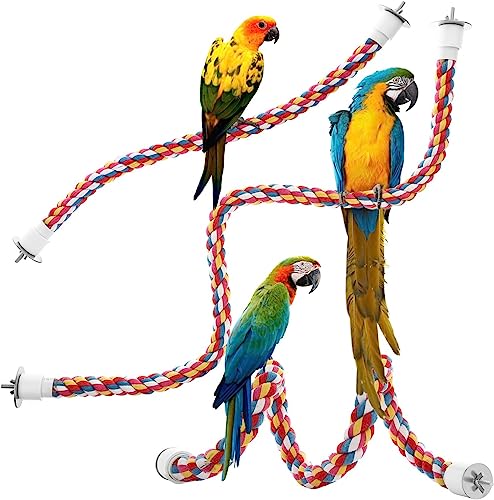


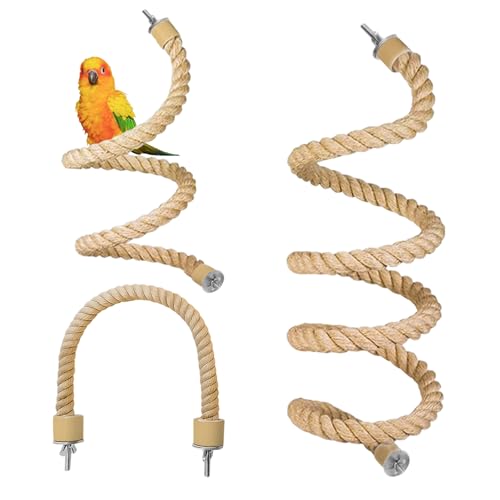
The perches compared here fall into two useful families: bendable rope perches that can be shaped into curves, loops, and climbs, and natural wood sets that bring irregular branches and chewable surfaces into the cage. A good setup usually mixes both, because they solve different problems. Sizing to the bird matters more than any single feature.
At a glance
| Product | Standout feature | Price tier | Link |
|---|---|---|---|
| JW Pet Comfy Perch (Medium) | Bendable cotton rope, rounded support, screw-off mounts | Mid-range | |
| Jusney Bird Rope Perch | Long run of rope for loops and curves; big-parrot sizing | Budget | |
| Jackrofe Cotton Rope Perch | Small-bird sizing, secure metal nut mounts | Budget | |
| Bissap 5-Piece Perch Stand Set | Grapevine and solid wood, five pieces plus a platform | Premium | |
| DINTSTYLE 3-Piece Jute Rope Set | Three lengths in one set, hemp over steel wire | Mid-range | |
How to choose bird perches
Variety is the whole point
A single-diameter dowel loads the same tendons and the same patches of skin every time a bird sits down. Vary the diameter and the texture and the foot has to grip differently, which keeps circulation moving and spreads pressure around. That is why a mixed cage, one rope run, one irregular branch, one flat platform, beats any single perfect perch. It is also why sets and multi-packs tend to be better value than buying one item at a time.
Rope or wood
Rope bends. That is its advantage and the reason a length of it can become a curve across a corner, an arch over a bowl, or a diagonal climb. It gives underfoot, which suits older birds and sore feet, and the give is what makes it comfortable for long sitting. The cost is maintenance: rope frays, and frayed rope is a genuine hazard.
Wood does not bend, but it does everything rope cannot. Natural branches are irregular, so every step is a slightly different grip. Wood can be chewed, which matters, because a parrot that is not chewing something is usually chewing something you did not want it to. Wood also wears nails and beaks down against a rough surface.
Most cages want both. Rope for the comfortable long perches, wood for the chewing and the foot exercise.
Size the perch to the bird, not the cage
This is the most common mistake. A rope thick enough for a macaw is a log to a budgie, and a perch sized for a small conure will not support a cockatoo. The maker’s bird list is the fastest guide: products here name their intended species directly, from Senegal parrots and green-cheeked conures at the small end through African grays, amazons, and macaws at the large end. Match that list before anything else. A bird should be able to wrap its foot comfortably without its toes meeting all the way around, and without the perch being so wide the foot lies flat.
Mounting hardware and cage fit
Almost every perch here attaches with a bolt and a nut through the cage bars, which is the arrangement to want. Check two things: that the hardware is on the outside where a beak cannot work at it, and that the fit is tight enough that the perch does not spin under weight. Rope perches with screw-off attachments at both ends let you move them without tools once you find a shape the bird likes. Wing nuts and washers are easier to tighten by hand than a plain nut.
Safety and upkeep
Rope is a consumable, not furniture. Cotton and hemp both fray with use, and loose threads catch toes and, at worst, wrap around them. Trim loose strands as they appear and replace a perch that has gone fuzzy rather than nursing it along. Birds that shred rope enthusiastically need it checked weekly. With wood, watch for splitting and for chewing that has thinned a branch to the point of snapping. Natural wood also varies piece to piece, so the item that arrives will not match the photo exactly, which is a feature rather than a defect.
Where the cage the perch goes
Height matters. Birds want a high perch to sleep on and will fight over it if there is only one. Placement over food and water bowls promises fouled bowls, so keep perches to the side of them. Leave the middle of the cage open enough for a wing stretch, and put the roughest, most chewable wood where the bird already likes to sit.
JW Pet Comfy Perch
The best seller in this group is the rope perch most people picture. A flexible core lets it bend into whatever shape the cage needs, and its rounded profile is designed to support the foot rather than press a line across it, which is why joint comfort is the pitch. The medium version runs thirty-two inches and is rated for larger birds up to macaws. Screw-off attachments at each end mean it mounts on any side of the cage and moves whenever the bird gets bored, which is the point: changing the shape of an existing perch renews the cage for free.
- Pros: Bends into loops, curves, and climbs for varied perching surfaces; rounded support aimed at foot and joint comfort; screw-off attachments allow mounting on any cage side; well-established design from a long-running pet brand; sized for larger birds including macaws.
- Cons: Cotton rope frays and needs regular checking; one perch rather than a set; too large for budgies and small conures at this size; not chewable in the way wood is.
Best for: Larger parrots needing a comfortable, reshapeable main perch.
Jusney Bird Rope Perch
Length is the argument here. At forty-eight inches, this is enough rope to run a full diagonal, double back, and still leave a loop, so a single product can rebuild the interior of a large cage. Soft multi-colored cotton is dyed with non-toxic food dyes and wrapped around flexible metal, so it holds whatever shape you bend it into and gives secure footing. Connectors fit any cage size. Jusney is direct about the real benefit: change the location or the shape regularly and you renew the bird’s surroundings without buying anything new, which relieves cage stress and boredom and gets muscles working.
- Pros: Long enough to create loops, curves, and multiple shapes from one perch; soft cotton over flexible metal for grip and shape retention; food-dye coloring; connectors fit any cage size; encourages exercise and relieves boredom; sized for conures, quakers, African grays, amazons, macaws, and cockatoos; inexpensive for the length.
- Cons: Cotton frays, particularly with dedicated chewers; a single rope, so no wood or texture variety; too thick for small birds; needs re-bending as the bird works it loose.
Best for: Large cages that need a lot of climbing rope for very little outlay.
Jackrofe Bendable Cotton Rope Perch
The small-bird answer, and the cheapest thing in this comparison. Thick cotton thread wraps an internal metal wire, so it bends and holds like the bigger ropes but at a diameter that suits Senegal parrots, sun conures, green-cheeked conures, and mini macaws. Bright colors are doing a job rather than decorating: they pull a bird’s attention to a new fixture it might otherwise ignore. Installation is a matter of rotating the nuts at each end, and Jackrofe specifically calls out the metal washers as unlikely to work loose, which is the failure that matters when a perch is holding a bird.
- Pros: Correctly sized for small parrots, where most rope perches are not; lowest price here, so a cage can have several; bends to fit any cage shape; sturdy metal washers and nut mounting; installs and removes without tools; colors attract interest.
- Cons: Too small for African grays, amazons, or macaws; cotton frays and wants weekly checks; a single rope with no wood variety; shorter than the larger rope perches.
Best for: Conures, small parrots, and any cage where the standard rope perches are simply too thick.
Bissap 5-Piece Large Bird Perch Stand Set
This is the set that delivers variety in one purchase. Five pieces cover genuinely different jobs: two Y-shaped natural grapevines, two solid wood stands wrapped with sisal rope, and a flat wooden platform. The grapevine is the interesting part, because its uneven surface forces a bird to grip differently at every step, which is exactly the foot exercise a smooth dowel never provides. It is also chewable, and Bissap leans on that: chewing occupies a bird and takes the edge off boredom and aggression. Everything is natural grapevine and solid wood with no paint or chemical smell, and each piece bolts on with built-in bolts and wing nuts, inside the cage or out.
- Pros: Five pieces spanning grapevine, solid wood with sisal rope, and a flat platform; uneven natural surfaces give real foot exercise; chewable, meeting a natural need and reducing boredom; no paint or chemical odor; wing-nut mounting needs no tools; can be mounted inside or outside the cage for extra landing space; suits macaws, African grays, cockatoos, and amazons.
- Cons: Priciest option here; longest piece is under ten inches, so these are additions rather than a main span; natural wood varies from the photos; sized for medium and large birds only; chewers will eventually consume them.
Best for: Medium to large parrots whose cage has rope but no texture, chewing, or platform.
DINTSTYLE 3-Piece Jute Rope Perch Set
Three ropes at fifteen, twenty-three, and forty-one inches, which is the smartest packaging in this group. The short one becomes a corner bridge, the long one a full climb, and the middle one whatever is left over, so a cage gets a layered setup rather than one lonely rope. Natural hemp is tightly wound over a steel wire core, giving firm support that still bends and holds a spiral, and spiral rope is reliably a favorite because balancing on it is a small puzzle. Pine wood and stainless steel mounts anchor them, with M5 screws and gaskets included. DINTSTYLE notes a faint scent on unboxing from packaging time, which airs off.
- Pros: Three lengths in one set for a layered cage without multiple orders; hemp over steel wire is firm yet bendable; spiral shapes build coordination and balance; stainless steel mounts with screws and gaskets supplied; long-and-short mix uses cage space without crowding; mounts inside or outside.
- Cons: Jute and hemp fray like any rope and need checking; a faint packaging scent at first; no chewable wood beyond the mounts; sizing suits small to mid-sized birds better than the largest parrots.
Best for: Building a full climbing layout in one go, especially for parakeets, lovebirds, and mid-sized parrots.
Verdict
Best Overall: JW Pet Comfy Perch. It is the best seller of this group and the safest first purchase for a larger bird. The rounded profile is built around foot comfort, it bends to any shape the cage allows, and the screw-off ends mean one perch can be rearranged whenever the bird needs something new. It is the perch most likely to become the spot your bird actually chooses.
Best Value: Jusney Bird Rope Perch. Four feet of shapeable cotton rope for less than most single perches, with a species list running from conures to cockatoos. One of these can restructure a large cage on its own, and re-bending it costs nothing at all.
Best Premium: Bissap 5-Piece Perch Stand Set. The only pick here that brings irregular grapevine, solid wood, sisal, and a flat platform in one box. If a cage is all rope and smooth dowels, this is the set that adds the textures and the chewing a bird’s feet and beak are asking for.
Frequently asked questions
What about calcium or mineral perches?
They are a separate category from the rope and wood perches compared here, and worth knowing about. Calcium and cement-style perches are rough, hard surfaces sold for nail wear and mineral intake. The usual advice is to use them sparingly: one short perch, never the sleeping perch and never the main one, because a hard abrasive surface under a bird all night causes the sore feet it was meant to avoid. Wood and rope should still make up most of the cage.
How many perches does a cage need?
Enough for variety, few enough to fly or flap between. Three is a sensible working number for most cages: a high one for sleeping, a mid one near activity, and a different-textured one somewhere else. Keep them clear of food and water bowls, and leave open space across the middle.
Is rope safe for birds that chew?
With supervision and upkeep, yes; rope is standard equipment in most cages. The risk is fraying, not the material. Loose threads catch toes, so trim them as they appear and retire a perch once it goes fuzzy. Dedicated shredders should get wood to chew so the rope is not the only target.
Do these fit any cage?
The rope perches here mount with nuts or connectors through the bars and are described as fitting any cage size, so bar spacing is rarely the obstacle. The wood sets bolt on with wing nuts and can go inside or outside. The genuine constraint is length: check the stated size against your cage before ordering, since a forty-eight-inch rope in a small cage is a tangle rather than a climb.
Rope or wood if I can only buy one?
Rope, if the cage has only smooth dowels and the bird is older or shows any foot soreness, because the give is immediate relief. Wood, if the bird is chewing the cage, the furniture, or itself, because it needs something legitimate to destroy. Both, before long.
This article may contain affiliate links; see our Affiliate Disclosure.