One listing on this page opens its feature list by telling you it used ChatGPT to analyze its own reviews, then summarizes what customers said. That is the entire specification: no dimensions, no material, no weight limit, just a machine’s precis of other people’s opinions. It is a striking thing to lead with, and it is a useful reminder to read what these things actually say about themselves.


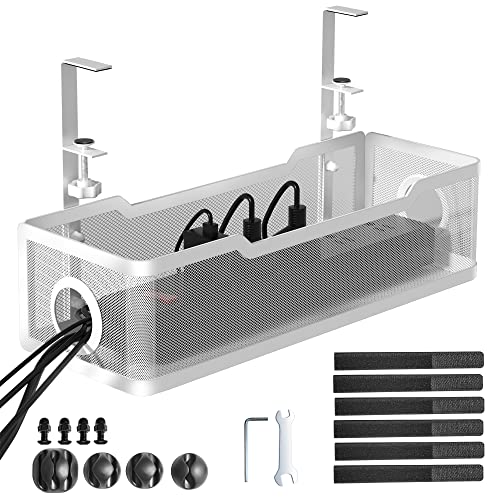
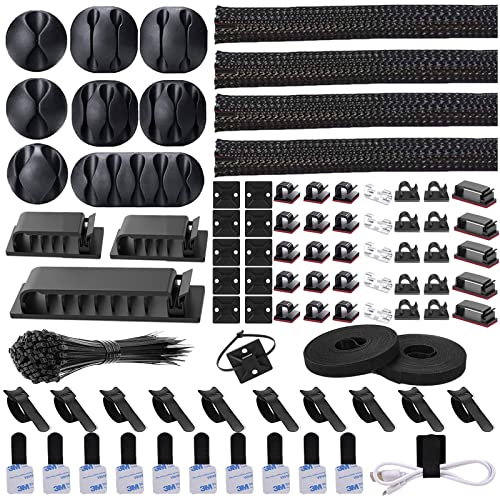


Three different products share this search. There are trays that clamp under the desk and hold the power strip. There are channels and straps that route cables along a surface. And there are kits of sleeves, clips and ties for tidying the cables themselves. They solve different halves of the same mess.
At a glance
| Product | Standout feature | Price tier | Link |
|---|---|---|---|
| fansto Straps | Cheapest here; 15 cables per strap | Budget | |
| Litwaro Tray | Best seller here; publishes a 15 lb limit | Budget | |
| Cinati Tray | Fully welded and powder coated | Budget | |
| N NOROCME Kit | 192 pieces; sleeves, clips and ties | Budget | |
| YECAYE J Channels | Six channels; removes without damage | Budget | |
| Scandinavian Hub Tray | Adhesive, no clamp; specs are AI review notes | Mid-range | |
| Univivi 36-Inch Tray | Longest here; full dimensions published | Premium | |
How to choose cable management
Measure your desk before you buy a clamp
This is the returns problem and not one tray here answers it. A no-drill tray works by clamping onto the edge of your desktop, so the thickness of that desktop decides whether it fits at all. Trays in this category typically quote a range of roughly 0.4 to 2 inches, and some stretch to 2.4, and none of the clamp trays on this page publishes theirs at all. A chunky solid-wood top or a thick laminate with a bullnose edge will defeat a clamp designed for a 25mm office panel. Get a tape measure on the edge first, because a clamp that will not close is a tray you cannot use at any price.
Only one tray tells you what it will hold
Think about what actually goes in one of these: a power strip, two or three chargers with bricks on them, a USB hub, maybe a laptop dock. That is not weightless, and it is hanging off the underside of your desk by a clamp. Litwaro is the only brand here publishing a figure, about 15 lbs on high-quality carbon steel, which is a real number you can plan against. Everybody else says sturdy. On something suspended above your knees, a stated capacity is worth more than an adjective.
Clamp or adhesive, and adhesive has a season
The clamp trays here hang on the desk edge with rubber pads to protect the finish, and they come off when you move. The adhesive ones stick underneath: Scandinavian Hub is self-adhesive with no screws, fansto uses upgraded acrylic pads, and YECAYE pre-applies tape to its J channels. Adhesive is neater and works on a desk with no usable edge. It also relies on a bond to a surface that gets warm in summer, holding weight, downwards, forever. For a power strip, a clamp is the safer bet; for a few cables, tape is fine.
Metal or fabric, and why the fabric ones mention fire
The metal trays here are carbon steel: Litwaro names it, Cinati adds that its tray is fully welded and powder coated, which is what stops a mesh basket flexing itself apart. The fabric ones are Oxford cloth, and both of them volunteer the same detail: flame retardant, with Univivi specifying 600D. That is not a coincidence. Fabric wrapped around a power strip and a pile of chargers invites the question, and the brands using it have answered it up front. Metal does not need to.
A tray hides the strip; channels hide the run
These are not competing purchases. A tray holds the power strip and the bricks in a basket under the desk, and does nothing about the cables crossing the floor to your monitor. YECAYE’s J channels stick along a surface and swallow the run itself, six of them, and come off without damaging the finish. fansto’s straps hold up to 15 cables each with hook-and-loop fasteners and a segmented design you can adjust without pulling the whole thing down. Most tidy desks use a tray and one of the others.
Kits solve the cables, not the clutter
N NOROCME’s 192-piece kit is a different animal: four cable sleeves at 20 inches each, twenty reusable ties, thirty-five clips and eleven holders, in six clip designs made from Polyamide66. That bundles a dozen individual cables into one tidy snake and pins it where you want it. It will not hold a power strip and it is not meant to. If your problem is six cables sprawling across a desktop rather than a mess of plugs underneath it, this is the product and a tray is not.
fansto Straps
The cheapest thing here and the most adaptable, because it has no fixed shape to fight your desk. Each extended strap holds up to 15 cables on reinforced hook-and-loop fasteners, and the segmented design means you can adjust one section without dismantling the lot, which matters when you add a cable in three months and do not want to start again. Twenty pairs of adhesive pads mount it, upgraded acrylic that fansto says sticks to most smooth surfaces including wood and glass. It suits narrow spaces where a tray simply will not go.
Pros:
- Cheapest option here
- Up to 15 cables per strap; adjust one section at a time
- Fits narrow spaces where a tray cannot
- Acrylic adhesive; sticks to wood, glass and more
Cons:
- Straps, not a tray; will not hold a power strip
- Adhesive under a warm desk, holding weight, indefinitely
- No weight capacity published
Best for: a tight space, and cables rather than plugs.
Litwaro Tray
The best-selling product here and the only one that answers the question everyone should ask: how much will it hold? About 15 lbs, on high-quality carbon steel, which is enough for a strip, a couple of bricks and a hub with margin left. Everyone else says sturdy. It clamps on with no drilling in about three minutes, the side clips slide on rather than needing tools, and built-in soft rubber pads sit between the clamp and your desktop so the finish survives. The mesh keeps everything ventilated and reachable. Cheap, popular and specified.
Pros:
- The best-selling product here
- The only tray publishing a weight limit: about 15 lbs
- Carbon steel; no drilling, fitted in about three minutes
- Rubber pads protect the desk finish
Cons:
- No length or desk thickness range published
- Clamp needs a usable desk edge
- Tray only; nothing for the cable run across the floor
Best for: most desks, with a number you can actually plan against.
Cinati Tray
The best-built cheap tray here, and the construction detail is the reason: fully welded and powder coated, which is what stops a wire basket from slowly racking itself into a parallelogram under load. A tray that is spot-welded at the corners flexes; one that is welded throughout does not. It hangs directly on the desk with no drilling and comes with anti-scratch mats between the clip and the desktop, which Cinati is right to call out as the thing that ruins a good desk. It comes in white, which most of this category forgets is an option.
Pros:
- Fully welded and powder coated; will not rack under load
- Anti-scratch mats between clip and desktop
- No drilling; hangs directly on the desk
- White, which suits a desk that is not black
Cons:
- No weight limit, length or desk thickness published
- Clamp needs a usable edge
- Sells behind the cheaper Litwaro
Best for: a tray that stays square, on a desk you care about.
N NOROCME Kit
A different product to everything else here and the right one for a different problem. It is 192 pieces: four split cable sleeves at 20 inches, twenty reusable ties, thirty-five clips and eleven holders, across six clip designs in Polyamide66. The sleeves are the interesting part, because they are split rather than tubular, so you lay cables in rather than threading them through and they close around the bundle by themselves. That turns eight separate cables into one snake. It will not hold a power strip and does not claim to.
Pros:
- 192 pieces; sleeves, ties, clips and holders together
- Split sleeves; lay cables in rather than threading through
- Six clip designs in named Polyamide66
- The second best-selling product here
Cons:
- Not a tray; holds no power strip or bricks
- Sleeves are 20 inches; a long run needs several
- Solves the cables, not the clutter underneath
Best for: turning eight cables into one, on the desktop.
YECAYE J Channels
Six J-shaped channels that stick under a desk or along a wall and swallow the cable run itself. The J profile is the point: it is open along one side, so you drop cables in and take them out again without unthreading anything, where a closed raceway means dismantling the run to add a monitor cable. Each comes with pre-applied tape and YECAYE promises damage-free removal, which matters on a rented desk or a finish you like. Six pieces cover a decent length and go round a corner. They hold cables, not hardware.
Pros:
- Open J profile; drop cables in without unthreading
- Six channels; covers a real run and turns corners
- Pre-applied tape with damage-free removal
- Works under a desk or along a wall
Cons:
- Channels, not a tray; no power strip goes in one
- Adhesive only; no clamp option
- No dimensions published
Best for: the cable run, which a tray does nothing about.
Scandinavian Hub Tray
Worth reading before buying, because the listing is unusual. Scandinavian Hub opens its features by stating that it used ChatGPT to analyze its reviews and summarize the main benefits customers reported, and what follows is exactly that: users found the desk looked cleaner, users found it easy to install, users found it spacious. Those are review summaries, not specifications. There is no length, no material, no weight limit and no desk thickness anywhere. What is stated is the mounting: self-adhesive, no screws and no drilling, which suits a desk with no clampable edge.
Pros:
- Self-adhesive; works on a desk with no usable edge
- No screws and no drilling at all
- Openly explains where its bullet points came from
- Described as spacious enough for a strip and cables
Cons:
- The features are AI-summarized reviews, not specifications
- No length, material, weight limit or desk thickness published
- Adhesive holding a power strip, under a warm desk, indefinitely
Best for: a desk with no edge to clamp, if you accept the unknowns.
Univivi 36-Inch Tray
The biggest tray here and the best documented: 36 inches long by 5.5 wide by 5.5 deep, published properly, which on a wide desk is the difference between one tray and a compromise. It offers both mounting methods, clamping on with no drilling or screwing down permanently, so it fits a rented desk or a fixed one. The fabric is 600D Oxford, flame retardant, which is the right thing to specify on a bag holding a power strip, and the tray unfolds so you can add or remove things without working blind above your knees.
Pros:
- 36 by 5.5 by 5.5 inches; published in full
- The longest tray here; covers a wide desk in one
- Clamp or screw mounting; suits rented or owned
- 600D flame-retardant Oxford; unfolds for access
Cons:
- The most expensive item here
- No weight limit or desk thickness range published
- No sales rank shown; fabric flexes where metal does not
Best for: a wide desk, with the dimensions known before it arrives.
The verdict
Work out which of the three products you need. A tray holds the power strip. Channels and straps hide the run. A kit bundles the cables. Most tidy desks end up with two of the three, and they cost almost nothing together.
Best overall: Litwaro Tray. The best seller here and the only one that tells you what it will hold: about 15 lbs of carbon steel capacity, which is a strip, a couple of bricks and a hub with room spare, hanging over your knees. Everything else says sturdy. It clamps on in about three minutes with no drilling, and the rubber pads mean the desk survives the process. Measure your desk edge first, because that is the fit question nobody here answers.
Best value: fansto Straps. The cheapest thing here and the most forgiving, because it has no fixed shape to fit. Each strap takes up to 15 cables on reinforced hook-and-loop, and the segmented design lets you adjust one section when you add a cable rather than rebuilding the lot. It goes where a tray physically cannot. It will not hold a power strip, and it never says it will.
Best premium: Univivi 36-Inch Tray. The longest tray here and the only one publishing its full dimensions, 36 by 5.5 by 5.5 inches, which on a wide desk means one tray instead of a compromise. It mounts by clamp or by screw, so it suits a desk you rent and one you own, and the 600D Oxford is flame retardant, which is the right thing to say about a bag full of power strip.
FAQ
Will a no-drill tray fit my desk?
Depends on the thickness of your desktop, and no clamp tray here says. The usual range in this category is roughly 0.4 to 2 inches, stretching to 2.4 on some. A thick solid top or a bullnose edge defeats a clamp built for an office panel. Measure the edge before ordering.
How much weight can these hold?
Only Litwaro says: about 15 lbs on carbon steel. Everyone else says sturdy. A power strip, two chargers with bricks and a hub add up, and the whole lot is hanging above your knees, so a published figure is worth more than an adjective.
Clamp or adhesive?
Clamp for anything heavy. Adhesive is neater and works where there is no usable edge, and it is a bond to a surface that warms up in summer, holding weight, downwards, indefinitely. For a power strip, take the clamp. For a few cables, tape is fine.
Why do the fabric trays mention flame retardancy?
Because it is a fair question about cloth wrapped around a power strip, and both fabric trays here volunteer the answer up front, Univivi specifying 600D Oxford. The metal trays do not need to. It is a good sign when a brand raises the obvious objection itself.
Do I need a tray or a kit?
Different problems. A tray holds the plugs and bricks underneath. N NOROCME’s kit bundles loose cables into one sleeve with clips and ties. YECAYE’s J channels swallow the run along a surface. If your desktop is a nest and your underside is a heap, you want two of these.
This article may contain affiliate links; see our Affiliate Disclosure.