You can tell within one step through the door whether a nursery’s diaper pail is working. Nothing else in the room announces itself so clearly, and no amount of lavender spray argues with it.


Every pail here promises odor control, so the real decisions sit underneath that: whether it takes ordinary bin bags or proprietary refills, how the lid seals, and whether you can work it one-handed while holding a squirming baby. The refill question alone separates these products by more over two years than the purchase price does.
At a glance
| Product | Standout feature | Price tier | Link |
|---|---|---|---|
| Ubbi Steel Diaper Pail | Powder-coated steel, sliding lid, any standard bag | Mid-range | |
| Diaper Genie Complete | Foot pedal, Double Air-Tite clamps, carbon filter | Mid-range | |
| Momcozy Triple-Seal Pail | Tallest here, viewing window, standard bags | Premium | |
| Munchkin STEP (Arm & Hammer) | Self-sealing whether the lid is open or closed; baking soda puck | Mid-range | |
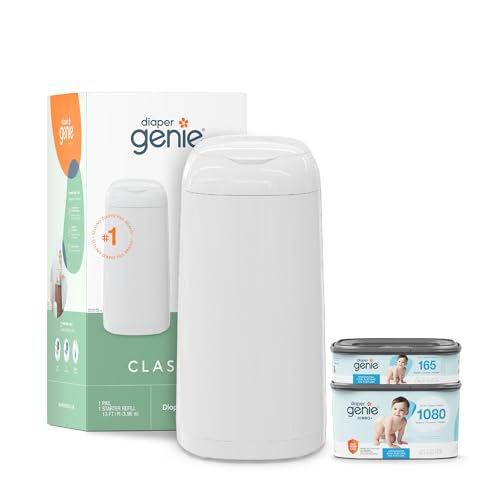
| Diaper Genie Classic Gift Set | Cheapest here; refills for up to 1,245 newborn diapers | Budget | |
How to choose a diaper pail
Refills or ordinary bin bags: the decision that costs money
This is the fork that matters, and it is worth being clear-eyed about. Refill systems use a continuous multi-layer film with odor-locking properties built into the plastic, plus antimicrobial finish on some. The film genuinely helps, and it is why these pails perform. The catch is that you buy that film, in that brand’s cassettes, for as long as you own the pail. Two or three years of nappies is a lot of cassettes.
The alternative is a pail engineered to seal well enough that a supermarket bin bag is sufficient. Ubbi and Momcozy both take standard bags. You save on refills from day one, and you are never stranded because the right cassette is out of stock. The tradeoff is that the seal now depends entirely on the pail’s lid and body rather than on clever plastic.
Neither approach is wrong. A rough rule: if you empty often and want the lowest running cost, take standard bags. If you want the longest possible stretch between emptying with the least smell escaping, the film systems earn their keep.
How the lid actually seals
Odor escapes at the moment of opening, so lid design is not cosmetic. A sliding lid moves across the opening instead of swinging up, which disturbs far less air and pushes far less smell out of the pail into the room. Clamp systems pinch the bag closed below the lid, so the contents are sealed even when the lid is open. Self-sealing designs go further and keep the seal regardless of lid position. A rotating or trapdoor mechanism drops the nappy through without opening the chamber to the room.
Look for a second layer as well. A carbon filter in the lid or a baking soda cartridge absorbs what escapes the seal, and both are replaceable consumables.
One hand is all you have
Assume one arm is holding a baby. That rules out anything needing two hands. Foot pedals are the most hygienic answer, since nothing gets touched and there is no bending. Push-button and one-handed lids work well and take up less floor space. A wide opening matters more than it sounds, because aiming a nappy through a small hole one-handed, in the dark, is how pails get missed entirely.
Capacity, height, and the reality of emptying
Quoted capacities are in newborn nappies, and newborn nappies are small. A pail holding fifty-five newborns holds far fewer toddler nappies, and the toddler ones are the ones you want sealed. Bigger is not automatically better: a full pail left for a week smells worse than a smaller one emptied every second day. Height decides comfort. A pail under twenty inches means bending at every change; the taller ones here, at twenty-seven inches and above, put the opening near hand height.
Material and cleaning
Steel does not absorb odor, and that is the argument for it. Plastic can hold smells over time, particularly once it is scratched, though modern pails are built to resist it and rinse out. Whatever the material, the pail will eventually need cleaning out, so consider whether it wipes down easily and whether it will rust. A childproof lock is worth having the moment your baby becomes a toddler with a curiosity about bins.
Ubbi Steel Diaper Pail
The best seller of this group takes the opposite approach to everyone else: solve the problem with the pail, not the bag. The body is powder-coated steel with a rubber seal, and steel does not soak up smells the way plastic can. The lid slides rather than lifts, so opening it barely disturbs the air inside, which is the single cleverest detail in this comparison. Because the sealing is structural, any standard bin bag works, with no cassettes, refills, or inserts to buy, ever. It holds up to 55 newborn nappies, has a childproof lock, arrives assembled, and is sold in a range of colors meant to look like furniture rather than a bin.
- Pros: No proprietary refills, which removes the running cost entirely; powder-coated steel resists odor absorption and will not rust; sliding lid minimizes air disruption and escaping smell; rubber seal; childproof lock; nine awards and a long-standing registry favorite; no assembly; genuinely attractive in a nursery.
- Cons: Higher upfront price than the budget refill pails; at 19.5 inches it is the shortest here, so expect to bend; 55 newborn nappies is a modest capacity; no foot pedal, so it takes a hand; no carbon filter as a second line of defense.
Best for: Anyone who wants the lowest long-term cost and a pail that does not look like one.
Diaper Genie Complete
The fully-loaded version of the best-known name in the category, and the only pail here with a foot pedal. That pedal is the most hygienic way to open a bin: no touching, no bending, and both hands still free for the baby. Odor control is layered rather than singular, with Double Air-Tite clamps sealing the bag and a deodorizing carbon filter catching what gets past them. The refill bags carry a built-in antimicrobial intended to lock in odor and inhibit bacteria growing on the film itself. One refill is included and holds up to 270 newborn nappies, so the pail arrives ready to use, and the body cleans easily without rusting.
- Pros: Foot pedal gives genuine hands-free, no-bend operation; two independent odor layers in the clamps and the carbon filter; antimicrobial refill film limits bacteria as well as smell; a generous 270-nappy refill included; easy to clean, no rust; the most established brand in the category.
- Cons: Locked into buying Diaper Genie refills and carbon filters for the life of the pail; the pedal mechanism is one more thing that can fail; costs about the same as the refill-free Ubbi before a single cassette is bought.
Best for: Nurseries where hands-free hygiene outranks running costs.
Momcozy Diaper Pail with Triple-Seal Odor Control
The thinking pail. At 28.86 inches it is the tallest here by a clear margin, which means no bending at any change, and the opening is extra-wide for one-handed disposal in the dark. A patented triple-seal system with a rotating lid locks odor in as the nappy goes through. A transparent viewing window shows the fill level, so you stop discovering the pail is full at the worst possible moment. It takes standard household bin bags, so there is nothing proprietary to buy, and a childproof lock keeps toddlers out. One quirk deserves flagging: Momcozy states the lid should be left open after each use for the best odor lock, which is counterintuitive and worth knowing before you buy.
- Pros: Tallest pail here at 28.86 inches, so no bending; extra-wide opening suits one-handed use; patented triple-seal with a rotating lid; transparent window shows fill level at a glance; standard bin bags, no refills required; childproof lock; holds up to 60 newborn or 24 large nappies.
- Cons: The most expensive pail in this comparison; the maker advises leaving the lid open after use for best sealing, which will bother some people; matching refills and deodorizers are still being rolled out; the tall body needs floor space.
Best for: Taller parents, bad backs, and anyone who wants standard bags without giving up modern conveniences.
Munchkin STEP Diaper Pail
Munchkin’s claim is the strongest in the category, ranked number one in odor control, and the mechanism behind it is the interesting part. The patented self-sealing system keeps odors contained whether the lid is open or closed, which removes the moment of exposure that every other pail has to manage. Arm & Hammer supplies the second layer as a baking soda puck cartridge, an old and genuinely effective trick against nappy smell. It stands 27 inches high, arrives fully assembled, and accepts Arm & Hammer refill rings, Snap, Seal & Toss bags, Nursery Fresh rings, and some other rings, which is a wider refill choice than most systems allow. Munchkin plants a tree for every pail sold.
- Pros: Self-sealing regardless of lid position, closing the usual escape moment; baking soda puck adds a proven second layer; ranked first in odor control; 27 inches high, so little bending; compatible with several refill ring types rather than only one; fully assembled; a tree planted per pail.
- Cons: Still a refill system, with ongoing costs for rings and pucks; only a starter refill and one puck included; the step pedal adds a moving part; plastic rather than steel.
Best for: Parents who want the strongest sealing claim available and some choice of refill.
Diaper Genie Classic Gift Set
The value play, and a strong one. It is the cheapest pail here, and it ships with a starter refill holding up to 165 newborn nappies plus a Jumbo+ refill holding up to 1,080, which is a combined 1,245 nappies before you buy anything. For most families that is months of nothing to think about. The odor control pairs the multi-layer, odor-locking refill film with a Push-N-Lock clamp, and a push-button lid means one-handed disposal. The continuous-film system is the underrated part: bags are cut and tied at whatever length you want, so a light day does not waste a full bag.
- Pros: Lowest price here and comes with refills for up to 1,245 newborn nappies; continuous film cuts to any length, reducing waste; Push-N-Lock clamp plus odor-locking multi-layer film; one-handed push-button lid; compact, so it suits small nurseries; excellent value as a registry or shower gift.
- Cons: Proprietary refills once the generous starter supply runs out; holds only 55 newborn nappies at a time, so it needs emptying often; no foot pedal; no carbon filter, unlike the Complete model.
Best for: Small nurseries, second pails, and anyone wanting the least spent up front.
Verdict
Best Overall: Ubbi Steel Diaper Pail. The best seller of this group, and the one that holds up longest. Steel that will not absorb smells, a rubber seal, and a sliding lid that barely moves any air are a complete answer to the odor problem, and taking ordinary bin bags means the pail costs nothing to run after the day you buy it. Over two or three years of nappies, that is the cheapest pail here despite not being the cheapest to buy. Its two real compromises are height and capacity.
Best Value: Diaper Genie Classic Gift Set. Cheapest to buy, and it arrives with roughly 1,245 nappies’ worth of refills. The odor-locking film and Push-N-Lock clamp work, one-handed operation is fine, and the continuous film wastes nothing. Budget for cassettes later.
Best Premium: Momcozy Triple-Seal Pail. It costs the most, and it spends it sensibly: the tallest body here, a wide one-handed opening, a fill-level window, a triple seal, and standard bin bags rather than refills. If the Ubbi’s low height is the thing putting you off, this is the upgrade.
Two specific cases: pick the Diaper Genie Complete if a foot pedal matters most, and the Munchkin STEP if you want a seal that holds even with the lid open.
Frequently asked questions
Are special refill bags worth it?
They do work. The film is multi-layered with odor-locking barriers, and some carries an antimicrobial to slow bacteria. The question is cost: you buy them for as long as you use the pail, and that adds up over years. Pails built to seal with standard bags trade that ongoing cost for a slightly higher purchase price and a seal that depends on the lid. Both approaches keep a nursery fresh when emptied regularly.
How often should a diaper pail be emptied?
Every couple of days for most families, and more often in hot weather or once nappies get bigger. Quoted capacities are in newborn sizes, so real-world capacity falls sharply as your baby grows. No sealing system fully compensates for a pail left too long, and emptying frequently is the cheapest odor control available.
Do carbon filters and baking soda cartridges actually help?
Yes, as a second layer rather than a primary defense. Activated carbon adsorbs odor molecules that escape the seal, and baking soda neutralizes acidic smells; both are established, uncontroversial approaches. They do not rescue a pail that seals badly or one left full for a week, and both are consumables needing periodic replacement.
Will a plastic pail start to smell over time?
It can, particularly once the inside is scratched, which is the case for steel bodies like the Ubbi. That said, the plastic pails here are designed to be wiped or rinsed out and resist retaining odor, and a pail cleaned occasionally rarely becomes a problem. If a lingering smell with an empty pail would bother you, steel removes the worry.
Can I just use a regular bin with a lid?
You can, and plenty do, but you will notice the difference. Ordinary bins swing a lid up and pump air out of the bin and into the room every time. Diaper pails exist to attack exactly that moment, with sliding lids, clamps, trapdoors, or self-sealing chambers, and add filters for what escapes. A regular bin with frequent emptying works; a pail lets you empty less often.
This article may contain affiliate links; see our Affiliate Disclosure.