The best-selling product in this search is a guitar pedal. The second best-selling one only makes kick drums. Search for a standalone drum machine and the things that come back at the top are, in order, a pedal you stamp on, a box that produces one voice, and a couple of wooden crates you hit with your hands. The actual drum machines are further down, and the cheapest of them is the one that tells you the most.




Worth knowing before you start: several products under this search are cajons, which are wooden boxes you play by hand. They are a fine instrument and they are not a drum machine.
At a glance
| Machine | What it actually is | Price tier | Link |
|---|---|---|---|
| FLAMMA FF02 | Guitar pedal. 121 grooves, stereo I/O | Budget | |
| FLAMMA FC12 | Guitar pedal. The best seller, 48 grooves | Budget | |
| Korg Volca Kick | Kick drums only. Analog, built-in speaker | Mid-range | |
| Alesis SR-16 | A real drum machine. 233 sounds, 12 pads | Mid-range | |
| Arturia DrumBrute Impact | Analog drum machine. Three bullets total | Premium | |
| Novation Circuit Rhythm | Sampler. Battery powered, screenless | Premium | |
| Behringer LmDrum | Hybrid sampler. 109 sounds, 64 steps | Premium | |
How to choose
A pedal is not a machine, and that is fine
The two pedals at the top of this search play preset grooves so a guitarist can practice to a beat. You stamp, it plays, you jam. What they will not do is let you build a pattern, because you cannot program them. A drum machine is an instrument you compose on: you place a kick here, a snare there, and it becomes yours. Both are useful and they answer different questions. If you want a metronome with a personality, buy the pedal and save a fortune. If you want to write drums, the pedal is a dead end.
One voice is not a kit
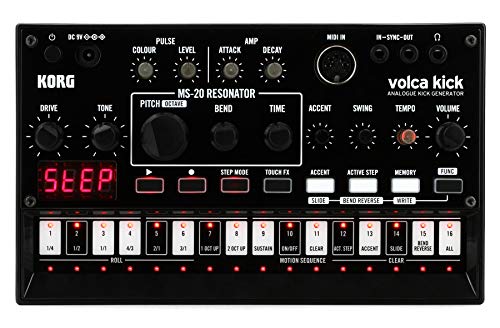
The second best-selling product here is clear about itself in its own title: it is a kick generator. It makes kick drums and bass, beautifully, from an analog circuit borrowed from a classic synthesizer, and it has a 16-step sequencer to arrange them with. What it does not have is a snare or a hi-hat. A drum machine needs at minimum a kick, a snare and a hat, because a rhythm is the conversation between them. One voice is an instrument. It is not a kit.
Analog or samples is the real fork
An analog machine builds its sounds from circuits, so every knob genuinely reshapes the drum and no two settings are the same. The palette is small and infinitely variable. A sample machine plays recordings, so the palette is enormous and fixed: the SR-16 carries 233 sounds and the LmDrum 109, and you choose rather than sculpt. Neither is better. Ask whether you want to hunt for a sound or dial one in, because that answer picks your machine faster than any price comparison.
The cheapest real machine has the fullest specification
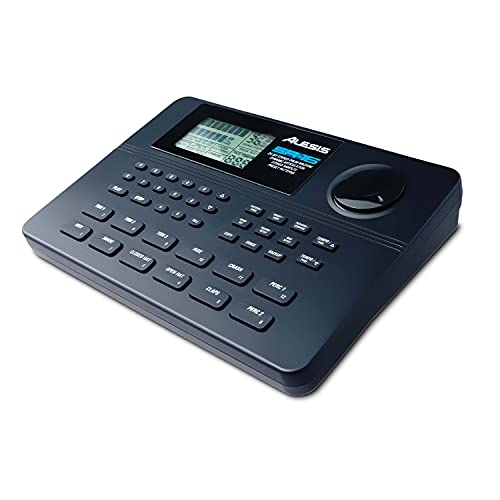
Something strange happens as the prices climb here. The cheapest genuine drum machine lists 233 sounds, 12 velocity-sensitive pads, 50 preset and 50 user kits, four outputs in stereo pairs, full MIDI, two footswitch jacks and step editing. The one costing nearly three times as much lists four words in total. The one in between offers three bullets, one of which is a note that its sound-shaping works on everything except the cowbell. Price is not buying you information in this category, and it may not be buying you machine either.
Separate outputs decide whether you can record it
This is the specification that separates a toy from a tool and almost nobody prints it. If every drum leaves by one stereo socket, you get a finished mix and you are stuck with it: no compressing the kick without compressing the hats. Individual outputs let you record each drum to its own track and work on it properly afterwards. Only one machine here publishes an output count, offering four in stereo pairs, and it is the cheapest real machine on the page.
Standalone should mean it runs without a desk
The word in the search is standalone, so it is worth asking what each of these needs to make a sound. One has a speaker built in, so it works on a train with nothing attached. One publishes four hours of battery life. Everything else here assumes mains power and an amplifier, which is standalone in the sense of not needing a computer, not in the sense of being portable. Decide which meaning you wanted, because the two are far apart.
FLAMMA FF02
The cheapest thing in this search and, oddly, the better of the two pedals here: 121 grooves across 11 genres against its stablemate’s 48 across six, with 66 savable slots so you can park the loops you actually use. It has stereo inputs and outputs where the other has mono, which matters the moment a real rig is involved. Dual footswitches, tap tempo, real-time fills and a clear screen. It costs less than the pedal outselling it by roughly six to one, which is the puzzle of this page.
Pros:
- 121 grooves against the best seller’s 48, for less money
- 66 savable slots for your own loops
- Stereo inputs and outputs, not mono
- Dual footswitches and tap tempo
Cons:
- A pedal; you cannot program a pattern
- Sells far behind its own worse-specified stablemate
- No sample rate or EQ detail published
Best for: a beat under your guitar, cheaply and with more of them.
FLAMMA FC12
The best seller in this entire search, which tells you what people typing drum machine usually want: a beat to play along to. It offers 48 grooves across six genres, real-time fills you can drop on any beat of any bar, tap tempo, and 44.1kHz 24-bit audio, which is the only sample rate figure published on this page. Two EQ presets tune it for a full-range speaker. FLAMMA is upfront that the power supply is not included and specifies exactly what you need, a 9V supply above 210mA.
Pros:
- The best-selling product in this search
- Publishes its sample rate and bit depth; nobody else does
- Fills you can trigger on any beat of any bar
- States the exact power supply required, and that it is missing
Cons:
- A pedal; no programming, no pattern of your own
- 48 grooves where the cheaper stablemate has 121
- Power supply not included
Best for: practicing to a beat, which is what most of this search wants.
Korg Volca Kick
The second best seller here and it is fair in its own title about what it is: an analog kick generator, not a drum machine. What it does, it does properly, running the sound through a resonating filter lifted from a classic Korg synthesizer to produce anything from a tight click to a deep bass note. There is a 16-step sequencer, Touch FX for live performance, sync and MIDI in to lock it to other gear, and a built-in speaker so it makes noise the moment you switch it on.
Pros:
- Genuine analog kick and bass, from a classic filter
- Built-in speaker; the only one here that needs nothing
- Sync and MIDI in for locking to other machines
- 16-step sequencer with live effect control
Cons:
- Kicks only; no snare, no hats, no kit
- Not a drum machine, whatever the search says
- Only useful alongside other gear
Best for: a kick you can sculpt, as part of a bigger setup.
Alesis SR-16
The cheapest genuine drum machine here and the best-documented product on the page by a distance. It carries 233 sounds across 50 preset and 50 user kits, any sound assignable to any of its 12 velocity-sensitive pads, so how hard you hit changes the sound rather than just the volume. Four outputs in stereo pairs let you record drums to separate tracks. Full MIDI, two footswitch jacks for start-stop and fills, sound stacking, step editing, and reverb built in. It has been the answer for a long time.
Pros:
- The cheapest real drum machine in this search
- Four outputs in stereo pairs; the only output count published
- 12 velocity-sensitive pads; 233 sounds, 100 kits
- Footswitch jacks for hands-free fills and start-stop
Cons:
- Samples, so you choose sounds rather than shape them
- Mains powered; no battery, no speaker
- An old design, and it looks it
Best for: writing drums properly, for the least money.
Arturia DrumBrute Impact
A genuinely analog drum machine, which means the sounds come from circuits and every control reshapes the drum itself rather than picking a different recording. That is the thing people want from analog and it is real. The listing, however, tells you almost nothing: three bullets, covering a separate accent per drum, a song mode for chaining patterns, and optional sound-shaping on all instruments except the cowbell. No voice count, no sequencer length, no outputs. The cowbell exception is the most specific thing here.
Pros:
- True analog; the knobs reshape the drums themselves
- Separate accent per drum for real dynamics
- Song mode chains patterns into an arrangement
- Sound-shaping across the kit
Cons:
- Three bullets; no voice count, sequencer or output detail
- Costs far more than the far better-documented alternative
- Analog means a small palette; there is no sound library
Best for: dialling in drums rather than picking them.
Novation Circuit Rhythm
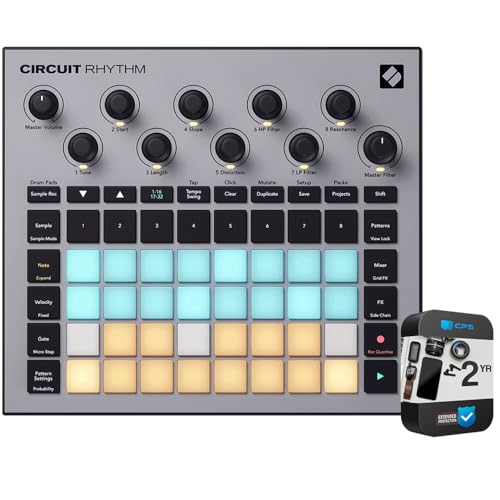
The only machine here that is genuinely standalone in the way the word suggests: four hours of battery, compact, and it records samples straight into the hardware with no computer anywhere. Eight sample tracks let you slice, reverse, loop, resample and play chromatically, so drums and basslines and melodies all live on the same grid. The workflow is deliberately screenless, which is a real design decision rather than an omission. Grid FX adds stutter, beat repeat, reverb and delay live. Note that this is a reseller bundle with an extended warranty attached.
Pros:
- Four hours of battery; the only figure published here
- Records and slices your own samples, no computer needed
- Eight tracks for drums, bass and melody together
- Grid FX for real-time performance
Cons:
- Sold as a bundle with a third-party warranty pack
- Screenless takes learning; there is nothing to read
- A sampler first, a drum machine second
Best for: making beats on a sofa, a train or a floor.
Behringer LmDrum
The most expensive machine on this page and the listing is four lines long: 109 sounds, a 64-step sequencer, a dual-mode filter and a wave designer. Sparse as that is, every one of those is a real specification and the 64-step sequencer is the longest here, which means patterns four bars deep instead of one. Hybrid sampling means samples you can then run through analog-style filtering, so you get the library and the sculpting. It is also the worst-selling product in this search by a wide margin.
Pros:
- 64-step sequencer; the longest patterns here
- Hybrid design: samples plus real filtering
- 109 sounds with a wave designer for shaping
- Dual-mode filter across the kit
Cons:
- Four bullets on the most expensive machine here
- The worst seller in this search by a distance
- No outputs, pads or connectivity published
Best for: long patterns and filtered samples, if you already know it.
The verdict
The best seller here is a guitar pedal and the runner-up makes only kicks. Both are clear about it; the search is what is confused. Among the real machines, the fullest specification belongs to the cheapest one, and the price climbs as the information thins.
Best overall: Alesis SR-16. The cheapest genuine drum machine in this search and the only one that tells you everything: 233 sounds across 100 kits, 12 velocity-sensitive pads so hitting harder changes the sound and not just the level, and four outputs in stereo pairs, which is the specification that decides whether you can mix your drums afterwards or are stuck with what came out. Full MIDI and footswitch control for fills.
Best value: FLAMMA FF02. If what you actually want is a beat under your guitar, which the top of this search suggests most people do, this is the one to buy. It has 121 grooves to the best seller’s 48, 66 savable slots, stereo in and out rather than mono, and it costs less than the pedal outselling it six to one. It will not let you write a pattern, and it never claims it will.
Best premium: Novation Circuit Rhythm. The only machine here that means standalone the way you probably meant it: four hours of battery and no computer at any point. Record your own samples into it, slice them, reverse them, play them chromatically across eight tracks, and perform the result with Grid FX. The screenless workflow takes learning and then gets out of the way.
FAQ
Is a drum pedal the same as a drum machine?
No. A pedal plays preset grooves so you can practice to a beat; you cannot program it. A drum machine lets you place each kick and snare yourself. The two pedals here are the top of this search because most people want the first thing.
Analog or sample-based?
Analog builds sounds from circuits, so every knob reshapes the drum and the palette is small but endless. Samples are recordings, so the palette is huge and fixed: 233 sounds here, or 109 there. Ask whether you want to hunt for a sound or dial one in.
Why do separate outputs matter?
Because one stereo output gives you a finished mix you cannot undo, and you cannot compress the kick without compressing the hats. Only the SR-16 publishes an output count here, at four in stereo pairs, and it is also the cheapest real machine.
Which of these work without an amp?
The Korg has a built-in speaker, so it makes noise on its own. The Novation publishes four hours of battery. Everything else needs mains power and something to plug into, which is standalone in the no-computer sense only.
Why does the dearest machine have the shortest listing?
Good question, and it is the pattern of this page. The cheapest real machine lists pads, outputs, MIDI, kits and sounds. The dearest lists four things. Price is not buying you information here, so read what is actually stated rather than what it costs.
This article may contain affiliate links; see our Affiliate Disclosure.