There is a 4K webcam in this search that costs less than a takeaway, and a 4K webcam that costs six times as much. The dear one tells you its frame rate, its focus type, its zoom, three selectable framings and the range its microphone hears from. The cheap one says 4K Ultra HD and then argues with itself about how wide the lens is: 99 degrees in the title, 90 degrees in its own bullets. Resolution is the number everyone shouts. It is not the number that decides how you look.





At a glance
| Webcam | The spec that matters | Price tier | Link |
|---|---|---|---|
| NIVEOLI 1080P | Cheapest here. 1080p30, HDR, shutter | Budget | |
| Logitech C270 | 720p, but a 55 degree lens. Mic hears 1.5m | Budget | |
| NexiGo N60 | Publishes its focus range. Admits an audio bug | Budget | |
| AOC 4K | Claims 4K. States no frame rate at all | Budget | |
| EMEET C960 | Publishes its focus range. 90 degree lens | Mid-range | |
| Logitech C920S | Autofocus, glass lens, and a shutter | Mid-range | |
| Logitech Brio 4K | Real 4K at 30fps. Three framings. Windows Hello | Premium | |
How to choose
Fixed focus is the real dividing line
Not resolution. A fixed-focus camera has a window of sharpness and everything outside it is soft, and the two brands plain enough to publish that window are the ones worth reading. NexiGo says its lens is optimized from 19.6 inches out to 13 feet. EMEET says its range runs from 11.8 to 118.1 inches. Now measure the distance from your face to your monitor. Plenty of people sit closer than 19.6 inches, and at that distance a fixed-focus camera is simply out of focus and nothing in the software will fix it.
Field of view decides what people see
This is the specification that changes the picture most and it swings enormously here. The cheapest Logitech runs a 55 degree diagonal, which is head and shoulders and nothing else. Others run 90 degrees, which puts your kitchen in the call. That is not a quality difference, it is a completely different photograph, and the narrow one is often what you want in a bedroom or a cluttered room. One camera here lets you pick instead of guessing, and that is the feature the premium price actually buys.
A frame rate is the tell on any resolution claim
Every camera in this search that publishes a frame rate says 30fps, and one camera claiming 4K does not publish one at all. That silence is the thing to notice. Resolution without a frame rate is half a specification, because 4K at a low frame rate looks worse in motion than 1080p at 30, and video calls are nothing but motion. Look for the two numbers together. A brand confident about both prints both, and the one on this page charging six times more prints both.
Logitech sells the same camera two ways, and cheaper is better
Here is the oddest thing in this search. The C920S ships with a privacy shutter and states that it does not include the three-month background-removal software license. Its stablemate takes the opposite deal: you get the software and, in its own words, no privacy shutter. Same camera, same 1080p, same autofocus. The version with the physical shutter is the cheaper one. A slide of plastic over a lens outlasts a three-month license by roughly a decade.
Microphone reach is published twice and inverted
Only two cameras here tell you how far their microphone actually hears, and the result is not what the prices suggest. The cheapest Logitech says its noise-reducing mic carries your voice clearly from up to 1.5 meters. The most expensive one says 1.2 meters from dual omnidirectional mics with noise canceling. So the budget camera claims the longer reach. If you sit back from the desk, that number matters more than the resolution above it, and five of the seven cameras here never mention it.
Look for the brand that admits a fault
NexiGo puts a note in its own bullets telling you to contact support for a firmware update if you notice audio delays. That is a company printing a known bug on the shop page rather than waiting for the review. It is worth more than any adjective on this page, because it tells you the fault exists, it has a fix, and they are not hiding it. EMEET does something similar in reverse, stating plainly that it will not do Windows face login.
NIVEOLI 1080P
The cheapest camera here by a distance, and it gives you full 1080p at 30 frames, with HDR that keeps your face visible against a bright window, dual noise-reducing digital mics, and a physical privacy shutter that a Logitech three times the price does not have. It clips to a monitor or stands alone, the head rotates a full 360 degrees, and it needs no drivers on Windows, Mac, Linux or Android. It is clear about the compromise too, stating fixed focus rather than pretending otherwise, and it does not publish a focus range.
Pros:
- Cheapest camera here by a wide margin
- 1080p at 30fps with HDR for backlit rooms
- Physical privacy shutter, unlike dearer rivals
- Works on Windows, Mac, Linux and Android
Cons:
- Fixed focus, with no range published
- No field of view stated
- USB 2.0 only
Best for: a working camera with a shutter, for almost nothing.
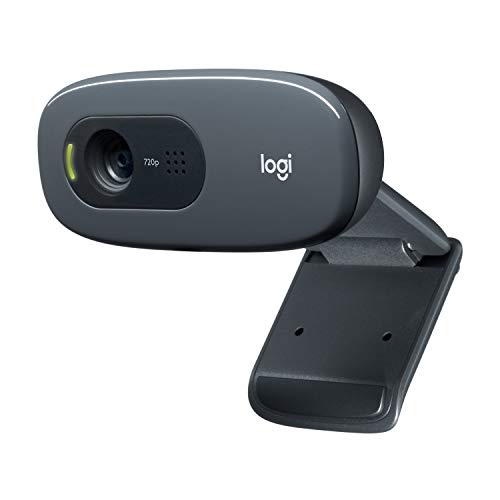
Logitech C270
The only 720p camera here, and the specification that makes it interesting is the lens: a 55 degree diagonal, by far the narrowest on this page. That is head and shoulders only, which is exactly right if your background is a bedroom rather than a studio, and it is a deliberate choice rather than a shortfall. RightLight 2 lifts the exposure against backlighting. Its noise-reducing mic is rated to carry your voice from 1.5 meters, further than the camera here costing nine times as much claims.
Pros:
- A 55 degree lens; the tightest framing here
- Publishes mic reach at 1.5 meters, the longest claimed
- RightLight 2 handles backlighting properly
- Clip folds so it stands on a shelf
Cons:
- 720p; the lowest resolution on this page
- No privacy shutter
- Fixed focus
Best for: keeping the room out of the shot, cheaply.
NexiGo N60
The listing that tells you the most about what you are actually buying: a two megapixel CMOS behind a 3.6mm glass lens, fixed focus, optimized from 19.6 inches to 13 feet, which is the number that decides whether you will be sharp at your desk. Glass rather than plastic at this price is worth noting. It has a privacy cover, needs no drivers, and lists every operating system it supports down to the version. It also prints a note about audio delays and points you at a firmware fix.
Pros:
- Publishes its exact focus range in inches and feet
- Glass lens at a budget price
- Names a known audio issue and its fix, on the listing
- Privacy cover; exhaustive compatibility list
Cons:
- Out of focus closer than 19.6 inches
- No field of view published
- Its compatibility bullet is printed twice, inconsistently
Best for: knowing whether you will be sharp before you buy.
AOC 4K
A 4K webcam at a budget price, and the two things it will not tell you are the frame rate and, apparently, the field of view: the title says 99 degrees and the bullets say 90. Every other camera here that quotes a resolution also quotes 30fps beside it. This one quotes neither a frame rate nor a focus type nor a sensor. What it does give you is real: 180 degree tilt with 360 degree swivel, a sliding lens cover, a noise-reducing mic, and a USB-A to USB-C adapter in the box so it fits any machine.
Pros:
- The cheapest camera here claiming 4K
- Includes a USB-A to USB-C adapter
- Sliding lens cover; 180 degree tilt, 360 degree swivel
- Mounts to a monitor, a desk or a tripod
Cons:
- States no frame rate anywhere, unlike every rival
- Title says 99 degrees; its own bullets say 90
- No focus type or sensor published
Best for: a cheap wide camera, if the 4K claim is a bonus not a reason.
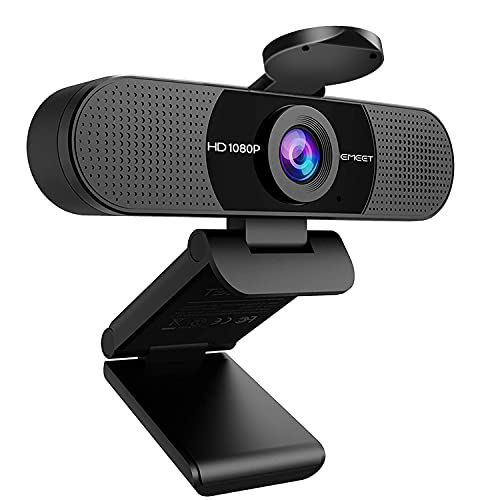
EMEET C960
The other listing that publishes its focus window, and its is the more generous: 11.8 to 118.1 inches, so about a foot out to ten. That means it stays sharp if you sit close, which the alternative does not. The lens is five-layer anti-glare across 90 degrees, wide enough for two people. Two omnidirectional noise-reduction mics, low-light boost with exposure adjustment aimed squarely at the sunny-window problem. It also states outright that it will not do Windows face login, which is the sort of exclusion most brands leave you to discover.
Pros:
- Publishes a focus range that starts close, at 11.8 inches
- Five-layer anti-glare lens across 90 degrees
- Two omnidirectional noise-reduction mics
- States plainly that Windows face login will not work
Cons:
- Fixed focus, however wide the window
- Needs selecting manually as the audio device
- No autofocus at a mid-range price
Best for: sitting close to the screen and staying sharp.
Logitech C920S
The camera that has quietly been the right answer for years, and this is the version to buy. Full 1080p at 30 through a glass lens with genuine autofocus, so the sharpness follows you instead of waiting in a fixed window. Stereo audio from dual mics. Crucially it ships with a snugly fitting privacy shutter, and Logitech states in the same breath that it does not include the three-month software license its other version carries. That is the real trade, and it costs less than the version without the shutter.
Pros:
- Real autofocus behind a glass lens
- Ships with the privacy shutter, and costs less for it
- Stereo audio from dual mics, not mono
- Light correction that works in any room
Cons:
- No background-removal license included
- 1080p only, at 30fps
- No field of view published
Best for: the safe answer, in the version that gives you the shutter.
Logitech Brio 4K
Six times the price of the cheap 4K camera and it prints every number that one omits: 4K at 30fps, autofocus, 5x digital zoom, and three field of view presets so you choose between 65 degrees for head and shoulders, or 78 and 90 for the room. RightLight 3 handles glare and backlighting. Dual omnidirectional mics hear to 1.2 meters. It carries both optical and infrared sensors for Windows face login, which nothing else here does, plus a flip-up privacy shade and a one year warranty.
Pros:
- Genuine 4K at a stated 30fps, with autofocus
- Three selectable framings, from tight to wide
- Optical and infrared sensors for Windows face login
- Publishes mic reach and carries a one year warranty
Cons:
- By far the most expensive camera here
- The privacy shade attaches rather than being built in
- Claims shorter mic reach than a far cheaper camera
Best for: 4K that publishes every number behind it.
The verdict
Resolution is the loudest number and the least useful. Fixed focus versus autofocus decides whether you are sharp, field of view decides what the call sees, and only two cameras here publish the focus window that tells you either. One camera claims 4K and will not state a frame rate.
Best overall: Logitech C920S. Real autofocus behind a glass lens at 1080p, stereo audio from dual mics, and light correction that copes with a window behind you. It ships with the physical privacy shutter and openly forgoes the three-month software license its sibling carries, which is the right trade and, oddly, the cheaper one. A slide of plastic over the lens outlives a three-month license many times over.
Best value: NIVEOLI 1080P. Full 1080p at 30 frames with HDR for backlit rooms, dual noise-reducing mics, and a privacy shutter, for less than a tenth of what the Brio costs. It says fixed focus rather than hiding it, and it runs on Windows, Mac, Linux and Android without drivers. If the camera is for calls rather than a career, this is the whole job done.
Best premium: Logitech Brio 4K. The only camera here that earns a resolution claim by publishing everything around it: 4K at 30fps, autofocus, 5x zoom, and three framings so you decide how much of your room joins the meeting. Optical and infrared sensors handle Windows face login, which nothing else here offers, and it states how far its microphone hears.
FAQ
Is a cheap 4K webcam worth it?
Be careful. The 4K camera here at the low end publishes no frame rate, no focus type and no sensor, while every rival that quotes a resolution also quotes 30fps beside it. Resolution without a frame rate is half a specification, and video calls are motion.
What is fixed focus and does it matter?
It means the camera is sharp only within a set window. NexiGo publishes 19.6 inches to 13 feet; EMEET publishes 11.8 to 118.1 inches. If you sit closer than the near figure, you are soft and no setting will fix it. Measure your desk before you buy.
How wide should the lens be?
Narrower than you think. The 55 degree lens here is head and shoulders; the 90 degree ones show your room. If your background is a bedroom, narrow is the feature. Only the Brio lets you switch between framings instead of committing.
Why does the pricier Logitech have no privacy shutter?
Because it trades the shutter for a three-month background-removal license. The C920S takes the opposite deal and states so plainly, and it is the cheaper of the two. The shutter is the better half of that bargain.
Which of these do Windows face login?
Only the Brio, using both optical and infrared sensors. EMEET states outright that it will not, which is the plain way to handle it. If face login matters, the rest of this page is not for you.
This article may contain affiliate links; see our Affiliate Disclosure.